

Reviewed · SKIP THE LINE
Coimbra: A Local’s Tour of the University + Skip-the-Line
The library is worth the climb. This 90-minute tour takes you through Coimbra’s old university court, the Baroque Biblioteca Joanina, the royal chapel, the academic prison, and the ceremonial halls. I like the skip-the-line entry and the fact that guides such as José and Rogério bring student life, old rituals, and Portuguese history into the visit. I also like the compact pace, which gives you plenty of context without taking up half a day.
The main drawback is physical: you’ll climb stairs and move through tight historic spaces, so this is not suitable for wheelchair users or people with mobility impairments. The library also admits only 50 people per time slot, meaning the schedule can shift slightly. Still, for $76 per person, I find the mix of access, guiding, and major university sights a strong deal.
In This Review
- Key things to know before visiting Coimbra University
- Why Coimbra University deserves a guided visit
- Starting at the Porta Férrea and Paço das Escolas
- Inside the Biblioteca Joanina, Coimbra’s great Baroque room
- Beneath the library at the academic prison
- The Real Capela de São Miguel and its 2,000-pipe organ
- The Sala dos Capelos, where ceremony takes over
- Finishing at the Via Latina above Coimbra
- Is $76 a fair price?
- The best guides and the most useful tour style
- Who should book, and who should skip it?
- Final verdict: book it for the library and the stories
- FAQ
- How long does the University of Coimbra tour last?
- Where does the tour begin?
- Is the entrance ticket included?
- Does the tour include the Biblioteca Joanina?
- Which languages are available?
- Is photography allowed inside the library?
- Is the tour suitable for wheelchair users?
Key things to know before visiting Coimbra University
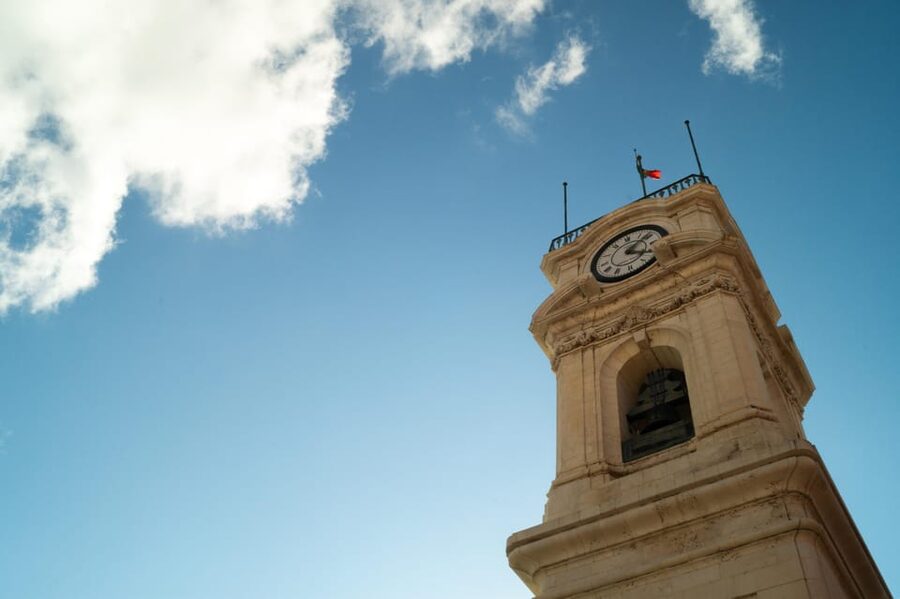
- The Biblioteca Joanina is the star attraction: You’ll see gilded woodwork, painted ceilings, exotic timber, and about 60,000 rare books.
- The guide adds the meaning: José, Rogério, Jorge, and David have been praised for explaining university customs, Portuguese history, and unusual details such as the library bats.
- The tour begins at the iron gate: Meet your guide outside the Porta Férrea, near the Dom Dinis starting point.
- The route includes stairs and narrow areas: The academic prison and upper university buildings require a reasonable level of mobility.
- The 90-minute format works well: You get the major rooms and their stories without committing an entire morning.
- Library access is time-sensitive: The university limits entry to 50 people per slot, so your guide may adjust the order or timing.
Why Coimbra University deserves a guided visit
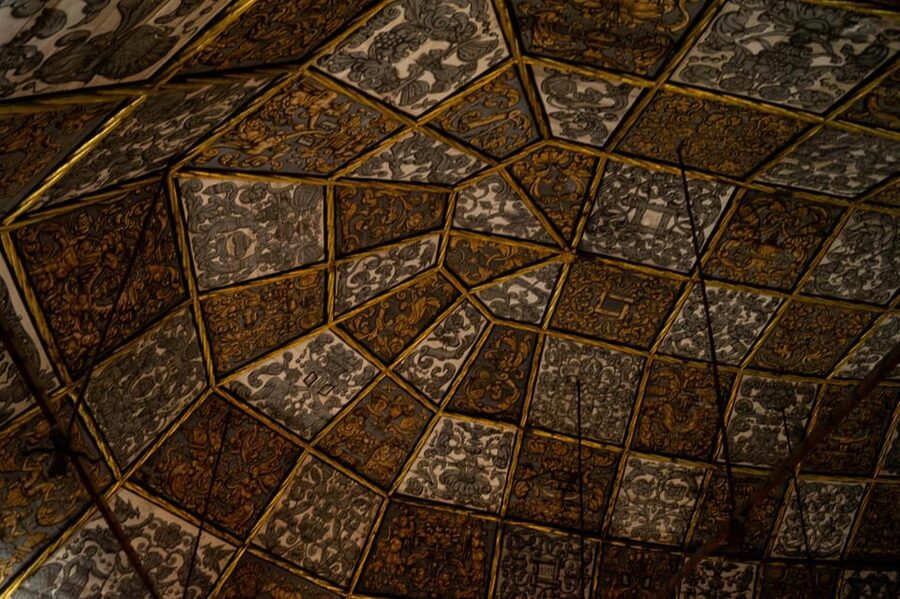
Coimbra’s university is not just a pretty collection of old rooms. It is a working center of learning with centuries of ceremony, discipline, royal influence, and student tradition packed into one hilltop complex.
The university moved from Lisbon to Coimbra in 1537, after earlier periods of movement between the two cities. The Paço das Escolas, once a royal palace, became the center of academic life. That combination of palace and school explains the tour’s unusual character. You are not simply walking through a museum. You are passing through former royal rooms that still serve university functions.
I would not choose a guide here only to avoid getting lost. The buildings are attractive enough to reward an independent visit, but the meaning is harder to grasp on your own. A guide connects the monarchs, professors, students, religious life, and campus rules. The best guides also add the little stories that turn an impressive room into a memorable one.
The feedback attached to this experience repeatedly praises José for his work as a history graduate of Coimbra. Other guides include Rogério, Jorge, and David. Their backgrounds vary, with some having studied at the university or worked in tourism, but the common strength is clear: the tour is built around explanation, not just pointing at decorative details.
A few more reviews worth comparing before you book
- Sintra: Castle of the Moors Skip-the-Line Ticket
★ 4.6 · 2,893 reviews - Lisbon: Sao Jorge Castle Skip-the-Line Ticket with Guide
★ 4.6 · 1,191 reviews - Sintra: National Palace and Gardens Skip-the-Line Ticket
★ 4.3 · 1,144 reviews
Starting at the Porta Férrea and Paço das Escolas
Meet your guide outside the iron gate, the Porta Férrea. This is a useful meeting point because it leads directly into the historic heart of the complex. You should arrive ready for a hilltop visit with stairs, uneven historic surfaces, and several indoor rooms.
The gate dates from 1634 and was designed by António Tavares. It is more than an entrance. Its statues honor D. Dinis, who founded the university, and D. João III, who brought it to Coimbra. Representations of the original faculties appear on the structure, giving your guide a natural way to explain how the university was organized.
One of the more entertaining traditions concerns students and their academic clothing. Students have been known to tie parts of their academic attire to the gate after completing their studies. This is the kind of detail you could easily miss if you simply entered, took photographs, and followed the arrows.
Once inside, the Paço das Escolas gives you a wide view of the university’s central court. This open space helps you understand the scale and layout before you move into the more decorated rooms. I like this beginning because it puts the library and chapel in context. They are not isolated attractions. They are parts of a former palace and an institution that has shaped Portuguese intellectual life for centuries.
Inside the Biblioteca Joanina, Coimbra’s great Baroque room
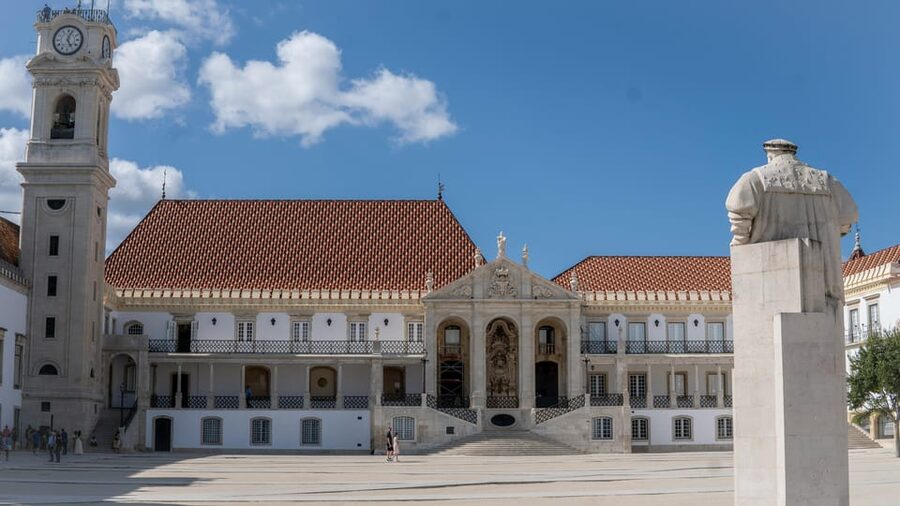
The Biblioteca Joanina is the reason many people should book this tour rather than buy access and wander alone. Built between 1717 and 1728 under D. João V, it was designed to impress. The room combines gilded woodwork, painted ceilings, dark exotic hardwoods, and rows of old books in a setting that feels theatrical without being artificial.
The collection contains more than 60,000 volumes. You are not permitted to use flash photography inside, but ordinary photography is allowed under the site’s rules. Take a moment before reaching for your phone. The ceiling paintings and carved details are easier to appreciate when you first look across the whole room.
The library’s conservation methods are especially interesting. Bats help control insects that could damage the books. Your guide may explain how the building’s design also helps maintain suitable conditions for the collection. The bats are not just a quirky footnote. They are part of the practical story of preserving books in a historic building.
Access is controlled, with a maximum of 50 people per time slot. That limit protects the room and the collection, but it also means the advertised order of stops can change. Your tour may spend time elsewhere first if the library slot requires it. I would treat this as a normal part of visiting a protected historic site, not as a flaw in the tour.
The skip-the-line benefit matters most here. A delayed entry or a full time slot could disrupt a short Coimbra visit, especially if you are fitting the university between train connections or other sightseeing. The ticket is included, and the guide handles the visit as part of the route.
Beneath the library at the academic prison
The Prisão Acadêmica sits below the library. This medieval prison was used to discipline students who broke university rules, showing how much authority the university once held over its own community.
The cells are narrow and secluded. You will hear about students being sent here to reflect on their conduct, which gives the university’s old autonomy a less polished side. The grand rooms above celebrate learning and royal support. The prison reminds you that academic life also involved rules, punishment, and strict control.
This stop is not as visually lavish as the library, but it adds balance. Without it, the university could seem like a succession of elegant rooms. The prison shows that this was a self-governing institution with its own disciplinary system.
Because the route includes a descent and narrow spaces, anyone with mobility concerns should think carefully before booking. The activity is specifically not suitable for wheelchair users or people with mobility impairments.
A different sort of day out around Coimbra:
- Coimbra: Live Fado Show with Glass of Port Wine
★ 4.7 · 998 reviews - University of Coimbra guided tours without queue
★ 5.0 · 518 reviews - Guided tour of the University and city of Coimbra.
★ 5.0 · 377 reviews - Coimbra: Mondego River Kayaking Tour
★ 4.7 · 324 reviews
The Real Capela de São Miguel and its 2,000-pipe organ
The Real Capela de São Miguel brings together older origins and later Baroque decoration. Inside, look for gilded altars, patterned azulejos, and a large organ with more than 2,000 pipes.
The chapel remains part of university life. Religious services, concerts, and weddings take place here, so it is not merely a preserved room behind a rope. That ongoing use changes how you read the space. The decoration was made for worship and ceremony, and the building still serves those purposes.
I would pay close attention to the contrast between the blue-and-white tilework and the gold altars. The chapel can feel visually busy, particularly if you try to photograph every surface. A guide helps direct your attention to the features that matter rather than leaving you to scan the room without a clear story.
Flash photography is prohibited in the Biblioteca Joanina, and it is sensible to follow the same careful approach throughout the historic interiors. The rules protect delicate surfaces and keep the tour moving.
The Sala dos Capelos, where ceremony takes over
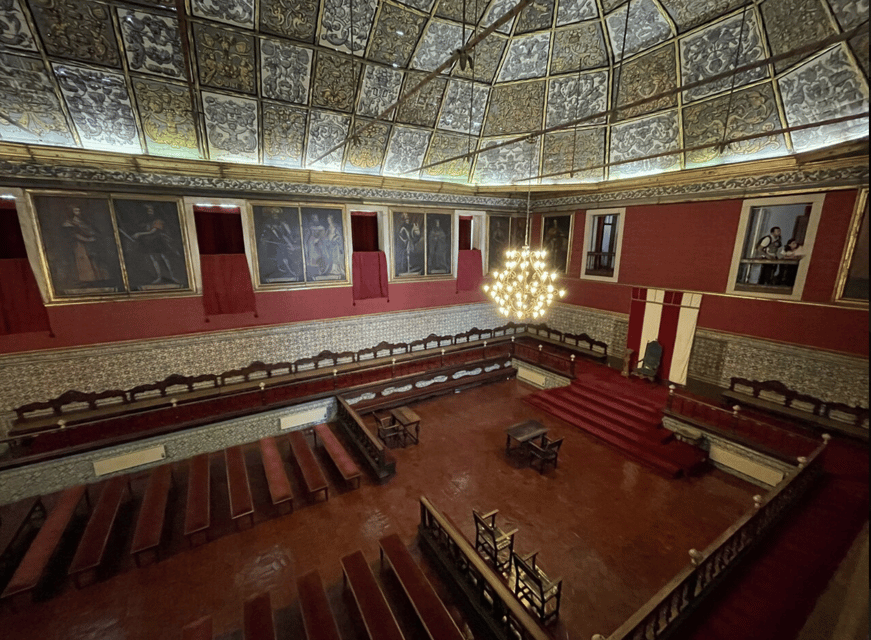
The Sala dos Capelos is the university’s main ceremonial hall. It began as a royal throne room and later became a setting for academic rituals, including doctoral defenses.
This room has blue azulejos, decorative ceiling motifs, and portraits of Portuguese monarchs. Your guide will explain how it moved from royal ceremony to university ceremony, a shift that captures the changing role of the institution.
I find this one of the most useful stops for understanding Coimbra’s academic identity. The room is not only about decoration. It shows how the university presents authority, achievement, and continuity. Royal proclamations once took place here. Today, academic ceremonies still give the room a formal role.
The guide-led format is particularly helpful in this hall. The portraits and tilework may catch your eye, but the room’s purpose becomes clearer when someone explains the rituals connected with it. Guides praised in the tour feedback, especially José and David, were noted for making Portuguese history easy to follow and for adding personal details about student customs.
Finishing at the Via Latina above Coimbra
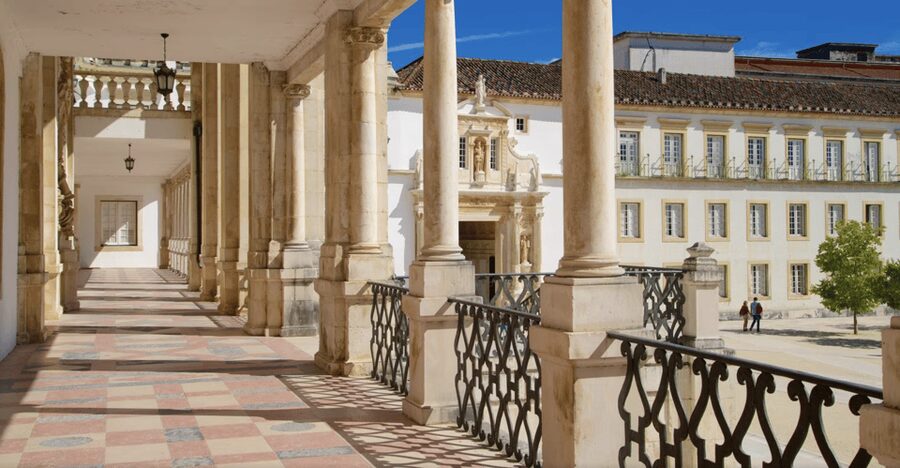
The tour ends at the Via Latina, an 18th-century neoclassical colonnade overlooking the Paço das Escolas. From here, you get views across Coimbra and a final chance to see how the university sits above the city.
Its name and symbolism relate to the university’s move from Latin toward Portuguese as the language of teaching. That change was not just a language preference. It points to a wider shift in who could access education and how knowledge was shared.
The Via Latina is a good closing point because it opens the view after so much time indoors. You can look back toward the courtyard, connect the separate buildings, and consider the university as a living institution rather than a list of rooms.
At 1.5 hours, the tour ends before the subject becomes tiring. If you enjoy history, you may want to stay in the area afterward and explore more of Coimbra on your own, but the guided portion covers the central university sights efficiently.
Is $76 a fair price?

The cost is $76 per person. That is more than a basic self-guided admission, but the value depends on what you want from the visit.
You are paying for an entrance ticket, a live guide in English or Portuguese, and access arranged around the library’s restricted time slots. The guide also gives you historical context, stories about university life, and practical help moving through a complex site. For the Biblioteca Joanina alone, the skip-the-line feature can be useful during busy periods.
Cheaper options may exist, but they do not always include the library. That distinction matters. If you come to Coimbra mainly to see the Joanina Library, confirm exactly what any less expensive tour includes before booking.
The strongest value comes for first-time visitors, history fans, and anyone who wants the university to make sense as part of Portugal’s story. If you only want a quick look at the courtyard and a few photographs, $76 may feel high. If you want the meaning behind the rooms and prefer not to manage timed entry yourself, the price is easier to justify.
The private group option may also suit families or couples who want a more personal pace. Even when the group is not formally private, the tour can feel intimate. One booking became a tour for only two people, and another had a single participant. Group size can vary, so do not assume a large coach-style experience.
The best guides and the most useful tour style
Guide quality is the biggest strength of this experience. José receives especially warm praise for his background in Coimbra history and his ability to explain both the university and Portugal. He is also known for adding stories about legends, rituals, and unusual customs, including the bat story in the library.
Rogério is also described as friendly and clear, with detailed explanations of university life. David has been praised for explaining the history in a simple way and staying after the scheduled time to answer questions. Jorge is described as highly informed and willing to extend the tour when needed.
That does not mean every guide will deliver the same personality or follow the exact same order. It does mean the experience is designed around live interpretation, and the supplied guide languages are English and Portuguese.
I would ask questions as you go. The guides appear comfortable discussing student traditions, royal figures, and the wider story of Coimbra. A question about the academic clothing, the prison, or the library’s conservation methods can lead to the kind of local detail that makes this more than a formal lecture.
Who should book, and who should skip it?
I would recommend this tour to you if you:
- Want to see the Biblioteca Joanina without managing timed access alone
- Enjoy architecture, Portuguese history, or university traditions
- Prefer a guide who can explain symbols and ceremonies
- Have about 90 minutes for a focused visit
- Can manage stairs and narrow historic spaces
- Are comfortable following a schedule that may shift for library entry
I would think twice if you:
- Use a wheelchair or have significant mobility limitations
- Prefer to move slowly and independently through every room
- Mainly want outdoor views and do not care about interiors
- Need a fixed timetable with no possibility of adjustment
Book early if the library is your priority, but remember that free cancellation is available up to 24 hours before the activity for a full refund. You can also reserve now and pay later, which helps if your Coimbra plans are still taking shape.
Final verdict: book it for the library and the stories
I would book this tour if you want the full University of Coimbra experience in a short, well-guided visit. The Biblioteca Joanina is the visual prize, but the Porta Férrea, academic prison, São Miguel Chapel, Sala dos Capelos, and Via Latina give it depth.
The deciding question is simple: do you want to admire old rooms, or understand why they matter? At $76, this is not the cheapest way to enter the university, but the included ticket, controlled library access, and strong guide reputation make it a sensible choice for most first-time visitors. Just allow for stairs, no flash photography, and a possible schedule change around the 50-person library limit.
FAQ
How long does the University of Coimbra tour last?
The experience lasts 1.5 hours, or 90 minutes.
Where does the tour begin?
Meet your guide outside, in front of the iron door at the Porta Férrea, near the Dom Dinis starting point.
Is the entrance ticket included?
Yes. The guided tour and entrance ticket are included in the price.
Does the tour include the Biblioteca Joanina?
Yes. The visit includes the Joanina Library, with its collection of more than 60,000 volumes.
Which languages are available?
The live tour guide is available in English and Portuguese.
Is photography allowed inside the library?
Photography is allowed, but flash photography is prohibited inside the Biblioteca Joanina.
Is the tour suitable for wheelchair users?
No. The route includes stairs and is not suitable for wheelchair users or people with mobility impairments.
Just added around Coimbra
- Soft Canyoning, river Ceira, Góis, Serra da Lousa, Coimbra★ 5.0 · 48 reviews
- University of Coimbra – more complete and private visit, ticket included★ 5.0 · 53 reviews
- Time travel at the Convent of Christ Tomar★ 5.0 · 56 reviews
- Coimbra Private Walking Tour with U.C. Tickets Early Access★ 4.5 · 68 reviews
- Discovering the charms and places of Coimbra★ 5.0 · 78 reviews
- Lousa Mountain Private Tour★ 5.0 · 88 reviews
- An adventure through the Schist Villages of Lousã★ 5.0 · 98 reviews
- Convent of Christ Tour “Portugal in the Map” – Visit Tomar with a local guide!★ 5.0 · 105 reviews
Skip the Line, compared.


Sao Jorge Castle Skip-the-Line Ticket with Guide
Read our review →
National Palace and Gardens Skip-the-Line Ticket
Read our review →

Porto Pubcrawl: 5h,7 Drinks,4 bars &Skip the line Club Entry
Read our review →
Quinta da Regaleira Skip the Line Tickets with Host
Read our review →Browse the lists this tour appears in