
Reviewed · DOLPHIN WATCHING
Faro: Dolphin and Wildlife Watching in the Atlantic Ocean
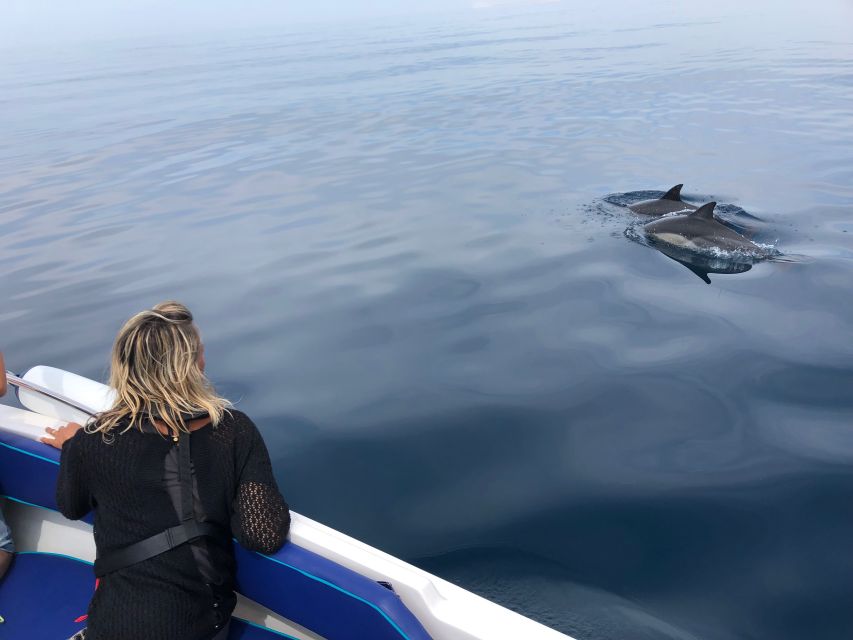
The Atlantic can put on quite a show. Faro’s Dolphin and Wildlife Watching trip combines a fast boat ride, wide views of the Ria Formosa Barrier Islands, and a serious search for wild dolphins, whales, porpoises, seabirds, turtles, and fish. I like the marine biologist guides, who explain animal behavior rather than simply pointing at fins, and I like the careful approach to wildlife. The main drawback is simple: these are free animals, not performers, so sightings are never guaranteed, and the open-ocean ride can be cold, windy, and bumpy.
You leave Faro marina with a small team of guides and head through Ria Formosa Natural Park toward the Atlantic. I especially like that the experience gives you 30 minutes to watch a dolphin group once one is found, instead of rushing from one sighting to the next. Still, the boat seats may feel hard by the end, and you should leave some extra time after the tour because the crew may stay out longer when a special sighting is possible.
In This Review
- Key points before you book
- Leaving Faro through Ria Formosa
- The fast ride into the Atlantic
- Watching dolphins without chasing them
- Searching for whales, orcas, and other cetaceans
- Birds, fish, and smaller surprises
- What the marine biologist guides add
- Is $76 a fair price?
- Who should book this boat trip?
- Practical details that make the trip easier
- Should you book Faro’s Atlantic wildlife tour?
- FAQ
- Where does the dolphin tour leave from?
- How long does the tour last?
- Are dolphins guaranteed?
- When is whale season?
- What animals might I see?
- Are hotel transfers included?
- What should I bring?
- Who should not take this tour?
Key points before you book
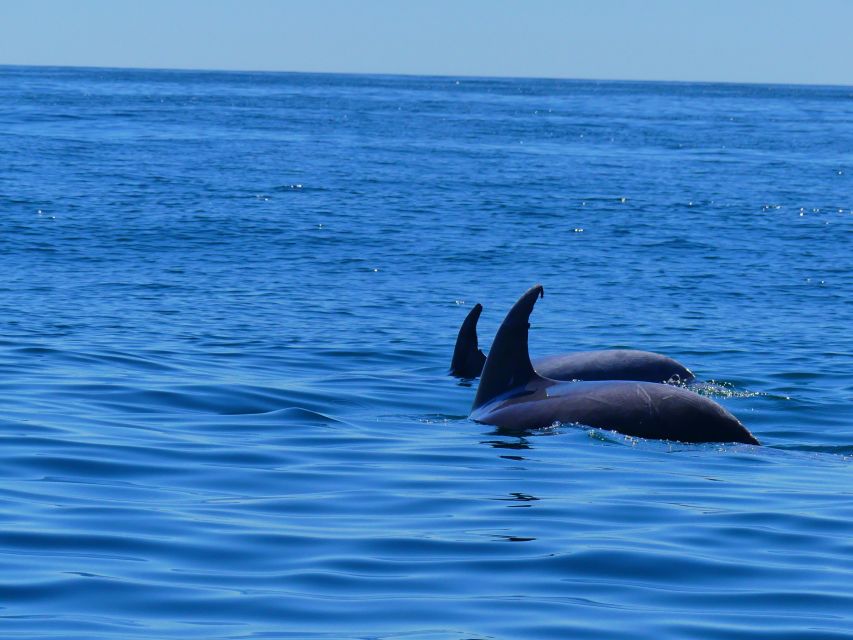
- Wild dolphins are the main event: Dolphins live in the area year-round, but sightings depend on sea conditions, animal movements, and luck.
- Marine biologists lead the search: Guides such as Miguel, Pedro, Ines, Alfredo, and Susannah have been praised for clear explanations and strong respect for the animals.
- The route has two very different moods: The calm waters and marshes of Ria Formosa give way to the open Atlantic, where the ride becomes faster and rougher.
- Whale season runs from February through May: Dolphins are possible all year, while whales are more likely during this seasonal window.
- The wildlife list is wide: You may search for dolphins, whales, porpoises, orcas, gannets, shearwaters, ocean sunfish, sharks, tuna, and marine turtles.
- Allow flexibility after the scheduled 2.5 hours: The crew has sometimes extended the trip when a rare sighting or a distant animal made the extra time worthwhile.
Leaving Faro through Ria Formosa
The meeting point is the Ocean Vibes Algarve office at Faro harbour or marina. Look for the shared shop with an Ocean Emotions banner. Hotel pickup is not included, so plan your own way to the marina and arrive with comfortable clothes, drinking water, sunscreen, and a jacket.
The first part of the trip crosses Ria Formosa Natural Park. This protected coastal area is made up of marshes, channels, barrier islands, and shallow waters. From the boat, you may see the islands of Deserta and Culatra, along with the changing shapes of the marshland.
This passage is more than a transfer to the ocean. It gives you a calmer start and a good look at the coast around Faro. The water inside the lagoon is generally less demanding than the Atlantic, so it is also a useful warm-up if you are unsure how you will handle a small fast boat.
The scenery changes as you move toward the coast. Ria Formosa feels sheltered and intricate, while the open water ahead feels broad and exposed. The contrast helps you understand why wildlife watching here requires patience. Animals are not gathered in one fixed spot, and the guides must read the water, watch for fins, and adjust the search as conditions change.
More dolphin trips:
- Small Group Dolphin and Wildlife Watching Tour in Faro
★ 5.0 · 578 reviews - Dolphin Watching + 2 Islands Tour – From Faro
★ 5.0 · 281 reviews - Faro: Dolphin Watching Boat Tour
★ 4.9 · 217 reviews
The fast ride into the Atlantic
Once the boat reaches the ocean, the character of the trip changes. Several people describe the ride as exciting, bumpy, and a little like a rollercoaster. That is part of the fun for some people, but it can be tiring if you have back trouble or motion sickness.
The boat seats may become uncomfortable during the latter part of the outing. On windy days, spray can reach you, and the wind may feel cold even when Faro is warm on land. Wear layers rather than relying on a swimsuit or thin shirt. A light waterproof jacket is a practical choice.
You will not spend every minute staring at dolphins. The crew may search for a while before finding anything. One outing took about 45 minutes before a sighting, while other trips found animals sooner. That waiting time is not wasted, since the guides are scanning the sea and sharing information, but you should be ready for stretches of open water without wildlife.
The reward is the sense of being in the animals’ own world. You are not visiting an aquarium or a controlled attraction. A fin may appear for only a second, and a group may change direction before the boat reaches it. That uncertainty is part of the experience, even when it tests your patience.
Watching dolphins without chasing them
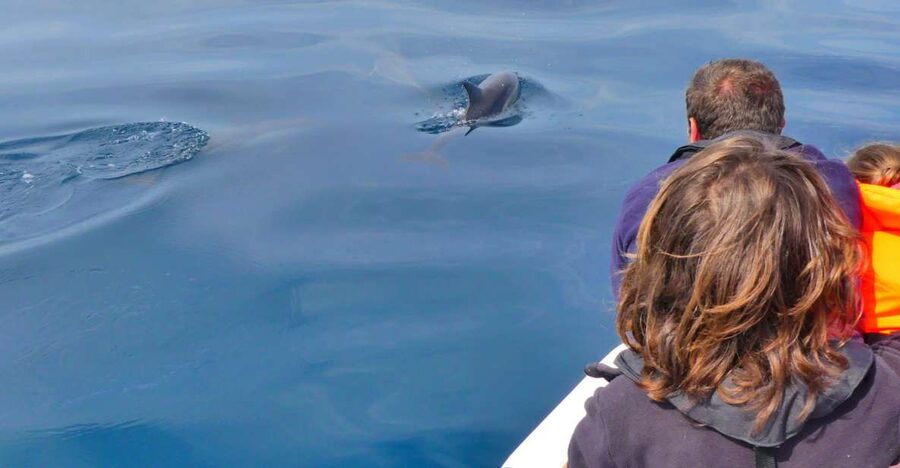
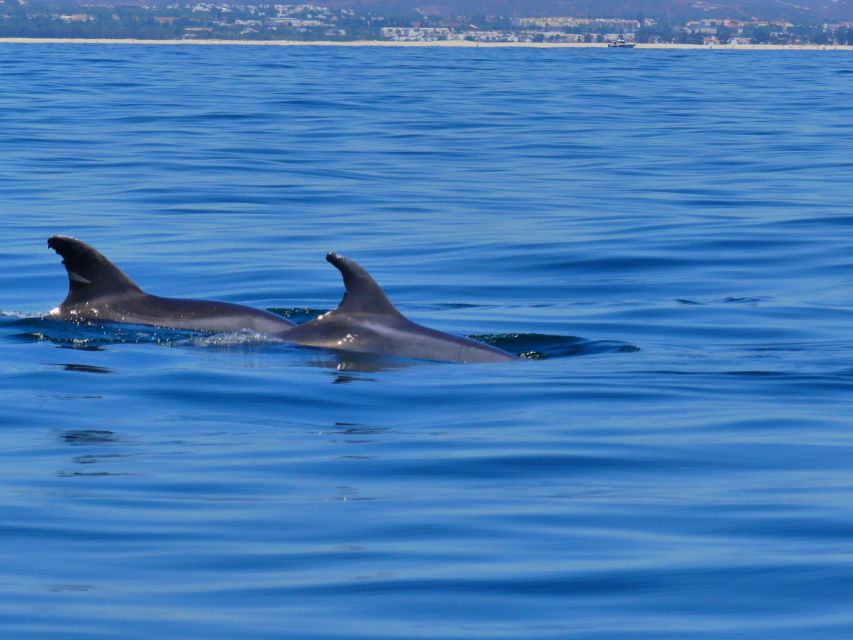
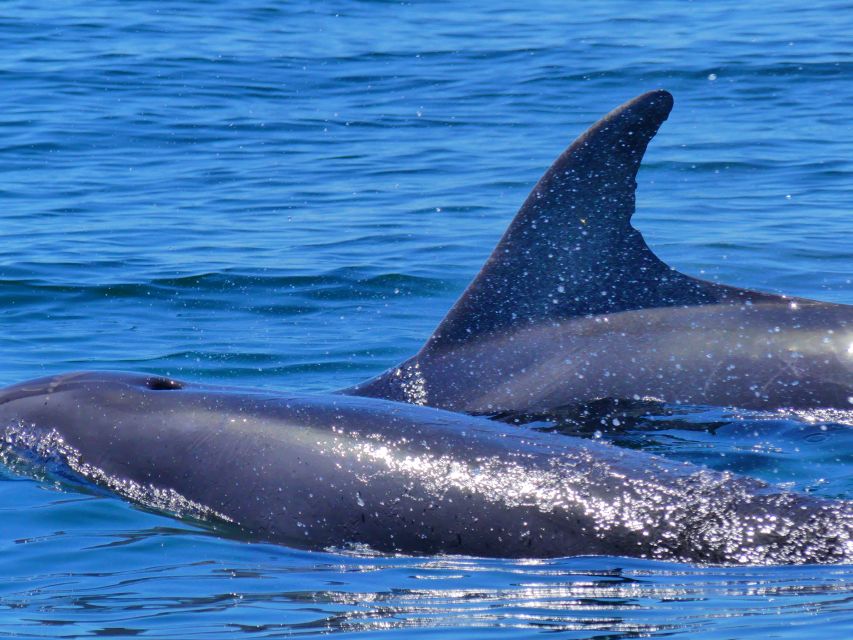
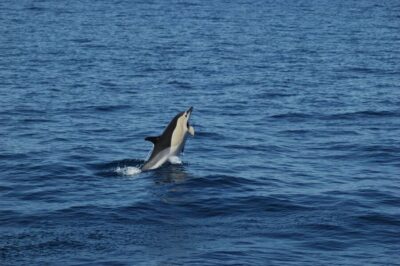
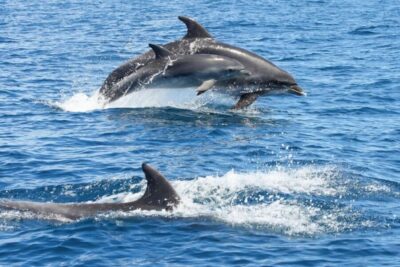
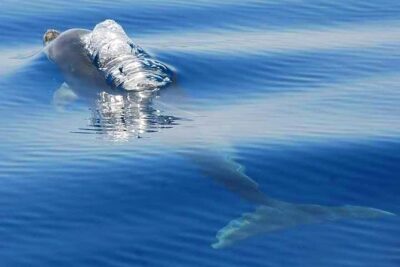
Dolphins are the most reliable wildlife target because they are resident in the area throughout the year. The exact species can vary. Sightings have included common dolphins, bottlenose dolphins, and striped dolphins, with groups ranging from a few animals to very large pods.
The guides work to keep a respectful distance and allow the dolphins to decide if they want to approach. Some animals have swum beneath the boat, alongside it, or close enough for you to watch their behavior clearly. Others have kept their distance. The difference matters. A good wildlife trip is not measured only by how close an animal comes.
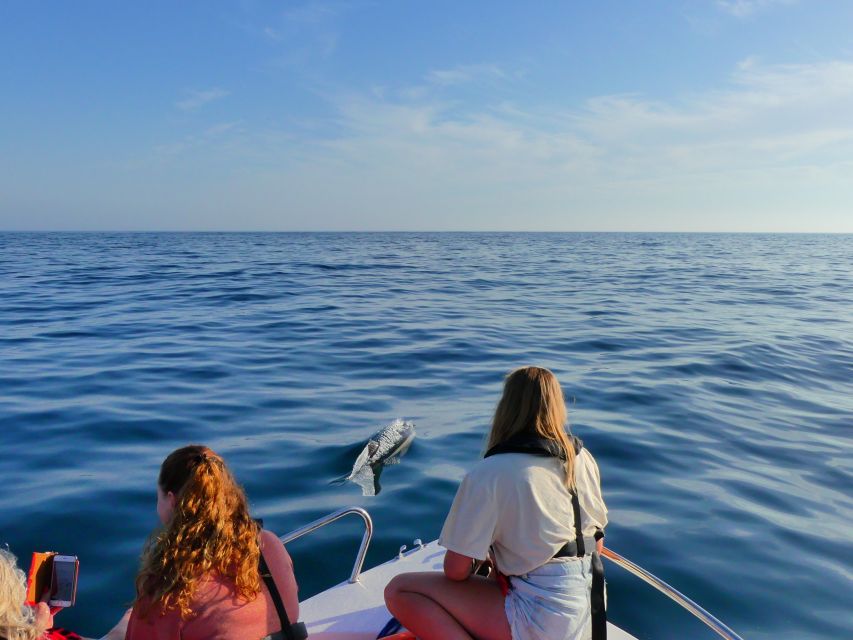
After a group is found, you get around 30 minutes to observe it. This rule keeps the viewing period focused and limits pressure on the animals. Use the time to watch more than the jumps. Look for adults and calves, changes in swimming speed, animals surfacing together, and the way the pod responds to the boat.
The guides also explain how marine biologists collect data on dolphin populations. That gives the sighting a useful scientific purpose. You learn to notice behavior and group patterns instead of treating the animals as moving photo subjects.
A few important rules keep the encounter responsible. Do not feed the dolphins, touch marine life, or try to touch the animals. Smoking and pets are not allowed, although assistance dogs are permitted. These limits are sensible, and the crew’s careful approach has been one of the most praised parts of the trip.
Searching for whales, orcas, and other cetaceans
Dolphins may be the regular prize, but the search can include much larger animals. The stated wildlife range includes whales, porpoises, and even orcas. Sightings have included fin whales, Bryde’s whales, killer whales, and a mother whale with her calf.
Whale season is February through May. That does not mean a whale will appear on every spring trip, but this period gives you the best stated chance. Dolphins remain possible outside that window, and the experience runs throughout the year.
Orcas are especially rare and cannot be expected. A few outings have found groups that included young animals, while other trips have focused only on dolphins or had no animal sighting at all. If the crew receives information from another boat about a worthwhile sighting, the trip may be extended to reach it. This is why I would not schedule a tight airport transfer, dinner reservation, or another timed activity immediately afterward.
The crew’s attitude is important here. Guides including Miguel, Pedro, and Ines have been praised for their enthusiasm, but also for their restraint. They appear to care about finding wildlife without turning the encounter into a pursuit. That balance makes a rare whale or orca sighting feel more meaningful.
A different sort of day out around Faro:
- 4 Stops | 3 Islands & Ria Formosa Natural Park – From Faro
★ 5.0 · 3,080 reviews - From Faro: Benagil Cave, Marinha Beach, Algar Seco & More
★ 4.7 · 2,027 reviews - Ria Formosa – Boat trip to the 3 Islands: Armona | Culatra Island | Lighthouse
★ 5.0 · 1,872 reviews - Ria Formosa Natural Park and Islands Boat Cruise from Faro
★ 5.0 · 1,314 reviews
Birds, fish, and smaller surprises
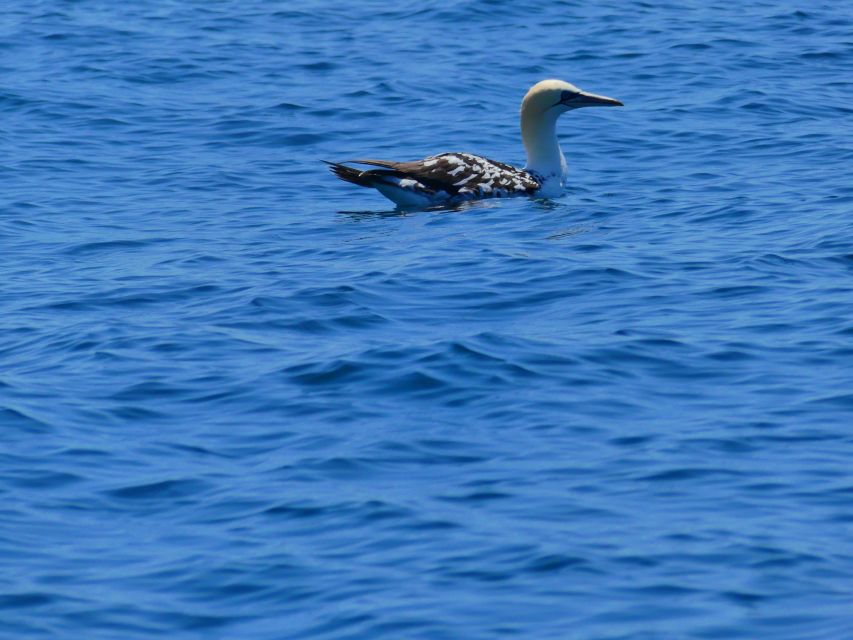
Keep looking above and below the surface. Gannets and shearwaters may fly over the boat, adding movement when the sea is quiet. Marine birds are easy to overlook while you wait for dolphins, but they help show how much life uses this stretch of ocean.
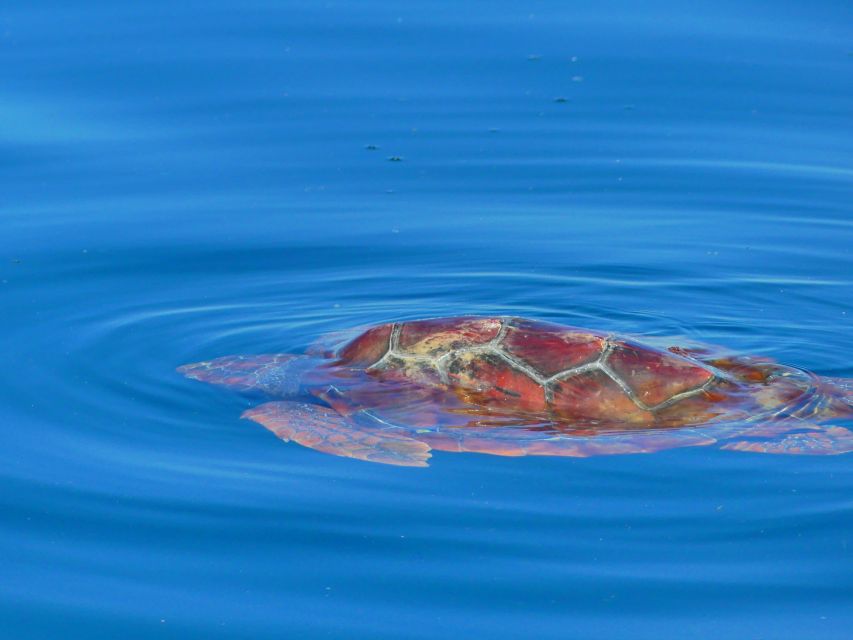
The trip may also search for ocean sunfish, blue sharks, hammerhead sharks, marine turtles, and tuna. Sightings will depend heavily on the day, so consider these possible extras rather than promised stops.
Some outings have included a puffin, a large tuna, and a shark. The variety is one reason the tour works better as a wildlife trip than as a dolphin-only outing. Even if a dolphin group does not appear, the ride may still offer seabirds, open-ocean views, and the chance to learn how marine life is identified.
Bring sunscreen and water. There is little reason to assume the boat provides either. Sun reflecting from the water can be strong, while the wind can make you feel cool and hide how much sun you are getting.
What the marine biologist guides add
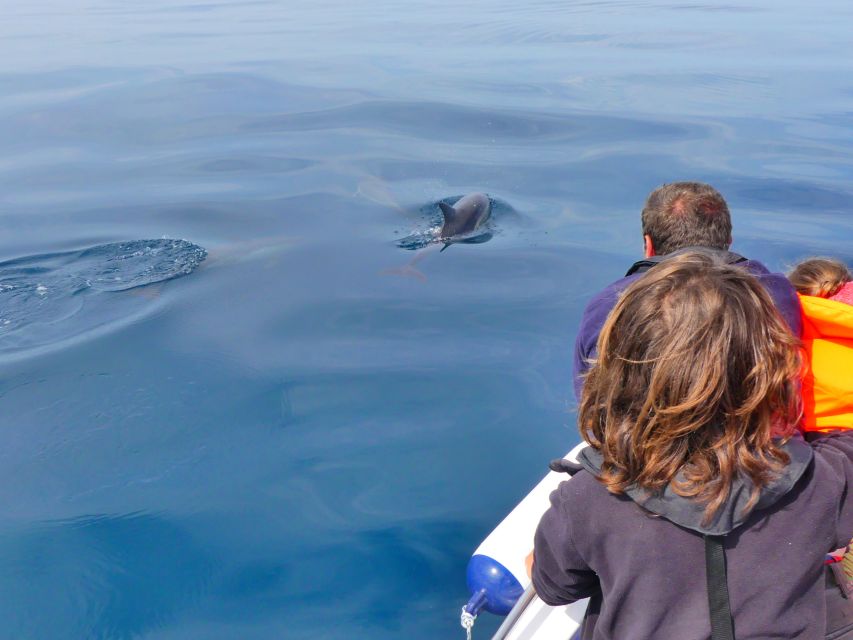
The guides are the heart of this experience. The best part is not only that they can help locate animals, but that they can explain what you are seeing once the excitement settles.
Guides named in the feedback include Miguel, Pedro, Ines, Alfredo, Susannah, Pablo, Inea, and others. Names and pairings vary by departure, so you should not expect a particular guide. The common thread is marine biology training, clear safety instructions, and enthusiasm for conservation.
Before heading out, the team explains life jacket use and the rules for approaching wildlife. On the water, they point out signs such as fins and surface movement. After a sighting, you can ask questions about dolphins, whales, and the wider ecosystem.
This educational side gives the trip lasting value. A quick glimpse of a dolphin is exciting, but understanding why a pod moves in a certain way helps you appreciate the encounter. The guides also seem to share the excitement rather than delivering a dry lecture. That mix of humor, science, and practical observation suits a short trip well.
The languages offered are English, French, Portuguese, and Spanish. Confirm the available language when you check the departure details if that matters to you.
Is $76 a fair price?
At $76 per person, this is not the cheapest way to get on the water in Faro. The price includes the guided boat tour, a marine biologist guide, and a life jacket, but not hotel transportation, food, water, or sunscreen.
I think the value is strongest if you care about responsible wildlife watching and want more than a basic boat ride. You are paying for a small-group style experience led by people trained to identify animals and explain their behavior. The crew may also spend extra time searching when conditions are difficult or a promising sighting develops.
The value is less certain if you need a guaranteed dolphin encounter. The normal success rate is described as about nine out of ten tours, which is strong but still leaves room for a blank day. One highly positive outing saw nothing and was still enjoyed for the boat ride and waves. That is the right mindset for booking this kind of activity.
The experience lasts 2.5 hours, though some departures have run longer. For a half-day activity, that is a reasonable use of time in Faro, especially if you are already visiting the marina or Ria Formosa. Just do not judge the price only by the number of animals seen. The guides, boat time, wildlife ethics, and interpretation are part of what you are buying.
Who should book this boat trip?
I would recommend it to adults, older children who are comfortable on a moving boat, couples, families with children over two, and anyone interested in marine biology or conservation. It suits people who can accept uncertainty and enjoy the search as much as the sighting.
It is not suitable for children under two, pregnant women, people with back problems, or people with mobility impairments. The tour is also not recommended for anyone with limited mobility. The boat ride can be bumpy, and boarding or moving around the vessel may be difficult.
If you are prone to seasickness, think carefully before booking. The provided information does not state that medication is available, but one passenger found it useful to take motion sickness tablets before facing the Atlantic swell. Ask a medical professional what is appropriate for you, and bring only what you normally use.
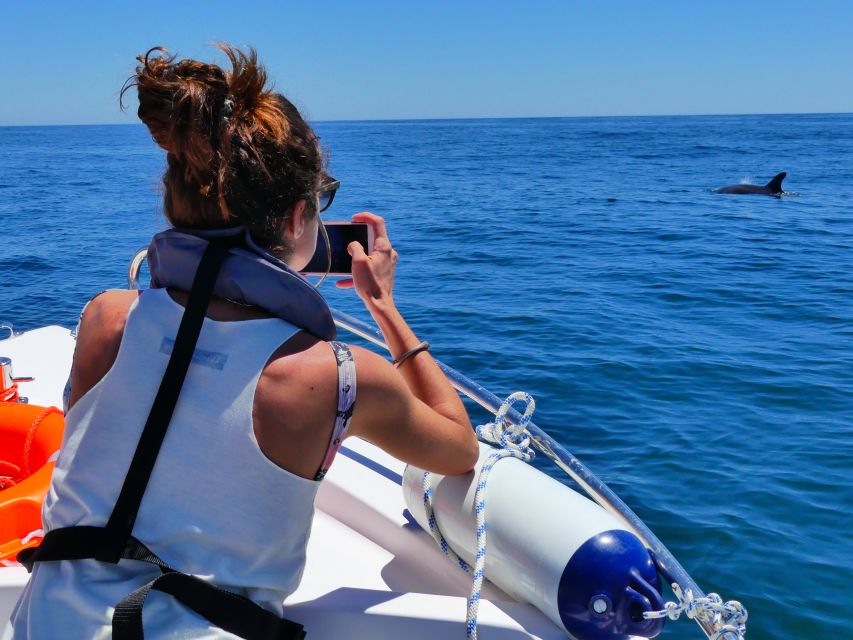
For photography, bring a camera if you like, but do not let it take over. Wildlife appears suddenly, and you may have only a moment to see a dorsal fin or a whale’s back. Binoculars might help with distant birds, but the most useful equipment is warm clothing and patience.
Practical details that make the trip easier
The tour has free cancellation up to 24 hours before departure for a full refund. A reserve-now, pay-later option is also available, which helps if your Algarve plans are still shifting.
Check the available starting times before booking. The meeting point is at the marina, and hotel pickup is not included. Give yourself enough time to find the Ocean Vibes Algarve office and its Ocean Emotions banner.
Wear comfortable clothes and bring:
- A warm or waterproof jacket
- Drinking water
- Sunscreen
- Motion sickness medication if you normally use it
- A secure way to protect your phone or camera from spray
Smoking, feeding animals, touching marine life, and touching animals are not allowed. Assistance dogs are allowed, but other pets are not.
The overall rating is 4.8 from 637 reviews, and the strongest praise centers on the same points: friendly guides, strong marine knowledge, respectful wildlife practices, and the excitement of seeing animals in open water. That consistency is reassuring, while the occasional no-sighting report keeps expectations realistic.
Should you book Faro’s Atlantic wildlife tour?
Book it if you want a genuine search for wild marine life, not a guaranteed show. The best reasons are the marine biologist guides, the 30-minute dolphin observation limit, the Ria Formosa scenery, and the chance of seeing species far beyond dolphins.
Choose the February to May period if whales are high on your list, though no season guarantees a sighting. Visit at any time of year if dolphins are your main goal. Leave your schedule loose afterward, dress for wind, and accept that a quiet sea is still part of the deal.
I would book this tour for the respectful approach and the quality of the guiding. Just remember the essential bargain: you pay for time, expertise, and a well-run search, not for an animal to appear on cue.
FAQ
Where does the dolphin tour leave from?
The meeting point is the Ocean Vibes Algarve office at Faro harbour or marina. Look for the shared store with an Ocean Emotions banner.
How long does the tour last?
The scheduled duration is 2.5 hours. The crew may sometimes stay out longer when a special sighting or promising search makes extra time worthwhile.
Are dolphins guaranteed?
No. Dolphins are wild animals, so a 100 percent sighting rate cannot be guaranteed. The usual success rate is stated as about nine out of ten tours.
When is whale season?
Whale season is between February and May. Dolphins are resident in the area all year.
What animals might I see?
Possible wildlife includes dolphins, whales, porpoises, orcas, gannets, shearwaters, ocean sunfish, blue sharks, hammerhead sharks, tuna, and marine turtles.
Are hotel transfers included?
No. Hotel pickup and drop-off are not included, so you must make your own way to the Faro marina.
What should I bring?
Bring comfortable clothes, water, sunscreen, and a jacket. You may get a little wet on windy days, and the wind can feel cold even when the weather is warm.
Who should not take this tour?
The tour is not suitable for children under two, pregnant women, people with back problems, or people with mobility impairments. It is also not recommended for people with limited mobility.
Just added around Faro
- Olhão: 3 Islands Guided Sightseeing Tour with Lunch★ 4.7 · 172 reviews
- From Faro: Visit Benagil Cave, Marinha Beach, Algar Seco & More★ 4.5 · 180 reviews
- Faro airport – Carvoeiro: Private Return Transfer★ 5.0 · 184 reviews
- Tavira Olive Experience Factory Tour and Tasting★ 5.0 · 190 reviews
- Faro: Dolphin Watching Boat Tour★ 4.9 · 217 reviews
- Ilha Deserta and Farol Island: a small group boat trip in Ria Formosa from Faro★ 4.5 · 228 reviews
- From Faro: Boat trip to Benagil Cave & Praia da Marinha★ 4.7 · 256 reviews
- Dolphin Watching + 2 Islands Tour – From Faro★ 5.0 · 281 reviews
Dolphin Watching, compared.

Benagil Caves & Dolphin Watching Speed Boat Tour
Read our review →
Dolphins Search and Benagil Caves from Albufeira
Read our review →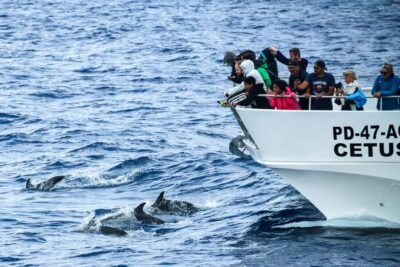
Benagil Caves & Dolphins Watching with Biologist
Read our review →Browse the lists this tour appears in