
Reviewed · TICKETS
Lisboa Story Centre: 1-Day Admission Ticket
Lisbon’s past comes alive here. The Lisboa Story Centre turns the capital’s history into a 60-minute journey with theatrical sets, sound, and multimedia rather than a roomful of dusty labels. I like its clear chronological path, and I especially like the powerful treatment of the 1755 earthquake and the city’s rebuilding. The main caution is that the treatment of modern Lisbon is brief, and the building does not have air conditioning.
The Centre sits in the East Wing of Terreiro do Paço, one of Lisbon’s grandest squares. I see it as a useful first-day stop: it gives you a quick framework for the city before you wander through Baixa, look up at Pombal-era buildings, or try to make sense of Lisbon’s many layers. Families should appreciate the playful approach, though the audio-led format may feel less lively if you prefer a traditional museum.
In This Review
- Key points to know before you go
- Why the Lisboa Story Centre works as an introduction
- Entering Terreiro do Paço and the first five areas
- The 16th-century warehouse and Portugal’s overseas trade
- The 1755 earthquake and All Saints’ Day
- The Marquis of Pombal and the rebuilt city
- The sixth area and the scale model of Lisbon
- Audio guides, pacing, and family appeal
- Location, opening hours, and practical planning
- Who should book this Lisbon attraction?
- Should you book the Lisboa Story Centre?
- FAQ
- How long does the Lisboa Story Centre visit take?
- Is the ticket valid for one day?
- What are the opening hours?
- Where is Lisboa Story Centre located?
- Is an audio guide included?
- Which languages are available for the audio guide?
- Is Lisboa Story Centre wheelchair accessible?
- What historical period does the Centre cover?
- Is there a temporary exhibition?
- Can I cancel my booking?
Key points to know before you go
- A 60-minute history journey: The main experience moves through five chronological areas on the ground floor, followed by a sixth area upstairs.
- The 1755 earthquake gets the strongest treatment: Sound, sets, and sensory effects recreate the disaster and its aftermath.
- A 16th-century warehouse adds atmosphere: You see the goods associated with Portugal’s overseas trade and caravela ships.
- The audio guide comes in nine language options: Choices include Portuguese, English, Spanish, French, Italian, German, Russian, Mandarin, and Japanese.
- The setting is hard to miss: The Centre is at Terreiro do Paço, 78 to 81, in central Lisbon.
- Plan around the heat: It is open from 10:00 to 19:00, with last entry at 18:00, but one recent experience found the lack of air conditioning uncomfortable.
Why the Lisboa Story Centre works as an introduction
Lisbon can be difficult to read at street level. Roman traces, medieval lanes, royal grandeur, maritime wealth, earthquake-era planning, and modern city life all overlap. The Lisboa Story Centre gives you a simple sequence, from early civilizations to the present, so later sightseeing has more meaning.
I like the fact that this is not presented as a lecture. The Centre uses large sets, recorded narration, visual effects, and sensory elements to tell its story. That makes the experience easy to follow even if you know little about Portugal before arriving.
The ticket is valid for one day, but the core visit takes about an hour. That is a useful distinction. You are not buying an all-day museum with dozens of galleries. You are paying for a focused introduction that fits neatly between lunch, a walk around Baixa, and a visit to the riverfront.
The Centre has earned a 4.5 out of 5 rating from 140 ratings, which fits the experience’s main strength: it is simple and effective. It does not try to turn every period into a scholarly study. Instead, it gives you a lively outline and a few memorable scenes.
More Day Trips in Lisbon
- Sintra and Cascais Small-Group Day Trip from Lisbon
★ 5.0 · 7,018 reviews - Three Cities in One Day: Porto, Nazare and Obidos from Lisbon
★ 4.5 · 3,572 reviews - From Lisbon: Day Trip to Porto, Óbidos, and Nazaré
★ 4.5 · 1,311 reviews
Entering Terreiro do Paço and the first five areas
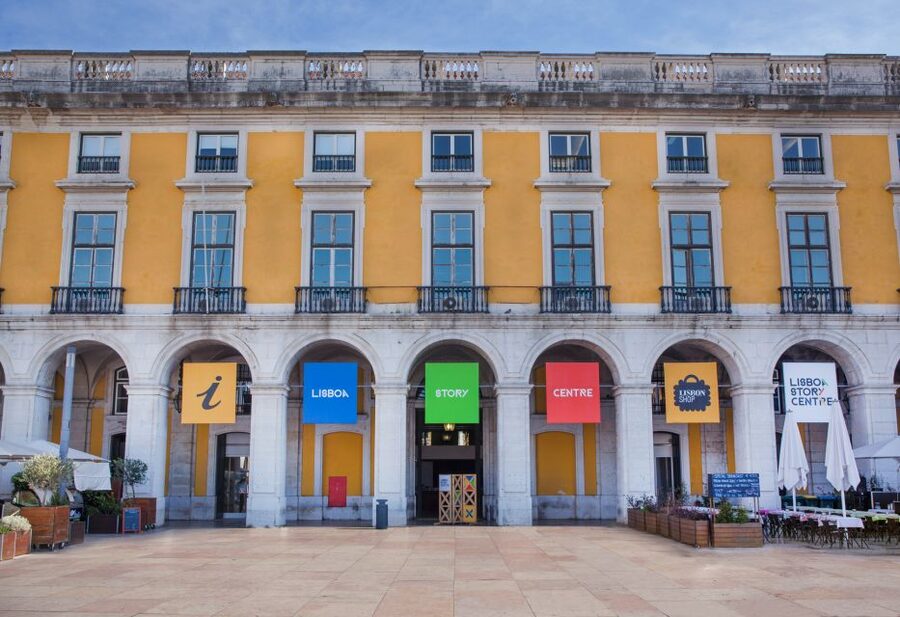
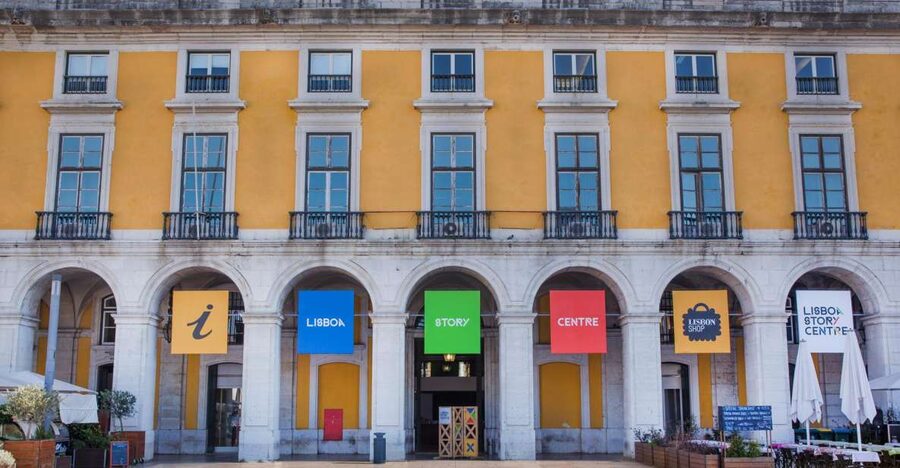
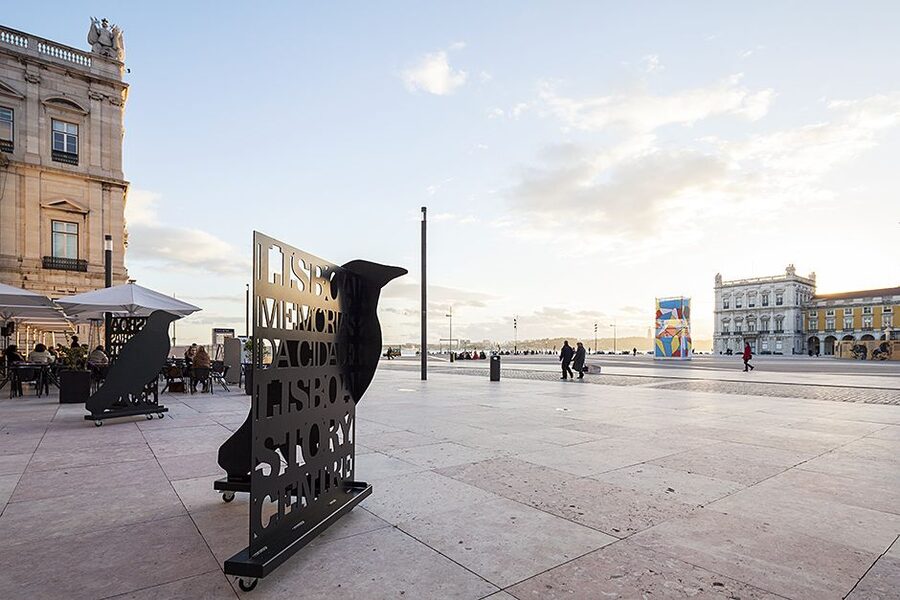
Your visit begins in the East Wing of the renovated Terreiro do Paço. This location matters. The square, also known as Praça do Comércio, is closely tied to Lisbon’s political, commercial, and waterfront life, so you are starting the experience in a place that already carries historical weight.
On the ground floor, five areas are arranged in chronological order. A multilingual recorded storyteller guides you through them. You can select from Portuguese, English, Spanish, French, German, Italian, Russian, Mandarin, or Japanese. Portuguese is also available in adult and child versions.
The audio guide keeps the route moving, but it also means the pace is partly set for you. If you want to linger over one display, you may need to listen while moving through the area. That is not a major problem for most people, but it is worth knowing if you prefer museums where you set every pause.
The early sections cover Lisbon from its earliest civilizations onward. The supplied information does not list every individual culture or date in detail, so you should think of these rooms as a broad opening chapter rather than a specialist study of ancient Portugal.
That broad approach is useful for families and first-time visitors. Children can follow a story with visual references, while adults get enough background to place the city’s later growth in context. If you already know Lisbon’s history well, these opening sections may feel brisk.
The 16th-century warehouse and Portugal’s overseas trade
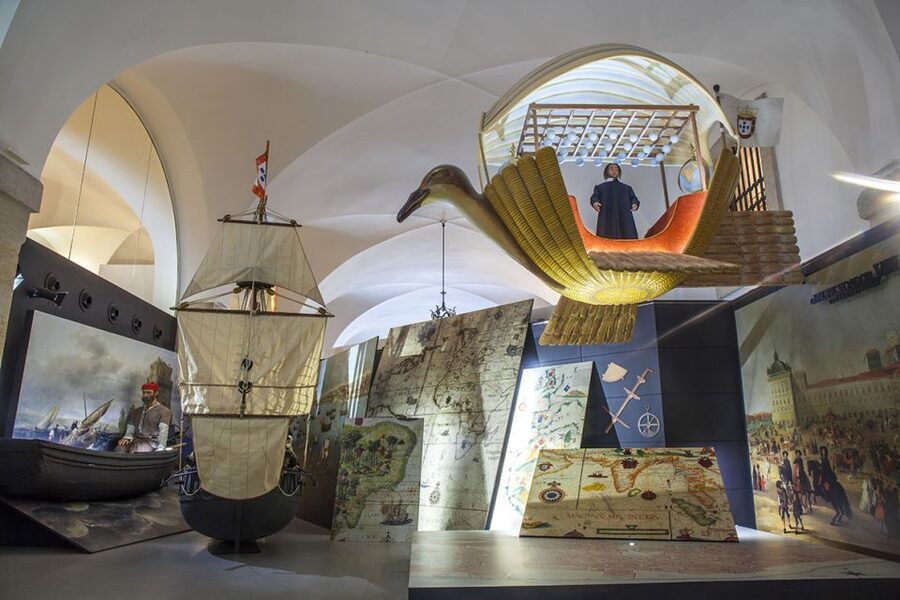
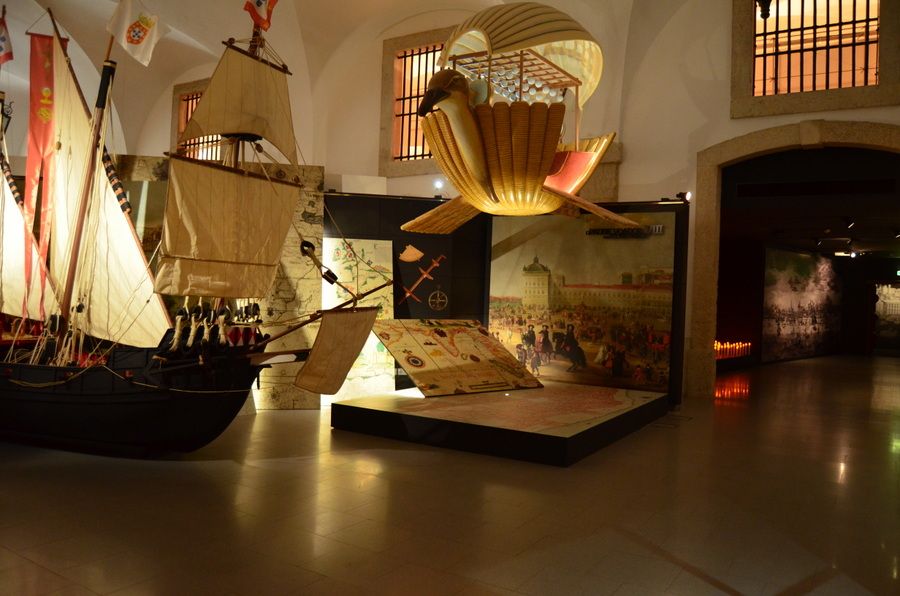
One of the more memorable settings is a recreation of a 16th-century warehouse. Here, the Centre explores the products arriving from the New World on caravela ships. The ships themselves are also displayed.
This section helps explain why Lisbon became so important. Instead of presenting maritime trade as a list of dates, the warehouse setting gives you a sense of goods moving through the city. It connects the riverfront to Portugal’s overseas activity and shows how commerce shaped Lisbon’s fortunes.
I like this part because it gives physical form to an otherwise abstract subject. You see the sort of setting in which trade could be stored and organized, then connect it with the ships that carried goods across the Atlantic.
The display is not a full maritime museum, and you should not expect long technical explanations about shipbuilding. Its purpose is to make one period understandable within a larger story. For a short visit, that is a sensible choice.
The caravela display also gives younger visitors something concrete to focus on. That helps break up the audio narration and keeps the history from becoming one long stream of dates and names.
The 1755 earthquake and All Saints’ Day
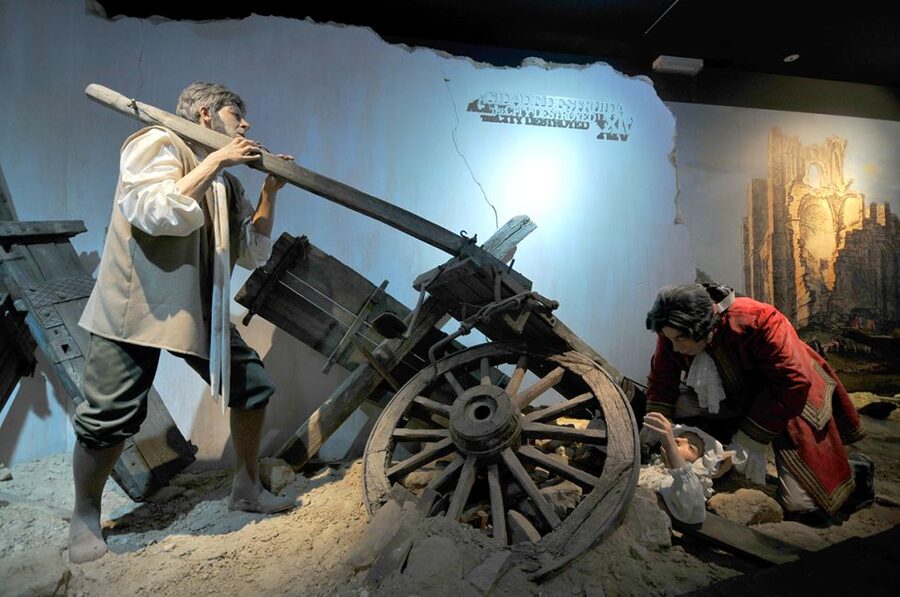
The dramatic center of the experience is the section on the Great Earthquake of 1755. The disaster struck on All Saints’ Day and caused enormous destruction in Lisbon, followed by fires and a tsunami. The Centre presents the event through an immersive combination of sound, scenery, and sensory effects.
This is the point where the presentation becomes most theatrical. You are not simply reading about the earthquake. You are placed inside a recreation designed to show the confusion and damage that followed.
I think this section is valuable because the earthquake explains so much of present-day Lisbon. It helps you understand why central Baixa has a planned street grid, broad squares, and a more uniform appearance than the older Alfama district.
The tone is serious, but the presentation remains accessible. If you are visiting with children, you may want to judge their comfort with loud or dramatic effects. The available information describes the experience as sensory and immersive, but it does not specify the exact intensity of each effect.
This is also the section most likely to stay with you after the visit. Lisbon’s earthquake is often mentioned in guidebooks, yet the Centre gives it a clear human and urban scale. You can connect the tragedy to the buildings and streets you see immediately outside.
More full-day escapes:
- From Lisbon: Fatima Batalha Nazare & Obidos Small Group Day Trip
★ 4.5 · 533 reviews - Arrabida and Sesimbra Small-Group Day Trip from Lisbon with Wine Tasting
★ 5.0 · 494 reviews - Best Sintra Day Trip From Lisbon – Pena, Cabo Da Roca & Cascais
★ 5.0 · 411 reviews - Lisbon: Arrábida and Sesimbra Day Trip with Wine
★ 4.8 · 366 reviews
The Marquis of Pombal and the rebuilt city
After the disaster, the story follows the Marquis of Pombal as he puts forward his plan to rebuild Lisbon. This is an important transition, because the city you explore around Terreiro do Paço owes much to that reconstruction.
The Centre focuses on Pombal’s broad vision and the rebuilding that followed. You are shown how a catastrophe led to a new form of urban planning. The message is not that the earthquake was somehow beneficial, but that Lisbon’s leaders responded with an ambitious plan that changed the capital.
This section gives your later walking tour more purpose. When you stroll through Baixa, you can notice the ordered streets and planned blocks with a better sense of why they look different from Lisbon’s older quarters.
I like the way the experience links a historical event to the city you can see with your own eyes. That is more useful than memorizing a date on its own. The Centre works best when it prepares you to notice details outdoors.
At the same time, this is still a short attraction. It cannot fully explain the politics, engineering, social cost, and long construction process behind the rebuilding. You get the main idea, not a full academic treatment.
The sixth area and the scale model of Lisbon
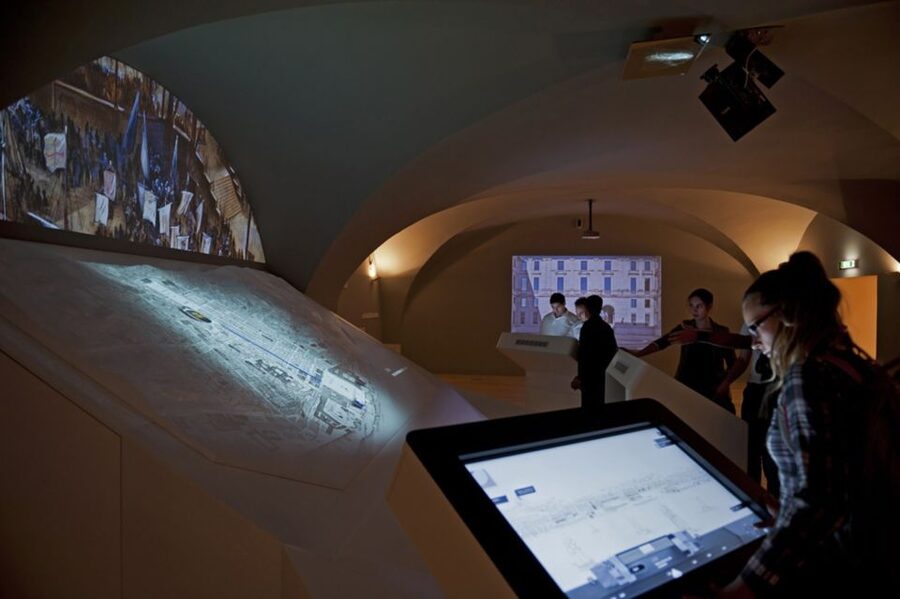
The sixth exhibition area is on the first floor. It contains a virtual scale model of the capital, showing different types of architecture and offering more detail about Lisbon’s development.
This area changes the viewpoint. The ground-floor rooms place you inside selected historical scenes. Upstairs, the model lets you look across the city as a whole. That contrast is useful: first you follow the story emotionally, then you step back and consider Lisbon’s form.
The model also encourages you to discover modern Lisbon. However, one important limitation is that the contemporary period is not treated in great depth. If you want a detailed account of Lisbon after the 20th century, this attraction may leave you wanting more.
That criticism is fair, but it does not weaken the Centre’s main purpose. The experience is strongest as a historical introduction, especially for the early city, maritime period, 1755 disaster, and Pombaline reconstruction.
You also receive access to a temporary exhibition area connected with the Centre’s main themes. The subject can change, so I would not plan a visit around a particular temporary display unless you confirm what is showing before you go.
Audio guides, pacing, and family appeal
The audio guide is included with admission, which makes the visit easier to use for international visitors. The language selection is unusually broad, and the Portuguese version includes both adult and child options.
I like the child version in principle because it recognizes that families need a different pace and tone. The Centre’s sets and multimedia effects already make it more approachable than a conventional historical museum.
The visit is guided rather than free-form. That helps you avoid missing the main scenes, but it can also make the experience feel less flexible. You may find yourself following the narration through each area instead of choosing your own route.
The 60-minute length is another advantage. Lisbon has plenty of sights that can consume half a day without warning. This one gives you a defined block of time, making it easy to fit into a busy schedule.
The main comfort issue is ventilation. One recent assessment specifically found the lack of air conditioning disappointing. Lisbon can be hot, especially in summer, so you may prefer to visit earlier in the day or later in the afternoon rather than during the hottest hours.
Location, opening hours, and practical planning
The address is Terreiro do Paço, 78 to 81, 1100-148 Lisbon. Its central riverfront position makes it convenient to pair with a walk through Praça do Comércio and the Baixa district.
The Centre opens every day from 10:00 to 19:00. Last entry is at 18:00. Because the main visit lasts about an hour, arriving close to closing time gives you little room for delays, so I would avoid leaving it until the final admission slot.
A skip-the-ticket-line option is included with the activity. The exact starting times depend on availability, so check the schedule when you choose your date.
The ticket includes admission and the audio guide. No transportation, meal, or additional attraction is listed, so judge the price against the value of a compact, self-contained history presentation rather than a full-day guided tour.
The activity is wheelchair accessible. That makes it a practical choice for visitors who need step-free access, though you may still want to confirm current on-site arrangements if you have specific mobility requirements.
Free cancellation is available up to 24 hours before the booked time, and you can reserve now while paying later. Those terms are useful if your Lisbon schedule is still shifting.
Who should book this Lisbon attraction?
I would recommend it most strongly to first-time visitors, families, and anyone who wants a quick orientation before sightseeing. It is also useful if the weather is poor or you have a spare hour near Terreiro do Paço.
You will probably get the most from it if you enjoy history presented through images, sound, and staged settings. The format gives you memorable reference points without asking you to read long walls of text.
Families should find the sets and dramatic scenes easier to manage than a formal museum visit. The child audio guide in Portuguese is an added benefit for Portuguese-speaking families.
I would be more cautious if your main interest is contemporary Lisbon. The Centre reaches the present day, but the modern period receives less attention than the earthquake and reconstruction. You may also find the lack of air conditioning uncomfortable in hot weather.
Should you book the Lisboa Story Centre?
Book it if you want Lisbon’s major historical turning points explained in about an hour, with a strong visual treatment of the 1755 earthquake and Pombal’s rebuilding plan. Its central location, broad audio-guide selection, wheelchair access, and family-friendly style add real value.
Skip it if you prefer quiet museums, detailed scholarship, or a long treatment of recent Lisbon. For most first-time visitors, though, the Centre is a useful beginning. Visit early, use the city model to plan what you want to see next, then step into Terreiro do Paço with a clearer idea of how Lisbon became the city around you.
FAQ
How long does the Lisboa Story Centre visit take?
The main historical journey lasts about 60 minutes.
Is the ticket valid for one day?
Yes. The admission ticket is valid for one day.
What are the opening hours?
Lisboa Story Centre is open every day from 10:00 to 19:00. Last entry is at 18:00.
Where is Lisboa Story Centre located?
It is at Terreiro do Paço, 78 to 81, 1100-148 Lisbon, in the East Wing of the renovated square.
Is an audio guide included?
Yes. An audio guide is included with admission.
Which languages are available for the audio guide?
The audio guide is available in Portuguese, English, Spanish, French, Italian, German, Russian, Mandarin, and Japanese. Portuguese has adult and child versions.
Is Lisboa Story Centre wheelchair accessible?
Yes. The attraction is wheelchair accessible.
What historical period does the Centre cover?
The experience covers Lisbon from the earliest civilizations to the present day, with special attention to the 16th-century warehouse period, the 1755 earthquake, and the rebuilding led by the Marquis of Pombal.
Is there a temporary exhibition?
Yes. You also have access to a temporary exhibition area related to the Centre’s main themes.
Can I cancel my booking?
Yes. You can cancel up to 24 hours in advance for a full refund. You can also reserve now and pay later.
Just added around Lisbon
- Tuk tuk tour in Belem area★ 5.0 · 46 reviews
- Lisbon: Private Tour Sintra, Cabo da Roca and Cascais★ 4.9 · 46 reviews
- Private Sintra Tour from Lisbon★ 5.0 · 46 reviews
- Premium Porto Private Day Trip from Lisbon with Local Guide★ 5.0 · 47 reviews
- 4 Hours Tuktuk City Tour in Lisbon★ 5.0 · 47 reviews
- Small Group Pena Palace, Sintra, Regaleira and Cascais★ 5.0 · 47 reviews
- From Lisbon: Tour to Fátima, Batalha, Nazaré and Óbidos★ 4.6 · 47 reviews
- DayTrip from Lisbon to Sintra+Cascais PRIVATE TOUR-small groups★ 5.0 · 47 reviews
Tickets, compared.



Quinta da Regaleira Skip-the-Ticket-Line Entry & Audioguide
Read our review →
Luz Stadium Tour & SL Benfica Museum Ticket w/Scarf
Read our review →
Browse the lists this tour appears in