
Reviewed · DOLPHIN WATCHING
Lisbon: Dolphin Watching with Marine Biologist
Wild dolphins are closer than you think. This three-hour outing from Lisbon combines a fast RIB boat ride with wildlife watching led by marine biologists, so you get more than a quick glimpse of fins beside the boat. You learn how dolphins behave, why they gather near the Tagus and Atlantic, and how to watch them without chasing or stressing them. I especially like the respectful approach to the animals and the excellent views of Lisbon’s waterfront on the way out and back.
I also like that the boat leaves from the city rather than requiring a long transfer to a distant port. The main consideration is the sea itself. A small speedboat can be exciting and comfortable in good conditions, but rough water can make the ride bumpy, and dolphin sightings are never guaranteed, even though the operator reports a 97 percent sighting rate.
In This Review
- Five things to know before you book
- Leaving Lisbon from Doca de Santo Amaro
- Crossing the Tagus in search of marine life
- Watching dolphins without chasing them
- Passing Bugio Lighthouse and the Atlantic coast
- The Cascais search area and marine science
- Returning past Belém’s great monuments
- What the $76 price really buys you
- Who should book this Lisbon boat trip?
- Should you book the SeaEO dolphin tour?
- FAQ
- Where does the dolphin tour depart from?
- How long does the experience last?
- Are dolphin sightings guaranteed?
- What languages are available?
- What is included in the price?
- Who cannot take part?
Five things to know before you book
- Dolphins are wild: Sightings are highly likely, but no crew can promise that animals will appear on a particular morning or afternoon.
- The RIB boat is part of the fun: You travel quickly across the Tagus and open Atlantic in a safe, compact boat, with lifejackets supplied.
- Marine biology is central: The onboard guide explains dolphin species, seabirds, fish, and conservation rather than simply pointing at animals.
- Lisbon’s monuments look different from the water: You pass the Belém Tower, Monument to the Discoveries, Jerónimos Monastery, and Bugio Lighthouse.
- Bring a warm layer: Even on a sunny Lisbon day, wind on the Atlantic can feel surprisingly cold.
- This is not for everyone: Children under five, pregnant women, people with severe back problems, and people with mobility impairments cannot take part.
Leaving Lisbon from Doca de Santo Amaro
The meeting point is SeaEO Tours at Doca de Santo Amaro, Gate 3, beneath the large red bridge in Alcântara. The bridge is the easiest landmark, but allow a little time to find the exact gate. The dock is on the riverside, and it can be reached from central Lisbon by public transport, which is useful if you are not renting a car.
You begin with a safety briefing before boarding. The crew supplies lifejackets and explains how to sit and behave on the boat. This matters because the RIB is built for speed, and the ride can become lively when the water is choppy.
The boat is a rigid inflatable craft, not a large sightseeing vessel with an indoor cabin. That gives you an open view from nearly every seat, and you are close to the water without being packed into a large crowd. The tradeoff is exposure to wind, spray, and movement. Wear practical clothes and shoes, and leave high heels at your hotel.
There is no hotel transfer, food, or water included. Bring your own water and avoid assuming that the boat will feel warm simply because Lisbon is warm. Several people found a jacket essential, including during summer outings.
More Dolphin Watching in Lisbon
- Lisbon: Tagus River Cruise to the Ocean & Dolphin Watching
★ 4.0 · 3,019 reviews - Lisbon: Dolphin Watching with Marine Biologist – Small Group
★ 4.9 · 867 reviews - Lisbon: Dolphin Watching with a Marine Biologist – Ocean Safari
★ 5.0 · 812 reviews
Crossing the Tagus in search of marine life
The first part of the cruise takes you along the Tagus Estuary and toward the Atlantic. This is not dead time. The meeting point of river water and sea water creates conditions that can attract marine life, and dolphins may sometimes appear surprisingly soon after departure.
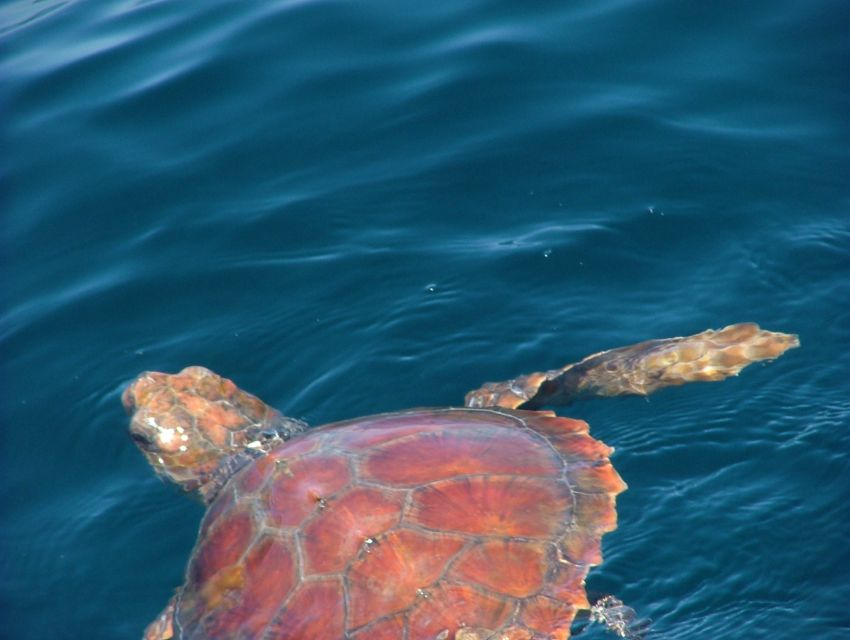
The crew watches the water carefully and explains what you are seeing. Depending on the day, the search may include bottlenose dolphins, common dolphins, harbour porpoises, seabirds, sunfish, jellyfish, sharks, or sea turtles. The description also includes whale watching, but you should treat every species as a possibility rather than a promise.
That uncertainty is part of the deal. Some departures locate dolphins within minutes. On another outing, the search took around two and a half hours before the group found them. If dolphins appear late, much of the three-hour trip may be spent scanning open water, so you need to enjoy the boat ride and the natural setting even without a guaranteed encounter.
The guides help make that search worthwhile. Past departures have included guides called Sid, Bart, Sara, Cidonio, and Lunor. Their languages include Portuguese, English, French, Italian, and Spanish. The strongest part of the experience is not simply their ability to find animals. It is the way they explain behavior and keep the group interested during the quieter stretches.
Watching dolphins without chasing them
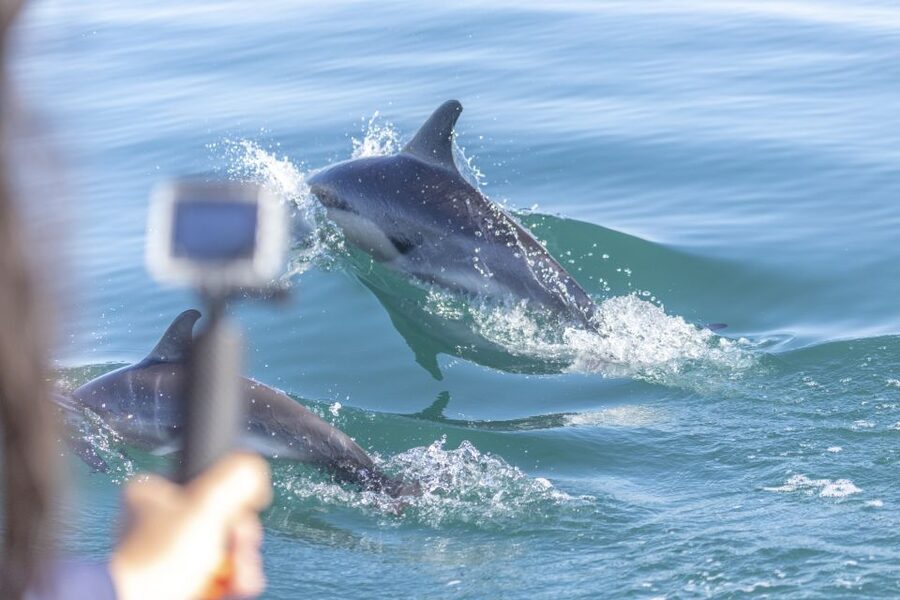
When a pod is located, the boat does not simply race straight through it. The crew keeps a respectful distance and allows the dolphins to decide how close they want to come. This is one of the most important reasons to choose a marine biology led trip rather than a purely recreational speedboat ride.
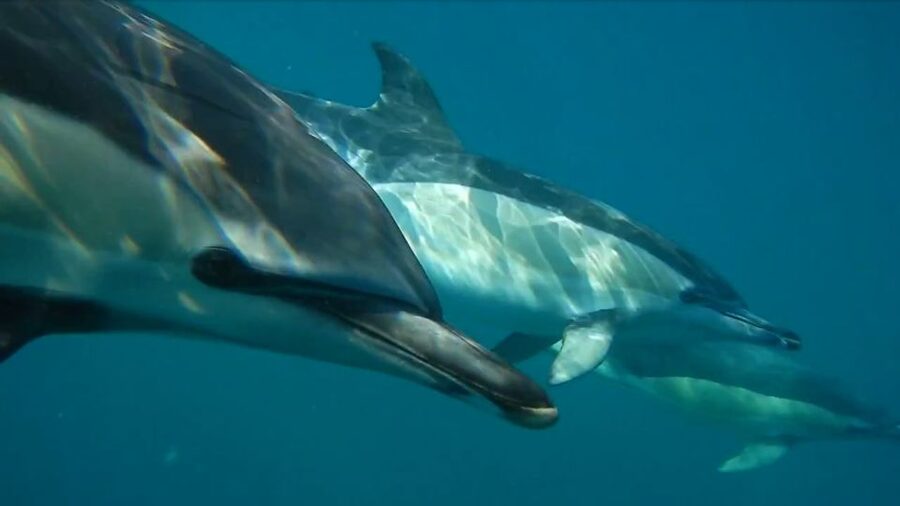
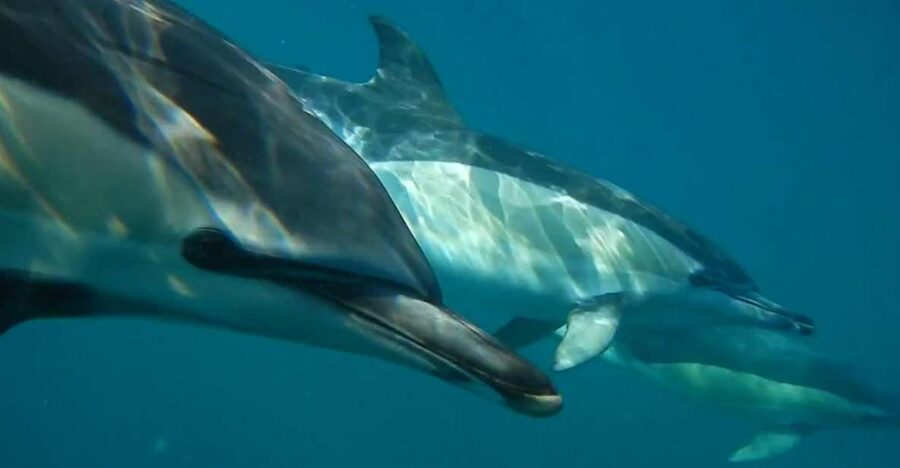
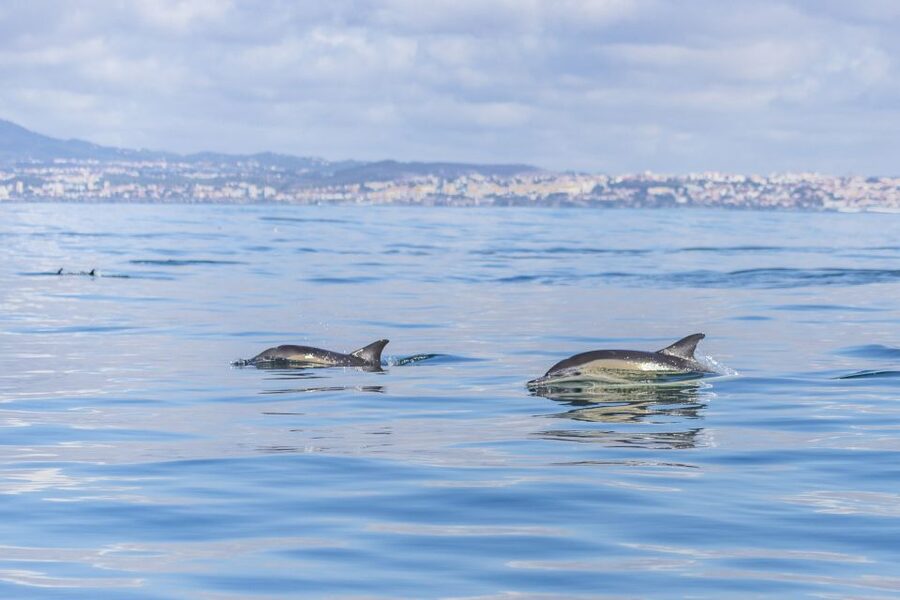
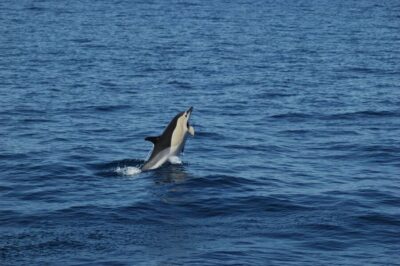
Dolphins sometimes swim alongside the RIB, pass beneath it, or approach out of curiosity. You might see young animals near the adults, observe jumping, or watch the pod interact with fish. The guides explain what the dolphins are doing instead of turning the sighting into a noisy chase.
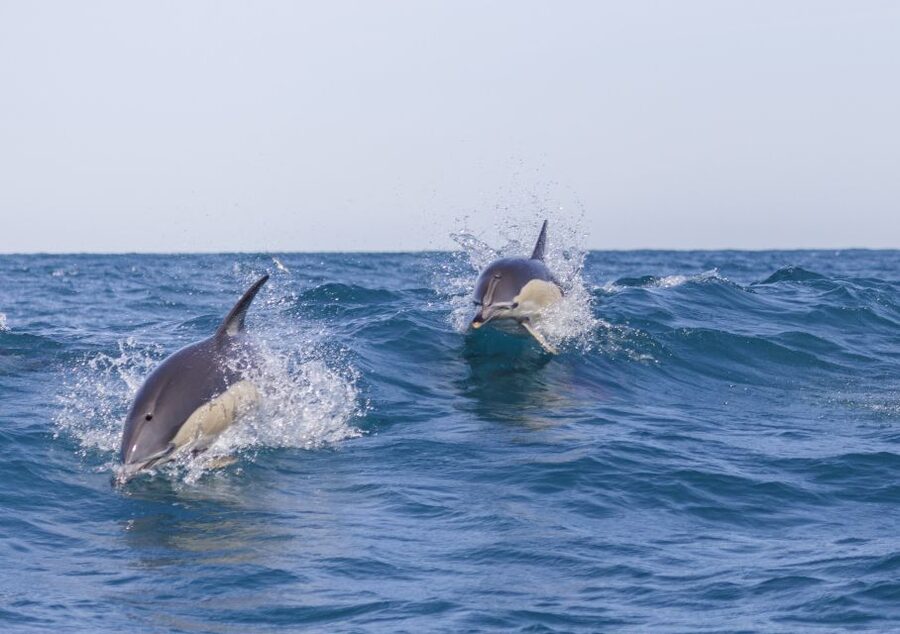
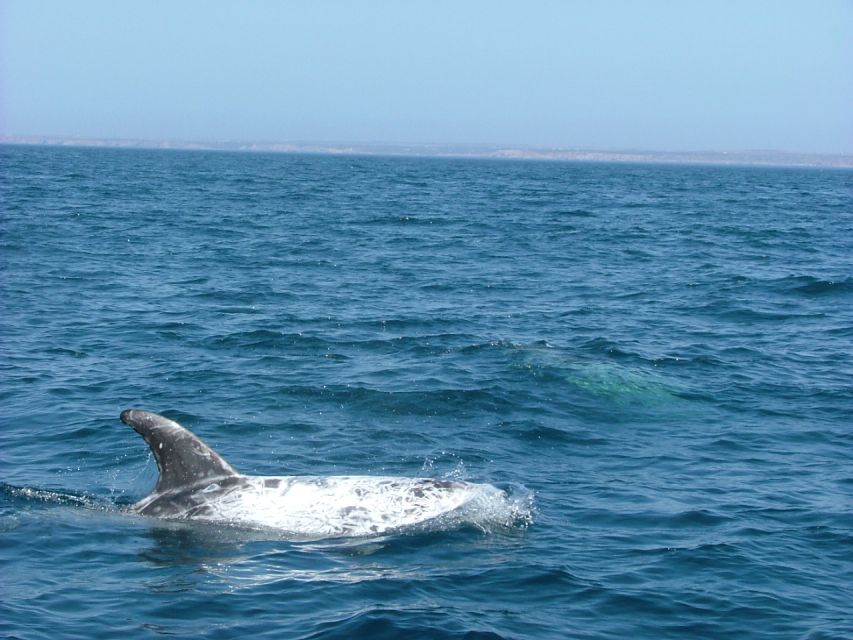
Several species have been seen on individual trips, including bottlenose dolphins, common dolphins, and harbour porpoises. Sunfish and a wide range of seabirds have also appeared. One especially fortunate outing included orcas, including a calf, but this is an exceptional sighting and should not shape your expectations.
The viewing conditions depend on luck, light, wind, and animal behavior. A clear, calm day gives you a better chance of scanning the sea and enjoying a steady ride, but wild animals do not follow a schedule. Keep your camera ready, but do not spend the whole outing looking through a screen. Dolphins can surface in a different place by the time you frame the shot.
You are not allowed to feed or touch marine life. Smoking, alcohol, drugs, and littering are also prohibited. These rules are sensible, and the crew’s conservation message gives the trip a stronger purpose than a simple photo stop.
Passing Bugio Lighthouse and the Atlantic coast
The route includes Fort of São Lourenço do Bugio, the round fortress and lighthouse positioned at the mouth of the Tagus. From the boat, it becomes a striking marker between Lisbon’s river and the open ocean.
This section gives you a clear sense of how quickly the city changes. One moment you are looking back toward Lisbon’s waterfront. Soon you are surrounded by open water, with the coastline stretching toward Cascais. The fast boat lets the crew reach wider search areas during the limited tour time, which is a real advantage for wildlife watching.
The speed also adds a light adventure element. The ride is not just transport to the dolphins. For many people, the journey itself becomes one of the best parts, especially when the sea is lively but conditions remain safe.
Still, this is where you should be honest about your comfort level. The boat is small, and a rough sea can be bumpy. The activity is not suitable for people with severe back problems, and it is also not suitable for people with mobility impairments or wheelchair users. If you are prone to seasickness, eat a good breakfast without milk, cream, or yogurt, as advised by the operator.
More dolphin trips:
- Setúbal: Dolphin Watching Tour
★ 4.8 · 801 reviews - Setúbal: Dolphin Watching Boat Tour
★ 4.8 · 423 reviews - Sesimbra: Arrábida Dolphin and Whale Watching tour with biologist
★ 5.0 · 248 reviews - Observation of Dolphins and Whales with Marine Biologist in Arrábida
★ 5.0 · 224 reviews
The Cascais search area and marine science
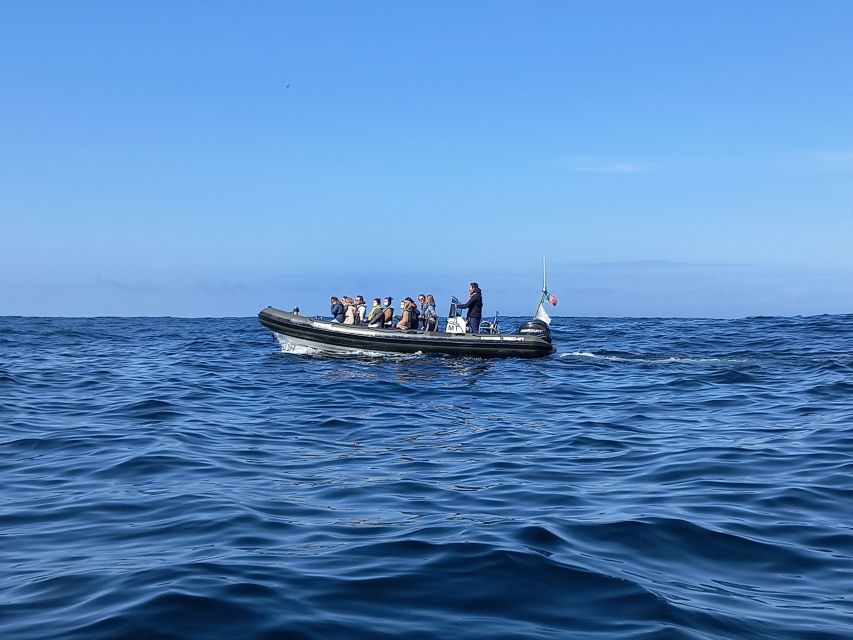
The boat continues toward the Cascais area, identified in the route information by the coordinates JJ85+VG Cascais. This is the main wildlife search section, where the crew may spend much of the trip looking for dolphins and other marine species.
A marine biologist gives context that you would not get from a simple boat cruise. You learn about different dolphin species, seabirds, feeding behavior, and the wider health of the sea. The crew may also explain why dolphins are found so close to Lisbon and how the Tagus Estuary connects with the Atlantic environment.
I value this educational side because it changes the way you watch. Instead of seeing only a burst of movement, you start looking for patterns: a group surfacing together, an animal riding the wake, or dolphins approaching the boat on their own terms.
The experience also has a useful conservation message. The crew’s stated aim is to observe cetaceans in their natural habitat through certified and licensed boat companies. That does not make the animals predictable, but it does show that the trip is designed around responsible observation rather than staged contact.
Do not expect a guaranteed swimming stop, a feeding session, or any chance to touch the animals. Those omissions are strengths here. The goal is to see wildlife behaving naturally, even if the encounter is brief.
Returning past Belém’s great monuments
Before returning to Doca de Santo Amaro, the boat passes Lisbon’s major riverside sights. You see the Belém Tower, the Monument to the Discoveries, and the Jerónimos Monastery from the water.
Belém Tower is given a short five-minute visit in the route, but this is not a full interior tour. Think of it as a scenic pass and a chance to view one of Lisbon’s best-known monuments from a different angle. The Monument to the Discoveries looks especially fitting from the river, since its design celebrates Portugal’s seafaring past.
The river view gives you a pleasant change of pace after the open-ocean search. You can take photographs, listen to local history, and watch Lisbon’s waterfront slide past as the boat heads back to the dock.
The return route also helps justify the three-hour duration. Even if wildlife is scarce, you are not simply spending the entire time staring at empty water. You get a boat trip through several distinct settings: city waterfront, estuary, lighthouse, open ocean, Cascais coast, and Belém.
What the $76 price really buys you
At $76 per person, this is not the cheapest way to get on the water in Lisbon. I think the price is reasonable if you care about wildlife, because it includes a marine biologist, boat crew, fuel, insurance, taxes, and lifejackets.
A cheaper harbor cruise may give you a longer view of the city, but it will not usually offer the same speed or a specialist focused on dolphin behavior. Here, you are paying for access to a wider search area and for expert interpretation when animals appear.
The value depends heavily on your expectations. If you want a guaranteed close-up dolphin encounter, no wild-animal tour can offer that at any price. If you are happy with a fast coastal trip, open-water scenery, and the chance to see several species, the price feels more justified.
A strong sighting can make the outing memorable for years. But even an unsuccessful search can still provide a thrilling boat ride and fine views, especially when the crew offers a different date after a weather cancellation or, in some cases, a chance to return after an outing without sightings. Confirm the exact arrangement with the operator if this becomes relevant to you.
Who should book this Lisbon boat trip?
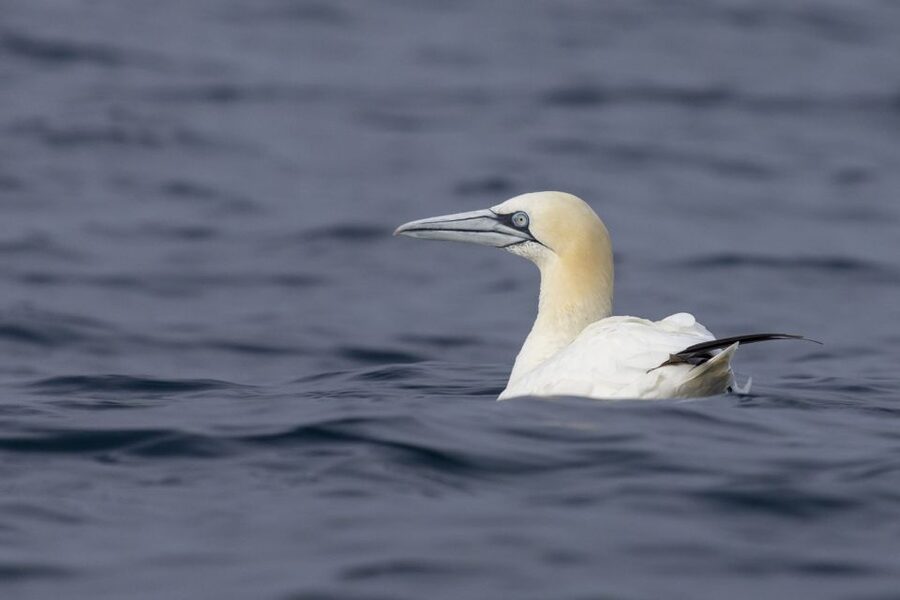
I would recommend it most strongly to adults, older children over five, couples, families with mobile children, and anyone who enjoys nature more than polished entertainment. You should be comfortable sitting in a small open boat for up to three hours and willing to accept a little wind and movement.
It also suits you if you want an activity outside Lisbon’s churches and tiled streets. The tour gives you a fresh view of the city and takes you into a marine setting without requiring a full-day excursion from Lisbon.
You may want to skip it if you get severe seasickness, have back trouble, are pregnant, or need wheelchair access. It is also a poor choice if your schedule is so tight that you cannot tolerate a wildlife trip without sightings.
For photographers, bring a camera but protect it from spray. Sunscreen is useful even on a cool day, and comfortable shoes will make boarding easier. A jacket is the most repeated practical tip, and it is worth taking seriously.
The operator offers free cancellation up to 24 hours before departure and allows you to reserve now and pay later. Starting times vary, so check availability for your preferred date. If weather makes the sea unsafe, the activity may be moved to another date or refunded.
Should you book the SeaEO dolphin tour?
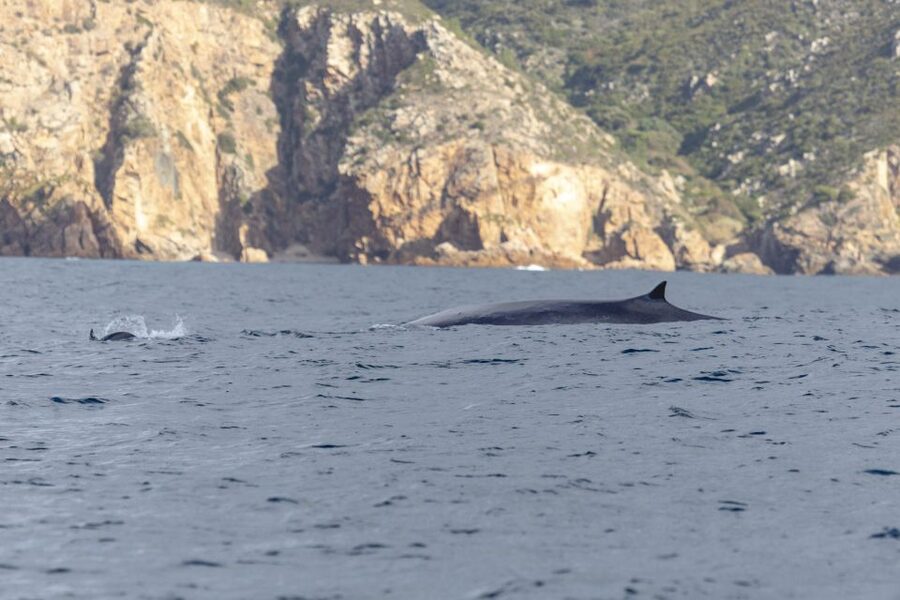
Book it if you want a respectful, marine biology focused wildlife trip with a proper open-water boat ride and Lisbon scenery included. The combination is unusually appealing: you can leave from the city, reach the Atlantic quickly, learn from a specialist, and possibly see dolphins, porpoises, sunfish, seabirds, or something even rarer.
I would not book it solely because you want a guaranteed dolphin photograph. Wild animals set the schedule. Book it because you like the idea of searching, learning, and enjoying the ocean, with a very good chance of a memorable sighting.
For most people who can handle the boat, $76 is a fair price for three hours of wildlife watching, coastal scenery, and expert guidance. Pack water, sunscreen, and a warm jacket, then keep your eyes on the sea.
FAQ
Where does the dolphin tour depart from?
It departs from SeaEO Tours at Doca de Santo Amaro, Gate 3, in the Alcântara area. The dock is beneath the large red bridge, which is the main landmark.
How long does the experience last?
The tour lasts three hours. Starting times vary, so you need to check availability for your chosen date.
Are dolphin sightings guaranteed?
No. Dolphins are wild animals, so sightings cannot be guaranteed. The local operator reports a 97 percent chance of seeing dolphins.
What languages are available?
The live guides speak Portuguese, English, French, Italian, and Spanish.
What is included in the price?
The price includes a marine biologist guide, crew members, lifejackets, insurance, taxes, and fuel. Hotel transfers, food, and water are not included.
Who cannot take part?
The activity is not suitable for children under five, pregnant women, people with severe back problems, people with mobility impairments, or wheelchair users.
Just added around Lisbon
- Central Lisbon E-Bike Tour★ 5.0 · 168 reviews
- From Lisbon: Sintra and Cascais Full-Day Private Tour★ 4.9 · 168 reviews
- Experience the Queen of Fado at Ah Amália Living Experience★ 5.0 · 171 reviews
- Lisbon – Vinho Verde Wine Premium Boat Experience★ 5.0 · 171 reviews
- Lisbon: 2-Hour Sunset Sailing Tour on Luxury Sailing Yacht★ 4.9 · 171 reviews
- From Lisbon: Small Group Fátima & Little Shepherds Town Tour★ 4.8 · 171 reviews
- Horse Riding on the Beach★ 4.5 · 171 reviews
- Óbidos: Medieval Tales & Secrets Spots Guided Walking Tour★ 4.9 · 171 reviews
Dolphin Watching, compared.

Benagil Caves & Dolphin Watching Speed Boat Tour
Read our review →

Dolphins Search and Benagil Caves from Albufeira
Read our review →
Benagil Caves & Dolphins Watching with Biologist
Read our review →Browse the lists this tour appears in