
Reviewed · TICKETS
Lisbon: National Tile Museum Entry Ticket
Tiles tell Portugal’s story. Lisbon’s National Tile Museum brings that story together in a former convent, where 15th-century azulejos share space with ceramics, porcelain, painted chapels, and a remarkable city panorama. At $11 per person, this is an easy cultural stop with much more to see than its name suggests.
I like the clear chronological route, which lets you follow Portuguese tile-making from basic materials and techniques to ornate modern work. I also like the building itself: the Madre Deus convent, church, cloister, and chapels are as important to the visit as the tiles. The main drawback is the split opening schedule, from 10:00 am to 1:00 pm and 2:00 pm to 6:00 pm, which can interrupt your plans.
In This Review
- Key points to know before you go
- Why Lisbon’s tile museum deserves your time
- Start with the materials and methods
- Follow the collection from the 15th century onward
- The former convent is half the experience
- Do not miss the Lisbon city display
- How long to allow, and when to visit
- Is the $11 ticket good value?
- Practical comfort and access
- Who will enjoy this museum most?
- Should you book the National Tile Museum ticket?
- FAQ
- Where is the National Tile Museum located?
- What does the ticket include?
- How much does admission cost?
- How long is the ticket valid?
- Is this a skip-the-line ticket?
- What are the museum’s opening hours?
- Which days is the museum closed?
- Is the museum wheelchair accessible?
- What should I bring?
Key points to know before you go
- The collection covers more than five centuries, beginning in the second half of the 15th century and continuing to the present.
- The former Madre Deus Convent is part of the attraction, with a decorated church, mannerist cloister, sacristy, high choir, and Chapel of Saint Anthony.
- Allow about 90 minutes to two hours if you want time for the main collection, church spaces, gardens, and café.
- The chronological display begins with tile-making materials and methods, giving useful context before the decorative pieces take over.
- A large Lisbon city display is a highlight, especially if you want to see how tiles helped shape the look of the capital.
- The $11 admission is good value, though the ticket is non-refundable and is not officially advertised as skip-the-line access.
Why Lisbon’s tile museum deserves your time
Lisbon is full of azulejos. You see them on façades, in railway stations, inside churches, and on ordinary residential buildings. It is easy to admire the patterns without understanding how the art developed. This museum gives you that missing background.
The National Tile Museum was founded in 1965 and became a national museum in 1980. Its home is the former Convent of Madre Deus, founded by Queen D. Leonor in 1509. That setting changes the experience. You are not walking through a plain modern gallery. You move through old religious rooms where tile panels, carved wood, ceiling paintings, and architectural detail work together.
I especially like this combination because it prevents the collection from feeling like a long row of decorative squares. You see how tiles functioned in real Portuguese buildings. They cover walls, frame paintings, guide the eye through chapels, and turn large architectural surfaces into scenes.
The museum is also useful for first-time visitors to Portugal. If you are curious about why tiles appear everywhere in Lisbon, this is one of the clearest places to begin.
More Museum Tours in Lisbon
- Lisbon: Luz Stadium Tour & SL Benfica Museum Ticket w/Scarf
★ 4.7 · 3,264 reviews - Lisbon: Banksy Museum Permanent Exhibition Entry Ticket
★ 4.7 · 506 reviews - Lisbon: Belem, Jeronimos Monastery, and Coach Museum Tour
★ 4.8 · 478 reviews
Start with the materials and methods
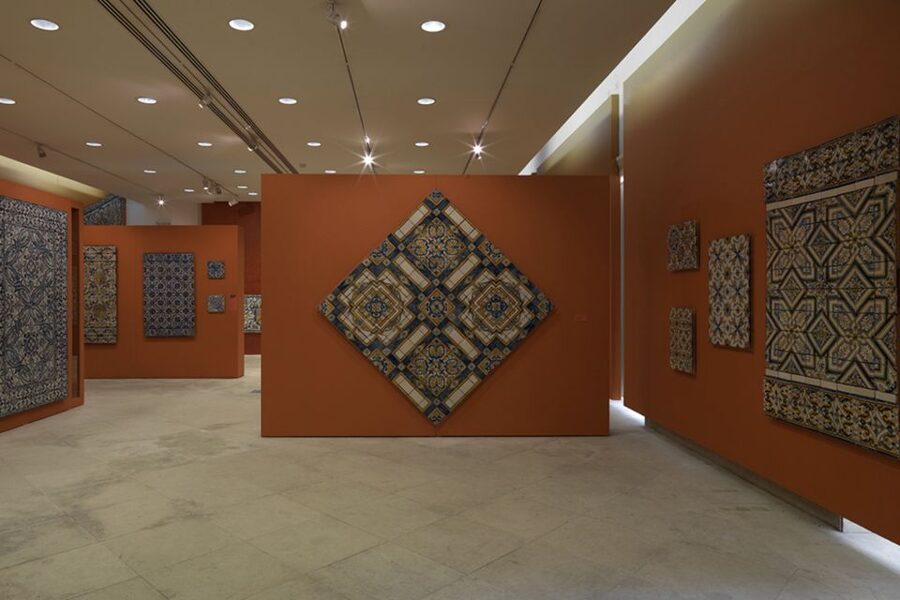
The permanent exhibition opens with an introduction to the materials and techniques used to make tiles. This is a smart choice. Instead of asking you to admire objects without context, the museum first explains what goes into the finished surface.
You can expect to learn about the basic process behind Portuguese tile work before following the collection through time. The method matters because changes in color, finish, design, and production help explain the different periods you see later.
This opening area may be less immediately dramatic than the church or the large decorative panels. Still, I would not hurry through it. A few minutes here makes the later rooms easier to understand, especially when you are comparing early examples with more elaborate work from later centuries.
The exhibition includes more than decorative wall tiles. Ceramics, porcelain, and faience from the 17th through the 21st centuries widen the story. That makes the museum a better choice for anyone interested in Portuguese applied art, not just azulejos.
Follow the collection from the 15th century onward
After the introductory section, the route follows a chronological order. This gives your visit a natural shape, with each period building on what came before.
The earliest works date from the second half of the 15th century. These pieces provide a starting point for Portuguese tile traditions and show that the art was developing long before the familiar blue-and-white scenes associated with Lisbon.
As you move forward, the displays reveal changing styles and methods. The exact appeal will depend on your taste. Some people will focus on color and pattern, while others will enjoy tracing how Portuguese artists and makers handled historical subjects, religious scenes, and decorative designs.
The chronological arrangement is particularly helpful if you are visiting with children or teenagers. You can turn the route into a simple visual exercise: notice how the designs change, how the colors develop, and how tile work moves from individual pieces to large scenes.
The explanations connected with the different monarchies are also easy to follow. They help place the collection within Portugal’s political timeline without turning the visit into a difficult history lesson.
One limitation is that not every tile piece has a great deal of detail beside it. If you want precise information about each object, consider using the audio tour. The audio option requires an app and your own headphones, so bring those if you plan to use it.
The former convent is half the experience
The museum’s setting deserves your full attention. The Convent of Madre Deus went through several building campaigns, and its rooms reflect those changes.
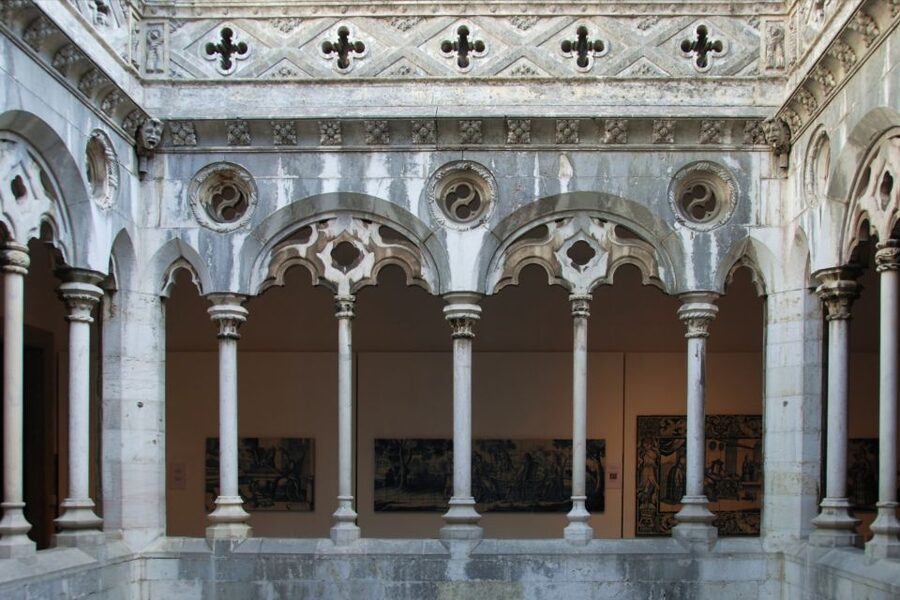
The 16th-century mannerist cloister is one of the quieter pleasures of the visit. Its architecture gives you a pause between gallery spaces and creates a strong contrast with the detailed tile panels inside. Take a moment to look beyond the obvious displays. The building’s proportions, openings, and decorative features help explain why the museum feels more like a historic complex than a standard collection.
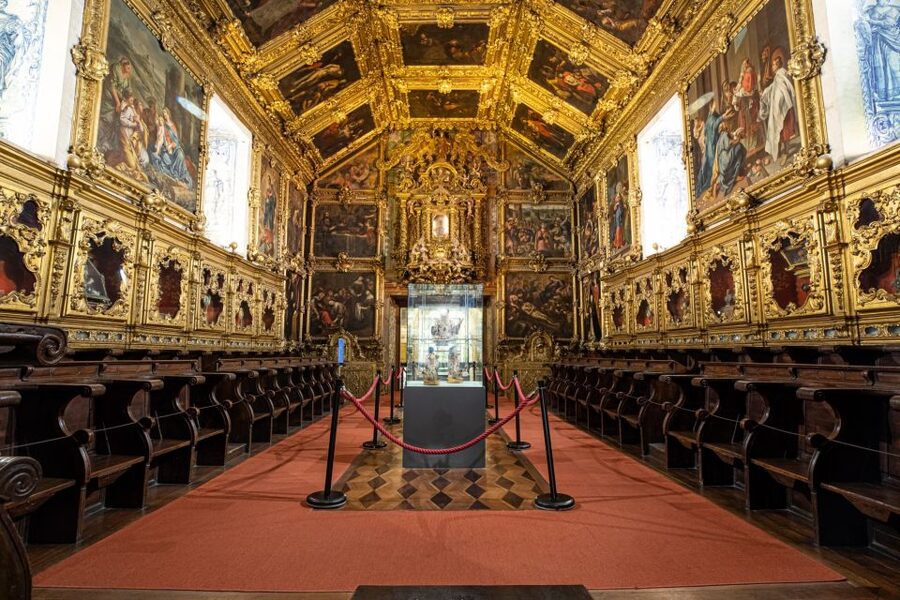
The church is another major stop. It contains notable groups of paintings and tiles, so you are seeing several art forms at once. The setting is atmospheric without needing much explanation. The tiles are not simply mounted on a wall for inspection. They belong to a space designed for worship and ceremony.
The sacristy includes a Brazilian wood display cabinet and carved wood frames holding paintings. These details add a different material and texture to the visit. If you focus only on the tile panels, you could easily miss them.
The high choir has lavish carved giltwood decoration. It is one of the places where the museum’s religious setting becomes especially clear. The scale and ornament help you understand how much visual work could be concentrated in a convent complex.
The Chapel of Saint Anthony adds an 18th-century Baroque room with decoration that is quite different from the earlier spaces. It also contains a significant number of canvases by André Gonçalves. This chapel is a good reminder that the museum is not only about tile-making. It is also a collection of Portuguese religious art in historic surroundings.
More galleries and collections:
- Lisbon: MAAT Gallery and MAAT Central Entry Tickets
★ 4.1 · 422 reviews - Lisbon: 3D Fun Art Museum Admission Ticket
★ 4.6 · 401 reviews - Lisbon SL Benfica Stadium & Museum Tour with Scarf
★ 4.5 · 327 reviews - Lisbon: National Tile Museum E-Ticket & Audio Guide
★ 4.3 · 121 reviews
Do not miss the Lisbon city display
One of the strongest moments comes near the top of the museum, where a large Lisbon city display gives you a different way to look at the capital.
This section helps connect the museum to the streets outside. After seeing tile panels in controlled rooms, you can think about how tile traditions shaped Lisbon’s public and private buildings. It gives the collection a sense of place rather than leaving it as a series of isolated objects.
I would save enough energy for this display instead of treating the final rooms as an afterthought. The chronological route can make you feel that you have already seen the main story, but the city view brings the subject back to Lisbon itself.
The museum also has gardens, which provide a useful break. On a warm day, the indoor rooms can feel uncomfortable because ventilation is limited in parts of the building. The garden is a welcome place to slow down before leaving.
How long to allow, and when to visit
The ticket is valid for one day, with availability and starting times shown during booking. The museum is open Tuesday through Sunday from 10:00 am to 1:00 pm, then from 2:00 pm to 6:00 pm. Last entry is at 5:30 pm.
That midday closure matters. You cannot simply arrive at 1:15 pm and continue into the afternoon. Plan your visit for the morning or after 2:00 pm, and avoid arriving near closing if you want to see the convent rooms at a relaxed pace.
For most people, 90 minutes is enough for a focused visit. I would allow closer to two hours if you want to read the introductory material, study the chronological displays, visit the church and chapels, see the Lisbon city display, and stop at the café.
The museum is closed on January 1, Easter Sunday, May 1, June 13, and December 25. Check the date carefully before you buy, since the admission is non-refundable.
Is the $11 ticket good value?
At $11, the admission offers solid value for Lisbon. You get access to a major national collection, a historic convent, several decorated religious spaces, and gardens. It is not a five-minute photo stop. The building alone gives the ticket more weight than a simple gallery admission.
The value is strongest if you enjoy art, architecture, religious interiors, or the story behind Portuguese city design. It is also a good rainy-day choice, though parts of the museum may feel warm on hot days.
The ticket does not include a guide or a stated skip-the-line benefit. The official information says it is not a skip-the-line ticket, so you should not buy it expecting guaranteed priority entry. Some booking arrangements may appear to speed up arrival, but I would treat that as a possibility rather than a promise.
Buying ahead can still be useful because it gives you a planned admission and may help you avoid uncertainty at the entrance. You enter through the main entrance and show your ticket on arrival.
The café adds to the value of the stop. It is described as a reasonable place for a break, with garden seating. It may be busy, particularly around lunchtime, so you could eat before entering if you want to avoid waiting. The museum shop is another expected stop, but the café and garden are more useful if you need a pause.
Practical comfort and access
Wear comfortable shoes. The museum occupies a historic convent, and you will spend your time walking between rooms, galleries, and religious spaces.
Bring water, particularly in warm weather. Some indoor areas have limited ventilation, so a light, comfortable outfit is sensible. A camera is also worth bringing, provided you follow any museum rules about photography.
The museum is wheelchair accessible. That is important in a historic building, although the supplied information does not specify which routes or rooms may have particular access arrangements. If you need detailed access information, confirm it before your visit.
Bring a passport or ID card, as these are listed among the items to have with you. The activity ends back at the museum entrance area, so there is no separate tour drop-off or transport arrangement to manage.
Who will enjoy this museum most?
I would recommend it to anyone who has noticed Lisbon’s tiles but wants to understand them better. You do not need to be an art specialist. The chronological route and introductory section make the collection approachable.
It also suits:
- Art and architecture lovers who want more than a quick church visit
- Families with older children or teenagers
- Visitors looking for an indoor activity on a wet day
- People who enjoy historic buildings as much as formal museum displays
- Anyone with an interest in Portuguese religious art and decorative design
It may be less appealing if you want a fast, highly interactive attraction or a short stop close to Lisbon’s main central sights. The museum rewards patience, and its split hours require planning.
The audio tour can help if you prefer detailed explanations. Remember that it requires an app and your own headphones. Without it, you can still follow the main route, but some individual pieces may have limited information beside them.
Should you book the National Tile Museum ticket?
Yes, if you want a calm, affordable cultural visit with real architectural character. The combination of early tile work, later ceramics, a decorated church, cloisters, chapels, gardens, and the Lisbon city display gives you far more than the name tile museum suggests.
Book it if you can spare 90 minutes to two hours and are willing to plan around the midday closure. I would choose an early morning or mid-afternoon entry, avoid the final half hour, and keep time for the church and city display.
Skip it only if your Lisbon schedule is already packed with sights that matter more to you, or if you are looking for a quick attraction with guaranteed priority entry. For most visitors interested in Portugal’s art and buildings, $11 is a sensible use of both time and money.
FAQ
Where is the National Tile Museum located?
The museum is in the Lisbon District of Portugal, inside the former Convent of Madre Deus.
What does the ticket include?
The ticket includes entry to the National Tile Museum.
How much does admission cost?
The listed price is $11 per person.
How long is the ticket valid?
The ticket is valid for one day. You should check availability for the starting times offered when booking.
Is this a skip-the-line ticket?
No. The activity information specifically says that this is not a skip-the-line entry ticket.
What are the museum’s opening hours?
The museum is open Tuesday through Sunday from 10:00 am to 1:00 pm and from 2:00 pm to 6:00 pm. Last entry is at 5:30 pm.
Which days is the museum closed?
It is closed on January 1, Easter Sunday, May 1, June 13, and December 25.
Is the museum wheelchair accessible?
Yes, the activity information states that the museum is wheelchair accessible.
What should I bring?
Bring a passport or ID card, comfortable shoes, a camera, water, and comfortable clothing. If you plan to use the audio tour, bring your own headphones, since the audio option requires an app and personal headphones.
Just added around Lisbon
- Central Lisbon E-Bike Tour★ 5.0 · 168 reviews
- From Lisbon: Sintra and Cascais Full-Day Private Tour★ 4.9 · 168 reviews
- Experience the Queen of Fado at Ah Amália Living Experience★ 5.0 · 171 reviews
- Lisbon – Vinho Verde Wine Premium Boat Experience★ 5.0 · 171 reviews
- Lisbon: 2-Hour Sunset Sailing Tour on Luxury Sailing Yacht★ 4.9 · 171 reviews
- From Lisbon: Small Group Fátima & Little Shepherds Town Tour★ 4.8 · 171 reviews
- Horse Riding on the Beach★ 4.5 · 171 reviews
- Óbidos: Medieval Tales & Secrets Spots Guided Walking Tour★ 4.9 · 171 reviews
Tickets, compared.





Quinta da Regaleira Skip-the-Ticket-Line Entry & Audioguide
Read our review →
Luz Stadium Tour & SL Benfica Museum Ticket w/Scarf
Read our review →
Browse the lists this tour appears in