
Reviewed · AZORES TOURS
Pico Mountain Climb: Portugal’s Highest Point – 2351 meters
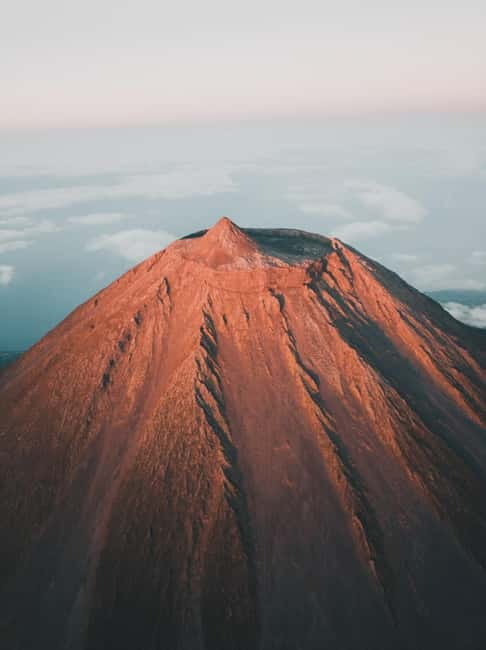
Portugal gets serious at the summit. This 7-hour climb to Piquinho takes you up Pico Mountain to 2,351 meters, the highest point in the country, across steep volcanic rock and an active volcanic cone. I like the clear goal: you know exactly what you are working toward, and the views from the top can stretch across several Azorean islands on a clear day.
I also like the practical support, including walking sticks, accident insurance, photos and video, and guides who stay with the group. Guides Isabel and Raisa receive especially warm praise for their encouragement, humor, mountain knowledge, and care with different hiking abilities. The main drawback is plain: this is a hard climb, and the descent can feel tougher than the ascent. If your fitness is low, this is not the right mountain introduction.
In This Review
- Key Points To Know Before You Climb
- The Mountain House Start Sets the Tone
- The First Viewpoint Gives You a Breather
- Two Hours Through the Mount Pico Natural Reserve
- The Quiet Break Called the Secret Stop
- The Picnic Stop Near the Upper Mountain
- The Volcano Crater and Lava Cone
- Piquinho at 2,351 Meters
- The Descent Is Not an Easy Afterthought
- What the Guides Add to the Day
- Is $90 Good Value?
- Who Should Book This Pico Mountain Climb?
- Booking Flexibility and Practical Details
- Should You Book It?
- FAQ
- Where does the Pico Mountain climb start?
- Where does the activity finish?
- How long does the climb take?
- How high is the summit?
- How long is the hiking route?
- What kind of terrain should I expect?
- Are walking sticks provided?
- Is food included?
- What languages do the guides speak?
- Who should not take this activity?
Key Points To Know Before You Climb
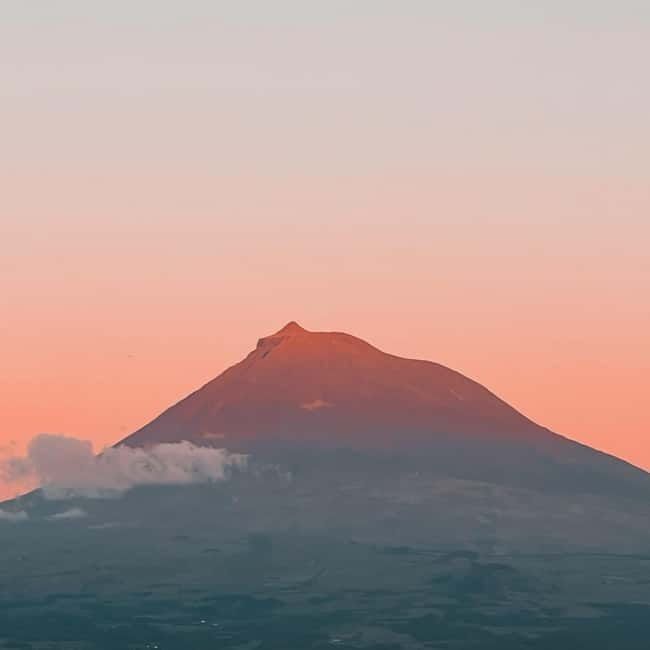
- The summit reaches 2,351 meters: You will stand at Piquinho, Portugal’s highest point, after climbing Pico Mountain.
- The trail is 8 kilometers: The route follows volcanic rock with an average slope of about 30 percent.
- The climb takes around seven hours: Expect a full day of hiking, rest stops, a summit break, and a return to Casa da Montanha.
- The volcanic cone is still active: Permanent fumaroles near the top remind you that this is a real volcano, not just a scenic hill.
- Guides are a major part of the value: Isabel and Raisa have been praised for motivation, group care, information, and photography.
- Bring proper gear: Wear hiking shoes, carry water and snacks, and pack warm, weather-appropriate clothing.
The Mountain House Start Sets the Tone
Your climb begins at Casa da Montanha, also called the Mountain House, in Madalena. You check in with the staff, meet your guide, receive walking sticks, and go through a safety briefing that takes about 10 minutes.
That short briefing matters. Pico is not a casual stroll to a viewpoint. The route is made from volcanic rock, much of it uneven and loose, and the slope averages 30 percent. You need to understand how to place your feet, how to use the poles, and how to stay with the group before the trail gets demanding.
I appreciate that the experience begins with an equipment check rather than rushing straight uphill. The guide is responsible for showing you the route and helping the group move safely, but you still need to bring the right personal gear. Hiking shoes are required, along with water, snacks, warm clothes, and clothing suited to the weather.
The activity is available in Portuguese, English, Italian, Spanish, and French. That is useful on a physical outing, where clear instructions matter more than small talk.
A few more reviews worth comparing before you book
- From Ponta Delgada: Whale and Dolphin Watching Trip
★ 4.7 · 4,109 reviews - Azores Whale Watching & Islet Boat Tour
★ 4.6 · 2,146 reviews - São Miguel West: Full-Day Van Tour with Lunch
★ 4.9 · 1,948 reviews
The First Viewpoint Gives You a Breather
The first viewpoint comes early, with about five minutes for a break, photos, and sightseeing. Do not dismiss this stop as a simple pause. It gives you a chance to settle into the pace and look back at the lower part of the route before the ground becomes rougher.
The climb starts on easier sections. That gradual beginning is helpful because you can learn the rhythm of walking on volcanic stone before the steeper sections arrive. Use the walking sticks from the start, not only when your legs begin to complain. They help with balance and make loose rock less awkward.
You should also resist the temptation to race during the first hour. The mountain has a way of collecting energy from enthusiastic hikers. A steady pace now leaves more strength for the lava cone and the descent later.
Two Hours Through the Mount Pico Natural Reserve
The main climb passes through the Mount Pico Natural Reserve, with a guided hiking section of about an hour and a half, followed by another section of roughly two hours. This is where the route changes from manageable to serious.
The volcanic surface requires constant attention. You will deal with uneven footing, loose rocks, and a steady uphill grade. Look at the ground when you need to, then stop safely when you want to take in the view. Trying to photograph every interesting angle while walking is a good way to lose your footing.
Your guide sets the pace and helps the group handle the changing terrain. This support is one of the strongest reasons to book a guided climb rather than attempt the mountain without help. The guide knows the route, watches the group, and can offer encouragement when the slope starts to test you.
The group may include people with very different levels of fitness. That can affect the pace. One piece of useful advice from the experience is to consider a private tour if you want a more consistent rhythm or if your party has widely different abilities. A shared group gives you company and can be good value, but you may spend time waiting or moving more slowly than you would alone.
The Quiet Break Called the Secret Stop
A 10-minute break and photo stop comes during the climb at a less obvious point on the route. It is described as a secret stop, though the real value is not mystery. It is a chance to rest before the next sustained effort.
This is a good moment to eat a small snack and drink water. Meals and drinks are not included, so you need to carry your own supplies. Coffee is provided during the climb, a small but welcome comfort that several people particularly enjoyed. A hot cup near the summit can feel like a luxury after hours on rough volcanic rock.
Keep snacks simple and easy to reach. You do not want to unpack a full meal on a steep slope. The provided walking sticks are useful here too, especially when you are restarting after a break and your legs feel stiff.
A different sort of day out around Azores:
- São Miguel West Full Day Tour with Setes Cidades Including Lunch
★ 5.0 · 1,391 reviews - São Miguel East Van Tour with Lunch: Furnas & Nordeste
★ 5.0 · 1,210 reviews - São Miguel East: Full-Day Van Tour with Lunch
★ 4.9 · 1,124 reviews - Azores Whale Watching & Islet Boat Tour
★ 4.5 · 1,059 reviews
The Picnic Stop Near the Upper Mountain
The route includes about 20 minutes for a photo stop, picnic, and sightseeing in the Mount Pico Natural Reserve. This is your main planned food break, but it is not a catered picnic. Bring your own snacks and water.
By this point, the views become part of the reward. The climb has already required effort, so stopping to look around feels different from pulling up beside a roadside viewpoint. You have earned the pause with your legs.
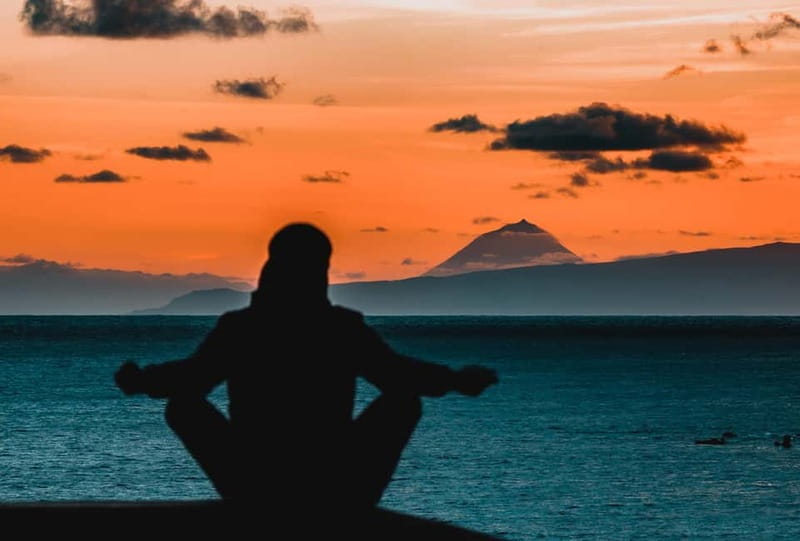
The weather will shape this part of the experience. On a clear day, the summit views can reveal four islands. In poor weather, clouds and wind may limit what you see. The physical achievement remains, but you should not book this climb only for a guaranteed wide view. Mountain conditions can change, and the weather is part of the deal.
Warm clothing is important even if the lower mountain feels mild. You are gaining considerable height, and the top can feel very different from the starting point. Weather-appropriate layers are more useful than a single heavy item because conditions may change as you climb.
The Volcano Crater and Lava Cone
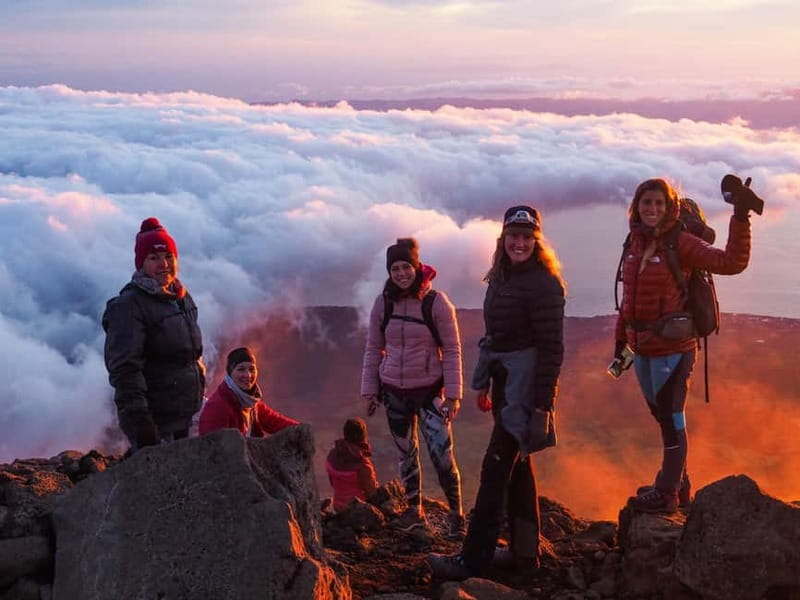
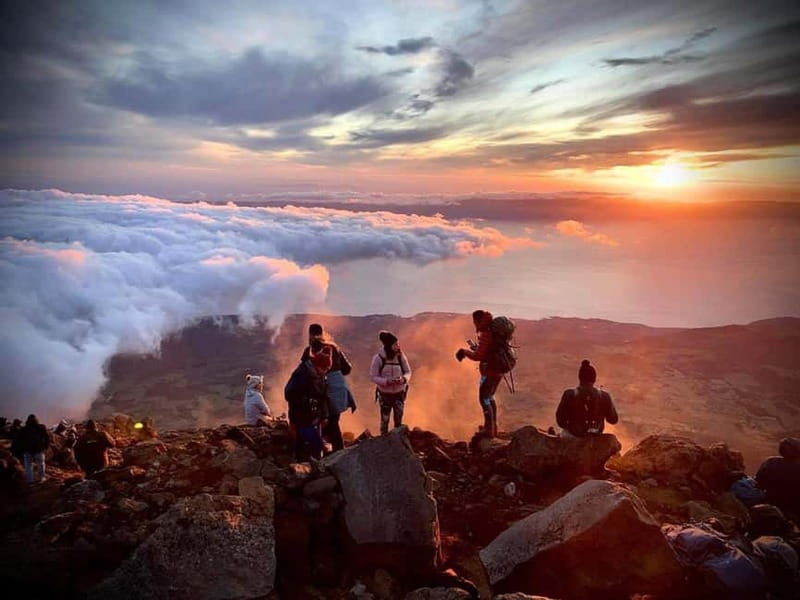
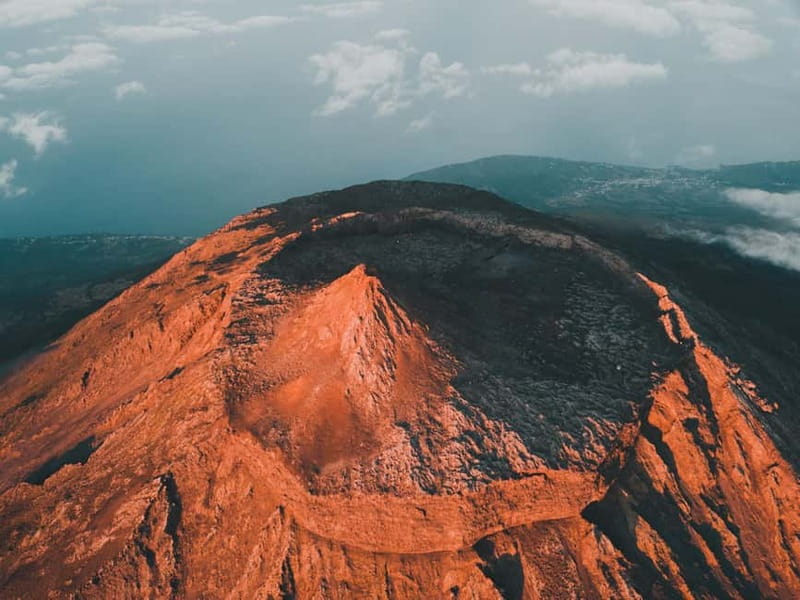
Near the top, you rest in the volcano crater before making the final attempt on the summit. This is one of the most distinctive parts of the climb. You are not simply walking toward a marker on a high ridge. You are moving through a volcanic setting, with the mountain’s crater and lava cone directly shaping the experience.
The final cone is steep and demanding. Permanent fumaroles near the top provide a clear reminder that Pico is a volcano. The sight and feel of that volcanic activity give the summit a character that a normal mountain viewpoint cannot match.
This last push requires patience. Follow the guide’s route, watch for loose stones, and use your hands or poles as instructed. The goal is not to get there quickly. The goal is to reach the top safely with enough energy left to enjoy it.
Piquinho at 2,351 Meters
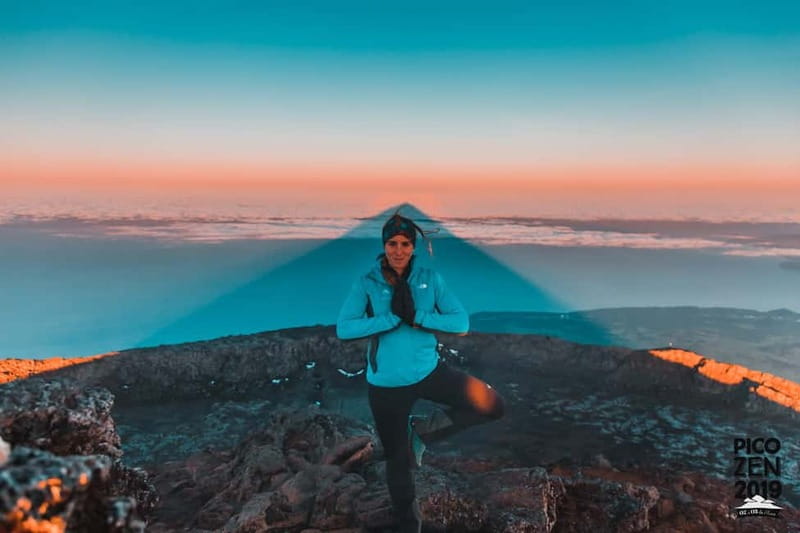
At Piquinho, you reach 2,351 meters, Portugal’s highest point. The moment has a simple appeal: after hours of climbing, you can look around and know that the hardest upward work is finished.
Take time here. The schedule allows a summit pause for breathing, relaxing, sightseeing, and photographs. Guides take photos and video during the experience, which is useful because handling your own camera on steep ground is not always practical. You can focus on the climb and still leave with a record of the achievement.
The views are the great prize when conditions cooperate. You may see broad views across Pico’s natural surroundings and, on a particularly clear day, as many as four islands. If clouds move in, the crater, rock, and fumaroles still give the summit a memorable setting.
Coffee at or near the top is an amusingly modest detail, but it appears to make a real impression. After a hard ascent, a warm drink tastes better than it has any right to.
The Descent Is Not an Easy Afterthought
The way down is planned with fewer stops so your leg muscles stay active. That makes sense, but do not mistake a downhill route for an easy one.
Several people find the descent harder than the climb. Tired thighs, loose stones, and the steep grade demand care. Your knees and ankles take a different kind of pressure, and fatigue can make each step less precise.
Use your walking sticks. Keep your pace controlled, especially on uneven volcanic rock. You may feel eager to finish, but the mountain is not forgiving of careless steps near the end of a long day.
The guide remains important during the return. The group comes back to Casa da Montanha, where the activity ends. The feeling of finishing is part of the reward, but reaching the starting point safely is the real final goal.
What the Guides Add to the Day
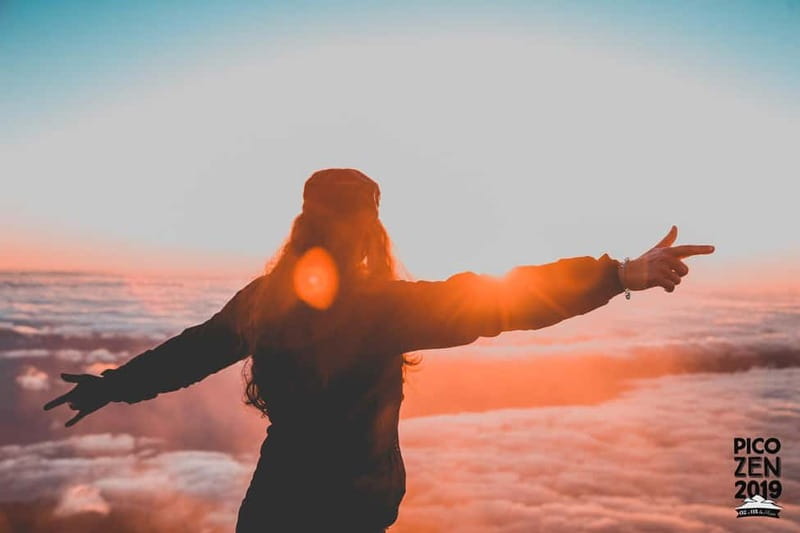
The guides are not just route finders. They shape the tone of the climb and help turn a difficult outing into something manageable.
Isabel has been praised for sharing information about Pico Mountain and life on the island. That kind of local context gives the physical effort a stronger sense of place. You are not only counting meters. You are learning something about the island beneath your boots.
Raisa has also made a strong impression. She is described as prepared, experienced, motivating, and attentive to the needs of the group. Her encouragement can matter when you are unsure you will make it to the top. She also takes photos, which adds practical value.
Guide personality counts on a seven-hour climb. A funny guide, a well-timed coffee, or a few encouraging words can change the mood when the slope gets steep. The experience has a 4.9 rating from 72 ratings, and guide quality is one of its most consistently praised features.
Still, a guide cannot remove the physical challenge. Think of the guide as support, not a substitute for fitness. You need to be ready to walk for hours on steep, uneven ground.
Is $90 Good Value?
At $90 per person, the price is reasonable for a guided full-day mountain outing, particularly because it includes several practical extras. You receive the guide, applicable fees and taxes, personal accident insurance, walking sticks, and photos and video.
The price does not include food, drinks, boots, a backpack, or jackets. You need to budget for and carry your own personal equipment. That is common for a serious hike, but it is worth knowing before you arrive at the Mountain House.
The value is strongest if you want safety support, route guidance, encouragement, and summit photos without arranging those details yourself. It is less compelling if you already know Pico well, have all the equipment, and prefer to set your own pace.
A private tour may be worth asking about if your group has very different fitness levels. The shared experience is likely better value for many people, but a private option could give you more control over timing and breaks.
Who Should Book This Pico Mountain Climb?
I would recommend this climb to fit hikers who want a demanding physical challenge with a clear reward. It suits people who enjoy volcanic scenery, high viewpoints, and the satisfaction of working hard for a summit rather than simply arriving by transport.
You should be comfortable with a seven-hour activity and an 8-kilometer route on steep volcanic terrain. A low level of fitness is specifically listed as unsuitable, as are mobility impairments, back problems, pregnancy, and wheelchair use. Children under 12 and people over 70 are also not accepted for this activity.
The footwear rules deserve attention. High heels, open-toed shoes, and sports shoes are not allowed. Bring proper hiking shoes, plus warm and weather-appropriate clothing. Water and snacks are your responsibility.
The climb is not ideal for someone seeking a relaxed scenic walk. It is also risky to book it as the only major plan of your day if you dislike long physical efforts or become discouraged by slow progress. The mountain rewards patience.
Booking Flexibility and Practical Details
You meet at Casa da Montanha in Madalena, where staff handle check-in and your guide waits for you. The activity returns to the same meeting point, so you do not need to arrange a separate finish location.
The total duration is about seven hours, and available starting times depend on the date. Check the schedule before booking so you can fit the climb around the rest of your time on Pico.
You can cancel up to 24 hours before the activity for a full refund. The reserve-now, pay-later option also gives you flexibility while you finalize your plans. These policies are useful for a mountain outing, since weather and personal energy can affect your decision.
Should You Book It?
Book this Pico Mountain climb if you want to stand on Portugal’s highest point and are ready for a genuinely hard day outdoors. The guides, walking sticks, accident insurance, coffee, and photos make $90 a fair price for structured support.
Skip it if you want an easy walk, dislike steep uneven ground, or cannot commit to seven hours of physical effort. For everyone else, this is a memorable way to experience Pico: volcanic, demanding, occasionally uncomfortable, and highly rewarding when Piquinho finally comes into view.
FAQ
Where does the Pico Mountain climb start?
The climb starts at Casa da Montanha, also called the Mountain House, in Madalena. Check in with the staff there, where your guide will be waiting.
Where does the activity finish?
The climb finishes back at Casa da Montanha, the same place where you begin.
How long does the climb take?
The activity lasts about seven hours, including the safety briefing, hiking sections, breaks, sightseeing, and descent.
How high is the summit?
The summit at Piquinho reaches 2,351 meters, making it the highest point in Portugal.
How long is the hiking route?
The route is approximately 8 kilometers long.
What kind of terrain should I expect?
You will hike across volcanic rock with loose stones, uneven sections, and an average slope of about 30 percent. The terrain becomes harder as you approach the top.
Are walking sticks provided?
Yes. Walking sticks are provided for comfort and safety.
Is food included?
No. Meals and drinks are not included. Bring your own snacks and water. Coffee is available during the climb.
What languages do the guides speak?
The live guides speak Portuguese, English, Italian, Spanish, and French.
Who should not take this activity?
The climb is not suitable for children under 12, pregnant women, people with back problems, mobility impairments, wheelchair users, people with a low level of fitness, or people over 70 years old.
Just added around Azores
- Private boat tour of the islets in Vila Franca do Campo★ 5.0 · 46 reviews
- Sete Cidades Azores 4×4 Day Tour from Ponta Delgada★ 4.9 · 46 reviews
- West Coast Van Tour (Half Day) | Terceira Island★ 4.9 · 46 reviews
- Full Day Guided Tour to Furnas with Lunch Included★ 5.0 · 46 reviews
- Full Day Outdoor Nordeste & waterfall Tour with Lunch★ 5.0 · 46 reviews
- São Miguel Island: Full-Day Sete Cidades Tour★ 4.9 · 46 reviews
- Half Day Guided Tour of Sete Cidades from Ponta Delgada★ 5.0 · 46 reviews
- Full-Day Sete Cidades Crater Lake and Fire Crater Lake Private Tour★ 5.0 · 47 reviews
Azores Tours, compared.
São Miguel West: Full-Day Van Tour with Lunch
Read our review →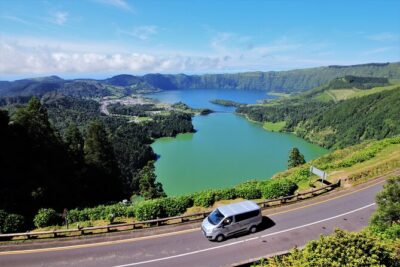
São Miguel West Full Day Tour with Setes Cidades Including Lunch
Read our review →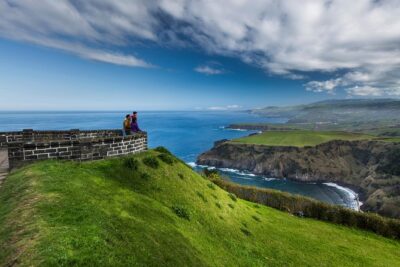
São Miguel East Van Tour with Lunch: Furnas & Nordeste
Read our review →
São Miguel East: Full-Day Van Tour with Lunch
Read our review →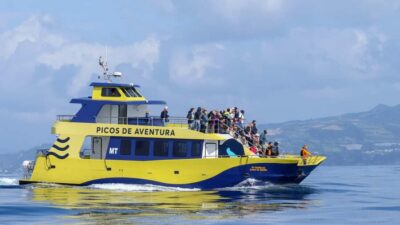
São Miguel Azores: Half-Day Whale Watching Trip
Read our review →Browse the lists this tour appears in