
Reviewed · AZORES TOURS
Pico Mountain: Climb the Highest Point of Portugal 2351m
Pico rewards effort with a summit you will remember. This guided climb takes you from Casa da Montanha at 1200 meters to the 2351-meter summit of Mount Pico, Portugal’s highest point, across steep volcanic rock and a demanding eight-kilometer route. The experience suits fit hikers who want expert support without needing formal mountaineering experience.
I like the small-group format and the practical help included in the $90.74 price: a professional guide, walking poles, personal insurance, and quality photos and videos. I also like the human side of the climb. Guides such as Raisa, Isabel, Nunu, and Haise are praised for setting a steady pace, sharing stories about Pico and the Azores, and helping people through the hard sections. The main caution is simple: this is a serious physical test, not a casual island walk.
The climb normally takes about seven hours, though a slower group can take around eight and a half. You need sturdy hiking boots, plenty of water, snacks, sun protection, and a strong level of fitness. The final section to Piquinho, the volcanic cone above the main summit, adds a scrambly finish and requires care on the way down.
In This Review
- Key points before you book
- Starting at Casa da Montanha at 1200 meters
- The volcanic route: eight kilometers of steep footing
- Pacing, guides, and the value of local stories
- Reaching Piquinho and the summit at 2351 meters
- The descent demands fresh concentration
- Timing, heat, and changing mountain conditions
- What $90.74 gets you
- Who should climb Pico with GOclimb Azores?
- Should you book the Pico Mountain climb?
- FAQ
- Where does the Pico Mountain climb begin?
- Where does the activity finish?
- How high is the summit?
- How long does the climb take?
- How long is the trail?
- What is the terrain like?
- Are walking poles provided?
- Are meals included?
- Can children under 12 or people over 60 join the standard group?
Key points before you book
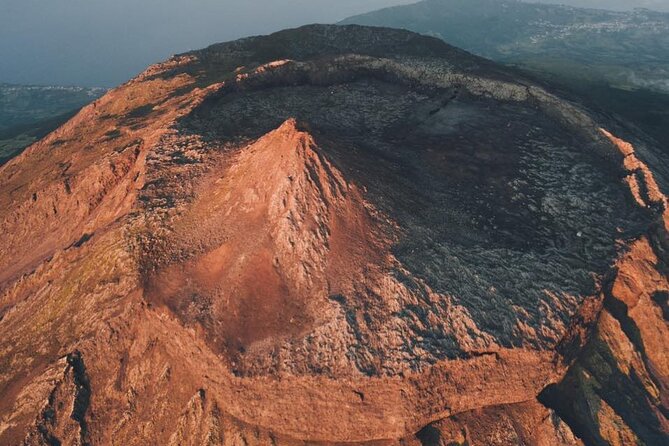
- 2351-meter summit: Reach the highest point in Portugal, with views that can stretch toward Terceira and Graciosa in clear weather.
- Eight kilometers on volcanic rock: Expect an average slope of 30 percent, steep footing, and constant changes in level.
- Guided access when permits are full: A guide can make the climb possible when independent booking slots have sold out.
- About seven hours on the mountain: Early starts can help you avoid the worst heat, but start times may change with conditions.
- Walking poles and media included: You receive poles, personal insurance, and photos and videos as part of the experience.
- Not a beginner’s stroll: You need strong fitness, balance, and confidence on rough ground. The descent can be as tiring as the climb.
Starting at Casa da Montanha at 1200 meters
Your day begins at Casa da Montanha, the mountain house on Caminho Florestal nº 9 in Candelária, near Madalena. This is not a town walking tour with a gentle warm-up. You meet already close to the mountain, at about 1200 meters, with the main climb still ahead.
The guide begins with a briefing for the group. You review the equipment, receive walking poles, and get a personal locator. That locator matters because the route is steep, rocky, and exposed in places. It also gives the group a clear safety system during a long day away from easy road access.
Pay attention during the first part of the walk. The guide uses it to see how you handle the steep ground and the changing breathing pattern. If you quickly lose balance or find your breathing difficult, that may signal that the full ascent is not right for you. This early check is useful, even if it feels a little blunt. Pico is not the place to discover halfway up that your fitness level was optimistic.
The operator lists a maximum of 10 people, which should help keep the group manageable. One account describes a group of 12, so it is sensible to confirm the expected group size when you book. A mixed group can affect the whole day, especially on a route where everyone must negotiate the same narrow, uneven sections.
A few more reviews worth comparing before you book
- From Ponta Delgada: Whale and Dolphin Watching Trip
★ 4.7 · 4,109 reviews - Azores Whale Watching & Islet Boat Tour
★ 4.6 · 2,146 reviews - São Miguel West: Full-Day Van Tour with Lunch
★ 4.9 · 1,948 reviews
The volcanic route: eight kilometers of steep footing
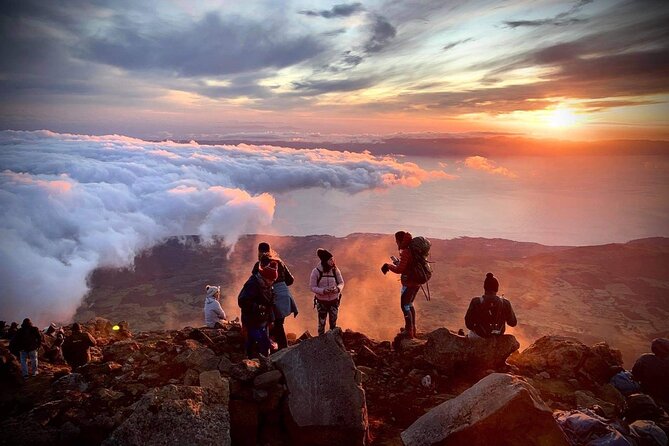
The trail is about eight kilometers in total, up and down, and the surface is volcanic rock from start to finish. You are not walking on a smooth mountain path. You will be placing your feet carefully, managing loose or uneven sections, and using your legs differently on the ascent and descent.
The average slope is listed at 30 percent. That figure tells you more than the distance does. Eight kilometers may sound modest on paper, but the repeated uphill effort makes the route demanding. You gain height quickly, and your breathing changes early. Walking poles are especially helpful for balance and for reducing pressure on tired knees during the return.
Guides divide the climb into manageable sections. Raisa, in particular, is praised for planning short photo and water breaks, along with a longer rest. That rhythm matters. Too few pauses can drain you early, while too many can make the day feel disjointed and leave you cooling down on exposed rock.
You should bring water and snacks because meals are not included. The tour price covers fees and taxes, personal insurance, the guide, walking poles, and photos and videos, but not food. Pack more than you think you will need for seven to eight and a half hours of hard work.
Pacing, guides, and the value of local stories
The strongest part of this experience is the guide support. The job is not only to point toward the summit. A good guide watches breathing, footing, morale, and time, while also keeping the group together.
Raisa receives repeated praise for her upbeat manner, patience, and ability to adjust help to each person. She is also described as keeping the group on schedule and making sure people stopped for water and snacks. Isabel is praised for responsibility and for respecting each person’s limits. Nunu adds stories about Pico’s people, food, history, and island culture, giving the climb a stronger local connection than a silent march uphill.
Haise is praised for managing the pace and helping the whole group reach both the top and the bottom safely. Those details are important because the summit is only half the job. On Pico, tired legs and reduced concentration can make the descent the more awkward section.
A guided climb is also useful for solo visitors. If you are alone and unsure about the route’s difficulty, having a guide and a ready-made group can remove much of the uncertainty. The tour is offered in English, and confirmation is received at booking, subject to space at Casa da Montanha.
Reaching Piquinho and the summit at 2351 meters
The reward comes high above the main route. Reaching Pico’s summit gives you the satisfaction of standing on Portugal’s highest point, but the final climb to Piquinho adds a special finish. The upper section includes a more hands-on scramble, which one account describes as a particularly enjoyable part of the ascent.
Conditions at the top can change the experience completely. In clear weather, you might see across the ocean toward Terceira and Graciosa. On a good day, the view is the sort that makes the slow climb worthwhile. In cracks between the rocks, you might also feel warm volcanic steam, a small reminder that this is an active volcanic peak rather than an ordinary hill.
The summit itself is not a place to rush. You will want time for photographs, a drink, and a pause to take in the height. The included photo and video service is useful here, since it lets you focus on the climb instead of asking a companion to document every moment.
Some guides add a small celebratory toast at the summit. That is not the reason to book the climb, but it can make the finish feel personal and festive. The important point is that reaching Piquinho requires effort, and the guide’s encouragement can make the difference for people who are fit but not used to this type of terrain.
A different sort of day out around Azores:
- São Miguel West Full Day Tour with Setes Cidades Including Lunch
★ 5.0 · 1,391 reviews - São Miguel East Van Tour with Lunch: Furnas & Nordeste
★ 5.0 · 1,210 reviews - São Miguel East: Full-Day Van Tour with Lunch
★ 4.9 · 1,124 reviews - Azores Whale Watching & Islet Boat Tour
★ 4.5 · 1,059 reviews
The descent demands fresh concentration
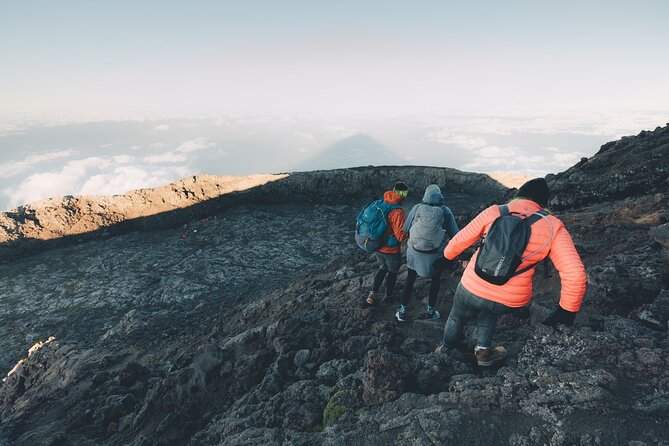
Do not treat the return as an easy walk downhill. Descending volcanic rock can be harder on your knees and more demanding on your balance than going up. After several hours of exertion, your feet may be tired and your concentration less sharp.
Good boots matter here. The advice from past participants is consistent: use proper hiking boots, not casual trainers. You also need to watch your footing and resist the urge to hurry. A stumble on rough volcanic ground can end a memorable day very quickly.
The group’s pace may slow on the way down, especially if people have different levels of mountain experience. One account describes frequent stops while the group waited for slower members, followed by an offer to let a smaller subgroup descend ahead. That solution worked, but it also shows why group composition matters.
The advertised duration is approximately seven hours, not a guarantee. A strong, well-matched group with good weather may move efficiently. A mixed group, crowded conditions, or cautious descent can push the day to eight and a half hours. Keep your schedule open after the climb. You do not want to plan a tight dinner reservation or another demanding activity immediately afterward.
Timing, heat, and changing mountain conditions
An early start can be a smart choice. One group began before sunrise and found the cooler temperatures helpful on both the ascent and return. Another account describes a 6:30 a.m. departure as a good decision because the first part was cooler and more shaded.
Start times can change, sometimes with short notice. One departure time was confirmed only the evening before after an earlier time had been discussed. That is not necessarily a problem, since mountain conditions can influence the plan, but you should check your messages and keep the morning flexible.
Sun protection deserves serious attention. The route can expose you to many hours of sun, and even people who applied sunscreen reported getting burned during a long day. Bring strong sun protection and use it before you start, then reapply as needed. A hat and suitable clothing are sensible additions, though the supplied information does not specify required clothing.
The activity depends on good weather. If poor conditions cancel the climb, you are offered another date or a full refund. The same applies if the minimum number of participants is not reached. You can cancel for a full refund if you do so at least 24 hours before the start time. Changes or cancellations within 24 hours are not accepted for a refund.
What $90.74 gets you
At $90.74 per person, this is good value if you were already planning to climb Pico and could not secure an independent permit or time slot. The guide is the key benefit. You get route support, group management, equipment checks, personal insurance, walking poles, and photographs and videos without arranging each piece yourself.
The value is less obvious if you are an experienced mountain climber who already knows the route and can obtain an independent place. You are paying for guidance and structure, not luxury. There is no meal included, and the day still requires your own boots, water, snacks, and sun protection.
For a solo visitor, the price also buys company and reassurance. For a couple or small group, it reduces the work of organizing the ascent. The 98 percent recommendation rate and 4.9 rating from 187 ratings point to a consistently well-liked operation, though the practical details still matter more than the numbers. A great guide cannot make a steep volcanic climb easy.
Who should climb Pico with GOclimb Azores?
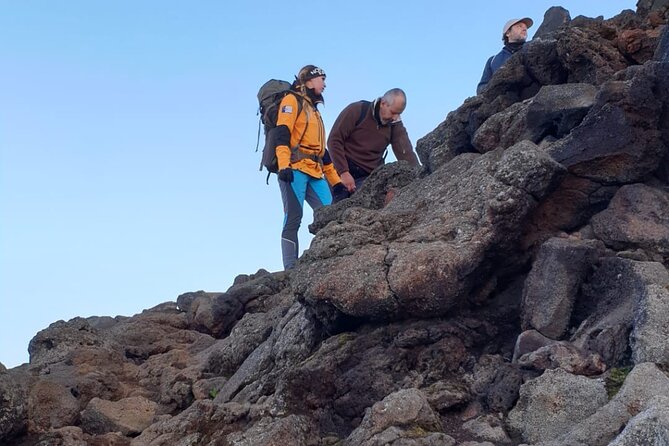
I would choose this experience if you want to summit Pico but prefer not to handle the route alone. It is particularly useful when independent spaces are full, when you are traveling solo, or when you want a guide who can judge pace and weather on the mountain.
You should be in strong physical condition and comfortable with a long, steep hike. You do not need mountaineering experience, but you do need stamina, balance, and a willingness to move over volcanic rock for most of the day.
This is not designed for children under 12 or participants over 60 in the standard groups. A private activity can be requested at a different price for those age groups. You must also provide all requested personal information, and the reservation is completed only if Casa da Montanha has space.
The experience suits an active adult who sees the effort as part of the reward. It is a poor match if you want an easy scenic walk, dislike uneven ground, or are hoping to decide on the day that you might turn the climb into a relaxed outing.
Should you book the Pico Mountain climb?
Book it if standing at Portugal’s highest point is high on your Azores wish list and you want professional support. The guides, poles, locators, insurance, and included media make the $90.74 fee reasonable, especially when independent slots have already sold out.
Before committing, be honest about your fitness. Train with long uphill walks, break in your hiking boots, and prepare for seven hours or more without a meal stop provided. Ask about the start time and expected group size, then leave your schedule open for a slow descent.
I would book this for the right person: an active hiker who wants a demanding, memorable summit day with a supportive guide. I would not book it as a spur-of-the-moment sightseeing tour. Pico gives you remarkable views and a proud finish, but it expects real work in return.
FAQ
Where does the Pico Mountain climb begin?
The meeting point is Casa da Montanha, also called Mountain House, at Caminho Florestal nº 9, Candelária, 9950-000 Madalena, Portugal.
Where does the activity finish?
The climb ends back at the meeting point at Casa da Montanha.
How high is the summit?
The summit of Pico Mountain is 2351 meters above sea level, making it the highest point in Portugal.
How long does the climb take?
The activity takes approximately seven hours. A slower group may take longer, with one account describing a total time of about eight and a half hours.
How long is the trail?
The full route is approximately eight kilometers, including the ascent and return.
What is the terrain like?
The trail is entirely on volcanic rock and has an average slope of about 30 percent. You should expect steep changes in level and uneven footing.
Are walking poles provided?
Yes. Walking poles are included, along with a professional guide, personal insurance, fees and taxes, and quality photos and videos.
Are meals included?
No. Meals are not included, so you need to bring your own water and snacks.
Can children under 12 or people over 60 join the standard group?
No. Participants under 12 or over 60 are not included in the standard groups. A private activity can be requested at a different price.
Just added around Azores
- Terceira Island: Caves and Craters Tour★ 4.6 · 169 reviews
- São Miguel, Azores: Sete Cidades Half-Day Jeep Tour★ 4.9 · 172 reviews
- Island Van Tour (Full Day) | Terceira Island★ 4.9 · 176 reviews
- Wine & Food Evening Walking Tour in Ponta Delgada, incl. dinner★ 5.0 · 177 reviews
- Faial Island: Half Day Tour★ 4.8 · 181 reviews
- Furnas Volcano & Tea Plantation With Traditional Lunch, East Tour★ 5.0 · 183 reviews
- São Miguel Island: Full Day All-in-One Tour★ 4.9 · 183 reviews
- Full Day Jeep Tour Furnas with lunch (Cozido) and drinks included★ 5.0 · 187 reviews
Azores Tours, compared.
São Miguel West: Full-Day Van Tour with Lunch
Read our review →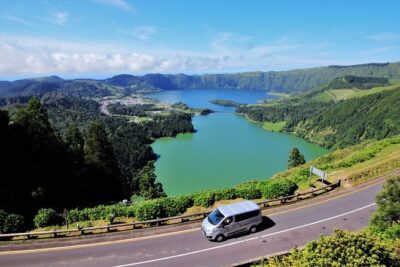
São Miguel West Full Day Tour with Setes Cidades Including Lunch
Read our review →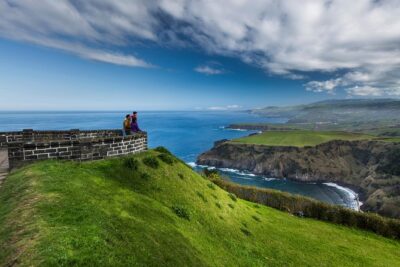
São Miguel East Van Tour with Lunch: Furnas & Nordeste
Read our review →
São Miguel East: Full-Day Van Tour with Lunch
Read our review →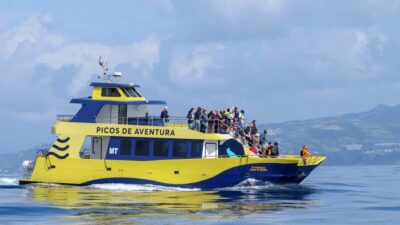
São Miguel Azores: Half-Day Whale Watching Trip
Read our review →Browse the lists this tour appears in