Reviewed · TICKETS
Porto: Entry Ticket at WOW The Chocolate Experience by 20|20
Chocolate has a surprisingly long journey. At Porto’s Chocolate Experience by 20|20, you follow cacao from ancient Central America to the modern chocolate bar through displays, tastings, and a working factory. I like the clear bean-to-bar story, and I like that you can taste cacao at several stages instead of simply reading about it. The main drawback is that the early galleries contain a lot of text, so this may feel more like a museum visit than a fully hands-on attraction.
The $20 entry fee is fair if you enjoy food museums, production tours, or Porto’s WOW cultural district. Plan about 90 minutes, and pay attention to the day you visit: the factory may not be operating on Sundays, which takes away one of the most appealing parts.
In This Review
- Key things to know before you go
- Entering the Chocolate Story at WOW
- Five thousand years of cacao in one route
- From cacao plantation to raw bean
- The bean-to-bar process, one stage at a time
- Watching Vinte Vinte chocolate being made
- How interactive is the visit?
- Is $20 a good value?
- Timing your visit in Porto
- Who will enjoy The Chocolate Experience?
- Practical advice for a smoother visit
- Should you book The Chocolate Experience?
- FAQ
- How long does The Chocolate Experience take?
- How much does admission cost?
- What is included in the ticket?
- Which languages are available for the audio guide?
- What are the opening hours?
- Can I visit anytime on my selected date?
- Is the experience wheelchair accessible?
- Can children visit alone?
Key things to know before you go

- The story reaches back 5,000 years: You see how cacao began as a sacred drink and became a global food.
- The visit ends in a live factory: You can watch cacao being turned into Vinte Vinte chocolate when production is running.
- Tastings are built into the route: Expect raw cacao, chocolate in different stages, and a final Vinte Vinte sample.
- The first galleries are text-heavy: Reading every panel can make the visit longer than 90 minutes.
- An audio guide is included: Choose Portuguese, English, Spanish, or French.
- Sunday may be a poor choice for factory fans: The factory is not guaranteed to be working then.
Entering the Chocolate Story at WOW
The Chocolate Experience is located at The Chocolate Story, part of the World of Wine complex in Vila Nova de Gaia, across the Douro from Porto’s historic center. You do not get transportation with the ticket, so you need to make your own way to WOW and show your ticket at the entrance.
Once inside, the route is designed as a museum journey rather than a guided walking tour. An audio guide is available in English, Portuguese, French, and Spanish. That gives you a useful choice: listen to the main story at your own pace, or move faster through sections that interest you less.
The attraction works best if you treat it as both a history museum and a tasting experience. The subject is chocolate, but the displays also touch on religion, trade, farming, advertising, royalty, and consumer habits. This wider view keeps the visit from becoming a simple account of how candy is made.
The entrance includes a small Vinte Vinte chocolate bar. It is a modest touch, but it sets the tone right away. Additional tasting points appear along the route, so the chocolate is not saved only for the end.
A few more reviews worth comparing before you book
- Porto: Cálem Cellar with Chocolate, Cheese, and Wine Tasting
★ 4.6 · 310 reviews - Tavira Tuk Tuk Tour – Chocolate Tour – Tavira City & Chocolate
★ 5.0 · 63 reviews
Five thousand years of cacao in one route
The opening section places cacao in ancient Central America, where it was valued as a sacred drink associated with gods and royalty. This is an important starting point because modern chocolate is usually presented as a sweet treat, while cacao began with a very different role.
You learn how cacao crossed the Atlantic and changed in Europe. The story follows its shift from a ceremonial beverage to a product consumed in many forms around the world. That change also brings up questions about status, trade, access, and mass production.
I like this historical framing because it gives you something to think about between tastings. The story is not only how chocolate is made. It is also why chocolate became so important.
The displays trace chocolate’s place in culture, advertising, and consumerism. You see how it became linked with indulgence, celebration, affection, and luxury. These ideas help explain why chocolate packaging and marketing can be almost as memorable as the food itself.
The tradeoff is pace. Several sections rely heavily on written panels, and one four-star assessment specifically found the early part less interactive than hoped. If you read every panel, you may spend longer than the advertised 1.5 hours. If your group includes children, young visitors may prefer the tasting stations and factory section to the historical displays.
From cacao plantation to raw bean
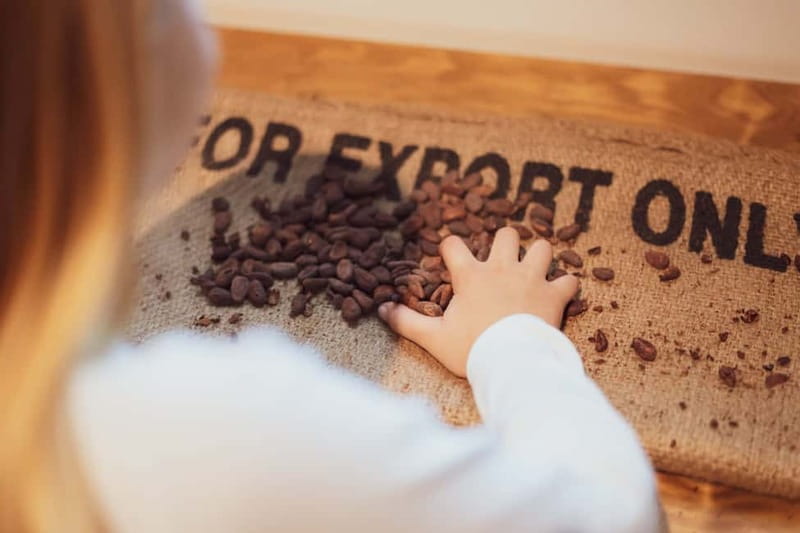
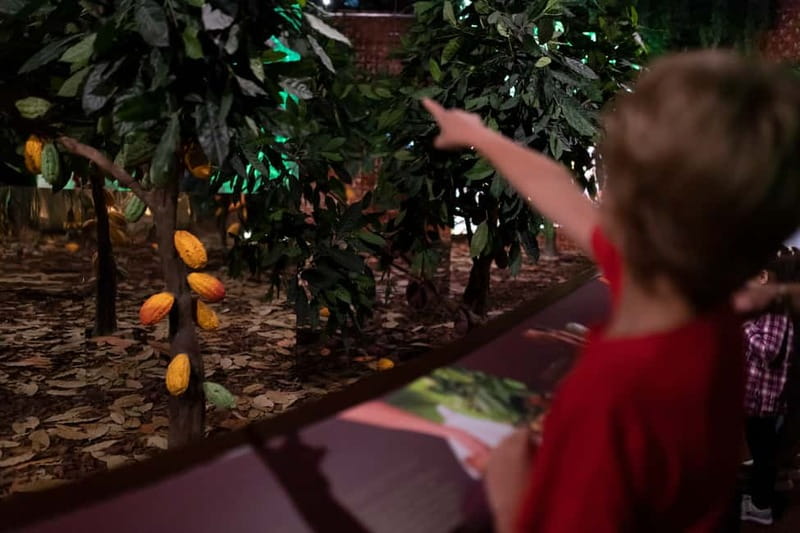
The next part shifts from history to agriculture. You learn about cacao plantations, sustainable farming methods, and the cacao plant itself. The attraction also introduces the fruit and the different cacao varieties.
This section matters because a chocolate bar can hide the work behind it. The plant, fruit, bean, and finished product can seem like separate things when you buy chocolate in a shop. Here, the route connects them.
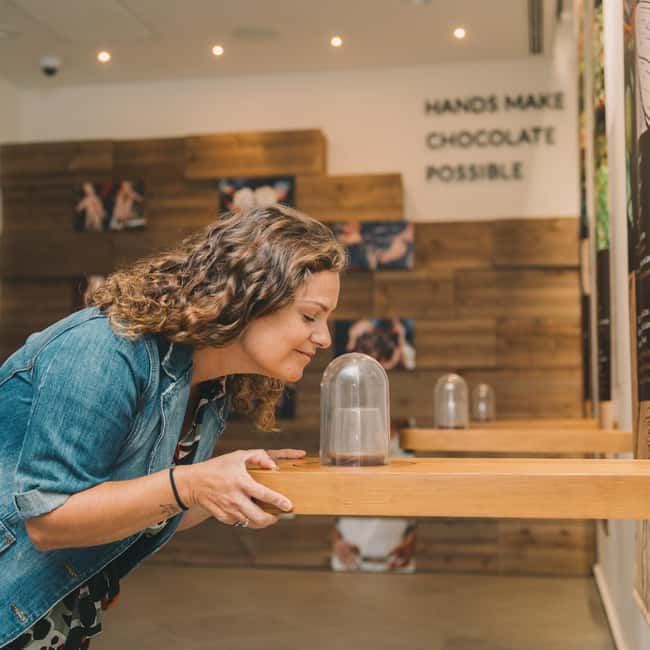
You get a chance to see and smell cacao, and the experience includes a taste of raw cacao. Do not expect raw cacao to taste like a finished milk chocolate bar. That contrast is part of the lesson. The tasting shows how much processing, blending, roasting, and refining change the flavor.
The focus on sustainability is also useful. You are not simply told that cacao comes from a tropical crop. You are asked to think about farming methods and the steps between plantation and factory. The attraction does not turn this into a specialist agricultural course, but it gives enough context to make the final bar feel less anonymous.
The bean-to-bar process, one stage at a time
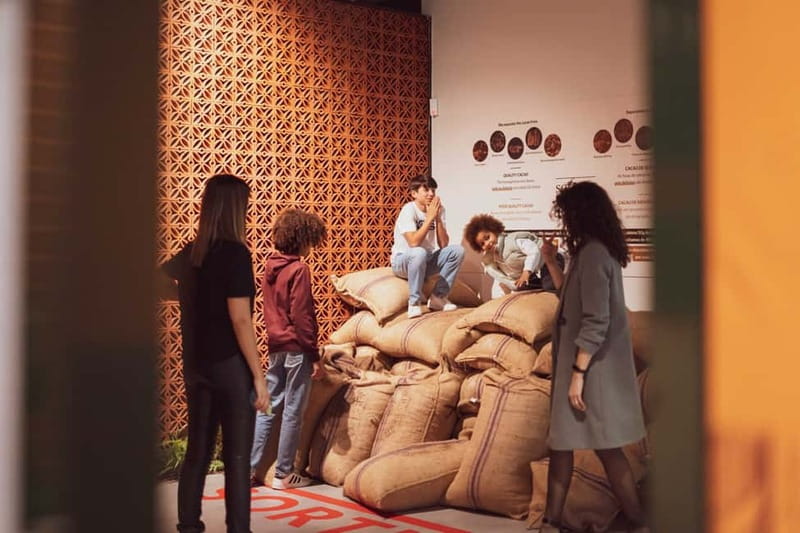
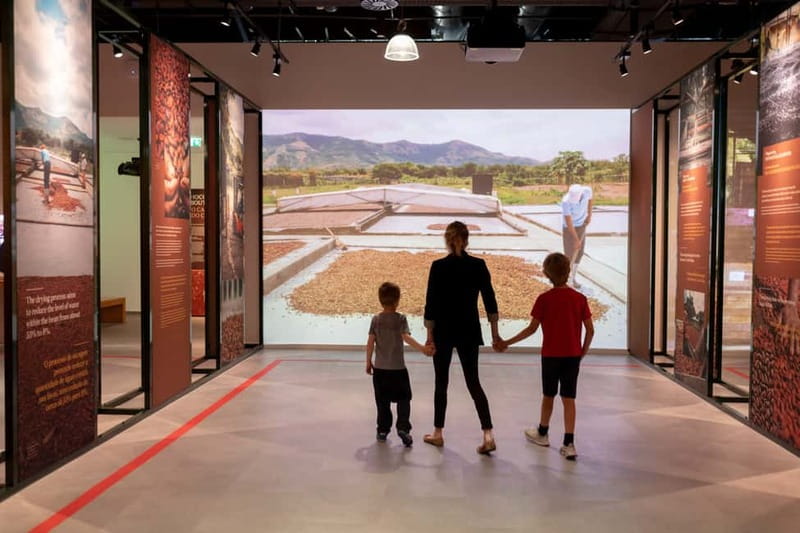
The production section follows cacao from harvest through fermentation, drying, roasting, and conching. These terms can sound technical, but the route gives you a practical sense of what each stage does.
Harvesting is the beginning, not the finished product. Fermentation and drying help develop the beans before they are roasted. Roasting changes the aroma and flavor, while conching refines the texture and taste.
The best part is that you do not only look at diagrams. You taste chocolate in different forms and stages, including 100 percent cacao. That sample is especially useful because it strips away the sweetness and lets you notice the character of cacao itself.
I like this hands-on approach. A museum panel can tell you that roasting changes flavor, but a tasting lets you notice the change directly. You can compare the raw ingredient with more developed chocolate and understand why a finished bar tastes smooth, sweet, and familiar.
Still, keep your expectations in check. This is an educational museum experience with tastings, not a chocolate-making class. You do not leave with a bar you made yourself, and the provided information does not promise a workshop or a personal demonstration.
A different sort of day out around Porto:
- The Unvanquished Tour in Porto City Center
★ 5.0 · 26,497 reviews - From Porto: Douro Valley w/ Boat Tour, Wine Tasting & Lunch
★ 4.7 · 19,061 reviews - Complete Douro Valley Wine Tour with Lunch, Wine Tastings and River Cruise
★ 5.0 · 12,920 reviews - Porto: Six Bridges Cruise
★ 4.2 · 11,680 reviews
Watching Vinte Vinte chocolate being made
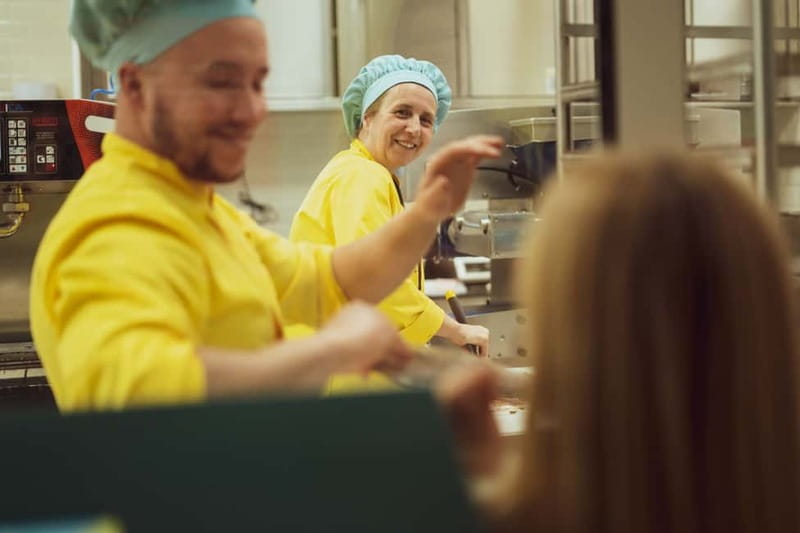
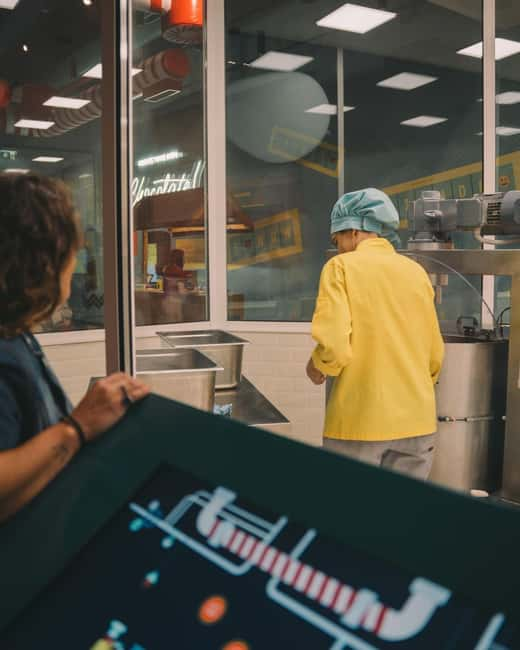
The route ends at an operating chocolate factory. This is the practical payoff of the visit. After learning about cacao farming and production, you can watch the transformation into award-winning Vinte Vinte chocolate.
The factory view gives the museum a stronger sense of place. You are not only seeing historic objects or reading about production in the abstract. You are close to the modern process and can connect the earlier stages with a product being made now.
The factory does not necessarily operate every day. If seeing machinery and production is important to you, avoid Sunday. The attraction is open daily from 10:00 a.m. to 7:00 p.m., with last entry at 7:00 p.m., but opening hours and production schedules can vary on bank holidays. Check the official website before setting your plans.
The final tasting lets you try the finished product. By this point, you have already sampled raw cacao and other forms, so the last chocolate works as a conclusion to the tasting sequence. You can compare it with what came before and better understand what processing adds.
How interactive is the visit?
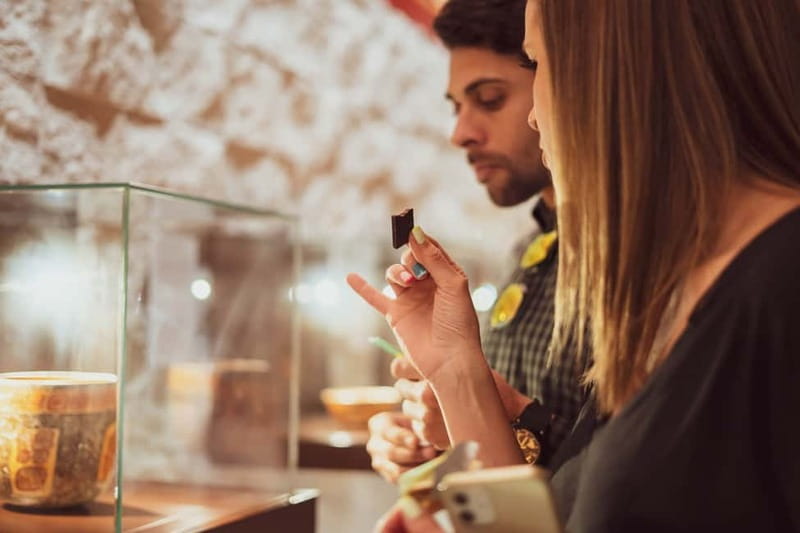
The experience includes sensory elements from the start: you see, smell, and taste cacao and chocolate. Tasting stations break up the reading and give you a reason to slow down.
The strongest interactive feature is the progression through the production stages. Instead of receiving one sample at the entrance and another at the exit, you get a series of small taste comparisons. That makes the technical information easier to remember.
The first part is less hands-on. If you enjoy museums with objects, panels, and historical displays, that will not be a problem. If you want constant activity, you may find the opening galleries too quiet and text-focused.
I would plan this visit around your interests. Chocolate lovers who want to understand origins and production should take their time. Families with children may want to keep the audio guide short and focus on the plant, tastings, and factory.
Unaccompanied minors are not allowed, so children must visit with an adult. The venue is wheelchair accessible, which makes it a practical choice for many visitors with mobility needs.
Is $20 a good value?
At $20 per person, this is not a throwaway attraction, but it offers more than a single tasting. You get museum entry, the audio guide, several chocolate samples, a Vinte Vinte tasting, and the chance to see factory production when it is running.
The value improves if you appreciate context. You are paying for the full story, from cacao’s sacred role to farming, processing, branding, and modern consumption. If you only want a quick chocolate sample, the ticket may feel expensive.
The value also depends on your visit time. A rushed walk through the galleries will not give you as much for your money. Allow the full 90 minutes, and visit when the factory is active if possible. A Sunday visit may still be worthwhile, but you should not assume you will see the same production activity.
The attraction currently carries a 4.2 rating from 115 reviews, which fits the experience well. It is broadly appealing and well organized, but not perfect for everyone. The praise centers on the clear history, the bean-to-bar process, the tastings, and the helpful staff. The most common limitation is the amount of reading at the beginning.
Timing your visit in Porto
You can enter anytime on your selected date during opening hours. That flexibility is useful if you are combining The Chocolate Story with other WOW museums or exploring Vila Nova de Gaia.
For the best factory chance, choose a weekday rather than Sunday. The available information does not provide a guaranteed production timetable, so checking ahead is sensible, especially around bank holidays.
A late afternoon visit may work well if you want a break from sightseeing, but allow enough time before the 7:00 p.m. last entry. Since the experience itself lasts about 1.5 hours, arriving near closing would leave little room for a slow visit.
You should also remember that transportation is not included. The ticket covers the museum experience, not your journey to WOW or any other attractions in the complex.
Who will enjoy The Chocolate Experience?

I would recommend it most strongly to:
- Chocolate fans who want more than a tasting
- Food-minded visitors interested in ingredients and production
- Families with children old enough to follow a museum route
- Visitors who enjoy audio guides and self-paced exhibits
- Anyone spending time at WOW and looking for an indoor activity
It may be less satisfying if you want a short, highly active workshop. The route has interactive and sensory moments, but much of the opening section asks you to read and listen.
It is also not the best pick if your only priority is watching the factory run. Production may not take place on Sundays, and the factory is only one part of the full attraction.
Practical advice for a smoother visit
Check the official website for bank holiday hours before you go. Pick a weekday if the factory is a major reason for your visit.
Use the audio guide selectively. You can listen to every section, but you may prefer to focus on cacao origins, farming, and the bean-to-bar process. The displays contain plenty to read, so a selective approach helps you stay within the 90-minute timeframe.
Save room for the tastings. The samples are small, but they form an important part of the experience. Pay attention to how raw cacao and 100 percent cacao differ from the finished Vinte Vinte chocolate.
If you are visiting with children, explain that the first rooms are more museum-like. The promise of tastings and a factory view can help hold interest while you move through the historical material.
Free cancellation is available up to 24 hours before the visit, and you can reserve now and pay later. Those terms are useful if your Porto schedule is still changing.
Should you book The Chocolate Experience?
Book it if you want a thoughtful chocolate museum with tastings, a clear bean-to-bar explanation, and a chance to see working production. The historical route is stronger than a simple confectionery display, and the samples give you a practical way to understand the process.
I would book a weekday slot and allow the full 1.5 hours. If you dislike reading-heavy museums or want a chocolate-making class, choose something more active. For most food lovers visiting WOW, though, this is a well-priced, entertaining stop that turns a familiar treat into a much more interesting story.
FAQ
How long does The Chocolate Experience take?
The stated duration is 1.5 hours. You can spend more or less time depending on how closely you follow the displays and audio guide.
How much does admission cost?
The listed price is $20 per person.
What is included in the ticket?
Admission to The Chocolate Experience by 20|20, a Vinte Vinte chocolate tasting, and an audio guide are included.
Which languages are available for the audio guide?
The audio guide is available in English, Portuguese, Spanish, and French.
What are the opening hours?
The Chocolate Experience is open daily from 10:00 a.m. until 7:00 p.m., with last entry at 7:00 p.m. Bank holiday hours may differ.
Can I visit anytime on my selected date?
Yes. You can use the ticket anytime on the selected date during museum opening hours.
Is the experience wheelchair accessible?
Yes, the activity is wheelchair accessible.
Can children visit alone?
No. Unaccompanied minors are not allowed. Children must visit with an adult.
Just added around Porto
- From Arouca: Paiva River Canoe Rafting Adventure Tour★ 5.0 · 46 reviews
- Jewish Walking Tour of Porto★ 4.5 · 46 reviews
- Porto Private Gourmet Food & Wine Historic Tour with a Sommelière★ 5.0 · 46 reviews
- Santiago and Valença do Minho Full Day Private Tour★ 5.0 · 47 reviews
- Porto: Aveiro with cruise, Costa Nova, Capelha do Senhor da Pedra★ 4.5 · 47 reviews
- Best of Porto Guided Tour: Cruise & Wine Tasting★ 4.5 · 47 reviews
- Water Canyoning★ 5.0 · 47 reviews
- Cruise Shore Excursion – Private Tuk Tuk Tour to the Historic Center★ 4.5 · 47 reviews
Tickets, compared.


Quinta da Regaleira Skip-the-Ticket-Line Entry & Audioguide
Read our review →
Luz Stadium Tour & SL Benfica Museum Ticket w/Scarf
Read our review →