
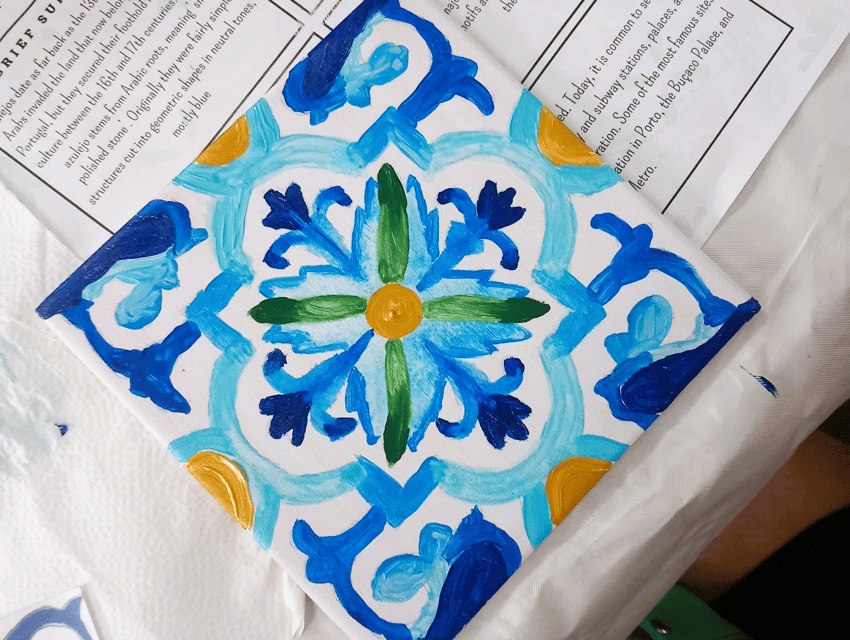
Reviewed · PORTO TOURS
Porto: Tile Painting and Cocktails in Downtown Porto
Slow down in central Porto. This two-hour workshop pairs a short lesson on Portuguese azulejos with hands-on painting, a cocktail, and a souvenir you create yourself. I especially like the calm setting and the patient guidance from hosts such as Daniella, Emmanuel, and Diogo. I also like that you can choose a ready-made design or bring an idea for a custom image.
The main thing to consider is that your tile may need extra drying time. Some people take it home the same day, while afternoon participants may need to return later or the next day. The activity costs about $41 per person, which is fair if you value a cultural lesson, a drink, art instruction, and a handmade keepsake in one compact experience.
In This Review
- Key points to know before you book
- Why azulejos make a fine Porto souvenir
- Arriving at Boiler Studio on Rua Chã 77
- The opening lesson: from Arabic influence to Portuguese walls
- Choosing a pattern, stencil, or personal image
- Painting with patient help and a cocktail
- Finishing the tile and getting it home
- Is $41 a fair price for two hours?
- Who will enjoy this workshop most?
- How to fit it into a day in Porto
- Should you book the Boiler Studio tile class?
- FAQ
- Where does the tile painting workshop take place?
- How long does the activity last?
- What is included in the price?
- Can I take my painted tile home?
- Do I need artistic experience?
- What languages are spoken?
- Is the workshop wheelchair accessible?
- Are young children allowed to join?
Key points to know before you book
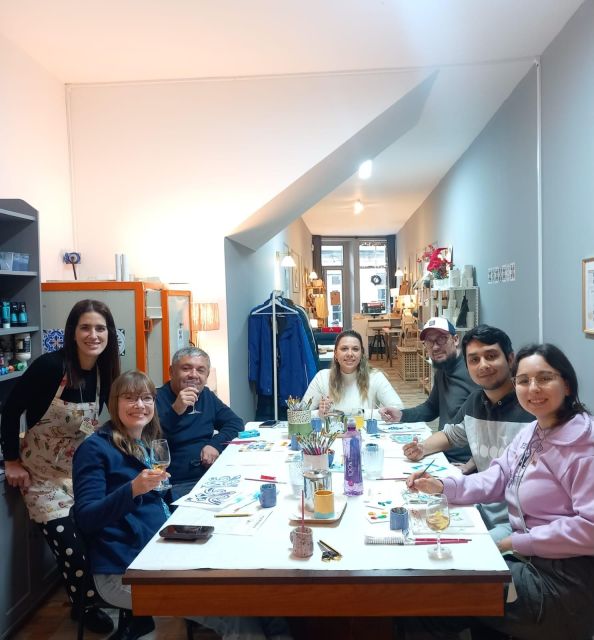
- Paint a real ceramic tile: You receive a tile, paints, brushes, and packaging, then take your finished piece with you.
- Learn the story behind azulejos: The introduction covers their Arabic roots, Portuguese development, colors, uses, and links to cities across the country.
- Choose your own level of creativity: Use one of the prepared patterns, trace a stencil, or ask the studio to print a personal image.
- Enjoy a Porto Tonic or similar cocktail: The drink adds a social, relaxed touch rather than turning the class into a formal art lesson.
- Meet at Boiler Studio by Porto Cathedral: Rua Chã 77 is close to São Bento Station, the Luís I Bridge, Time Out Market, and the Cathedral.
- Plan around the age rule: The activity is listed as unsuitable for children under 10, despite one family review mentioning a 9-year-old who enjoyed it.
Why azulejos make a fine Porto souvenir
Porto’s tiled façades are not just pretty decoration. They help tell the story of Portugal’s architecture, religion, public life, and changing artistic tastes. A tile workshop gives you a small way to understand what you are seeing on churches, railway stations, houses, and city walls.
Azulejos date back as far as the 13th century, when Arab culture reached the lands now known as Spain and Portugal. The word comes from Arabic roots and means small polished stone. Early examples used simple geometric shapes and restrained colors, often blue. Tiles became firmly rooted in Portuguese culture during the 16th and 17th centuries.
That short history lesson matters because it gives your later sightseeing more meaning. After the class, you may notice how a tiled surface can be a pattern, a picture, a sign, or an entire historical scene. You are not simply painting a decorative square. You are working with one of Portugal’s most recognizable forms of visual culture.
The workshop also covers how tile styles changed across different periods, seasons, and Portuguese cities. The information is presented as a starting point rather than a university lecture, so it should suit you if you want useful context without spending an afternoon in a museum.
A few more reviews worth comparing before you book
- The Unvanquished Tour in Porto City Center
★ 5.0 · 26,497 reviews - From Porto: Douro Valley w/ Boat Tour, Wine Tasting & Lunch
★ 4.7 · 19,061 reviews - Complete Douro Valley Wine Tour with Lunch, Wine Tastings and River Cruise
★ 5.0 · 12,920 reviews
Arriving at Boiler Studio on Rua Chã 77
Boiler Studio sits on Rua Chã 77, a typical street directly in front of Porto Cathedral. That location is useful for two reasons. First, it is easy to combine with sightseeing in the old center. Second, the street itself helps set the mood before you even begin.
The studio is close to several well-known stops:
- Porto Cathedral
- São Bento Train Station
- The Luís I Bridge
- Time Out Market
You can plan the workshop as a midday pause between visits, or use it as a rainy-day activity. Several people found it particularly welcome when the weather made outdoor exploring less pleasant. The two-hour length is long enough to make something personal but short enough to fit into a busy Porto schedule.
Boiler Studio also operates as a shop selling handmade products by local artists. Give yourself a few minutes to browse before or after the class, but remember that the shop is separate from the workshop itself. It can be a useful place to find another locally made gift if your own tile leaves you wanting more handmade art.
The studio is wheelchair accessible. Instruction is available in English and Portuguese.
The opening lesson: from Arabic influence to Portuguese walls
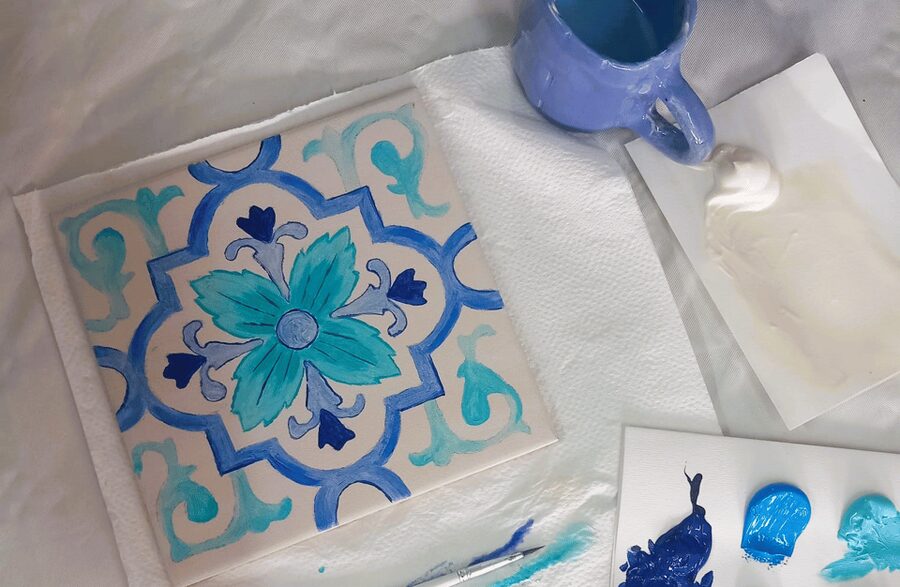
The class begins with an explanation of where azulejos came from and how they became part of Portuguese life. You learn about outside influences, the importance of color, and the ways tiles are used today.
This opening section is one of the strongest parts of the activity because it keeps the painting connected to Porto. A tile can feel like a random craft project if you do not know why it matters. Here, the background gives you a reason to pay attention to patterns and color choices.
The information is not limited to Porto alone. The workshop moves through different periods and cities, helping you see that Portuguese tile traditions are not all alike. Blue and white designs may be the best-known, but the class gives you a broader sense of the styles you may encounter during your trip.
Expect a compact introduction, not a long historical talk. That balance works well for most people. You get enough context to appreciate the craft, then move quickly to the part where your hands take over.
Choosing a pattern, stencil, or personal image
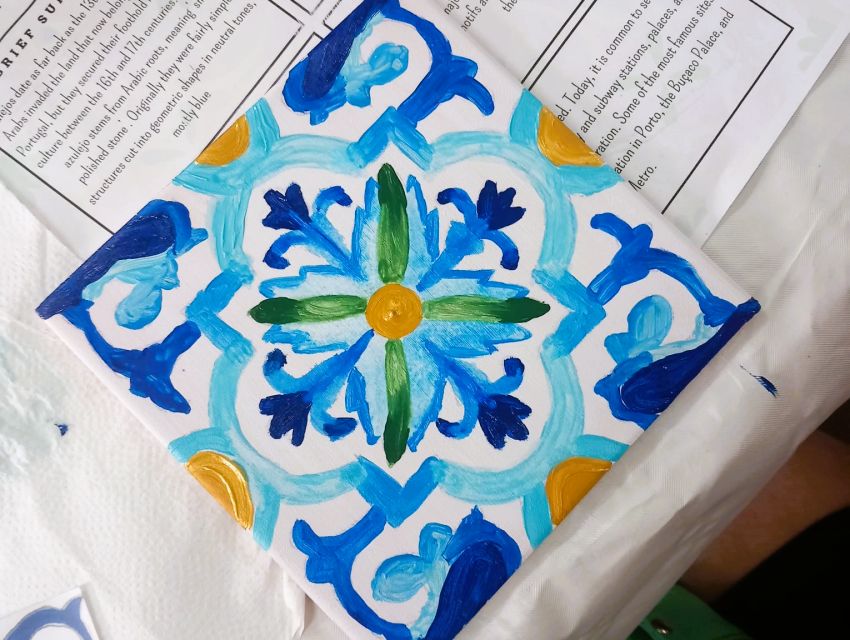
Once the introduction is finished, you receive a ceramic tile and begin planning your design. You can choose from prepared patterns and stencils, which is the sensible route if you do not consider yourself artistic.
You can also work from your own idea. A useful detail is that the studio can print a personal photo or design for you to use as a guide. That gives the activity more flexibility than a fixed paint-by-numbers class, especially if you want a tile connected to your family, a favorite image, or a specific memory from Porto.
The range of choices also helps groups with different tastes. One person can follow a traditional pattern while another creates something more personal. Parents and older children can work at their own level, and couples do not need to produce matching tiles unless they want to.
Do not expect a factory-perfect result from a short painting session. The value is in making something by hand, and small irregularities are part of the charm. If you want a polished design, use a stencil and listen closely to the instructor. If you prefer a more personal souvenir, accept that your finished tile may look handmade rather than flawless.
A different sort of day out around Porto:
- Porto: Six Bridges Cruise
★ 4.2 · 11,680 reviews - Porto: Live Fado Show with Glass of Port Wine
★ 4.8 · 6,498 reviews - Porto: 6 Bridges Douro River Cruise
★ 4.3 · 6,472 reviews - Porto: Torre dos Clerigos Entrance Ticket
★ 4.6 · 6,395 reviews
Painting with patient help and a cocktail
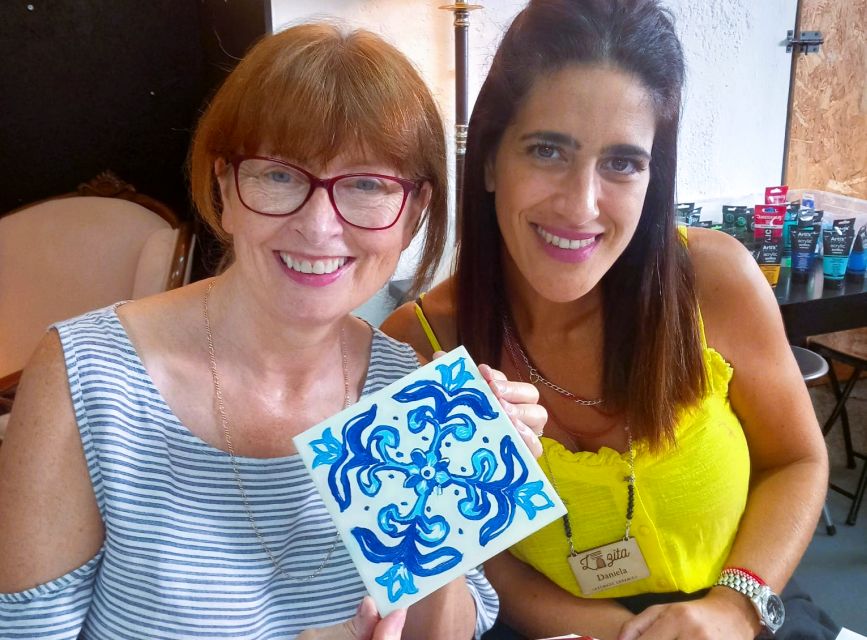
The practical session is relaxed and social. Calm music, paints, brushes, and a drink create more of a painting-and-sip atmosphere than a strict lesson. The cocktail is often a Porto Tonic, made with white port and tonic, though the supplied information describes it simply as a cocktail.
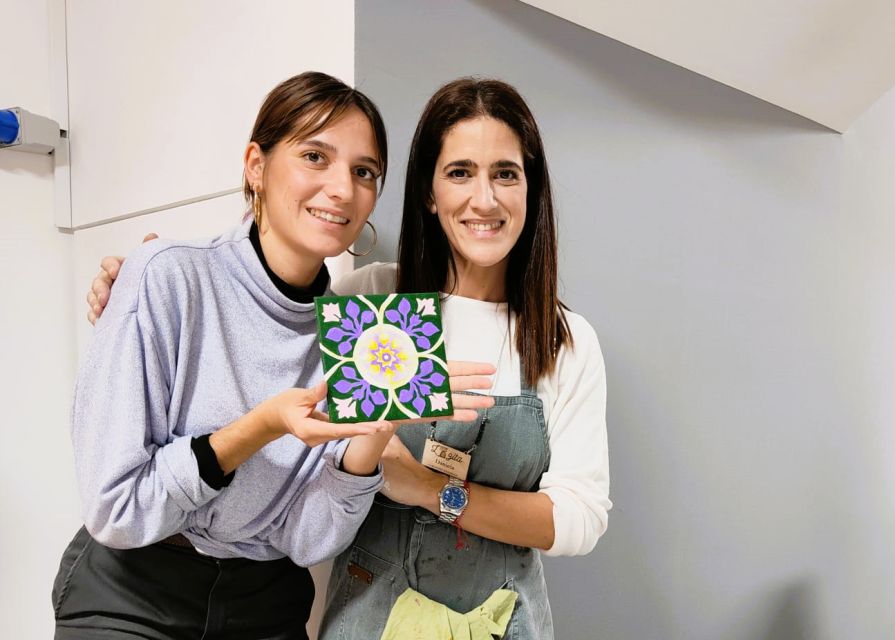
The drink is a welcome part of the value, but the teaching is more important. Daniella is repeatedly praised for being patient, funny, attentive, and willing to adjust her help to different skill levels. Emmanuel and Diogo are also noted for their friendly guidance. You can ask for help with layout, color, or technique without feeling that you are slowing the class down.
This is good news if you are nervous about art. Several people who described themselves as uncreative or inexperienced still enjoyed the process and finished a tile they were happy to keep. The instructors guide you through the steps, but they do not appear to take over the project.
You may also meet other people at the worktables, making this a natural choice for solo visitors or couples who want a little conversation during a quiet afternoon. At the same time, the setting remains calm enough for you to focus on your design.
The supplied paints are acrylic, and all materials are included. You do not need to bring brushes, paint, or paper packaging. Wear something you can relax in, however, since this is a hands-on art activity and paint is involved. That is simple common sense rather than a stated dress rule, but it can save you from worrying about your clothes.
Finishing the tile and getting it home
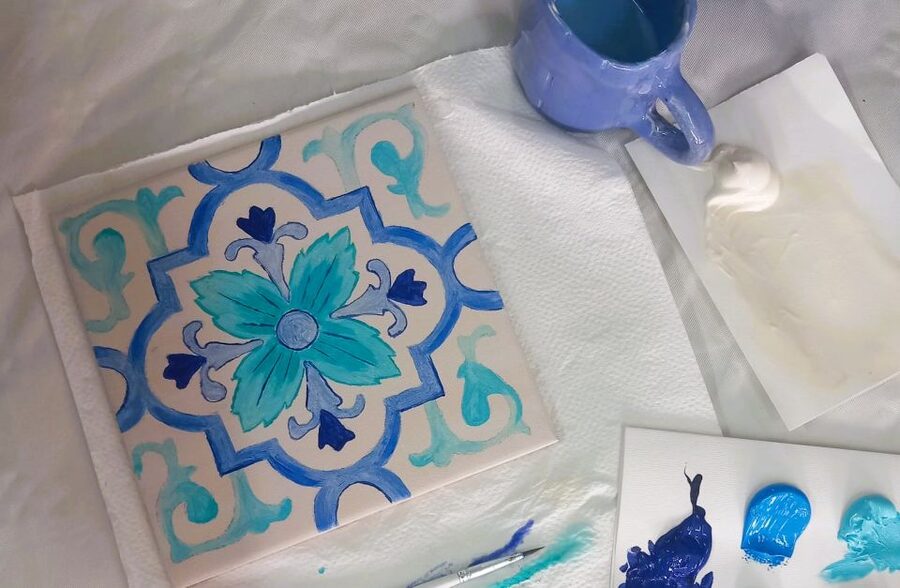
The scheduled activity lasts two hours, but the actual finish time can depend on how detailed your design becomes. Some people finish within the session. Others are allowed to stay longer, and some return later to collect a tile that still needs to dry.
This is the most important practical point to understand before booking. If you are leaving Porto immediately after the workshop, ask the studio about collection timing when you arrive. Morning and earlier afternoon sessions offer more flexibility. A late session may mean returning the following day, depending on how long your paint takes to dry.
Paper packaging is included, which makes the finished piece easier to carry. Still, a ceramic tile is not as carefree as a fabric souvenir. Pack it where it will not get crushed in your luggage, and keep it protected during the rest of your trip.
The tile is a better memento than a standard shop purchase because you made it during your time in Porto. Even a simple geometric design can bring back the sounds, colors, and easy pace of the afternoon.
Is $41 a fair price for two hours?
At about $41 per person, this is not the cheapest possible craft activity. The price includes the ceramic tile, acrylic paints, other materials, packaging, instruction, the historical introduction, and a cocktail.
That package makes the cost reasonable for you if you want more than a drink or a souvenir. You are paying for a hosted cultural activity in the city center, with supplies provided and an instructor available throughout the painting. The value improves if you would otherwise spend money on a separate museum visit and a purchased souvenir.
The price may feel less attractive if you only want to paint quickly or if you already have plenty of art experience. This is designed for a relaxed group session, not for advanced ceramic training or a professional studio course. You also leave with one tile rather than a large finished collection.
For many people, the best value is the combination of learning and making. The history explains what you are creating, and the finished object gives the lesson a physical reminder.
Who will enjoy this workshop most?
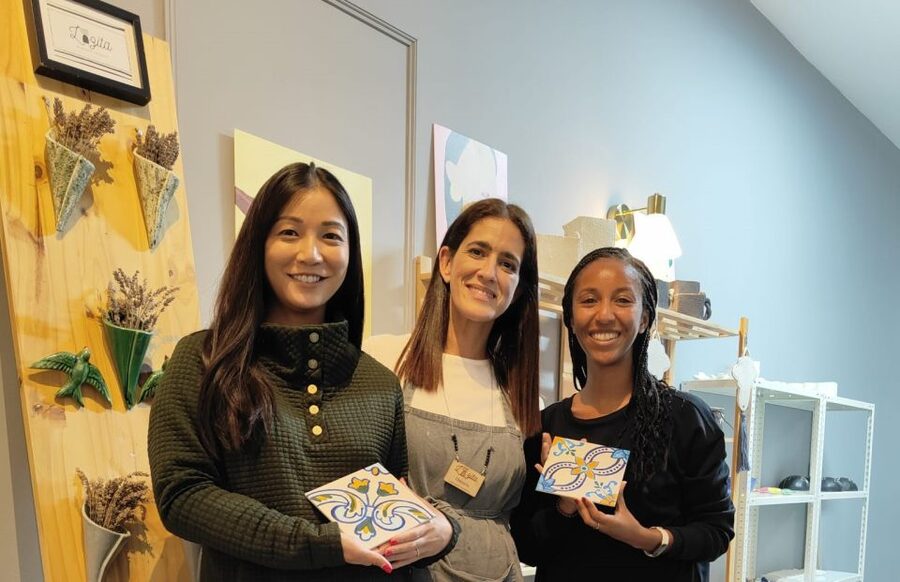
I would suggest this activity to you if you want a break from steep streets, churches, viewpoints, and Porto’s busy sightseeing rhythm. It is especially useful on a rainy afternoon, though the indoor setting works in any weather.
It suits:
- Couples looking for a shared activity
- Solo visitors who enjoy meeting people
- Families with children aged 10 and older
- Anyone who wants a handmade souvenir
- People curious about Portuguese architecture and design
- Visitors who are interested in art but lack formal training
It is also a good choice for mixed groups. The prepared patterns make it approachable for beginners, while the chance to use a personal design gives more confident artists room to make something individual.
The activity may not suit you if you dislike guided group classes, do not want to handle paint, or need to leave Porto right after the session. It is also not intended for children under 10 according to the activity information. One account describes a 9-year-old enjoying the class, but I would follow the stated age limit and confirm directly before booking for a younger child.
Smoking, fireworks, and explosive substances are not allowed. Those rules are unlikely to affect most visitors, but they are part of the studio’s conditions.
How to fit it into a day in Porto
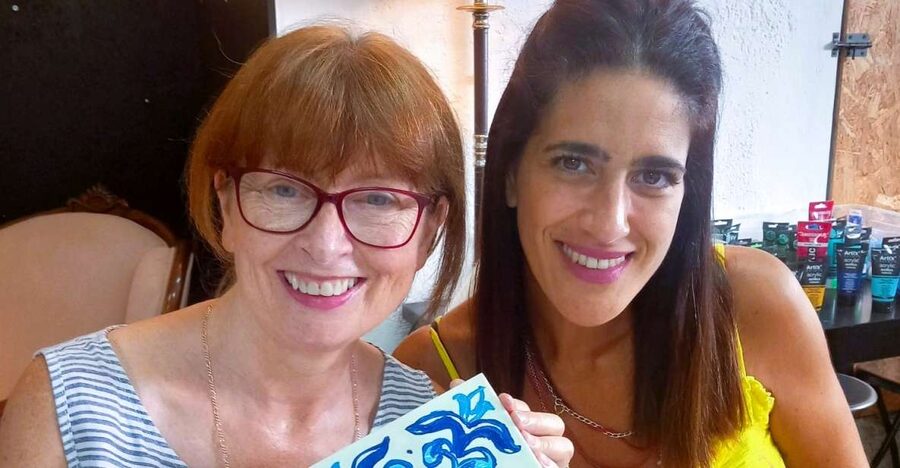
The central meeting point makes planning easy. You could visit São Bento Station and the Cathedral first, then paint while taking a break from walking. Afterward, continue toward the Luís I Bridge or Time Out Market.
A morning booking leaves the afternoon open for sightseeing. If you choose an afternoon class, allow room for collecting the tile later, especially if you want a highly detailed design. The exact starting times vary, so check availability for your date.
I would avoid placing the workshop immediately before an important departure. The class is meant to feel unhurried, and you do not want to spend the last part watching the clock or carrying a damp tile onto a train.
The calm pace also makes it a useful reset after a busy first day in Porto. You can sit down, have a drink, listen to music, and do something with your hands rather than simply move from one attraction to the next.
Should you book the Boiler Studio tile class?
Yes, if you want a friendly, low-pressure activity that connects directly to Portuguese culture. The strongest reasons are the central location, thoughtful introduction to azulejos, patient instructors, included materials, and the chance to take home something you made yourself.
I would book it for a rainy-day plan, a family activity with older children, or a quieter counterpoint to Porto’s sightseeing. The 4.9 rating from 484 reviews reflects a very consistent experience, with particular praise for Daniella and the studio team.
Think twice if your schedule is tight or you need the tile immediately. Ask about drying and collection before you commit to a late session. Otherwise, $41 buys you two relaxed hours, a cocktail, practical help, and a personal piece of Porto to carry home.
FAQ
Where does the tile painting workshop take place?
It takes place at Boiler Studio, Rua Chã 77, on a typical street in front of Porto Cathedral in central Porto.
How long does the activity last?
The scheduled workshop lasts two hours. Some people may need extra time to finish their tile or return later to collect it after drying.
What is included in the price?
The price includes the workshop information about Portuguese tiles, a ceramic tile, acrylic paints, paper packaging, a cocktail, and all other materials used during the activity.
Can I take my painted tile home?
Yes. You can take your painted tile with you, though the timing may depend on drying. Some participants collect it later the same day or the following day.
Do I need artistic experience?
No. The instructors guide you through the process, and you can use prepared designs or stencils. You may also ask the studio to print a personal image to use as a guide.
What languages are spoken?
The instructors offer the activity in English and Portuguese.
Is the workshop wheelchair accessible?
Yes, the activity is listed as wheelchair accessible.
Are young children allowed to join?
The activity is listed as unsuitable for children under 10. If your child is younger, check with the provider before booking.
Just added around Porto
- Matosinhos: Conservas Pinhais Factory Tour★ 4.8 · 173 reviews
- Private Geres National Park Tour with Lunch and Transfers★ 5.0 · 174 reviews
- Porto: Tour on the Douro River in a Classic Boat★ 5.0 · 178 reviews
- Porto: Santiago de Compostela and Valença do Minho Day Trip★ 4.5 · 181 reviews
- Porto: 6 Bridges Port Wine River Cruise with 4 Tastings★ 4.8 · 182 reviews
- Private Rafting Experience in Melgaço★ 5.0 · 186 reviews
- Tile Painting and Cocktails in Downtown Porto★ 5.0 · 187 reviews
- Porto: Combined Ticket for WOW Cultural District★ 4.7 · 188 reviews
Porto Tours, compared.


Douro Valley w/ Boat Tour, Wine Tasting & Lunch
Read our review →
Complete Douro Valley Wine Tour with Lunch, Wine Tastings and River Cruise
Read our review →


Wine Tour with Lunch, Tastings & River Cruise
Read our review →Browse the lists this tour appears in