
Reviewed · WHALE WATCHING
Rabo de Peixe: Sperm Whale Sanctuary Expedition
Whales turn a boat ride into a real adventure. This three-hour expedition from Rabo de Peixe takes you into the Atlantic sanctuary north of São Miguel, where sperm whales are the main prize, with dolphins, turtles, and Portuguese man-of-war also possible. I like the 10-minute briefing with marine biologists, and I like that the crew places animal welfare at the center of the outing. The main drawback is simple: this is wild nature, not a show, and rough weather can cancel or delay the trip.
I also like the setting at Clube Naval Rabo de Peixe, which gives the experience a local harbor feel rather than a large tourist-terminal mood. At $82 per person, the price feels fair for a three-hour trip with a marine biologist aboard, though you should bring your own snacks, drinks, sunscreen, and rain protection.
In This Review
- Key points to know before booking
- Why sperm whales make this São Miguel trip special
- Starting at Clube Naval Rabo Peixe
- The first stretch along São Miguel’s north coast
- Reaching the deeper Atlantic sanctuary
- What the marine biologist adds
- Conservation without the lecture
- Is $82 a fair price?
- Comfort, weather, and who should skip it
- Returning to Rabo de Peixe Harbor
- Who will enjoy this most?
- Should you book the Rabo de Peixe expedition?
- FAQ
- Where does the sperm whale expedition begin?
- How long does the experience last?
- What language is the tour guide available in?
- What animals might I see?
- Is hotel pickup included?
- What should I bring?
- Can everyone join the boat trip?
Key points to know before booking
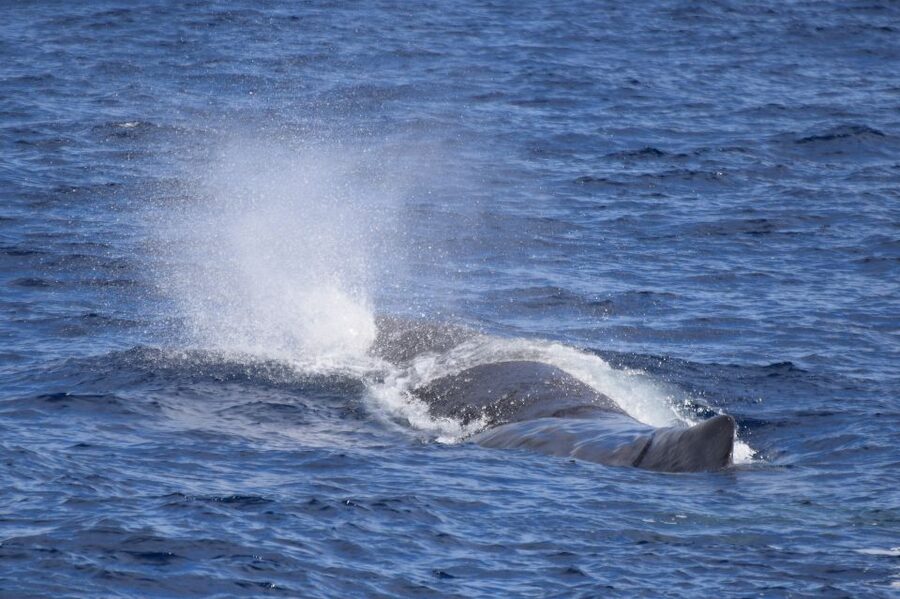
- Sperm whales are the main target: You head into deeper Atlantic water to search for the world’s largest cetacean species.
- Marine biologists lead the learning: The briefing and boat commentary cover whale behavior, species identification, local history, and conservation.
- Wildlife sightings can be varied: Dolphins, turtles, Portuguese man-of-war, and other whales may appear along with sperm whales.
- A respectful operating style matters: The crew explains how boats approach marine mammals without chasing or crowding them.
- Plan for weather and a flexible schedule: Poor conditions can cancel the trip, and marina logistics may add 30 to 45 minutes.
- The boat ride can be physical: This trip is not suitable for pregnant women, people with back problems, mobility impairments, or recent surgery.
Why sperm whales make this São Miguel trip special
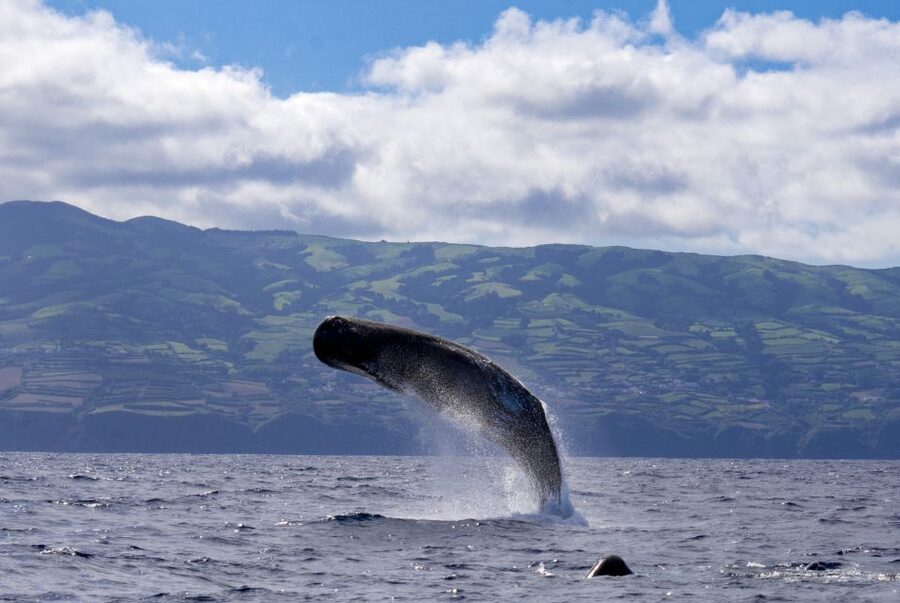
The Azores sit in a productive part of the Atlantic, and São Miguel gives you access to open water without a long overland journey. From Rabo de Peixe, the boat leaves the north coast and heads toward deeper water, where sperm whales spend much of their time.
Sperm whales are an especially worthwhile focus. They are the largest members of the cetacean family, which includes whales, dolphins, and porpoises. Their size alone makes an encounter memorable, but the real appeal is seeing them in their natural setting, with the crew explaining their habits and travel routes as you watch.
I appreciate that the experience does not treat the whale as a simple photo opportunity. The briefing explains how marine biologists and whale-watch crews behave around the animals. That context helps you understand why the boat may slow down, wait, change direction, or keep its distance instead of racing toward every sighting.
The trip also has a good element of uncertainty. You may see sperm whales, but you may instead spend time watching dolphins or scanning an empty stretch of sea. That waiting is part of the activity, and the crew uses it as a chance to explain the marine environment rather than letting the ride become silent guesswork.
More Whale Watching in Azores
- From Ponta Delgada: Whale and Dolphin Watching Trip
★ 4.7 · 4,109 reviews - Azores Whale Watching & Islet Boat Tour
★ 4.6 · 2,146 reviews - São Miguel Azores: Half-Day Whale Watching Trip
★ 4.5 · 983 reviews
Starting at Clube Naval Rabo Peixe
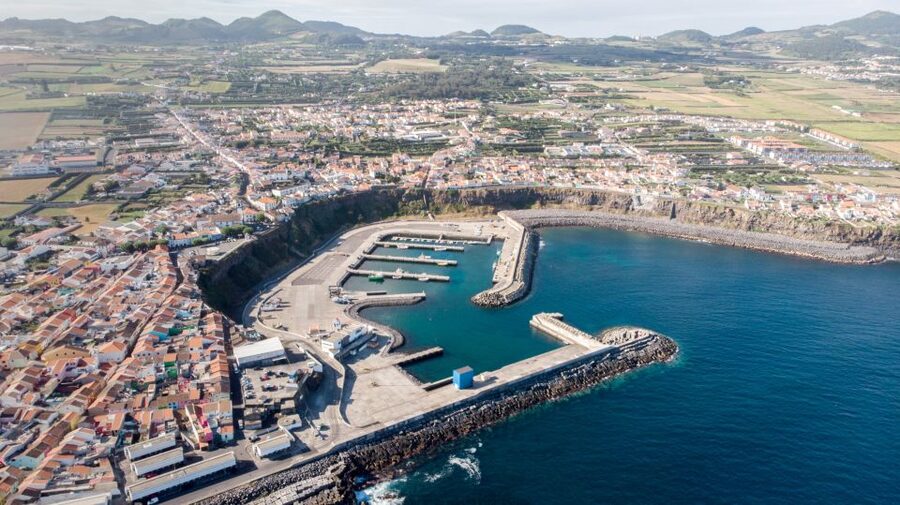
Your meeting point is Clube Naval Rabo Peixe, at Rabo de Peixe Harbor on the northern side of São Miguel. You arrange your own way to the marina because hotel pickup and drop-off are not included.
Arrive ready for the briefing rather than treating it as paperwork. The opening session lasts about 10 minutes and introduces the species you might see, the history of whale watching in the Azores, and the rules used to protect the animals. This is a useful start because it gives you basic tools for the rest of the trip: what to look for, how whales surface, and why the skipper may not approach directly.
The harbor setting is also practical. You can get your bearings before boarding, check your clothing, and make sure your sunscreen, sunglasses, and hat are secure. Since snacks and drinks are not supplied, this is the right moment to confirm that you have water and something small to eat.
The marina may not run on a precise clock. The operator warns that logistics can add 30 to 45 minutes to the total duration. If you have a dinner reservation or a connecting activity, leave a generous buffer. A trip advertised as three hours can take longer from start to finish.
The first stretch along São Miguel’s north coast
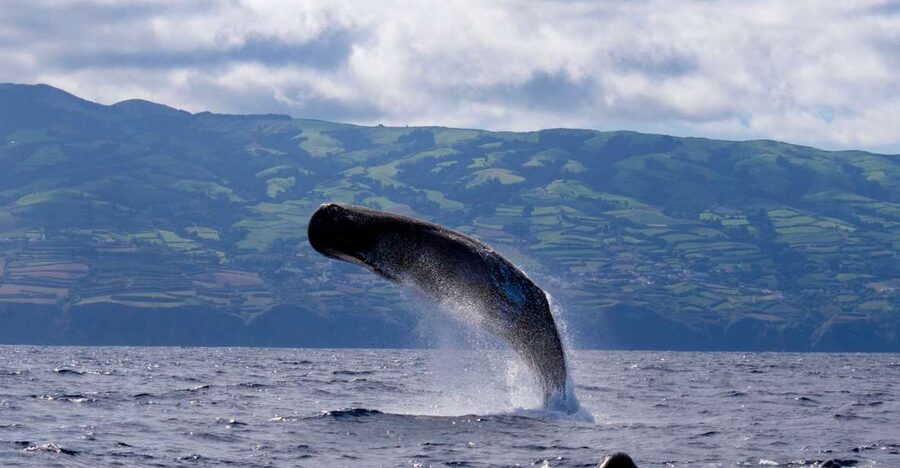
Once aboard, you travel out from Rabo de Peixe and along the northern coast. The shore gives you something to watch while the crew searches for signs of life farther out.
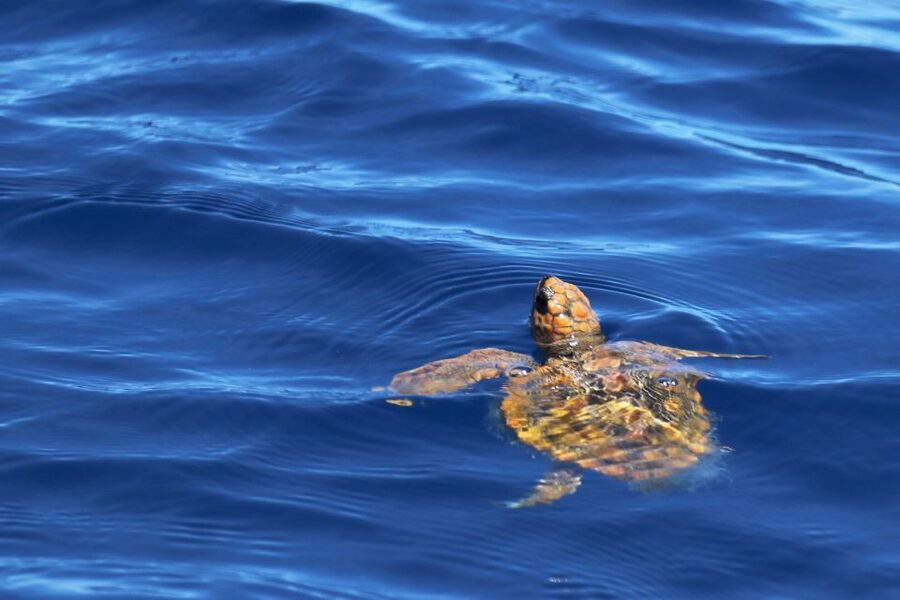
The trip is not limited to whales. Along the coast, you might see dolphins, turtles, or Portuguese man-of-war. A Portuguese man-of-war is not a jellyfish, though it is often mistaken for one, and its floating body can be an interesting sight from the boat. You might also encounter other cetacean species, depending on the day.
One recent outing produced minke whales, a Bryde’s whale, several groups of dolphins, Atlantic spotted dolphins, and a hammerhead shark. That is not a promise of what you will see, but it shows how wide the range of marine life can be around São Miguel. The trip has a primary target, yet the surrounding water can provide plenty of surprises.
The coastal portion also helps you settle into the rhythm of whale watching. You will spend time looking across the surface, following the crew’s directions, and learning to distinguish a bird, wave, floating object, or distant fin from a genuine sighting. Bring patience. The ocean does not place animals on cue.
Reaching the deeper Atlantic sanctuary
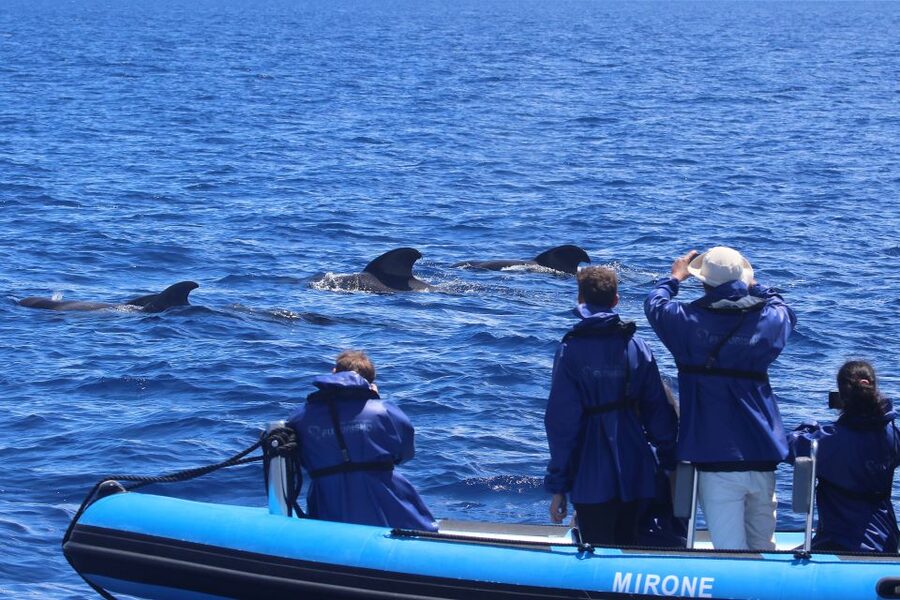
As the boat reaches deeper water, the focus shifts to sperm whales. This is the part of the trip most people have in mind when they book, but it is also the part where conditions matter most.
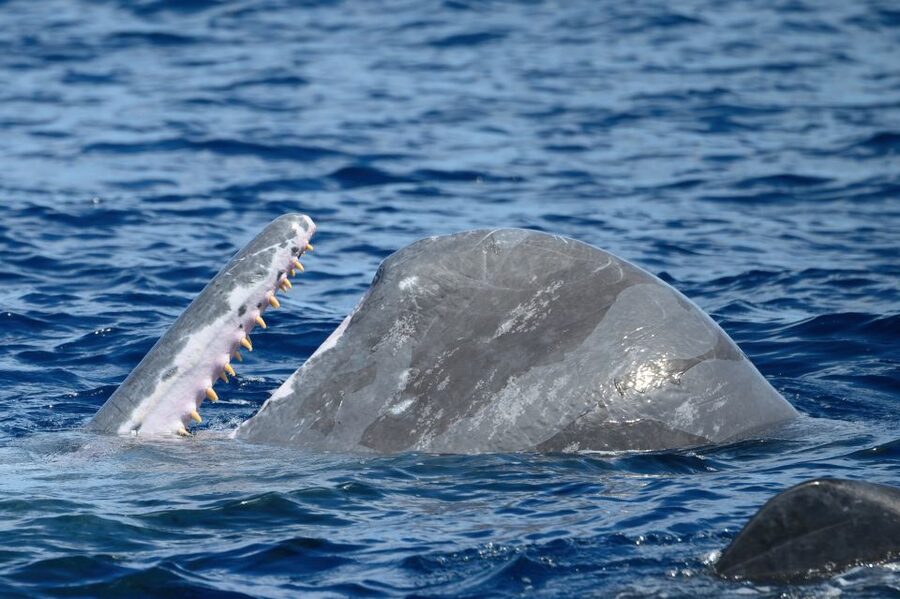
A sperm whale may surface at a distance, remain visible for a short time, and then disappear again. The marine biologist can help you understand what you are seeing and explain how the animals use the surrounding waters. You may hear about their behavior, routes, and place in the local marine system while keeping watch for the next appearance.
The best approach is to value the whole encounter, not only a close view. One particularly successful outing included 10 different sperm whales. One animal approached the boat closely, while the boat did not chase it. That distinction is important. A close sighting feels far better when it happens because the whale chooses the distance.
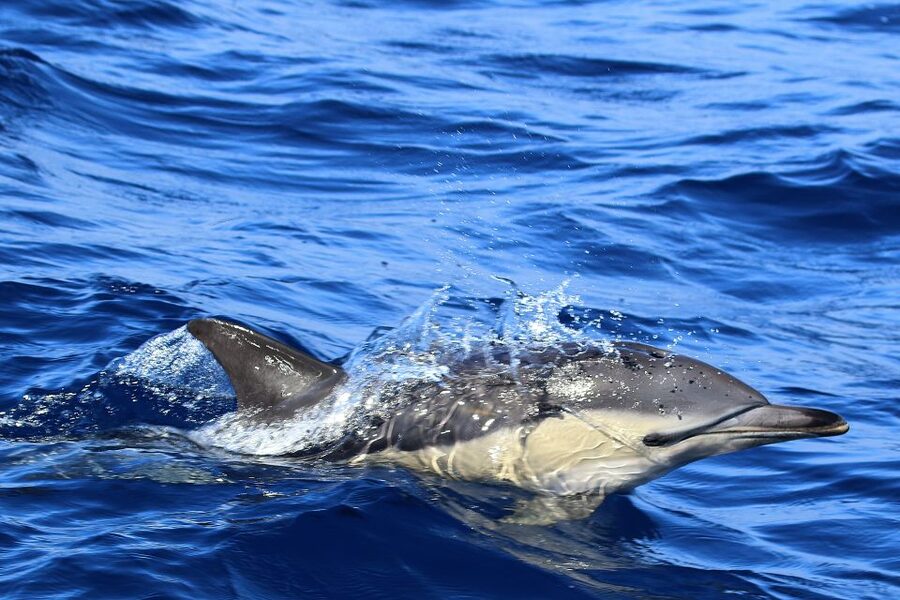
The same outing included three dolphin species: bottlenose, common, and Atlantic spotted dolphins. Several groups had young animals with them. Again, conditions vary, but these accounts show why you should not think of the expedition as a single-species trip.
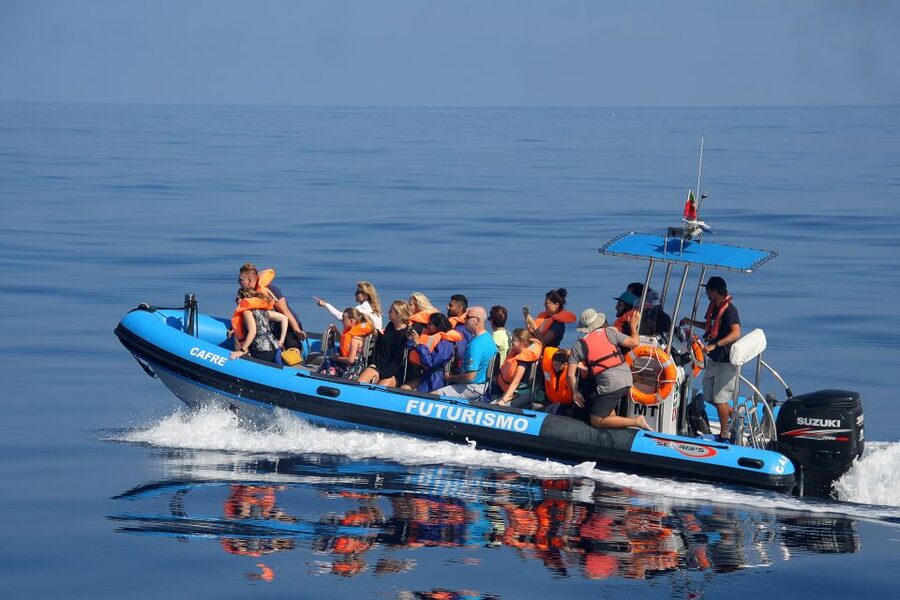
The boat itself affects comfort and viewing. One recent departure used a 16-place zodiac. A small boat can put you close to the water and make the outing feel personal, but it can also expose you more fully to spray, wind, and motion. Wear comfortable clothing that can handle a wet ride, and do not assume that ordinary sightseeing clothes are enough.
More whale trips:
- Terceira: Whale and Dolphin Watching in a Zodiac Boat
★ 4.8 · 230 reviews - Terceira: Half-Day Dolphin and Whale Watching Tour
★ 4.6 · 219 reviews - São Miguel: Whales & Volcano Full-Day Tour with Lunch
★ 4.5 · 95 reviews - From Funchal: Ecological Catamaran Dolphin Whale Watching
★ 4.5 · 5,771 reviews
What the marine biologist adds
The marine biologist is more than a guide who points at a fin. The pre-trip talk covers whale-watching history in the Azores and the way professionals observe animals with care. That gives the expedition an educational purpose without turning it into a classroom at sea.
During the trip, the biologist can explain the species you encounter and place each sighting in context. You may learn why some animals stay near the surface, why others appear only briefly, or how researchers identify recurring individuals. The provided information does not promise a formal research presentation, so you should expect practical interpretation rather than a long lecture.
The language options are English and Portuguese. That makes the trip accessible to visitors who speak either language, though you should select the language that helps you follow instructions most easily. Clear directions matter when the boat is moving and a sighting appears suddenly.
Biologist Emma has received special praise for bringing warmth and excitement to the experience. That kind of personal delivery can make a difference. A guide who is visibly interested in the animals helps you stay engaged during the quiet periods, when the sea may offer only a distant bird or a changing patch of water.
Conservation without the lecture
The conservation element is one of the strongest reasons to choose this expedition. The briefing explains how marine biologists and whale watchers respect the animals, and the return discussion covers conservation efforts in the Azores.
That matters because responsible whale watching depends on decisions that may not be obvious from the passenger seat. A respectful crew may avoid a direct approach, reduce speed, wait for the animal to surface, or stop moving when the whale comes nearer. From your point of view, that can mean fewer dramatic boat maneuvers, but it also means the encounter is less intrusive.
The crew’s behavior is especially important with dolphins. Dolphins often move quickly and may approach a boat on their own. A boat that tries to force a close encounter can turn an enjoyable sighting into a stressful one for the animals. The strongest experiences described from this trip praise the crew for respecting wildlife above all else.
I would choose a responsible operator even if it slightly reduced the chance of a close photograph. You may return with fewer perfect pictures, but you will have taken part in a better form of wildlife tourism.
Is $82 a fair price?
At $82 per person, this is not the cheapest way to spend a morning or afternoon in São Miguel. It is also not an inflated price for a three-hour marine expedition that includes a professional marine biologist and a pre-trip briefing.
The value depends on what you want. If you only want a fast boat ride and guaranteed animal sightings, no whale-watching trip can provide that. If you want an educational outing with a serious focus on wildlife protection, the price is easier to justify.
You are paying for more than fuel and a seat. The fee covers the crew’s local knowledge, the biologist’s interpretation, the planning required to locate animals, and the chance to enter protected marine habitat under established viewing practices. Food, drinks, rain gear, and transportation to the harbor cost extra, so budget for those separately.
The best value comes when you treat the trip as a half-day experience rather than a timed attraction. Allow for the three hours on the water, the briefing, and a possible 30 to 45-minute delay caused by marina operations.
Comfort, weather, and who should skip it
The activity requires good weather. That is sensible for a small open boat, but it means your plans need some flexibility. If conditions change, the trip may be delayed or cancelled, and the ocean can feel much less gentle than it looks from shore.
Wear comfortable shoes with good footing. High heels are not allowed, and they would be a poor choice on a moving boat anyway. Add a sun hat, sunglasses, sunscreen, and comfortable clothes. Pack snacks and drinks because they are not included.
A raincoat is also not included. Even if the forecast looks dry, spray and changing Atlantic conditions can make waterproof outerwear useful. Bring a proper rain jacket rather than relying on a thin fashion layer.
This outing is not suitable for pregnant women, people with back problems, people with mobility impairments, or anyone recovering from recent surgery. The boat’s motion and boarding arrangements may be hard on the body. If you have a medical concern, do not assume that a calm forecast removes the problem.
Drones, alcohol, and drugs are not allowed. These restrictions are reasonable on a wildlife boat, where safety, animal protection, and clear judgment matter.
Returning to Rabo de Peixe Harbor
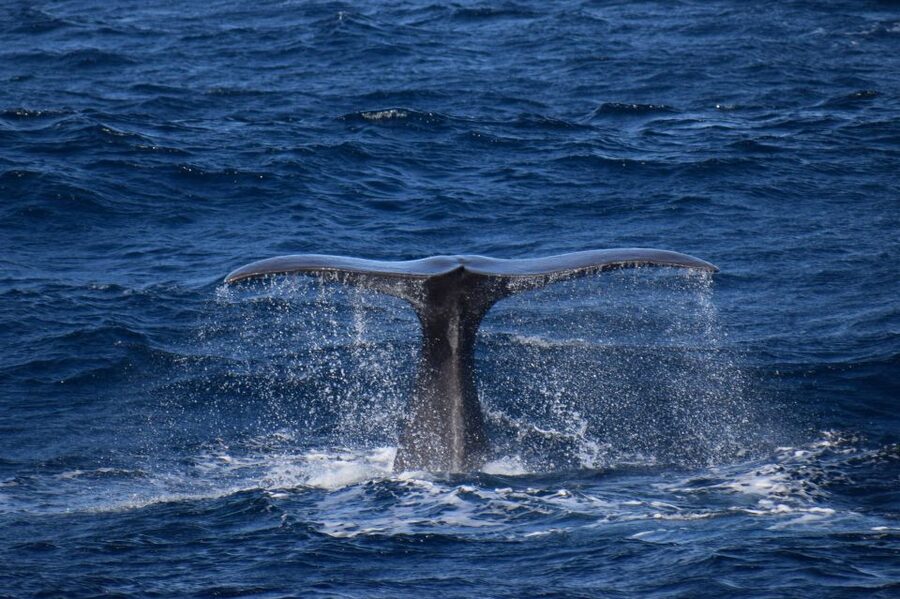
The return trip gives the crew a final chance to discuss what you have seen. The closing talk covers the cetaceans, their habits, and their routes, helping you connect individual sightings with the wider marine system around the Azores.
That final explanation is useful even if your sightings were brief. A whale disappearing beneath the surface can feel incomplete until you understand that the animal’s behavior is part of the encounter. If you saw several species, the wrap-up can help separate them and explain what made each one different.
You return to Clube Naval Rabo Peixe, completing the three-hour outing, though the total schedule may run longer because of marina logistics. Since there is no hotel transfer, you can continue on your own schedule after leaving the harbor.
I would avoid planning anything that requires you to be at a precise place immediately afterward. Give yourself time to disembark, collect your belongings, and adjust if the boat returns late.
Who will enjoy this most?
This trip suits you if you want:
- A focused search for sperm whales
- A small-scale boat experience rather than a large sightseeing cruise
- Clear information from a marine biologist
- A wildlife outing that takes conservation seriously
- The chance to see dolphins and other marine life as well as whales
- A three-hour activity that fits into a day on São Miguel
It is less suitable if you dislike open-water motion, need guaranteed sightings, or have a tight schedule. It also may not suit anyone who wants a completely dry and comfortable ride. The ocean decides the terms.
Families with older children may appreciate the educational side, but the provided information does not set a minimum age or describe child-specific facilities. Ask the operator directly if you are booking for young children.
Should you book the Rabo de Peixe expedition?
I would book this trip if sperm whales are high on your São Miguel wish list and you can keep your schedule flexible. The combination of a marine biologist, responsible viewing practices, and a real chance of seeing several cetacean species gives the $82 price solid value.
Book it with realistic expectations. You might see 10 sperm whales, several dolphin species, and a shark in one outing, or you might spend much of the time scanning open water. That uncertainty is not a flaw in the tour. It is the nature of wildlife watching.
Choose this experience for the quality of the encounter, not a guaranteed photograph. Bring sun protection, snacks, water, and a raincoat, leave extra time around the three-hour schedule, and prepare for a boat ride that may be lively. If that sounds like your kind of adventure, Rabo de Peixe is a strong choice.
FAQ
Where does the sperm whale expedition begin?
The activity begins at Clube Naval Rabo Peixe in Rabo de Peixe Harbor on São Miguel Island.
How long does the experience last?
The whale-watching activity lasts three hours, including the boat outing. Marina logistics may add 30 to 45 minutes to the total duration.
What language is the tour guide available in?
Live guides are available in English and Portuguese.
What animals might I see?
The main target is the sperm whale. You might also see dolphins, turtles, Portuguese man-of-war, minke whales, Bryde’s whales, Atlantic spotted dolphins, bottlenose dolphins, common dolphins, or other marine life.
Is hotel pickup included?
No. Hotel pickup and drop-off are not included, so you need to make your own way to Clube Naval Rabo Peixe.
What should I bring?
Bring comfortable shoes, sunglasses, a sun hat, snacks, sunscreen, and comfortable clothes. Raincoats, food, and drinks are not included.
Can everyone join the boat trip?
The activity is not suitable for pregnant women, people with back problems, people with mobility impairments, or people with recent surgeries. It also requires good weather.
Just added around Sao Miguel Island
- Sete Cidades Azores 4×4 Day Tour from Ponta Delgada★ 4.9 · 46 reviews
- West Coast Van Tour (Half Day) | Terceira Island★ 4.9 · 46 reviews
- São Miguel Island: Full-Day Sete Cidades Tour★ 4.9 · 46 reviews
- Sao Miguel: Snorkeling around Vila Franca do Campo★ 4.8 · 49 reviews
- Azores: Canyoning in Salto do Cabrito★ 5.0 · 49 reviews
- Ponta Delgada: Full-Day Sete Cidades 4X4 Tour with Lunch★ 4.9 · 50 reviews
- Furnas: Thermal Springs & Tea Plantation Day Tour with Lunch★ 4.6 · 55 reviews
- From Ponta Delgada: Sete Cidades Guided Tour★ 4.8 · 61 reviews
Whale Watching, compared.

Funchal Bay: Dolphin & Whale Watch Luxury Catamaran Cruise
Read our review →
All Inclusive Whale and Dolphin Watching Luxury Tour
Read our review →
Madeira Dolphin and Whale Watching on a Ecological Catamaran
Read our review →
Dolphin and Whale Watching by Luxury Catamaran
Read our review →Browse the lists this tour appears in