
Reviewed · FOOD & DRINK
Tavira Olive Experience Factory Tour and Tasting
Olives tell Portugal’s story in small bites. This 90-minute Tavira olive factory tour combines a clear look at table-olive processing with a generous tasting of local food and drink. I like the friendly, personal welcome from Andreia and her family team, and I like that the tasting feels more like a relaxed shared spread than a token sample. The main consideration is timing: outside the September and October picking season, the machines may be silent.
This is not a grove visit or a dedicated olive-oil-making tour. It focuses mainly on how olives are prepared for eating, including preservation, texture, pits, salt, and the machinery involved. Still, the explanation is lively, and the food afterward is substantial enough to make this a good-value stop at $35.09 per person.
In This Review
- Key points to know before booking
- What this Tavira olive experience actually covers
- Arriving at the small factory near Tavira
- Inside the processing area
- The important seasonal warning about machinery
- The tasting is the real reward
- What you can buy afterward
- Why the price can be good value
- Who will enjoy this most
- A balanced look at the drawbacks
- Booking, cancellation, and practical details
- Should you book the Tavira Olive Experience?
- FAQ
- Where does the Tavira Olive Experience take place?
- What time does the tour start?
- How long does the experience last?
- Is the tour offered in English?
- Will the olive-processing machines be operating?
- Is this an olive-oil-making tour?
- What food and drinks are included?
- Can I cancel for a full refund?
Key points to know before booking
- Table olives are the main subject: You learn how olives are prepared for eating, not just how oil is extracted.
- Andreia gives the tour a personal touch: Her presentation is friendly, amusing, and easy to follow.
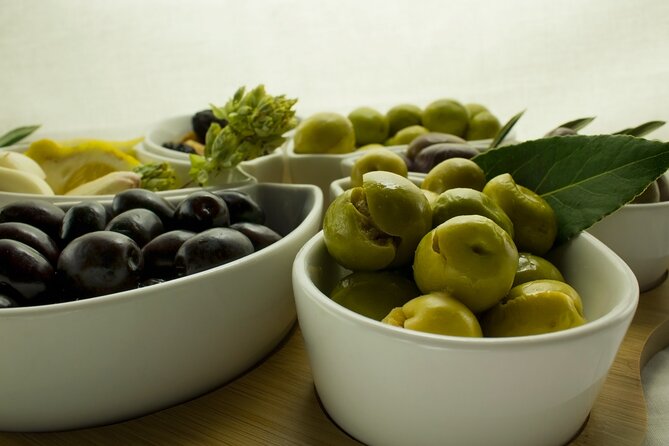
- The tasting is generous: Expect olives, olive oil, bread, cheese, meat, honey, orange marmalade, lupini, sauces, and wine, with some nonalcoholic drinks available.
- Production is seasonal: Olive processing usually takes place in September and October, and not every day.
- It is a small local business: The factory is managed by a family team, giving the visit a direct connection to local food production.
- Allow extra time to find the entrance: Some map apps have trouble locating the factory, so save the address and arrive prepared.
What this Tavira olive experience actually covers
It helps to set your expectations before you go. The experience takes place at Olive Factory Tavira, at Estrada do Arraial Ferreira Neto, outside central Tavira. The activity is often described in broad terms as an olive and olive-oil experience, but the practical focus is the processing of table olives.
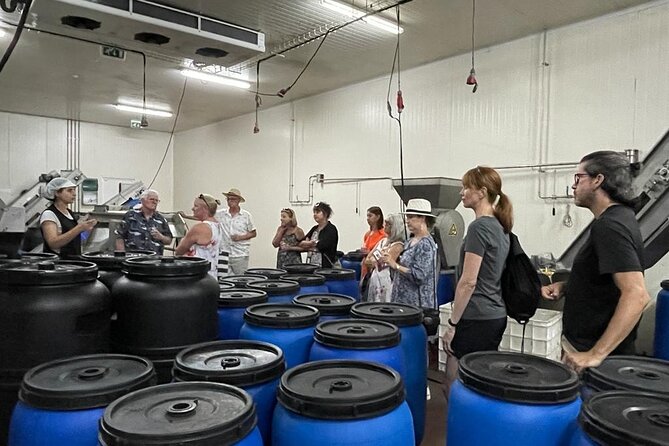
You will see the equipment used to transform freshly picked olives into the preserved product sold for eating. The guide explains the work involved, the role of salt, and the reasons olives end up with different textures and flavors. You also learn why some olives retain their pits and how preparation affects the final bite.
That distinction matters. If you want to walk among olive trees, learn about harvesting in the field, or watch an oil press produce extra-virgin olive oil, this is not the right experience. If you want to understand what happens after olives reach a small processing facility, it is a better fit.
The tour can also touch on olive oil and its place in the process, but the factory is not presented as an olive-oil production site. One useful point raised during the experience concerns storing oil in the refrigerator as a way some people try to check its purity. Treat such tips as part of the conversation rather than the central purpose of the visit.
More Portuguese food and wine outings:
- Tour & Wine tasting – Authentic Algarve Flavours by Quinta da Tôr
★ 5.0 · 343 reviews - From Porto: Douro Valley w/ Boat Tour, Wine Tasting & Lunch
★ 4.7 · 19,061 reviews - Winner 2025 Undiscovered Lisbon Food & Wine Tour by Eating Europe
★ 5.0 · 6,390 reviews
Arriving at the small factory near Tavira
The meeting point is Olive Factory Tavira, Hélder Madeira, Estrada do Arraial Ferreira Neto S/N, 8800-228 Tavira, Portugal. The scheduled start is 4:00 pm, and the activity finishes back at the same place.
The address deserves attention. Map applications have reportedly struggled to find the facility, and one guide, Andreia, called to help a group that was having trouble locating it. I would save the full address before setting out and avoid leaving the search until the last minute. The operator allows you to arrive up to an hour early and wait at the bar, but drinks ordered before the tour cost extra.
The group can include up to 30 people. That is not an intimate private visit, but the factory setting and family-run format keep the experience from feeling like a large commercial production. Most people can take part, and confirmation is provided when you book.
The location is listed under Faro, but the actual meeting point is in Tavira. If you are planning a day around the eastern Algarve, check your route carefully and allow time to reach the address.
Inside the processing area
The first part is a walk and talk through the factory. You are introduced to the machines and shown how olives move through the production process. The point is not a complicated technical lecture. Instead, the guide connects each stage to things you can see and taste later.
You learn about olives prepared for consumption, including preservation methods and the effect of salt. The guide also explains why olives can have different textures and why the pit matters. These details are easy to miss when you buy a jar from a supermarket, yet they explain much of the difference between a firm, pleasantly bitter olive and a softer, heavily seasoned one.
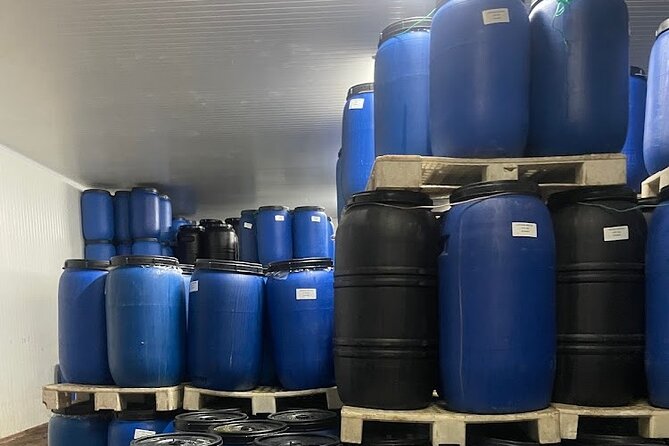
The setting is modest. This is a small facility rather than a polished museum with elaborate displays. That is part of its appeal. You are looking at working equipment and hearing about the labor behind the products. One particularly human detail is the small team itself. The business is run by three women, and the hands-on nature of the operation gives the visit a strong family-business character.
Andreia is frequently praised for her delivery. She explains the process with humor and keeps the talk moving, which matters because machinery can be hard to make exciting when it is not operating. Her sister Liliana is also named as one of the welcoming hosts. The team’s warmth is one of the strongest reasons to choose this experience over a more formal food museum visit.
The important seasonal warning about machinery
Do not book this tour assuming you will see a full production line running. Olive picking generally takes place in September and October, and processing does not happen every day. If you visit outside that period, the machines may be switched off.
That does not cancel the educational part. You can still see the equipment and learn how it is used, and several visits have been enjoyable even when production was out of season. Still, the sight and sound of active machinery would add something, so ask the operator about current production if that is important to you.
The seasonal issue is especially relevant for anyone expecting an agricultural working tour. This is a food-processing visit, and its most dependable features are the explanation and tasting, not live production. I would book it for the local insight and food, with operating machinery considered a bonus.
A few more reviews worth comparing before you book
- 4 Stops | 3 Islands & Ria Formosa Natural Park – From Faro
★ 5.0 · 3,080 reviews - From Faro: Benagil Cave, Marinha Beach, Algar Seco & More
★ 4.7 · 2,027 reviews - Ria Formosa – Boat trip to the 3 Islands: Armona | Culatra Island | Lighthouse
★ 5.0 · 1,872 reviews - Ria Formosa Natural Park and Islands Boat Cruise from Faro
★ 5.0 · 1,314 reviews
The tasting is the real reward
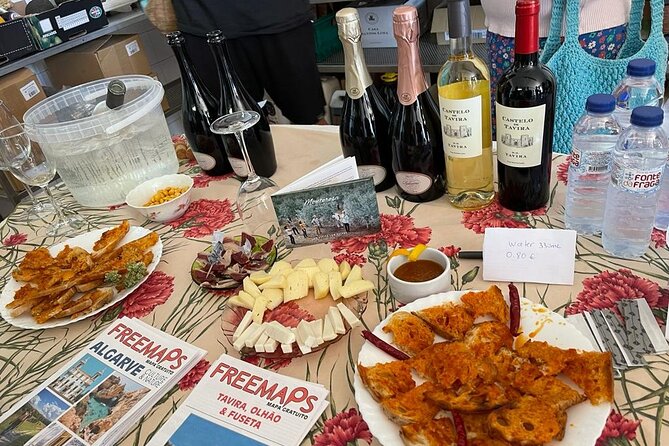
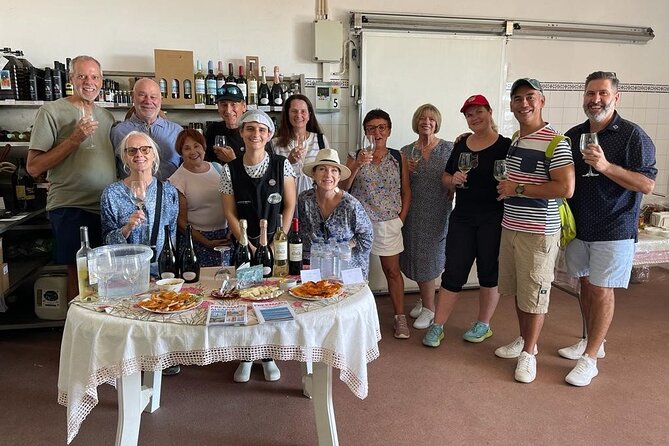
After the factory explanation, you sit down to sample local products. The included food goes well beyond a few olives on a saucer. You can expect assorted olives, olive oil, special bread or homemade sourdough, cheese, honey, orange marmalade, and wine. Accounts of the spread also include meat, lupini, sauces, and other Portuguese products.
That generosity changes the value calculation. At $35.09 per person, you are paying for a guided factory visit plus a small meal of regional tastes. The tasting is described as generous enough to feel like a little feast, not merely an add-on. It also gives the earlier explanation a practical purpose: you can compare flavors and textures while the details are still fresh.
Bread and olive oil form a natural center for the table, while cheese, meat, jams, and honey add contrast. Orange marmalade brings sweetness, and lupini add another familiar Portuguese snack to try. Wine is included with the tasting, and nonalcoholic choices are available. Drinks ordered separately at the bar before the tour are not included.
The tasting also creates a social side to the experience. You share a table with the group and have time to chat rather than being hurried straight toward the exit. For me, this relaxed finish is more memorable than a quick retail sample.
What you can buy afterward
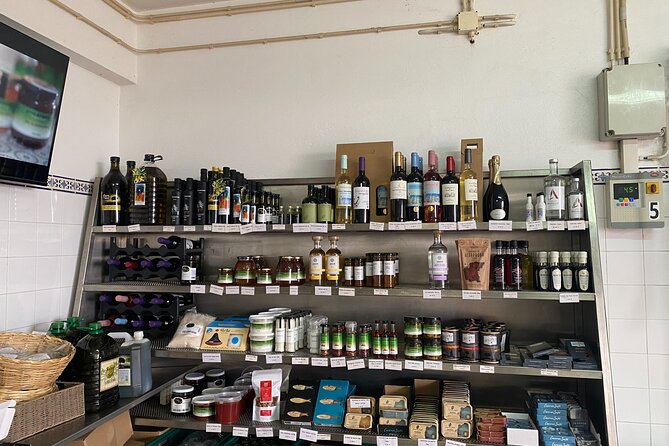
There is a small shop where you can purchase products you sampled. Souvenirs and purchases are not included in the tour price, and the stated allowance for these extras is about 15 to 20 euros.
Buying something is optional, but it can be a useful way to take home flavors that are difficult to find elsewhere. The selection may include olives, oils, jams, and other local products served during the tasting. You get to try before buying, which is better than guessing from a label.
Keep your luggage space in mind. Food products are practical souvenirs, but jars and bottles add weight and may require care during transport. The shop is best treated as a chance to support the small producer, not as a required part of the visit.
Why the price can be good value
The listed price is $35.09 per person. For a short activity, that may initially seem high if you think of it as a factory walk alone. The equation looks better when you include the guided explanation, the local setting, the wine, and the broad tasting spread.
You are also paying for a small business experience rather than a large attraction with heavy visitor infrastructure. The value is strongest if you enjoy food, want an activity that lasts about an hour and a half, and appreciate a tasting that can stand in for a light meal.
The value is weaker if your only goal is to watch olive oil being made. Since this is mainly a table-olive facility and production may be inactive, you should not compare it directly with a full olive-oil mill visit. Think of it as a local food workshop with machinery, followed by a generous Portuguese tasting.
A 4:00 pm start works well on a day when you want a slower afternoon. It can also be a sensible option in poor weather, since the visit takes place indoors. You should still confirm your route and avoid arriving rushed because of the location issue.
Who will enjoy this most
I would recommend this experience to anyone curious about how everyday Portuguese food is made. It suits couples, families, and small groups who enjoy tasting local products without committing to a long formal cooking class.
It is also a good choice if you like meeting the people behind a regional product. The family team’s role is visible, and the experience feels connected to the work of a small producer. Andreia’s humor helps keep the technical explanation approachable, even for people who know little about olives.
Food-focused visitors will get the most from it, especially if they enjoy trying several products at once. The tasting includes enough variety to keep curious eaters busy, and allergy needs can be discussed in advance. One guide accommodated a husband’s allergies after being contacted before the visit, so I would share any dietary concern early.
This is less suitable for anyone needing a fully active factory tour. It is also not the best match for a serious olive-oil student seeking detailed oil tasting, grove management, or a working oil press. The activity gives useful olive and oil context, but its center is the table olive.
A balanced look at the drawbacks
The biggest weakness is the possible gap between expectation and reality. The word olive can suggest orchards, harvests, and oil pressing. Here, you may instead spend your time looking at stationary machinery while the guide explains the process.
The facility can also be difficult to locate. This is a practical nuisance, not a flaw in the food experience, but it can affect your mood before the tour starts. Save the address, leave extra time, and remember that the operator has helped people find the entrance.
The group size can reach 30 people. That is manageable, but the tasting may feel less personal than a private food visit. You also need to pay separately for any drinks you order before the tour, and souvenirs are not part of the ticket.
On the positive side, the guide’s energy seems to soften these limitations. A good presenter can make inactive equipment interesting, and Andreia’s warm style is repeatedly singled out as a reason the visit works. The tasting then gives the activity a satisfying finish.
Booking, cancellation, and practical details
The tour is offered in English, uses a mobile ticket, and lasts approximately one hour and 30 minutes. Confirmation arrives at booking, and the maximum group size is 30.
Free cancellation is available until 24 hours before the 4:00 pm start for a full refund. Changes or cancellations made inside that 24-hour window are not accepted for a refund, and the cut-off follows local time.
The experience is booked, on average, 11 days ahead. That is not a rule requiring you to book that early, but it is a useful sign that you should not leave it until the last day during a busy visit to the Algarve.
Contact the operator ahead of time if you have food allergies or need help with directions. Wear something comfortable for walking through a working facility, and plan your route before leaving. The tour ends where it begins, so you do not need to arrange a second pickup point.
Should you book the Tavira Olive Experience?
Book it if you want a friendly, food-centered activity with a real small-business feel. The best parts are the clear explanation of table-olive processing, Andreia’s lively presentation, and the abundant tasting of olives, bread, cheese, meat, honey, marmalade, oil, lupini, and wine.
Think twice if you specifically want to watch olive oil being produced or see machinery operating. The season and production schedule control that part, and the factory is not a grove or a dedicated oil mill.
For most food-minded visitors in the Tavira area, I think the combination is worth the $35.09 price. Just arrive with the right idea: you are going to learn how olives reach the table, meet a welcoming local team, and sit down to a very good spread of Portuguese flavors.
FAQ
Where does the Tavira Olive Experience take place?
It takes place at Olive Factory Tavira, Hélder Madeira, Estrada do Arraial Ferreira Neto S/N, 8800-228 Tavira, Portugal. The activity ends at the same meeting point.
What time does the tour start?
The scheduled start time is 4:00 pm.
How long does the experience last?
The experience lasts approximately one hour and 30 minutes.
Is the tour offered in English?
Yes. The experience is offered in English.
Will the olive-processing machines be operating?
Not always. Olive picking generally takes place in September and October, and production does not happen every day. Outside the active season, you may see the machines without seeing them running.
Is this an olive-oil-making tour?
No. The main focus is the processing of table olives for consumption. The experience also provides information about olive oil, but it is not an olive grove or dedicated olive-oil production tour.
What food and drinks are included?
The tasting includes snacks such as olives, special bread or homemade bread, cheese, honey, orange marmalade, and olive oil. The spread may also include meat, lupini, sauces, and wine. Nonalcoholic drinks are available, while drinks ordered separately at the bar cost extra.
Can I cancel for a full refund?
Yes. You can cancel at least 24 hours before the experience start time for a full refund. Cancellations or changes made less than 24 hours before the start are not accepted for a refund.
Just added around Faro
- Olhão: 3 Islands Guided Sightseeing Tour with Lunch★ 4.7 · 172 reviews
- From Faro: Visit Benagil Cave, Marinha Beach, Algar Seco & More★ 4.5 · 180 reviews
- Faro airport – Carvoeiro: Private Return Transfer★ 5.0 · 184 reviews
- Faro: Dolphin Watching Boat Tour★ 4.9 · 217 reviews
- Ilha Deserta and Farol Island: a small group boat trip in Ria Formosa from Faro★ 4.5 · 228 reviews
- From Faro: Boat trip to Benagil Cave & Praia da Marinha★ 4.7 · 256 reviews
- Dolphin Watching + 2 Islands Tour – From Faro★ 5.0 · 281 reviews
- Faro Airport Private Transfer to or from Alvor★ 5.0 · 287 reviews
Food & Drink, compared.
Douro Valley w/ Boat Tour, Wine Tasting & Lunch
Read our review →
Winner 2025 Undiscovered Lisbon Food & Wine Tour by Eating Europe
Read our review →
Cálem Cellar Tour, Interactive Museum & Wine Tasting
Read our review →
Douro Valley Small-Group Tour with Wine Tasting, Lunch and Boat
Read our review →
Browse the lists this tour appears in