
Reviewed · WALKING TOURS
Best of Lisbon Small-Group Guided Walking Tour
Lisbon reveals itself one hill at a time. This small-group walking tour packs Rossio, Chiado, Baixa, Alfama, and Commerce Square into three to four hours, with a pastel de nata, wine tasting, and tapa along the way. I like the tight route and the strong focus on Portugal’s turning points, from the 1755 earthquake to the 1974 Carnation Revolution. I also like the group limit of 14, which gives your guide room to answer questions.
The main drawback is that this is an orientation tour, not a deep visit to Lisbon’s monuments. You will see many famous places from outside, but museum and monument entries are not included. The walk also includes hills, cobbled streets, and Alfama’s winding lanes, so good shoes and moderate fitness matter.
In This Review
- Key points at a glance
- Why this tour works as a first look at Lisbon
- Rossio Square begins the story
- Restoring independence at Restauradores
- Carmo Square and the Carnation Revolution
- Chiado brings literature, cafés, and shopping
- Baixa explains Lisbon’s earthquake rebuild
- A short viewpoint before Alfama
- Alfama, fado, and the city’s oldest lanes
- Commerce Square closes the route by the river
- How much walking and time should you expect?
- Is $23.94 a fair price?
- Who should book this Lisbon walk?
- Should you book the Best of Lisbon walking tour?
- FAQ
- How long does the Best of Lisbon Small-Group Guided Walking Tour last?
- Where does the tour begin?
- Where does the tour end?
- What food and drink are included?
- Is the tour offered in English?
- How large is the group?
- Are monument and museum entry fees included?
- How fit do I need to be for the walk?
- What is the cancellation policy?
Key points at a glance
- Covers Lisbon’s central essentials: Rossio, Restauradores, Carmo, Chiado, Baixa, Alfama, and Praça do Comércio fit into one half-day route.
- Food is part of the lesson: You receive a classic pastel de nata, plus a wine tasting and tapa.
- The guide makes the difference: Guides such as Felipe, Maria, Jose, Joana, and Filipa are praised for clear English, humor, patience, and useful city advice.
- A useful first-day tour: The route helps you understand Lisbon’s layout before you explore museums, viewpoints, and neighborhoods on your own.
- Mostly an outdoor experience: You do not pay for museum entry, and the Santa Justa Elevator is viewed rather than ridden as part of a ticketed visit.
- Good value at $23.94: For several hours of guiding, local food, and a broad city overview, the price is appealing, especially for a first visit.
Why this tour works as a first look at Lisbon
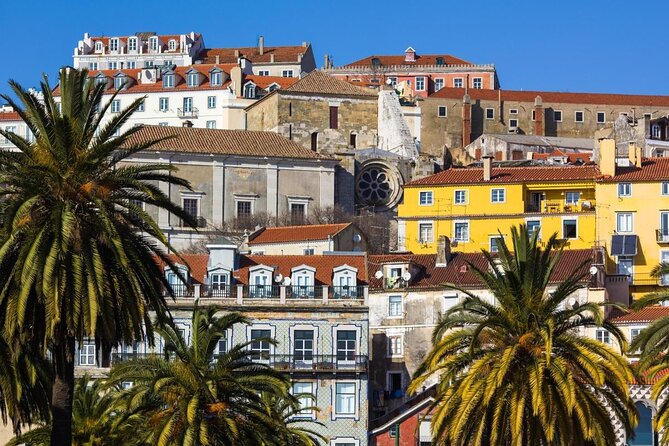
Lisbon can feel confusing at first. The city spreads over steep hills, broad rebuilt avenues, old lanes, grand squares, and riverfront spaces. This route gives you a useful mental map without asking you to plan every turn yourself.
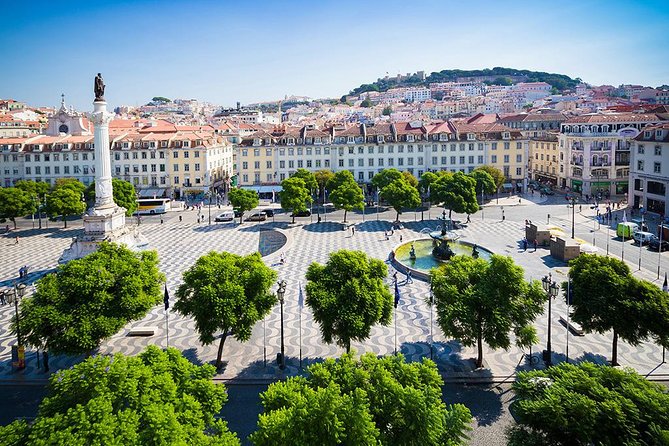
The walk begins at Praça Dom Pedro IV, better known as Rossio Square, and ends at Praça do Comércio beside the Tagus. In between, you move through the historic center and see how Lisbon changed through independence, dictatorship, earthquake, trade, religion, music, and urban rebuilding.
I especially like the balance of big landmarks and small details. You get the broad history in the squares, then more local texture in Chiado and Alfama. The included food stops also keep the tour from becoming a nonstop march through dates and names.
The guides receive the strongest praise. Felipe is described as patient and clear, while Maria is praised for humor and passion. Jose is repeatedly singled out for his energy, city advice, and care with solo visitors. Guides named Daniel, Franco, Filipa, Flavia, Catarina, Carlos, Alex, Katerina, and Joana also receive warm marks for making the walk friendly and easy to follow.
Guide quality can vary on any scheduled tour, of course. Still, the pattern here is encouraging: the experience depends heavily on a personable local guide, and this company appears to put that human side at the center.
More Walking Tours in Lisbon
- Lisbon: History, Stories and Lifestyle Walking Tour
★ 4.8 · 10,902 reviews - Lisbon: Food and Wine Small Group Walking Tour
★ 4.9 · 4,082 reviews - Best of Lisbon Walking Tour: Rossio, Chiado & Alfama
★ 4.9 · 2,700 reviews
Rossio Square begins the story
Your meeting point is Praça Dom Pedro IV, at the heart of Baixa. You spend about 10 minutes here, learning how the square was built with Portuguese stones arranged in a wave pattern that echoes the nearby ocean.
Rossio is more than a pretty starting point. It is Lisbon’s nerve center, and its location helps you understand the city’s central grid. Look around before the group moves on, since the square links several important streets and neighborhoods.
The tour then visits Igreja de São Domingos for about five minutes. This church sits beside São Domingos Square and adds a quieter, more solemn stop to the opening stretch.
You also pass Lisbon’s most expensive and fashionable avenue. The supplied route gives only a brief mention of it, so do not expect a long shopping or architecture session there. It is best understood as a quick contrast with the older, more workaday streets you will see later.
Restoring independence at Restauradores
At Praça dos Restauradores, the central obelisk honors Portugal’s restoration of independence from Spain in 1640. You spend about five minutes here, but the guide uses the monument to explain a major chapter of Portuguese history.
The obelisk, inaugurated in 1886, carries the names and dates of battles from the Portuguese Restoration War. That makes this a useful stop for understanding why national pride appears so often in Lisbon’s monuments.
Nearby, Rossio Central Station provides one of the route’s best architecture lessons. Its exterior borrows from 16th-century Manueline design, with ornate details that make it one of the historic center’s most memorable buildings.
The guide also explains the railway engineering behind the route toward Sintra. You may hear a train heading into the tunnel, which turns an architectural point into a small live demonstration. The stop lasts only about five minutes, but it is a clever way to connect Lisbon’s older buildings with the city’s modern transportation network.
Carmo Square and the Carnation Revolution
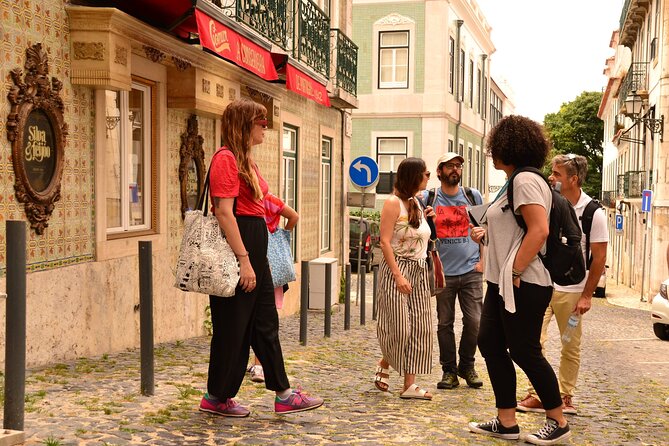
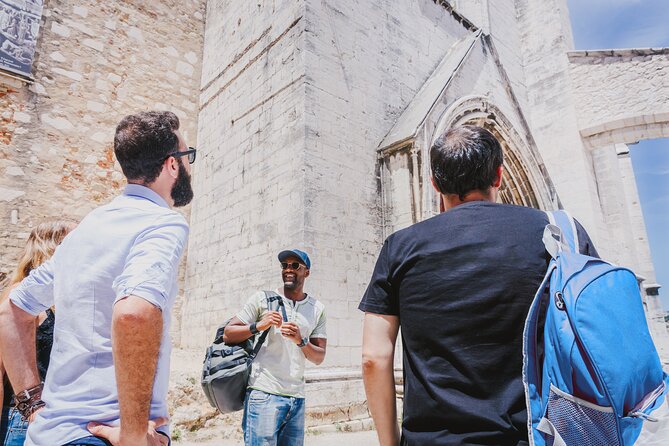
Largo do Carmo is one of the most meaningful stops on the walk. The group spends around 10 minutes here, connecting the square to both a 14th-century convent and the Carnation Revolution of 1974.
Portugal’s former dictatorship lasted 48 years. At Carmo, you learn how the regime collapsed during the peaceful military-led revolution that brought major political change. The square is especially valuable because the history happened in a real, compact place rather than in an abstract lecture.
The stop also introduces the Santa Justa Elevator, one of central Lisbon’s best-known landmarks. You have around 10 minutes to admire the structure and its city views. The tour does not include entry, so you should not expect a ride or a separate ticketed visit.
That distinction matters. The elevator can draw long lines, and this experience is designed to keep moving. You get the landmark, the story, and a viewpoint without turning the group into a queue. If riding the elevator is important to you, plan it separately.
More guided walks:
- Age of Discoveries Walking Tour in Belém
★ 5.0 · 1,513 reviews - Sintra & Cascais Day Tour with Pena Palace Entry and Gardens Walk
★ 5.0 · 962 reviews - Lisbon Roots – Small group Food & Culture Walking Tour w/tastings
★ 5.0 · 910 reviews - Lisbon: Starter Walking Tour to the highlights in German
★ 4.9 · 781 reviews
Chiado brings literature, cafés, and shopping
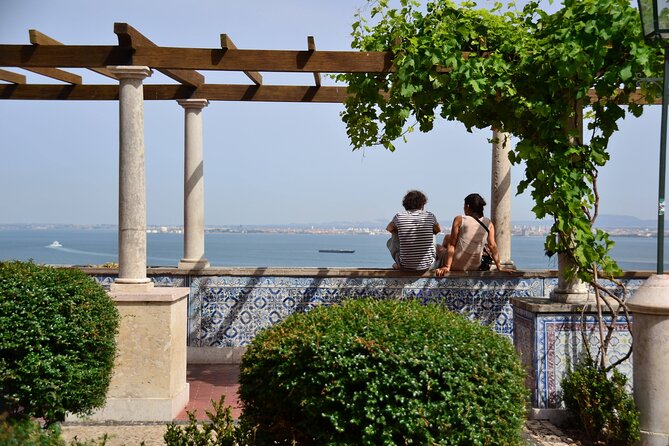
From Carmo, the route moves into Chiado. This elegant neighborhood developed in the 19th century for Lisbon’s intellectual and wealthy residents. You spend about 10 minutes here, looking at old shopfronts, cafés, theaters, bookstores, and surviving facades.
Chiado is a good place to slow down mentally, even if the walking pace continues. The neighborhood shows a more polished side of Lisbon than Alfama, and the guide can help you read the city through its businesses and architecture.
I like this part of the route because it gives you practical ideas for later. You may want to return for a café stop, browse the bookstores, or simply walk the streets without a group. The tour does not offer extended free time, so treat Chiado as an introduction rather than a shopping visit.
Baixa explains Lisbon’s earthquake rebuild
The group then follows Rua Augusta, the main street through central Lisbon, before spending about 15 minutes in Baixa. This is one of the most useful stops for understanding the city’s shape.
The 1755 earthquake destroyed much of the old center. Lisbon was rebuilt under new urban rules, with a more ordered street plan and anti-seismic construction ideas that were innovative for the period.
That story explains why Baixa feels different from Alfama. Here, the streets are broad and organized. The buildings follow a plan. The route helps you see that Lisbon is not one uniform old quarter, but a city rebuilt in layers after disaster.
The walk through Baixa is also one of the easier sections physically. Several people praise the generally manageable pace, and one guide was noted for using public elevators and escalators where available. Still, the full tour eventually reaches hills and uneven streets, so a flat opening should not fool you into expecting an effortless walk.
A short viewpoint before Alfama

Miradouro Chão do Loureiro provides a five-minute panoramic pause. It is a useful breath between Baixa’s regular streets and Alfama’s older, more tangled layout.
The tour gives you time for photos, but not a long scenic break. Keep your camera ready and avoid assuming every viewpoint will become a full rest stop. The experience aims to cover a wide area in limited time.
This is also where the value of a guide becomes clear. A map can show you streets and squares, but a local guide can point out how the city rises from the riverfront and how the districts connect. That orientation helps you plan the rest of your stay.
Alfama, fado, and the city’s oldest lanes

Alfama receives about 20 minutes, making it the longest single neighborhood stop. It is known for Moorish heritage, narrow streets, winding lanes, and fado music.
The guide explains the melancholy musical tradition while pointing out fado restaurants tucked between the alleys. You will not attend a full fado performance on this tour, but you get enough context to understand why the music belongs so strongly to Alfama’s identity.
This is the section where comfortable shoes matter most. The route includes hills and cobblestones, and Alfama is not laid out for a fast, straight walk. Several strong reviews praise guides for allowing breaks and keeping a reasonable pace, even during rain or colder mornings.
One particularly useful feature is the local perspective on life in Alfama. Rather than treating the neighborhood as a photo backdrop, the guide can explain how the area fits into present-day Lisbon. That gives the stop more weight than simply pointing at old walls.
The route does not include Lisbon Cathedral, even from the outside. One participant specifically wished it had been added, and that is a fair limitation to note. If the cathedral matters to you, put it on your own schedule.
Commerce Square closes the route by the river
The final stop is Praça do Comércio, reached after the Alfama section. You spend about 10 minutes in this grand riverfront square, once known as Terreiro do Paço because the royal Ribeira Palace stood here before the 1755 earthquake destroyed it.
The square was fully redesigned as part of the rebuilding of Pombaline Downtown. The guide explains its role as a reception hall for people arriving from the Atlantic, which helps you see Lisbon as a port city with imperial and commercial ambitions.
This is a fitting end because it brings together the main themes of the tour: earthquake rebuilding, royal power, trade, architecture, and the Tagus. The tour ends here, leaving you well placed to continue exploring independently.
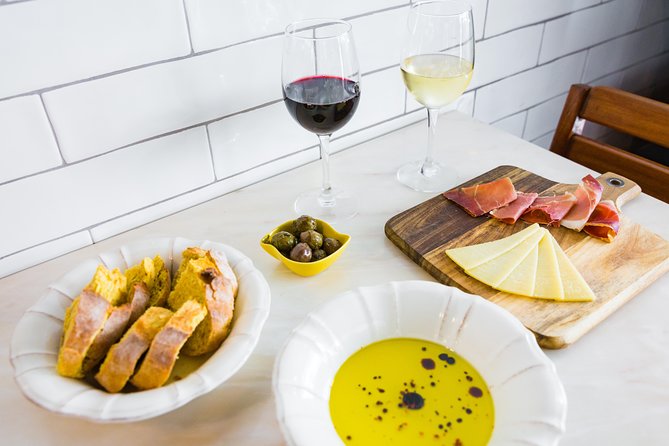
The food element also fits naturally into the route. The pastel de nata is a simple but worthwhile taste of Portugal, while the wine tasting and tapa add a more social pause. Food and drinks beyond these inclusions are your responsibility, and no hotel pickup or drop-off is provided.
How much walking and time should you expect?
The advertised duration is approximately three to four hours. The exact length can depend on the guide, group pace, questions, weather, and the time used at the food stops.
This is a real walking tour, not a sightseeing bus with brief photo stops. You move between central squares, neighborhoods, viewpoints, and the riverfront. Moderate physical fitness is required, and comfortable shoes are not optional advice here.
The route is helped by Lisbon’s public elevators and escalators when available, but you should still expect hills. Rain does not necessarily stop the experience. A guide named Jose kept the group engaged even in wet conditions, while another tour continued in heavy rain.
The maximum group size is 14 people. That is small enough for questions and personal attention, though it is not a private tour. If you want a completely flexible pace or long photography sessions, a private guide or self-guided day may suit you better.
The activity is offered in English and includes a mobile ticket. It begins at Praça Dom Pedro IV and ends at Praça do Comércio, with public transportation nearby. Service animals are allowed.
Is $23.94 a fair price?
At $23.94 per person, I consider this a strong value for a first visit. You receive three to four hours with a local guide, a broad route through central Lisbon, a pastel de nata, wine tasting, and a tapa.
The price is especially good if you would otherwise spend your first day trying to work out Lisbon’s basic layout alone. A guide connects the squares and neighborhoods, explains why Baixa looks so planned, and gives context for Alfama and the Carnation Revolution.
The value is lower for repeat visitors who already know the main sights. One critical assessment found the route too familiar and wanted more walking beyond the standard squares, elevator, and Alfama. That is not a flaw for first-time visitors, but it is an important warning for anyone who has already explored central Lisbon.
You should also budget separately for any museum, monument, elevator, food, or drink not listed as included. This is a guided overview, not an all-inclusive attraction pass.
Who should book this Lisbon walk?
I would choose this tour for a first or short visit, especially if you want a quick city orientation on your first day. It suits solo visitors, couples, and small groups who enjoy asking questions and walking through real neighborhoods rather than sitting on a bus.
It also works well after a flight. The exercise can help with jet lag, and the route gives you a practical sense of where to return for meals, viewpoints, shopping, and evening plans.
You may want something else if you dislike hills, have limited walking ability, want extensive indoor sightseeing, or already know Lisbon’s central districts. Families and older visitors should judge the cobbles and slopes against their own fitness, even though the pace is generally described as manageable.
The tour is often booked well ahead, with an average booking lead time of 38 days. If your Lisbon dates are fixed, reserving early is sensible. Free cancellation is available up to 24 hours before the start time, but changes or cancellations inside that window are not refunded.
Should you book the Best of Lisbon walking tour?
Yes, if you want an affordable, lively introduction to Lisbon’s center. The strongest reasons are the wide coverage, the food samples, the small group, and the guides’ repeated praise for clear explanations, humor, patience, and useful recommendations.
I would book it near the beginning of your stay, then use the final stop at Praça do Comércio as a launch point for independent exploring. Just set the right expectation: you are seeing Lisbon’s essential outdoor sights, not entering every monument.
For first-time visitors, the tour offers a lot for $23.94. For repeat visitors, choose it only if you want a guided refresher and a social walk through familiar neighborhoods.
FAQ
How long does the Best of Lisbon Small-Group Guided Walking Tour last?
The tour lasts approximately three to four hours.
Where does the tour begin?
It begins at Praça Dom Pedro IV, 1100 Lisboa, Portugal.
Where does the tour end?
The tour ends at Praça do Comércio, 1100-148, Portugal.
What food and drink are included?
The tour includes one pastel de nata pastry, a wine tasting, and a tapa.
Is the tour offered in English?
Yes. The experience is offered in English.
How large is the group?
The tour has a maximum of 14 travelers.
Are monument and museum entry fees included?
No. Entry to museums and monuments is not included. Hotel pickup and drop-off are also not included.
How fit do I need to be for the walk?
You should have a moderate level of physical fitness. The route includes walking through hilly areas, cobbled streets, and Alfama’s winding lanes.
What is the cancellation policy?
You can cancel up to 24 hours before the experience for a full refund. Cancellations or changes made less than 24 hours before the start time are not refunded or accepted.
Just added around Lisbon
- Central Lisbon E-Bike Tour★ 5.0 · 168 reviews
- From Lisbon: Sintra and Cascais Full-Day Private Tour★ 4.9 · 168 reviews
- Experience the Queen of Fado at Ah Amália Living Experience★ 5.0 · 171 reviews
- Lisbon: 2-Hour Sunset Sailing Tour on Luxury Sailing Yacht★ 4.9 · 171 reviews
- Lisbon – Vinho Verde Wine Premium Boat Experience★ 5.0 · 171 reviews
- Óbidos: Medieval Tales & Secrets Spots Guided Walking Tour★ 4.9 · 171 reviews
- From Lisbon: Small Group Fátima & Little Shepherds Town Tour★ 4.8 · 171 reviews
- Horse Riding on the Beach★ 4.5 · 171 reviews
Walking Tours, compared.

Porto Walking Tour, Lello Bookshop, River Cruise and Cable Car
Read our review →

Best of Lisbon Walking Tour: Rossio, Chiado & Alfama
Read our review →
Experience Porto’s Charm: 3-Hour Guided Walking Tour
Read our review →
Enjoy a Guided Levada Walk in the Rabaçal Valley
Read our review →
Browse the lists this tour appears in