
Reviewed · HISTORICAL TOURS
Lisbon: History, Stories and Lifestyle Walking Tour
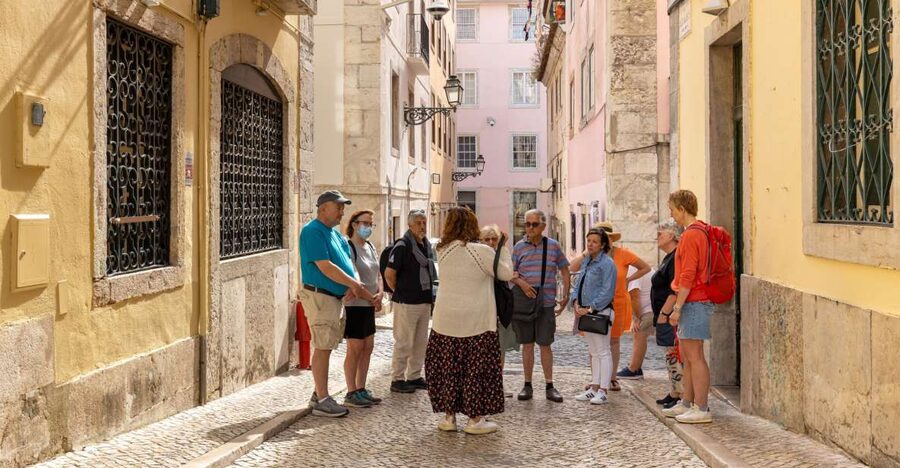
Lisbon reveals itself one hill at a time. This three-hour tour packs in Bairro Alto, Alfama, Baixa, and the Tagus viewpoints, while a local guide adds the stories that buildings alone cannot tell. I like the mix of walking, history, and a short tram ride. I also like that coffee and cake are included, a small but welcome pause in a city built for uphill legs.
The main drawback is the terrain. You will walk downhill and uphill, use narrow lanes and steps, and cover a lot in three hours. The pace is usually relaxed, with plenty of stops, but this is not a flat city stroll. The meeting point can also change with the option you book, so check your confirmation carefully.
The guides are a major part of the experience. Paulo, Ricardo, Beatrice, Anna, João, Lucia, and others have been praised for clear storytelling, humor, local advice, and patience. One especially memorable guide, Paulo, grew up in Lisbon and experienced the 1974 Carnation Revolution as a child, offering a personal link to a major turning point in Portugal’s recent past.
In This Review
- Key points at a glance
- Why this three-hour route works for a first visit
- Bairro Alto and the city rebuilt after 1755
- San Roque Church and Lisbon’s ornate interior
- Carmo Convent and the Carnation Revolution
- Santa Justa and the heart of Baixa
- The tram ride toward Portas do Sol
- Portas do Sol and the view over old Lisbon
- Alfama, fado, and Lisbon’s everyday traditions
- Guides, group size, and the feel of the outing
- What to bring and how to plan the timing
- Is the $29 price worth it?
- Should you book the Lisbon History, Stories and Lifestyle Walking Tour?
- FAQ
- How long does the Lisbon walking tour last?
- What is included in the price?
- Is hotel pickup included?
- Which languages are available?
- Does the tour visit Alfama?
- Can I cancel for a full refund?
Key points at a glance
- Bairro Alto begins the story: Start in a 16th-century district shaped by Lisbon’s growth and the rebuilding that followed the 1755 earthquake.
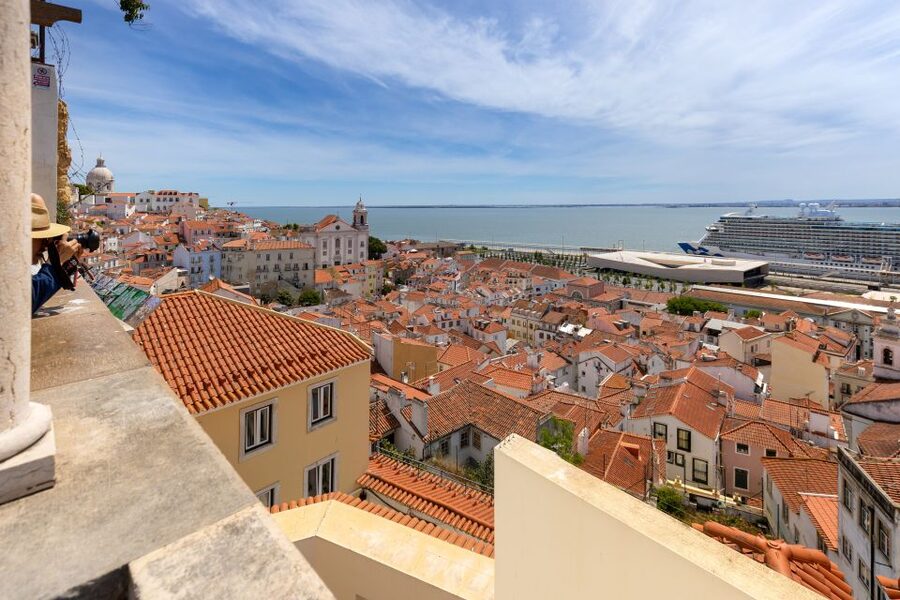
- São Pedro de Alcântara gives you the big picture: Look across Baixa and the Tagus toward the south bank from one of the city’s best viewpoints.
- A tram ride breaks up the walking: Ride an iconic Lisbon tram toward Portas do Sol, with the exact meeting details depending on your booking option.
- Churches carry the history: San Roque, Carmo, and Lisbon Cathedral show how Lisbon’s faith, architecture, and politics changed over time.
- Alfama feels like old Lisbon: Wander narrow streets toward the river, passing fado houses and places tied to Lisbon’s popular saint festivals.
- Coffee and cake add real value: The included stop gives you a taste of local café life without adding another expense.
Why this three-hour route works for a first visit
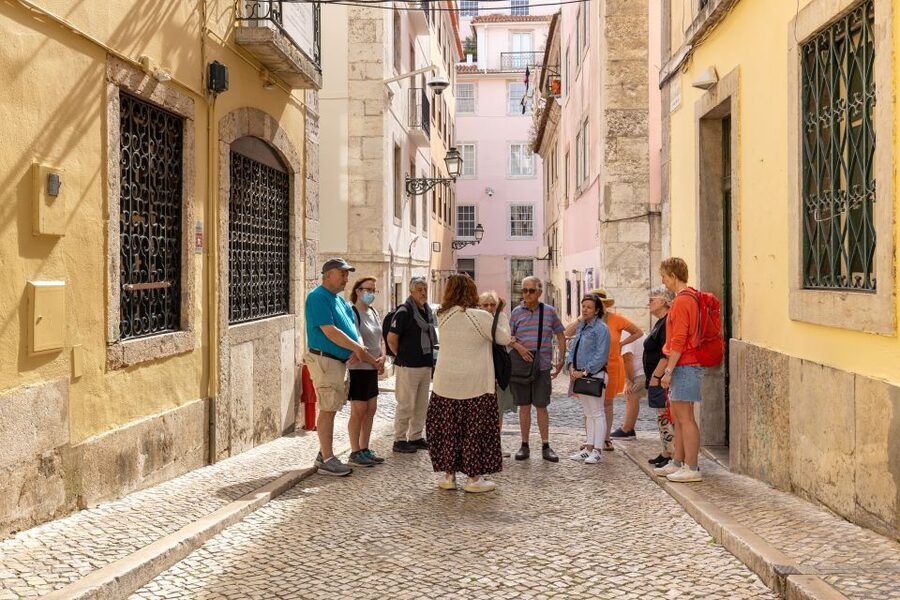
I see this tour as a city orientation with substance. You do not simply tick off landmarks. You move through districts that developed at different times, hear how the earthquake changed the city, learn where a dictatorship ended, and finish among the winding streets of Alfama.
That range matters because Lisbon can feel scattered at first. Its central districts sit between steep hills, grand squares, old churches, lookout points, and the broad Tagus River. A guide helps connect those pieces. By the end, you should have a better sense of where Baixa sits, how the upper neighborhoods relate to the river, and which areas deserve a slower return visit.
The price is $29 per person. For three hours, a live guide, a tram trip, a walking route, coffee, and cake, I consider that good value, especially at the start of a Lisbon stay. A private or small-group option may offer a quieter experience, while a larger group could feel less personal.
The strongest part is not any single monument. It is the combination. You get city views, architecture, political history, neighborhood life, public transport, and a snack in one compact outing. That makes the tour useful for a first day, though you should keep some free time afterward if the route runs longer than scheduled. One guide, Ricardo, was specifically praised for allowing the tour to overshoot while still completing it without rushing.
More History Tours in Lisbon
- Lisbon: Live Fado Show with Port Wine in Historic Center
★ 4.7 · 4,166 reviews - Lisbon: Fado Show with Wine in a Historic Venue
★ 4.8 · 1,294 reviews - Explore Lisbon by Tuk Tuk: History and Viewpoints
★ 5.0 · 840 reviews
Bairro Alto and the city rebuilt after 1755
The tour begins in Bairro Alto, a district dating from the 16th century. Today, it is widely associated with evening life, but the important point here is how the neighborhood fits into Lisbon’s wider growth.
You hear how families from Baixa and nearby districts moved into or reshaped this area after the earthquake of 1755. That disaster destroyed much of central Lisbon and led to a major rebuilding program. A good guide can turn this from a date in a textbook into a way of reading the streets around you.
I like beginning here because it gives the tour a clear historical question: how did Lisbon become the city you see now? The answer is not just medieval lanes or grand rebuilt avenues. It is layers of old neighborhoods, catastrophe, renewal, religion, trade, and everyday life.
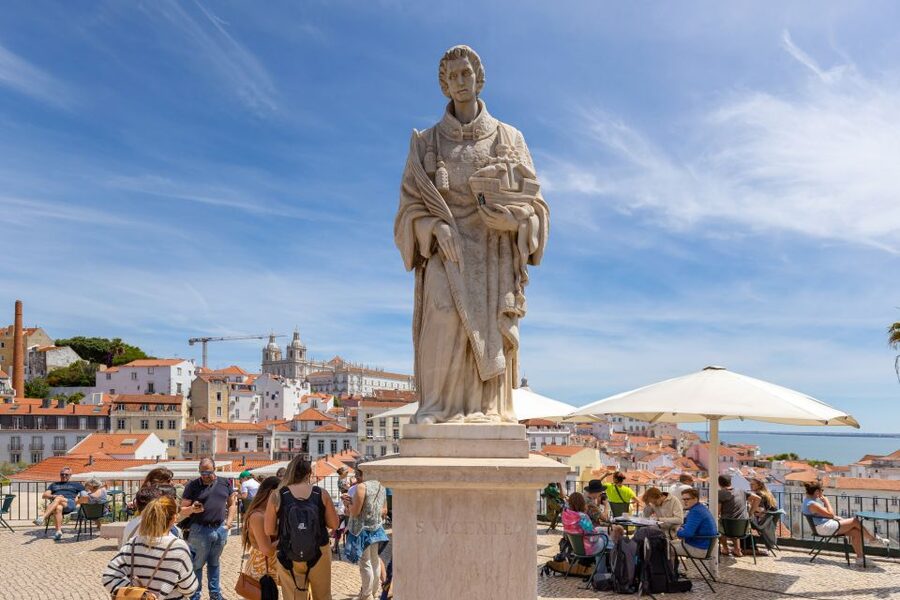
The route then passes the garden of São Pedro de Alcântara. This is an important pause, not just a photo stop. From the viewpoint, you can look over Baixa and across the Tagus toward the south bank. The view helps you understand Lisbon’s shape better than a map does.
Bring your camera, but also listen to the orientation. You are looking across rooftops, hills, and the river toward districts you may visit later. The city is easier to navigate once you know how these areas line up.
San Roque Church and Lisbon’s ornate interior
San Roque Church has a restrained exterior, described as austere, but the interior is a different story. Inside, gilding, tiles, and paintings create a strong display of Mannerist and Baroque design.
This contrast is one of the tour’s better lessons. Lisbon often rewards you for stepping through an unassuming doorway. The outside may appear plain, while the interior carries the decoration, wealth, and religious confidence of earlier centuries.
You should expect the guide to explain the church as more than a beautiful room. Its Jesuit connection adds context to Portugal’s religious and cultural past. The stop also gives your legs a short break from the hills before the route heads down toward Carmo.
If religious art is not your main interest, this visit still works because it is brief and visually distinctive. The gilded details and tilework offer a change from the outdoor viewpoints and city streets.
Carmo Convent and the Carnation Revolution
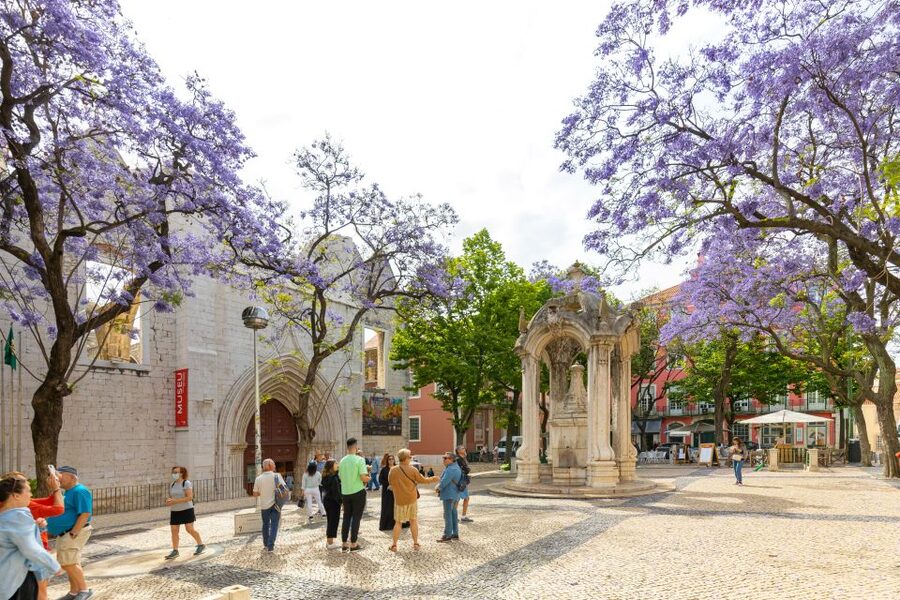
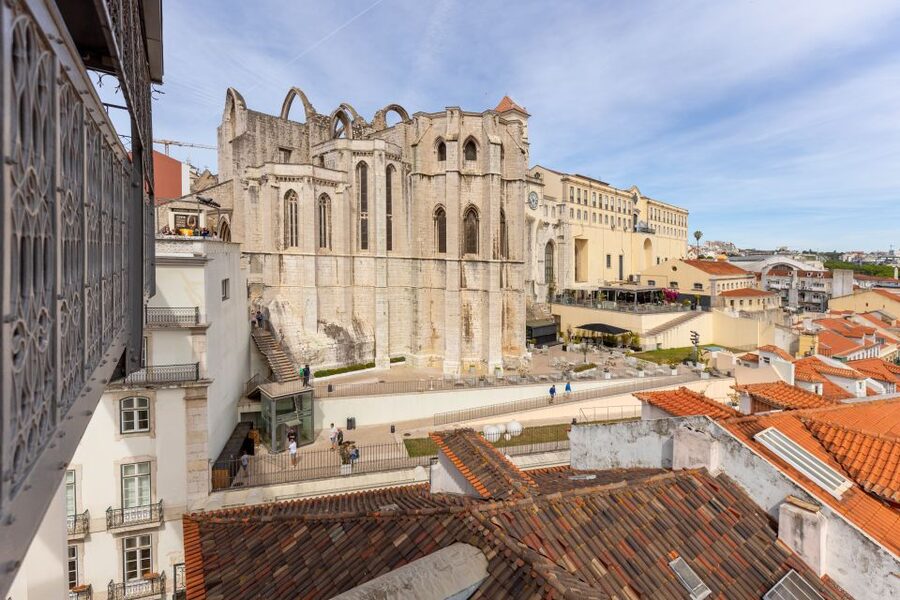
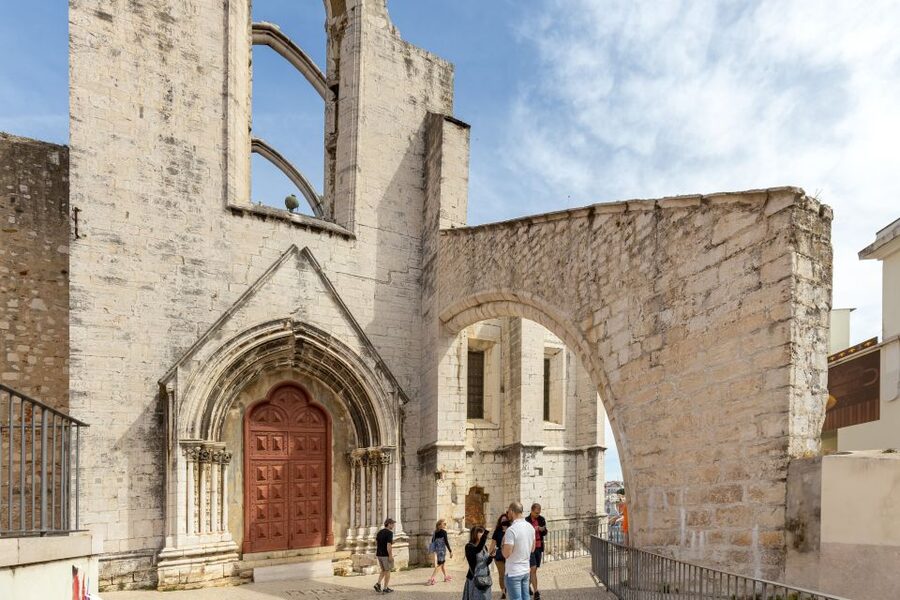
The Carmo convent and church are fine examples of Lisbon’s Gothic architecture, but their importance goes beyond style. The site is tied to the Carnation Revolution of 1974, when a military uprising brought an end to nearly five decades of dictatorship.
This is one of the most meaningful stops on the route. Lisbon’s story is not only about Moors, kings, churches, earthquakes, and explorers. It also includes a recent political past that shaped modern Portugal.
The open, damaged feel of Carmo gives the history a strong setting. You can better grasp how old stone, national memory, and modern politics meet in one place. Guides often explain the revolution in an accessible way, and this is where a local guide’s personal connection can make a difference.
Paulo has been praised for describing the revolution from the perspective of someone who lived through it as a child. That kind of firsthand local memory can add a human scale to an event that might otherwise feel distant.
This stop is also a good reason to take the tour early in your visit. You will hear names, dates, and stories that can help you notice more when you later explore Lisbon on your own.
More Walking Tours in Lisbon
- Best of Lisbon Small-Group Guided Walking Tour
★ 5.0 · 4,869 reviews - Lisbon: Food and Wine Small Group Walking Tour
★ 4.9 · 4,082 reviews - Best of Lisbon Walking Tour: Rossio, Chiado & Alfama
★ 4.9 · 2,700 reviews - Age of Discoveries Walking Tour in Belém
★ 5.0 · 1,513 reviews
Santa Justa and the heart of Baixa
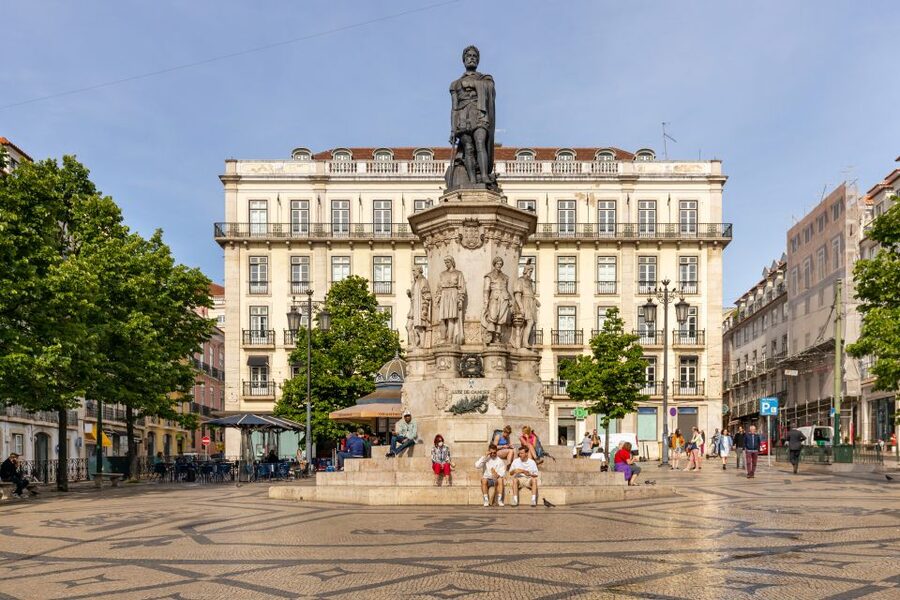
From Carmo, the route continues toward the Santa Justa elevator. Its Gothic Revival design makes it one of Lisbon’s most recognizable structures, and it provides a well-known viewpoint over the city.
The elevator is a working piece of public infrastructure as well as a monument. It links different levels of the city, which tells you something important about Lisbon: the hills are not a decorative backdrop. They shape how people move, build, and live.
The tour does not promise a long ride on the elevator, so treat this part as a chance to see the structure and understand its place in Baixa. You will also pass several central attractions in the district, the rebuilt heart of Lisbon.
Baixa gives the tour a different rhythm. The streets are more orderly and open than Alfama’s lanes, reflecting the rebuilding after the earthquake. Listen for the contrast between this planned center and the older quarters that come later.
A short coffee and cake break is included somewhere along the experience. In practice, the stop is often described as coffee with a pastel de nata. One guide adapted the snack for a vegetarian group, offering a vegan spinach pastry with espresso instead. That suggests it is worth mentioning dietary needs when you meet your guide, though the supplied details do not promise a specific alternative for every booking.
The tram ride toward Portas do Sol
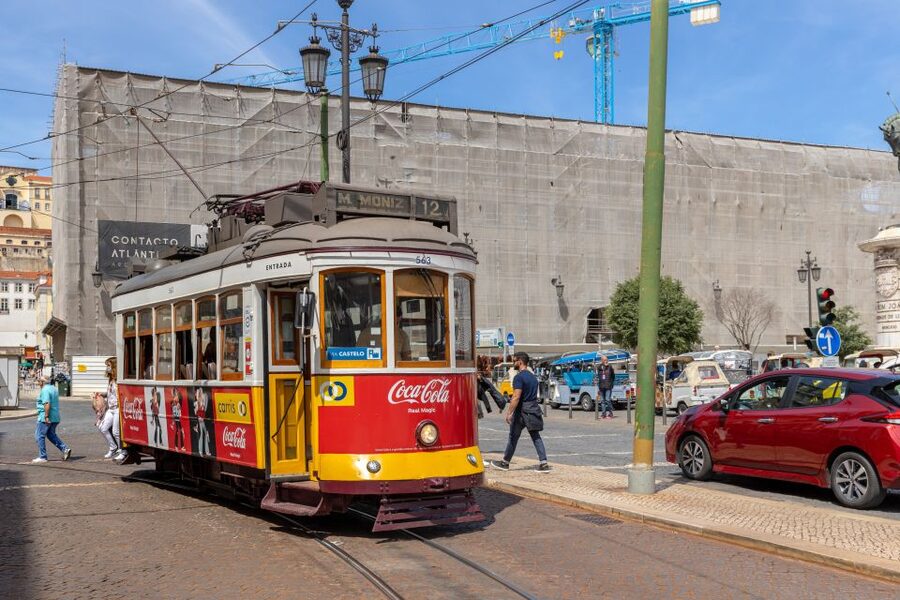
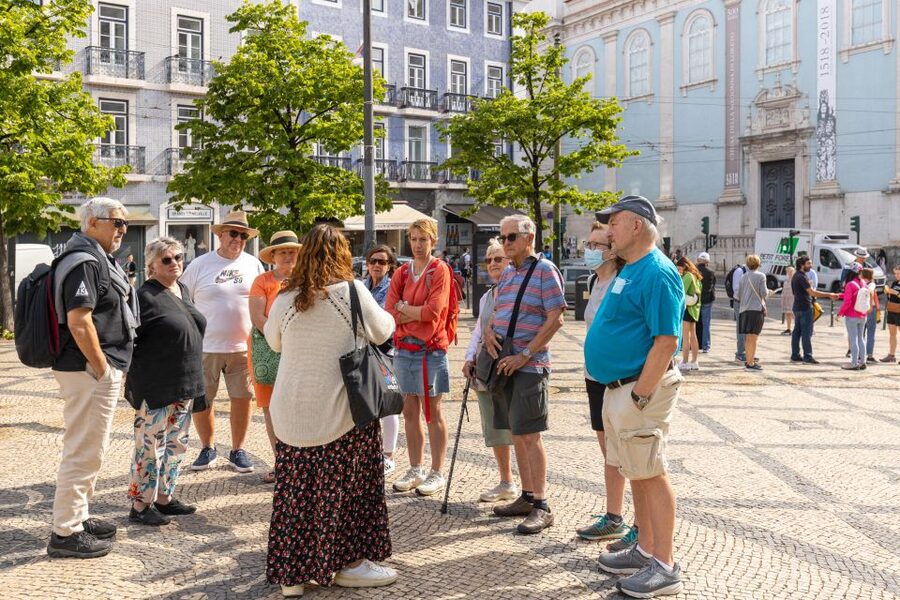
The tram segment is short, but it adds something a walking tour cannot. Lisbon’s old trams are part of the city’s daily character, and riding one lets you experience the steep streets from inside the system locals use.
The planned route goes upward from the castle area toward Portas do Sol. Exact arrangements may vary, and the meeting point depends on the option you select. One review identifies tram 12, but you should rely on the instructions attached to your booking rather than assume a particular line.
This is also the least predictable part of the outing. Lisbon trams can be affected by rain, breakdowns, or service problems. Anna received particular praise for changing the route when a tram broke down during heavy rain. Her calm response turned a possible disappointment into part of the day rather than letting it spoil the tour.
That is useful advice: enjoy the tram if it runs, but do not make the entire experience depend on it. The walking route and guide are the core of the tour. The tram is a fun bonus and a practical way to reach the upper part of Alfama.
Portas do Sol and the view over old Lisbon
At Portas do Sol, the city opens again. You can see the Monastery of São Vicente de Fora, the National Pantheon, and the Alfama district stretching through narrow streets toward the Tagus.
This is a good place to pause and let the geography settle. Earlier, São Pedro de Alcântara showed you Baixa and the south bank from the western side of the center. Portas do Sol shifts the view eastward and places you above the oldest quarter.
The stop also prepares you for the final part of the route. Alfama is not best understood from one monument. Its character comes from the lanes, stairways, walls, small buildings, and sudden glimpses of water.
You will want comfortable shoes with reliable grip. The route includes hills and steps, and smooth pavement is not guaranteed in an old district. The guides generally allow time for photographs and explanations, but you should still expect steady movement rather than a long sightseeing stop at every landmark.
Alfama, fado, and Lisbon’s everyday traditions
Alfama is one of Lisbon’s oldest and most traditional districts. Its narrow streets run down toward the Tagus, creating a very different feel from Baixa’s formal layout.
The tour brings in Alfama’s fado houses and the festivals of Lisbon’s popular saints, especially St. Anthony. These details move the experience beyond architecture. You get a look at how music, neighborhood identity, religion, and public celebration shape local life.
I especially like this part for first-time visitors because Alfama can be confusing to explore alone. Its lanes twist and change level, and it is easy to miss the connections between a viewpoint, a church, a small square, and the river below. A guide gives you a framework without removing the pleasure of getting slightly lost later.
Do not expect a full fado performance or an extended visit inside a fado house. The tour introduces the district and its traditions rather than offering a separate evening music program. If fado becomes a highlight for you, ask your guide for suggestions for a later night.
The route ends at Lisbon Cathedral, built in 1150, three years after the city was retaken from the Moors. Its appearance reflects many changes over time, so you see a mixture of architectural styles rather than one perfectly uniform design.
Ending here makes sense. The cathedral brings together the city’s medieval conquest, religious life, changing architecture, and position at the edge of Alfama. It also gives you a useful landmark for returning to the neighborhood independently.
Guides, group size, and the feel of the outing
Guide quality appears to be the biggest strength of this experience. Paulo, Ricardo, Beatrice, Anna, Lucia, João, Helena, Raquel, and other guides have been praised for warmth, humor, local knowledge, and clear explanations.
That range matters because the route covers difficult subjects as well as pretty views. A guide needs to explain the 1755 earthquake, Jesuit art, Gothic architecture, and the end of dictatorship without turning the walk into a lecture. The best feedback points to guides who mix facts with personal stories and practical recommendations.
Small groups are available, and private options are offered. A small group makes it easier to hear on busy streets and gives you more room to ask questions. One tour had only three participants and felt close to a private walk, while another had eight people and remained easy to follow.
The experience can suit solo visitors, couples, and families who want a quick orientation. Andrew, who joined alone, found it a good way to meet people while learning the city. The relaxed approach also suits people who are not especially fit, since guides stop often and allow time for photographs.
Still, do not confuse frequent stops with an easy route. Lisbon’s hills remain Lisbon’s hills. If you have mobility limits, ask for the exact route and meeting point before booking. The information provided confirms hills, narrow streets, and steps, but it does not give a formal accessibility rating.
What to bring and how to plan the timing
Wear walking shoes and bring water. A light rain layer is sensible because the tour operates outdoors, and the route may need to change in wet or difficult conditions.
Keep your schedule flexible after the three-hour finish. Ricardo’s tour ran over slightly, and other guides have been praised for taking time with questions. That is usually a good sign, but it can affect a tight lunch reservation or a timed museum visit.
The best use of this experience is near the start of your stay. You can return to Alfama, Baixa, or Bairro Alto with better bearings and a list of places to explore in greater detail.
Check the meeting point for your chosen option. It may vary, and hotel pickup and drop-off are not included. The tour is conducted in Portuguese, Spanish, Italian, German, French, or English, so choose the language that lets you follow the historical detail without effort.
Cancellation is free up to 24 hours before the start, and you can reserve now and pay later. Those policies are useful if your Lisbon plans are still shifting, but the main booking decision should come down to your interest in walking, hills, and guided history.
Is the $29 price worth it?
At $29, I find the tour a strong buy for a first look at Lisbon. You receive three hours with a live guide, a tram ride, a broad route through major districts, and coffee with cake.
The value is especially good if you would otherwise pay separately for transport and spend time finding the best viewpoints on your own. You also get local context for places such as Carmo and San Roque, which can be easy to admire without understanding.
It is less suitable if you prefer slow museum visits, long meals, or complete freedom to stop whenever you wish. The route covers a lot, so some sights receive an introduction rather than a detailed visit.
The rating of 4.8 from 10,902 ratings points to very strong satisfaction, but I would focus on the pattern behind it: guides are praised for storytelling, humor, patience, flexibility in bad weather, and useful local tips. Those qualities make a greater difference here than the simple number of stops.
Should you book the Lisbon History, Stories and Lifestyle Walking Tour?
I would book it if this is your first Lisbon visit and you want a quick, well-rounded introduction. The combination of Bairro Alto, São Pedro de Alcântara, Baixa, Carmo, a tram ride, Portas do Sol, Alfama, and the cathedral gives you a strong first map of the city.
You should also book it if you enjoy history explained through places and personal stories. Paulo’s account of growing up during the dictatorship era, Ricardo’s detailed city recommendations, and Beatrice’s patient approach show how much the guide can add.
I would skip it only if hills and steps are a serious problem, or if you want a very slow tour focused on one neighborhood. For most visitors, the $29 cost, included snack, and mix of old Lisbon with modern political history make this a practical start to the city.
FAQ
How long does the Lisbon walking tour last?
The tour lasts three hours. Some outings may run slightly longer if the guide takes extra time for questions or to complete the route.
What is included in the price?
The price includes a live guide, the walking tour, a tram trip, coffee, and cake.
Is hotel pickup included?
No. Hotel pickup and drop-off are not included. The meeting point can vary depending on the option booked.
Which languages are available?
The tour is available in Portuguese, Spanish, Italian, German, French, and English.
Does the tour visit Alfama?
Yes. The route explores Alfama, including the area around Portas do Sol, the narrow streets leading toward the Tagus, and the district’s links with fado and Lisbon’s saint festivals.
Can I cancel for a full refund?
Yes. You can cancel up to 24 hours in advance for a full refund. You can also reserve now and pay later.
More Guided Walks
- Sintra & Cascais Day Tour with Pena Palace Entry and Gardens Walk
★ 5.0 · 962 reviews - Lisbon Roots – Small group Food & Culture Walking Tour w/tastings
★ 5.0 · 910 reviews - Lisbon: Starter Walking Tour to the highlights in German
★ 4.9 · 781 reviews - Lisbon Tram No. 28 Ride & Walking Tour
★ 4.1 · 766 reviews
More Heritage Sites and Old Towns
- Lisbon: Daytime or Sunset Boat Cruise with History and Wine
★ 4.9 · 819 reviews - Private Tuk Tuk Tour Through Lisbon’s Historical Streets
★ 5.0 · 734 reviews - Lisbon Sunset Sailing with Portuguese Wine and History
★ 5.0 · 668 reviews - Lisbon: Guided Tuk-Tuk Tour Along the Historic Tram Line 28
★ 4.8 · 475 reviews
Just added around Lisbon
- Central Lisbon E-Bike Tour★ 5.0 · 168 reviews
- From Lisbon: Sintra and Cascais Full-Day Private Tour★ 4.9 · 168 reviews
- Experience the Queen of Fado at Ah Amália Living Experience★ 5.0 · 171 reviews
- Lisbon: 2-Hour Sunset Sailing Tour on Luxury Sailing Yacht★ 4.9 · 171 reviews
- Lisbon – Vinho Verde Wine Premium Boat Experience★ 5.0 · 171 reviews
- Horse Riding on the Beach★ 4.5 · 171 reviews
- Óbidos: Medieval Tales & Secrets Spots Guided Walking Tour★ 4.9 · 171 reviews
- From Lisbon: Small Group Fátima & Little Shepherds Town Tour★ 4.8 · 171 reviews
Historical Tours, compared.
Historical Sites, Wine Experience, Lunch & Cruise
Read our review →
Live Fado Show with Port Wine in Historic Center
Read our review →


Explore Lisbon by Tuk Tuk: History and Viewpoints
Read our review →Browse the lists this tour appears in