Reviewed · LISBON TOURS
Discover Bairro Alto’s Hidden Gems and Stunning Viewpoints
Lisbon reveals itself one hill at a time. This 2.5-hour walking tour links Rossio, Bairro Alto, and Largo do Carmo with stories about royal railways, Portugal’s national poet, plague, faith, and the earthquake that changed the city. I like the route because it connects famous sights instead of treating them as isolated photo stops. I also like the local guide format, which gives you cultural context and useful history for a very low starting price.
The main consideration is the uphill walking and the extra guide contribution. The advertised price is only $3.61 per person, but you should budget another €10 to €20 for the guide. The end point also needs attention: the route description finishes at Largo do Carmo, while the listed meeting details name Miradouro de Santa Catarina as the endpoint. Confirm the exact finish before setting your plans.
In This Review
- Key points to know before you book
- Why this short walk works well in Lisbon
- Praça Dom Pedro IV: starting in the heart of Rossio
- Rossio Station and its horseshoe portals
- Praça Luís de Camões and Portugal’s national poet
- Bairro Alto, from city expansion to Saint Roch
- Largo do Carmo and the vow behind the convent
- Viewpoints, hills, and what to expect physically
- Is the $3.61 price really good value?
- Who should book this Bairro Alto walk?
- Final verdict: a strong history walk with one pricing caveat
- FAQ
- Where does the tour start?
- Where does the tour end?
- How long does the experience last?
- What language is the tour offered in?
- Is admission to the Santa Justa elevator included?
- What extra payment should I plan for?
Key points to know before you book
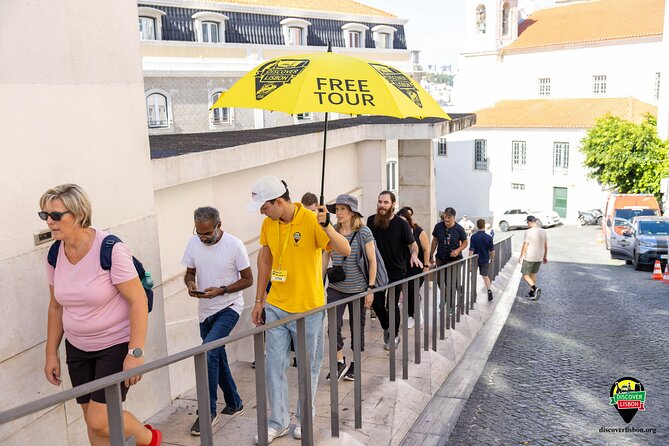
- Rossio begins the story: Start at Praça Dom Pedro IV, one of central Lisbon’s key public squares.
- Rossio Station is a highlight: Its ornate Neo-Manueline entrance looks more like a small palace than a railway station.
- Camões gives the tour a literary heart: Learn about Luís de Camões, author of Os Lusíadas and Portugal’s national poet.
- Bairro Alto has a changing past: The district’s story includes city expansion, noble land, plague, churches, and urban planning.
- Carmo adds powerful earthquake history: The Carmelite church and convent connect medieval devotion with Lisbon’s 1755 destruction.
- The cost needs a closer look: The low booking price does not include the €10 to €20 contribution to the guide or entry to the Santa Justa elevator.
Why this short walk works well in Lisbon
This is a useful orientation walk for your first day in Lisbon. In two and a half hours, you move from the open space of Rossio into older streets and hilltop districts, ending near a major viewpoint area. The route gives you a framework for the city, especially if you want to understand how Lisbon changed over time.
I like the balance between major sights and less obvious urban stories. You see the famous façade of Rossio Station, but you also hear why Bairro Alto grew where it did. You pass through places tied to Camões and the Carmelite order, then finish with a clearer sense of how disaster reshaped Lisbon.
The tour is conducted in English and includes a local guide. Admission is free at the listed stops, so much of what you pay for is interpretation. That matters in Lisbon, where a quick look at a church, square, or tiled façade rarely explains the layers underneath.
The group can reach up to 50 people. That is a fairly large maximum for a walking tour, so the experience may feel less personal if the group is full. On the other hand, the wide streets and major squares on the route provide room to gather at several points.
A few more reviews worth comparing before you book
- Lisbon City Center Tour – The Unmissable Lisbon
★ 5.0 · 22,234 reviews - Lisbon: Sintra, Pena, Regaleira, Cabo da Roca & Cascais
★ 4.7 · 19,656 reviews - Lisbon: Jerónimos Monastery Entrance Ticket
★ 4.1 · 14,164 reviews
Praça Dom Pedro IV: starting in the heart of Rossio
The walk begins at Praça Dom Pedro IV, usually called Rossio. This is a practical meeting point in central Lisbon, surrounded by streets, cafés, shops, and public transport connections. It is also a good place to begin thinking about the city as a meeting point between daily life and grand national history.
You spend about 25 minutes here as the guide sets up the route and points out the role of the square. The stop is free, and there is no formal admission process. That keeps the start simple, though you should arrive ready to walk rather than expecting a seated introduction.
Rossio works well as a first stop because it helps you get your bearings. From here, the route heads toward Bairro Alto, passing through parts of Lisbon that show how the central city connects to the hill districts.
Expect a walking pace rather than a stop-and-start sightseeing bus rhythm. Wear shoes with a firm sole. Lisbon’s hills are manageable for most people with moderate fitness, but the route is not ideal if you want a completely flat stroll.
Rossio Station and its horseshoe portals
The next stop is Estação do Rossio, Lisbon’s historic railway station. It was commissioned by the Portuguese Royal Railway Company and designed by José Luís Monteiro between 1886 and 1887. Construction finished in 1890, and the station linked Lisbon with Sintra.
The exterior is the reason to pause. The Neo-Manueline design is a Romantic revival of the ornate Manueline style associated with early 16th-century Portugal. Its most memorable feature is the pair of intertwined horseshoe portals at the entrance, marked Central Station.
I like this stop because it corrects a common assumption: a railway station does not have to look purely practical. From the outside, Rossio Station resembles a ceremonial building or even a temple more than a transport hub. The design turns an ordinary act, catching a train, into a piece of national theater.
You have about 25 minutes here. Admission is free, and the emphasis is on the façade and its meaning. If you want a longer look at the trains or interior spaces, this walking tour may not provide enough time. The value comes from having the architecture explained while you are standing in front of it.
Praça Luís de Camões and Portugal’s national poet
The route then reaches Praça Luís de Camões, a natural bridge between central Lisbon and Bairro Alto. This square honors Luís de Camões, Portugal’s national poet and the author of Os Lusíadas, the epic poem about Vasco da Gama’s sea route to India.
You spend about 30 minutes on this part of the walk. That is enough time for the guide to explain why Camões matters beyond a statue or a street name. His influence is so strong that Portuguese is sometimes called the language of Camões.
The story also includes the claim that Camões lost one eye while fighting in Ceuta. It is the kind of detail that helps connect a literary figure with the military and maritime world that shaped Portugal’s identity.
I especially like this stop for readers, history fans, and anyone who wants more than architecture. Camões gives the tour a human voice. Instead of moving only from building to building, you get a sense of how poetry helped define the country’s memory of exploration.
Praça Luís de Camões also marks a change in mood. Rossio feels like a central civic square. From here, the walk begins to feel more tied to the hill neighborhoods and evening life of Lisbon.
A different sort of day out around Lisbon:
- Lisbon: History, Stories and Lifestyle Walking Tour
★ 4.8 · 10,902 reviews - Lisbon: Sunset Boat Party Cruise with DJ and Open Bar
★ 4.5 · 10,378 reviews - Lisbon: Pena Palace, Sintra, Cabo da Roca, & Cascais Daytrip
★ 4.7 · 9,981 reviews - Lisbon: Oceanário de Lisboa Entrance Ticket
★ 4.6 · 9,943 reviews
Bairro Alto, from city expansion to Saint Roch
The Bairro Alto section lasts about 30 minutes and carries the most layered historical explanation on the route. In the late 15th century, Lisbon’s population grew as the country’s overseas activity expanded. The city needed more room, and the area around today’s Camões square once served as one of the entrances to Lisbon.
The guide explains the earlier Fernandine wall and the former gate of Santa Catarina. After the earthquake, two churches, Encarnação and Loreto, occupied part of this area. The story is not just about buildings. It is about a city repeatedly adjusting its boundaries, streets, and religious landmarks.
The hill also had links to wealthy noble families. At the same time, a cemetery for victims of the Black Death occupied higher ground. That contrast, wealth on one side and illness and burial grounds on the other, helps explain why this part of Lisbon developed in uneven ways.
The account then turns to Saint Roch. In 1506, King Manuel I requested a relic of Saint Roch from Venice and placed it in a hermitage near the cemetery. As the population grew and plague affected Lisbon, poorer and sick people moved closer to the church. An urban plan followed to accommodate them.
This is the section where a guide adds real value. Without explanation, Bairro Alto can seem like a district of narrow streets, restaurants, bars, and old façades. With the background, you can read it as a place shaped by migration, illness, devotion, social class, and city planning.
The route’s name promises viewpoints, but the supplied schedule does not list a separate viewpoint stop with a set duration. You will pass through elevated parts of Lisbon, and the published endpoint is Miradouro de Santa Catarina, yet the itinerary also names Largo do Carmo as the final sightseeing stop. Confirm whether the walk includes a formal viewing stop and exactly where the guide will leave you.
Largo do Carmo and the vow behind the convent
The walk’s listed final sight is Largo do Carmo, one of Lisbon’s most atmospheric squares. The church and convent were founded after Nuno Álvares Pereira, a general supporting King John, vowed to build the world’s most beautiful church if Portugal defeated Castilian forces at the Battle of Aljubarrota in 1385.
Portugal won, and Pereira kept his promise by funding the Carmelite church and convent. Construction began in 1389 and was completed in 1423. He later joined the Carmelite order and spent the rest of his life in the convent.
You have about 15 minutes here, which is enough for an introduction but not a long interior visit. The focus is on the foundation story and the role of the site in Lisbon’s past. If you want a museum-style examination of the Carmo ruins, you may need to return independently with more time.
Largo do Carmo is also tied to Lisbon’s earthquake history, one of the subjects included in the tour. The church and convent offer a direct way to discuss destruction and survival. Stonework, religious foundations, and open sky make the effects of disaster easier to picture than a simple date in a history book.
This final stop gives the walk a strong visual ending. It also leaves you near other central Lisbon sights, depending on the confirmed route. The published meeting information lists Miradouro de Santa Catarina as the end point, so do not assume the tour finishes exactly at the Carmo square without checking.
Viewpoints, hills, and what to expect physically
The route covers central Lisbon on foot, with movement toward Bairro Alto and other higher ground. A moderate level of physical fitness is recommended. You do not need to be an athlete, but you should be comfortable walking for two and a half hours and handling Lisbon’s slopes.
The experience does not include private transport. That is part of its strength, since the walk lets you see how the districts connect, but it also means you cannot retreat to a vehicle between stops.
The Santa Justa elevator is not included. The tour may discuss or pass near major central sights associated with Lisbon’s vertical streets, but entry to the elevator is separate. Do not count on this walk as an elevator ticket or a substitute for that attraction.
Service animals are allowed, and the meeting point is near public transportation. The tour is offered in English and uses a mobile ticket, which keeps the arrival process straightforward.
Is the $3.61 price really good value?
At $3.61 per person, the advertised rate looks unusually low for a guided walking experience lasting around two and a half hours. Since the main stops have no admission charge, your payment mainly covers the guide’s time, explanations, and route planning.
The required extra contribution changes the calculation. You should plan to give the guide €10 to €20, making the practical cost much higher than the headline price. Even so, the total may represent good value if you want a history-focused orientation walk rather than paid entry to several monuments.
I would judge the price by the quality of the explanation, not by the number of attractions entered. This route gives you architectural context at Rossio Station, literary context at Camões square, social history in Bairro Alto, and religious and earthquake history at Carmo.
The experience also offers discounts for booking other activities with the same provider for later that day or night. That could improve the value if you are planning more Lisbon activities, though you should compare the terms before committing to anything else.
Who should book this Bairro Alto walk?
I would recommend it to first-time visitors who want a clear introduction to Lisbon’s central hills. It suits anyone who enjoys city history, architecture, literature, and stories about how ordinary people shaped urban districts.
It is also a good match for you if you prefer a guide to explain what you are seeing instead of wandering with only a map. The route is short enough to fit into a busy Lisbon schedule and ends in an area where you can continue exploring.
You may want another option if you have limited mobility, dislike hills, or prefer small private groups. A maximum of 50 people means the guide may need to speak to a crowd. You should also think twice if your main goal is entering monuments, since the listed stops are free outdoor or exterior visits and the Santa Justa elevator is not included.
The tour is booked, on average, five days ahead. That suggests you should reserve before arrival if your schedule is tight, especially if you want a particular day. Free cancellation is available up to 24 hours before the start time, but changes or cancellations inside that window are not refunded.
Final verdict: a strong history walk with one pricing caveat
Book this experience if you want a low-cost introduction to Rossio, Camões, Bairro Alto, and Carmo, with a guide tying the stops together. I like its range: grand railway architecture, national literature, plague and urban growth, religious foundations, and earthquake damage all fit into one walk.
The two things to settle first are the €10 to €20 guide contribution and the endpoint discrepancy between Largo do Carmo and Miradouro de Santa Catarina. Once those are clear, this is a sensible choice for your first day in Lisbon, especially if you value context more than paid entry or a tiny group.
FAQ
Where does the tour start?
The tour starts at Praça Dom Pedro IV, 1100-581 Lisboa, Portugal.
Where does the tour end?
The itinerary identifies Largo do Carmo as the final sightseeing stop, while the meeting information lists Miradouro de Santa Catarina, 1200-262 Lisboa, Portugal, as the endpoint. Confirm the exact finish with the provider.
How long does the experience last?
The walking tour lasts approximately 2 hours and 30 minutes.
What language is the tour offered in?
The experience is offered in English.
Is admission to the Santa Justa elevator included?
No. Entry to the Santa Justa elevator is not included.
What extra payment should I plan for?
The listed price does not include a contribution to the guide. You should plan for €10 to €20 per person.
Just added around Lisbon
- Tuk tuk tour in Belem area★ 5.0 · 46 reviews
- Lisbon: Private Tour Sintra, Cabo da Roca and Cascais★ 4.9 · 46 reviews
- Private Sintra Tour from Lisbon★ 5.0 · 46 reviews
- Premium Porto Private Day Trip from Lisbon with Local Guide★ 5.0 · 47 reviews
- 4 Hours Tuktuk City Tour in Lisbon★ 5.0 · 47 reviews
- Small Group Pena Palace, Sintra, Regaleira and Cascais★ 5.0 · 47 reviews
- From Lisbon: Tour to Fátima, Batalha, Nazaré and Óbidos★ 4.6 · 47 reviews
- DayTrip from Lisbon to Sintra+Cascais PRIVATE TOUR-small groups★ 5.0 · 47 reviews
Lisbon Tours, compared.
Lisbon City Center Tour – The Unmissable Lisbon
Read our review →
Sintra, Pena, Regaleira, Cabo da Roca & Cascais
Read our review →

Sunset Boat Party Cruise with DJ and Open Bar
Read our review →
Pena Palace, Sintra, Cabo da Roca, & Cascais Daytrip
Read our review →