
Reviewed · HISTORICAL TOURS
Lisbon: Jewish History Tour of Lisbon
Lisbon’s Jewish past is mostly hidden. This three-hour private walking tour brings it back through streets, squares, stories, and the city’s changing neighborhoods. I like its broad range, from medieval Jewish quarters to forced conversions and the 1940s refugee passage. I also like the guides’ strong storytelling, with José, Filipa, Rita, Sofia, and others praised for making difficult history clear and engaging. The main drawback is simple: few physical remains survive, so this is more an interpretive history walk than a tour of preserved Jewish buildings.
The route covers a lot of ground for $106 per person. That price makes the most sense if you value a private guide, can ask questions freely, and want Lisbon’s Jewish story placed inside the larger story of Portugal, its empire, and its diaspora. Wear comfortable shoes, and allow for a steady walk through the old center.
In This Review
- Key points to know before booking
- Why this Lisbon Jewish history tour matters
- Praça do Comércio and the story of departure
- From Praça do Município to the riverfront
- Baixa and the forced conversions
- Rossio and the 1506 Pessah massacre
- Praça da Figueira, Mouraria, and the old city
- Alfama and the medieval Jewish quarter
- The Resistance Museum and Lisbon in the 1940s
- What the guide adds to an artifact-poor route
- Is $106 a fair price for three hours?
- Who should book this walk?
- My verdict: book it for the story, not the monuments
- FAQ
- How long does the Jewish History Tour of Lisbon last?
- Where does the tour meet?
- Which languages are available?
- Is this a private group tour?
- What places does the tour cover?
- Does the tour include hotel pickup?
- What should I bring?
Key points to know before booking
- The tour begins beneath Lisbon’s triumph arch: Meet your guide at Praça do Comércio, where an orange backpack or Lisbon Walker logo tote identifies the guide.
- Most of the evidence is in the street plan and spoken history: You will not find a long line of preserved synagogues or Jewish monuments.
- The route links several central districts: Praça do Comércio, Baixa, Rossio, Praça da Figueira, Mouraria, Alfama, and the castle hill all play a part.
- The 1506 Pessah massacre is a major turning point: The Rossio stop connects the city’s public spaces with the persecution of Lisbon’s Jewish and New Christian communities.
- The story reaches beyond medieval Lisbon: The guide also discusses forced conversions, the worldwide Sephardic diaspora, and refugees passing through Portugal during the Second World War.
- Private touring adds flexibility: The route can be adjusted for different starting points and time frames, although the advertised guided experience lasts three hours.
Why this Lisbon Jewish history tour matters
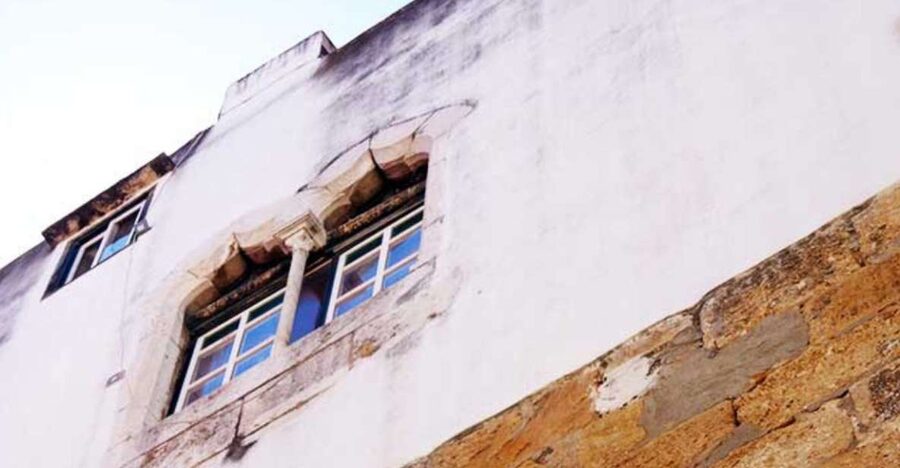
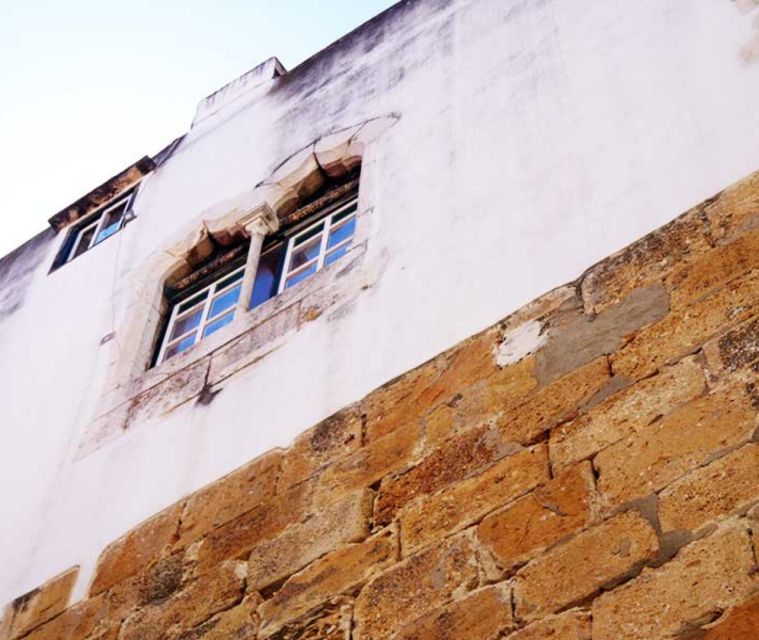
Lisbon is not a city where Jewish history announces itself at every corner. You will not get the same visual experience as in a preserved medieval quarter with intact synagogues, Hebrew inscriptions, or a clearly marked Jewish museum at every turn. Here, the city’s rebuilding, religious changes, and long periods of erasure mean that much of the past must be reconstructed.
That is exactly why a guide matters. A good guide can connect an ordinary street to a former judiaria, explain how medieval segregation shaped daily life, and show how later events changed the meaning of the same public square. The strongest part of this experience is not a single monument. It is the way the stops fit together.
I would approach the tour as a history walk through Lisbon, with Jewish life as the central lens. You will learn about the Jewish community, but you will also gain a clearer sense of Portugal’s political and religious history. The guide may also bring in Jewish contributions to Portuguese culture, science, and gastronomy.
Several guides have received especially warm praise for their presentation. José is repeatedly described as an engaging and articulate guide with an impressive command of Portuguese and Jewish history. Filipa and Philippa are praised for clear English, good storytelling, and patience on hot days. Rita, Sofia, Jorge, and others are also noted for answering questions and adjusting their pace to the group.
More History Tours in Lisbon
- Lisbon: History, Stories and Lifestyle Walking Tour
★ 4.8 · 10,902 reviews - Lisbon: Live Fado Show with Port Wine in Historic Center
★ 4.7 · 4,166 reviews - Lisbon: Fado Show with Wine in a Historic Venue
★ 4.8 · 1,294 reviews
Praça do Comércio and the story of departure
The tour starts under the large triumph arch at Praça do Comércio. This is an easy meeting point in a broad, open square, and the orange backpack or Lisbon Walker tote should help you find the guide.
The square is also a fitting place to begin because the tour connects it with the Exodus. That opening gives the experience a wider frame. Rather than treating Lisbon’s Jewish past as an isolated local subject, the guide links the city to movement, departure, exile, and the spread of communities across the Atlantic, the Mediterranean, Asia, and northern Europe.
You can expect the guide to set up the main questions here. Who lived in Lisbon? How did Jewish communities fit into medieval Portuguese society? What happened when political and religious pressure changed the rules? And how did people, families, ideas, and traditions travel after leaving Portugal?
The value of this first stop is context. Praça do Comércio itself does not provide a complete visual record of Jewish Lisbon, so you will rely on explanation. If you prefer tours centered on visible artifacts, this may feel abstract at first. If you enjoy connecting a city square with a larger story, it is a thoughtful beginning.
From Praça do Município to the riverfront
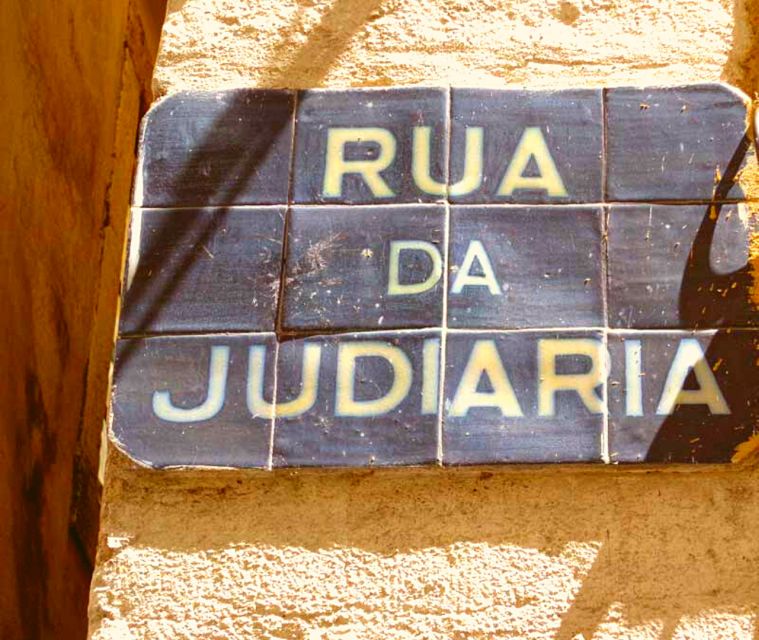
From Praça do Comércio, the route continues toward Praça do Município, Rua do Comércio, Casa dos Bicos, and Ribeira. These stops help place Jewish life within the commercial and civic center of Lisbon.
The route is not simply a checklist of Jewish landmarks. The guide uses the streets and public spaces to explain where people worked, traded, met, and moved through the city. The mention of Ribeira also keeps the story tied to Lisbon’s connection with the river and the wider world.
Casa dos Bicos adds an architectural point of interest along the way. The tour information does not promise that every building on the route was a Jewish site, and it is useful to keep that distinction in mind. Some places are direct historical stops, while others help explain the urban setting in which the community lived.
This section should appeal to anyone who wants more than a narrow religious-history lesson. You will see central Lisbon while learning how commerce, public authority, and community life overlapped. The guide’s interpretation does much of the work here, since the surviving physical evidence is limited.
Baixa and the forced conversions
The Baixa portion turns the story toward one of its most painful chapters: forced conversions. This is where the tour moves from the presence of a Jewish community to the pressures placed upon it.
The subject requires careful explanation because conversion did not simply erase identity, family ties, or cultural memory. The tour presents the experience of Jewish and New Christian communities within the wider history of Portugal. That distinction matters, especially if you want to understand why the story continues beyond the formal end of open Jewish life.
I value this part of the route because it shows how public policy can change ordinary life. Streets that now feel practical and modern once formed part of a city shaped by religious boundaries and government decisions. The Baixa stop also helps explain why later Jewish history in Lisbon is often difficult to see directly.
You should expect serious material here. The guide’s job is not only to name events, but to explain how they affected communities over time. José and other guides have been praised for doing this in a clear and engaging way, without losing sight of the broader history of Portugal.
More heritage sites and old towns:
- Explore Lisbon by Tuk Tuk: History and Viewpoints
★ 5.0 · 840 reviews - Lisbon: Daytime or Sunset Boat Cruise with History and Wine
★ 4.9 · 819 reviews - Private Tuk Tuk Tour Through Lisbon’s Historical Streets
★ 5.0 · 734 reviews - Lisbon Sunset Sailing with Portuguese Wine and History
★ 5.0 · 668 reviews
Rossio and the 1506 Pessah massacre
Rossio is one of the tour’s most important stops because it is connected with the 1506 Pessah massacre. The square is a busy public place today, which makes the historical subject especially stark. The tour places a major act of violence within a setting that you can see and understand as part of modern Lisbon.
This stop gives the route emotional weight. It also shows why the absence of physical remains should not be mistaken for an absence of history. A public square can hold a difficult past even when the buildings and signs do not explain it.
The guide will help you follow the sequence from earlier Jewish life, through forced conversions, to persecution and its consequences. The story does not end at Rossio. It leads into the question of what happened to people who left, hid their identity, converted under pressure, or carried traditions into other parts of the world.
If you are sensitive to difficult history, you may want to tell the guide how much detail you prefer. This is a private group, so questions and pacing can be handled more easily than on a large scheduled walk.
Praça da Figueira, Mouraria, and the old city
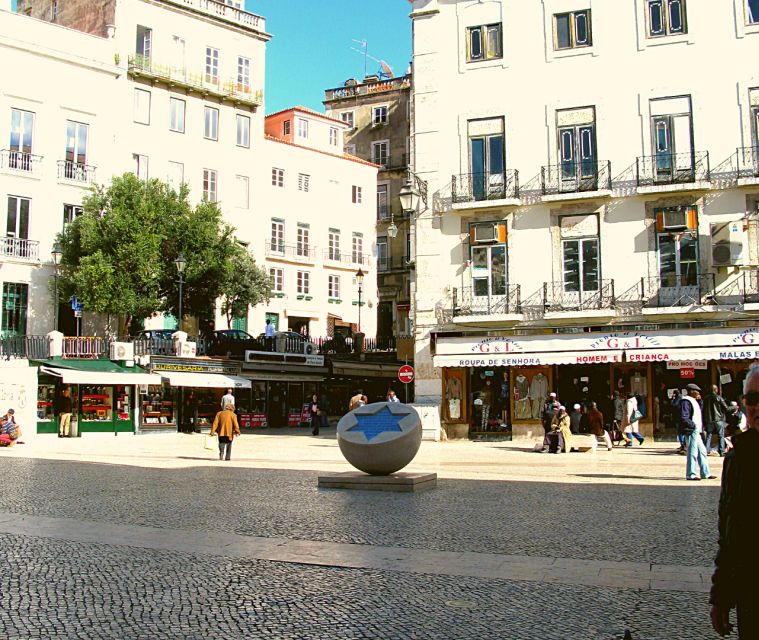
The route also includes Praça da Figueira and Mouraria before reaching the Alfama area and the castle hill. These stops broaden the geographic picture of Jewish Lisbon and show how the old center was divided into districts with different roles and identities.
Mouraria is particularly useful as part of a tour about Lisbon’s communities and changing population. The available information does not identify every exact landmark here as a surviving Jewish site, so you should think of this section as historical orientation rather than a parade of preserved buildings.
One practical advantage is that the route includes many well-known parts of central Lisbon. Even when a stop is not a visible Jewish monument, you are learning where the old community lived and how the city was organized around it. The walk therefore doubles as a useful introduction to the castle hill, Alfama, Baixa, and the central squares.
The walking can be substantial. Some groups have found the hill climbing limited, but the route still covers a fair distance, and Lisbon’s old streets are not perfectly flat. Comfortable shoes are essential. On a hot day, the ability to pause matters, and the private format gives the guide more room to adjust the pace.
Alfama and the medieval Jewish quarter
Alfama is one of the tour’s central subjects. The guide discusses the medieval Jewish quarter and the system of segregation that shaped life in the old city.
This is where you should expect the strongest contrast between historical importance and visible remains. Alfama’s narrow streets and old urban pattern can help you picture the setting, but the tour does not promise a complete collection of surviving Jewish structures. Much of what you learn will come through the guide’s account of the quarter, its residents, and its place in medieval Lisbon.
That oral element is not a minor detail. You should book this experience because you want explanation, not because you expect to photograph a series of intact Jewish landmarks. Several people who have taken the walk found the limited physical evidence disappointing, but still considered the guide’s historical interpretation the main reward.
The Alfama section can also help you understand how Jewish life fit alongside other communities on the castle hill. Guides may point out churches, Roman remains, or other historic features along the way. Those extra sights are useful when they clarify the layers of Lisbon, though they are not substitutes for Jewish artifacts.
The Resistance Museum and Lisbon in the 1940s
The route includes the Resistance Museum and the story of Jewish refugees passing through Portugal during the 1940s. This gives the tour a modern chapter and prevents the experience from ending with the medieval period or the Inquisition.
The refugee story is especially valuable because it connects Lisbon with the wider upheavals of the Second World War. Portugal appears here not only as a place with its own Jewish history, but also as a passage point in a much larger story of movement, danger, and survival.
The Resistance Museum stop also changes the rhythm of the tour. After the medieval quarters, religious persecution, and the 1506 massacre, you reach a more recent period with different political pressures. The guide can show how Lisbon’s role changed over time and how the city became part of the route taken by refugees.
Because the walk covers several centuries, it is worth asking questions as you go. A private guide can explain links between the periods and adjust the emphasis to your interests, including family history, Portuguese culture, diaspora routes, or the modern Jewish presence.
What the guide adds to an artifact-poor route
The guide is the heart of this experience. The strongest praise centers on clear explanations, lively storytelling, and the ability to answer questions. José is singled out several times, while Filipa, Philippa, Rita, Sofia, Jorge, and other guides are also described as personable and effective.
That consistency matters because the route depends heavily on interpretation. A guide who simply points to streets would leave you with a pleasant walk but an incomplete understanding. A guide who explains the setting, chronology, and human consequences can make the same streets meaningful.
You may hear about historical figures and the Jewish community’s influence on Portuguese culture, science, and food. You will also encounter the idea of a Lisbon diaspora spreading across several regions. These subjects help turn the tour from a local neighborhood walk into a connected history of departure and adaptation.
The guide’s flexibility is another advantage. The tour can be tailor-made for different time frames and starting points. The standard experience is three hours, but you can ask about adjustments if your plans or interests require a different arrangement. Since it is a private group, you are not locked into the needs of a large crowd.
Is $106 a fair price for three hours?
At $106 per person, this is not the cheapest way to walk around central Lisbon. The price includes the three-hour guided tour, but not hotel pickup, food, or drinks. You meet in the city center, so you need to make your own way to Praça do Comércio.
The value depends on how much you want from the history. For a private group, the price can be reasonable if you want a specialist subject, room for questions, and a route that connects several districts. It is less attractive if you mainly want landmarks you can inspect on your own or if your interest in Jewish history is casual.
I would also compare the cost with the likely time savings. Without a guide, you can walk through Alfama, Baixa, Rossio, and the central squares, but the Jewish connections may be easy to miss. Here, the fee pays for research, storytelling, and links between places that do not always carry visible signs.
The free-cancellation policy allows you to cancel up to 24 hours ahead for a full refund. You can also reserve now and pay later, which is useful if your Lisbon schedule is still shifting.
Who should book this walk?
I would recommend it most strongly to visitors with a serious interest in Jewish history, Portuguese history, genealogy, religious change, or diaspora routes. It also suits anyone who wants a thoughtful orientation to Lisbon’s old center rather than a tour focused only on grand buildings.
The experience works well for a private family group because you can ask detailed questions and request a gentler pace. Several parties appreciated guides who allowed breaks, especially in hot weather. Still, you should be ready to walk for three hours and bring comfortable shoes.
You may want to choose another activity if your priority is a collection of preserved synagogues, artifacts, or clearly marked Jewish monuments. The tour’s central limitation is also its defining challenge: Lisbon’s Jewish past is often present through memory, geography, and explanation rather than through intact remains.
My verdict: book it for the story, not the monuments
I would book the Lisbon Jewish History Tour if I wanted a careful introduction to the city’s Jewish past and a private guide who could place it within Portugal’s larger story. The route is wide-ranging, the subject is important, and the guides appear particularly strong at making complex events understandable.
Go in with the right expectation. You are signing up for a three-hour walking conversation through Praça do Comércio, Baixa, Rossio, Mouraria, Alfama, and the castle hill. You will see few surviving Jewish artifacts, but you can come away with a much clearer sense of medieval segregation, forced conversions, the 1506 Pessah massacre, the 1940s refugee passage, and the diaspora that spread from Lisbon across the world.
If that kind of guided interpretation is worth $106 per person to you, this is a worthwhile private tour. If you need visible ruins at every stop, choose a different focus.
FAQ
How long does the Jewish History Tour of Lisbon last?
The included guided experience lasts three hours. The activity is valid for one day, with starting times available according to the booking schedule.
Where does the tour meet?
Meet the guide under the large triumph arch at Praça do Comércio. Look for an orange backpack or a tote bag with the large Lisbon Walker logo.
Which languages are available?
The tour is offered in English and Portuguese.
Is this a private group tour?
Yes. The activity is arranged for a private group rather than a shared public group.
What places does the tour cover?
The route includes Praça do Comércio, Praça do Município, Rua do Comércio, Casa dos Bicos, Ribeira, the Resistance Museum, Mouraria, Praça da Figueira, Rossio, Alfama, and the castle hill.
Does the tour include hotel pickup?
No. Hotel pickup and drop-off are not included. Food and drinks are also not included.
What should I bring?
Bring comfortable shoes because the experience is a walking tour covering several Lisbon districts.
Just added around Lisbon
- Tuk tuk tour in Belem area★ 5.0 · 46 reviews
- Lisbon: Private Tour Sintra, Cabo da Roca and Cascais★ 4.9 · 46 reviews
- Private Sintra Tour from Lisbon★ 5.0 · 46 reviews
- Premium Porto Private Day Trip from Lisbon with Local Guide★ 5.0 · 47 reviews
- 4 Hours Tuktuk City Tour in Lisbon★ 5.0 · 47 reviews
- Small Group Pena Palace, Sintra, Regaleira and Cascais★ 5.0 · 47 reviews
- From Lisbon: Tour to Fátima, Batalha, Nazaré and Óbidos★ 4.6 · 47 reviews
- Private 4 hour Sintra Tour★ 5.0 · 47 reviews
Historical Tours, compared.
Historical Sites, Wine Experience, Lunch & Cruise
Read our review →
Live Fado Show with Port Wine in Historic Center
Read our review →

Browse the lists this tour appears in