
Reviewed · HORSES
Lisbon: Morning of Equestrian Art with Lusitano Horses
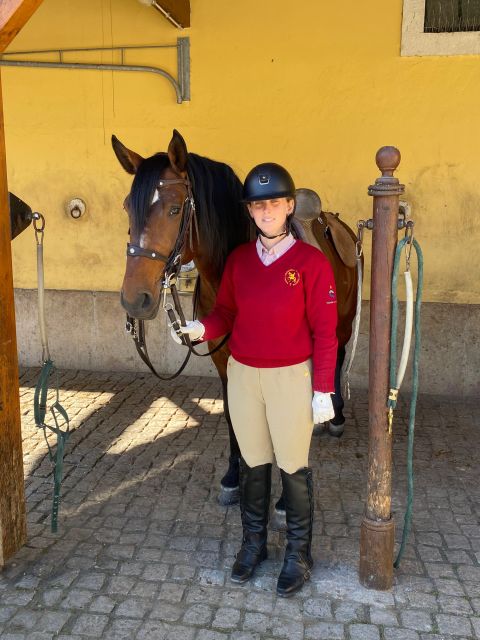
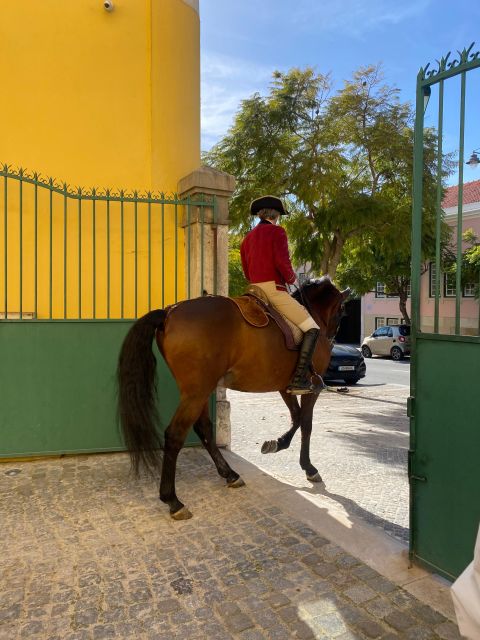
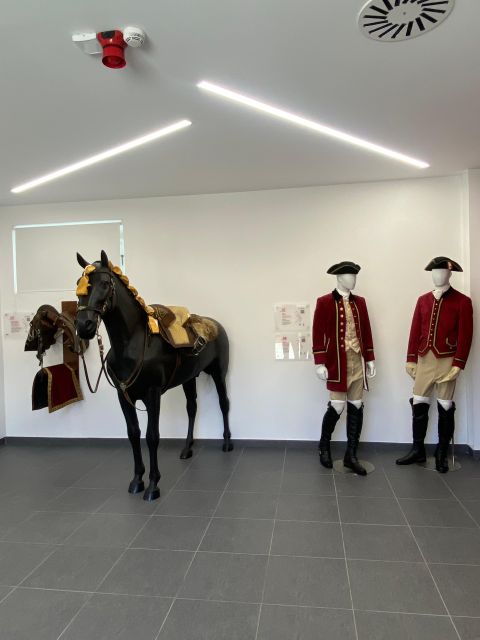
Horses make Lisbon’s courtly past feel close. I like the chance to watch Pure Blood Lusitano horses train at the Portuguese School of Equestrian Art, not just see a polished performance. I also like the period costumes, music, and access to the Nora Patio, which give the morning a strong 18th-century flavor. The main drawback is repetition: the warm-up and later training can cover similar ground, so visitors expecting constant action may leave early.
This is a good-value outing at $17 per person, especially if you already enjoy horses, riding traditions, or Portuguese culture. I would plan on roughly 90 minutes to two hours, arrive for the recommended 11 a.m. start, and bring headphones for the audio guide. The experience is less suitable if you want a fast-moving sightseeing tour with lots of explanation from a live guide.
In This Review
- Key points to know before you go
- Why Lusitano horses make this morning different
- Arriving at the Henrique Calado Riding Ring
- The Nora Patio and the 18th-century atmosphere
- What the training session is like
- The value of the audio guide
- Timing, comfort, and access
- The ticket detail you should not miss
- Is $17 a fair price?
- Who should book this Lisbon horse experience?
- Should you book the Portuguese School of Equestrian Art?
- FAQ
- Where does the equestrian experience take place?
- What time does the activity run?
- How long should I plan for the visit?
- Are Lusitano horses included in the experience?
- Is an audio guide included?
- Can I take photographs?
- Is the venue wheelchair accessible?
- What ticket do I need to show at the entrance?
Key points to know before you go
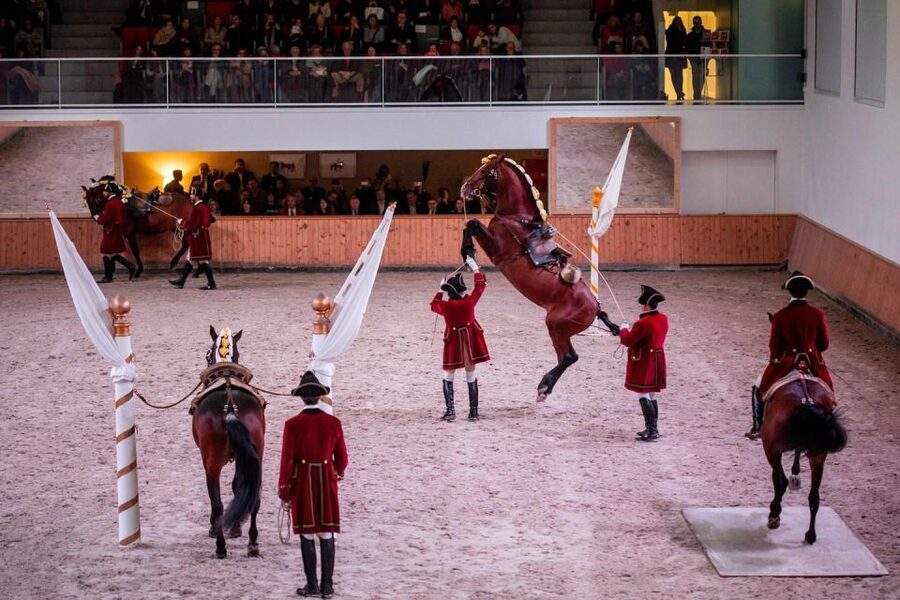
- Watch Alter Real Lusitano horses train: These Pure Blood horses come from the Alter Real Stud Farm and are prepared for the high-level gala performances of the Portuguese School of Equestrian Art.
- The 11 a.m. to 12:30 p.m. window is best: The activity runs until 1 p.m., but the earlier portion gives you the clearest chance to see the day’s main training.
- Period costumes and music shape the mood: Riders work in traditional dress while period music recalls the atmosphere of an 18th-century royal court.
- The Nora Patio allows photography: You can take photographs and videos there without flash, but photography is not allowed inside the Henrique Calado Riding Ring.
- The audio guide is included, headphones are not: Bring your own headphones, a charged smartphone, and internet access.
- Ticket instructions matter: The GetYourGuide voucher is not the admission ticket. You need the separate Book N Tour ticket sent by email.
Why Lusitano horses make this morning different
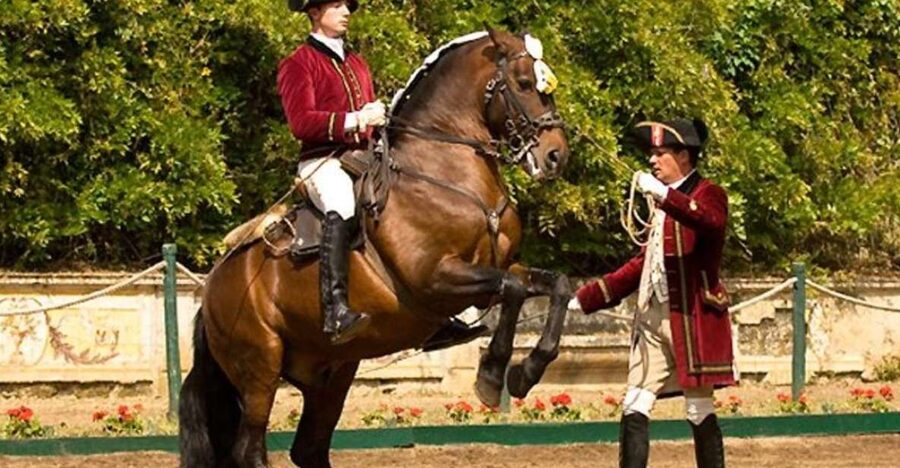
This is not simply a stable visit. The focus is the training of Lusitano horses for Portuguese classical riding, a tradition presented as a living part of the country’s equestrian culture.
The horses come from the Alter Real Stud Farm, one of the names tied to the Portuguese School of Equestrian Art. You are watching the working stage before a gala show, when horses and riders repeat exercises, build control, and prepare complex choreography.
That distinction matters. A performance gives you the finished result. Here, you see the preparation: the warm-up, the exercises, and the patient work needed to bring a horse to a very high level. I like that this makes the visit feel more honest. You see the discipline behind the elegance.
The morning also follows a clear principle: the horses’ rhythm, health, and physical needs come first. This is important for anyone who cares about animal welfare. The training is presented as controlled and deliberate, rather than as a display of tricks rushed out for an audience.
Still, you should set your expectations correctly. This is a training session, not a nonstop show. Some movements may repeat, and parts of the morning can feel quiet. If you want fast entertainment, you may find the pace slow. If you enjoy watching horses respond to careful handling, the slower rhythm is part of the appeal.
A few more reviews worth comparing before you book
- Horse Riding on the Beach
★ 4.5 · 171 reviews - From Lisbon: Horseback Riding on Comporta Beach
★ 4.7 · 167 reviews - From Lisbon: Comporta and Setúbal Trip with Horseback Riding
★ 4.3 · 90 reviews
Arriving at the Henrique Calado Riding Ring
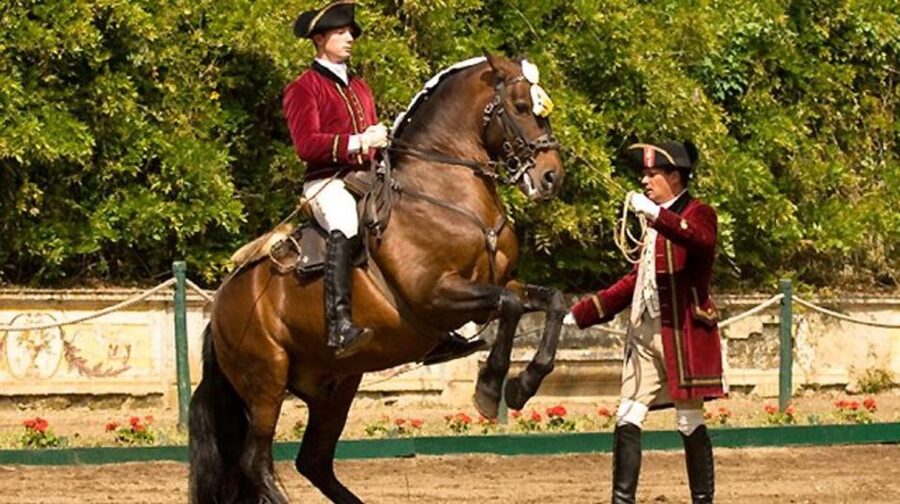
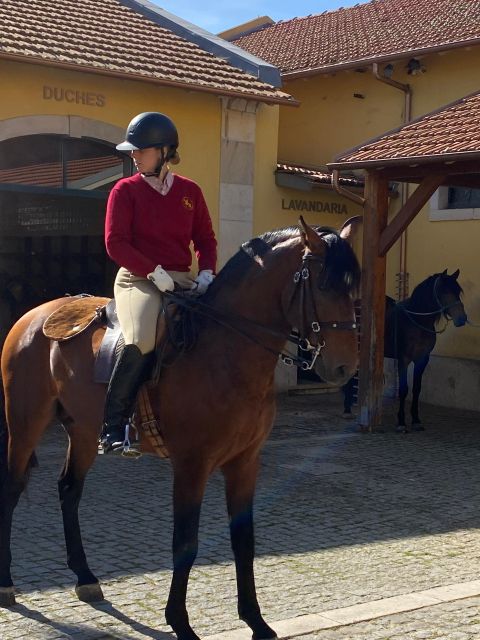
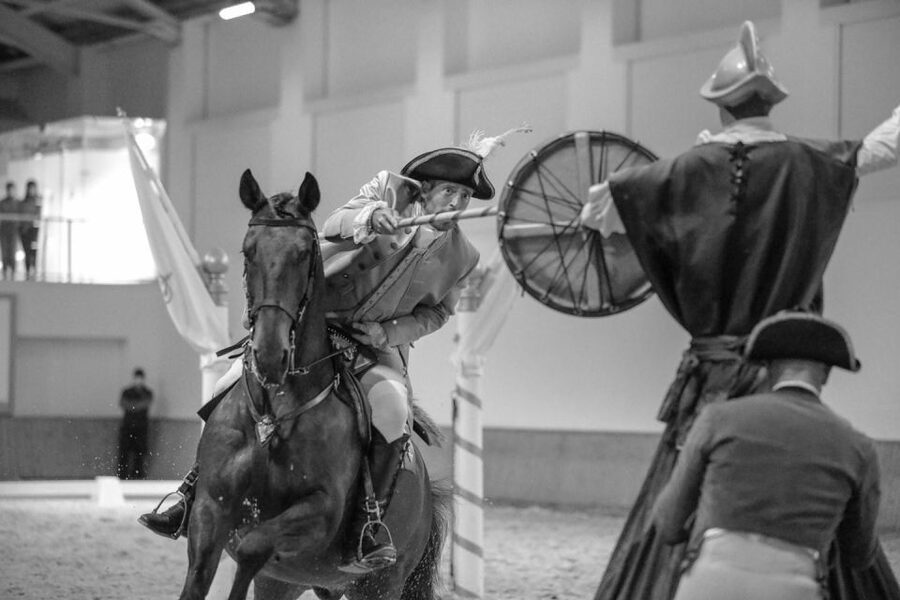
Your visit centers on the Henrique Calado Riding Ring, where the riders carry out their warm-up and resourcefulness exercises. The riders wear period costume, which helps connect the practical work in front of you with the school’s formal performances.
The setting gives the morning much of its character. You are not just looking at horses in modern riding clothes inside a generic arena. The costumes, music, and formal exercises recreate the feel of an 18th-century court, at least in broad outline.
You will also have a chance to look behind the scenes and see how handlers care for the horses. That portion is useful because it adds context to what happens in the ring. The horses do not appear as finished performers by magic. Their care and preparation are part of the institution’s daily work.
The exact amount of attention you receive can vary. English and Portuguese-speaking hosts or greeters are available, but the main explanatory support comes through the audio guide. One low-rated experience specifically complained about a lack of personal attention, so I would not book this expecting a guide to stay beside you and explain every movement.
Instead, treat the visit as a self-guided look at a working equestrian school. You can watch, listen, and take in the details at your own pace.
The Nora Patio and the 18th-century atmosphere
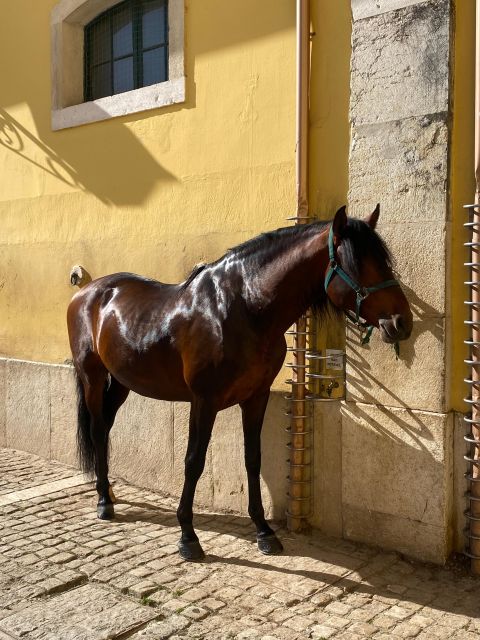
The Nora Patio offers a different feel from the riding ring. It is also the place where photography and video are permitted, as long as you do not use flash.
This is the better area for taking home a few visual memories. The period surroundings, costumed riders, and horses create a more relaxed setting for photographs. If you want pictures, use the Nora Patio rather than trying to capture the action inside the ring.
Inside the Henrique Calado Riding Ring, photography is not allowed. This rule is easy to miss if you arrive thinking you can record the training. Put your phone away once you enter the ring and focus on the riders’ work.
The music helps tie the two areas together. Period pieces play while the riders rehearse exercises and choreographies. This is not background decoration alone. It is part of the effort to recreate the atmosphere of a court where riding was both practical skill and formal art.
I would give the music and costumes more weight than you might expect. Without them, a training session could feel like a technical demonstration. With them, the visit has a stronger cultural identity and a clearer connection to Portugal’s equestrian tradition.
What the training session is like

The morning begins with the horses’ warm-up and the riders’ preparation. You can watch the animals settle into the work while the riders carry out exercises that support the later gala show.
The emphasis is on control, balance, and responsiveness. The supplied information does not identify every exercise by name, so I would avoid arriving with a checklist of specific riding movements. The important point is that you see training for complex equestrian art, not a casual horse ride.
The riders’ resourcefulness exercises form one of the central parts of the visit. These exercises show the precision expected at the school and give you a sense of how much repetition lies behind the polished choreography of a formal performance.
Period music continues as the work develops. Some visitors may find the combination graceful and unusual. Others may feel that the session repeats itself. Both reactions make sense. The experience asks you to observe small changes in posture, timing, and response rather than wait for a new attraction every few minutes.
For that reason, I recommend staying until at least 12:30 p.m. if you can. The activity continues until 1 p.m., but 11 a.m. to 12:30 p.m. is identified as the best visiting period. Leaving too early may mean you see only the initial warm-up and miss the fuller training sequence.
One recent low score described an hour of pre-training followed by another hour of similar exercises. That is a useful warning. The session may feel repetitive if you are not already interested in horses. Families with impatient children, or anyone hoping for a quick photo stop, should consider this carefully.
A different sort of day out around Lisbon:
- Lisbon City Center Tour – The Unmissable Lisbon
★ 5.0 · 22,234 reviews - Lisbon: Sintra, Pena, Regaleira, Cabo da Roca & Cascais
★ 4.7 · 19,656 reviews - Lisbon: Jerónimos Monastery Entrance Ticket
★ 4.1 · 14,164 reviews - Lisbon: History, Stories and Lifestyle Walking Tour
★ 4.8 · 10,902 reviews
The value of the audio guide
The audio guide is included in English, French, and Portuguese. It gives you a way to understand the school and the horses without depending entirely on live commentary.
Bring your own headphones. Headphones are not included, and the practical instructions also call for a charged smartphone and internet access. Download or access the guide before you arrive if possible, since a weak connection or a low battery can turn a pleasant visit into a fiddly one.
The guide is especially useful for first-time visitors who do not already know the difference between a training session and a gala performance. It can help you understand why the riders repeat movements and why the horses’ pace is controlled.
It is not a substitute for constant personal guidance. The available host or greeter speaks English or Portuguese, while the audio guide adds French as an option. If you need detailed answers about each horse or every movement, this format may feel limited.
I see the audio guide as a bonus rather than the main reason to book. The horses and live training provide the substance. The guide helps you read what you are seeing.
Timing, comfort, and access
The experience lasts one day in ticket validity, but the actual morning activity runs from 11 a.m. to 1 p.m. You do not need to treat this as a full-day excursion. It fits neatly into a Lisbon morning, leaving the afternoon open for another part of the city.
Wear comfortable shoes. You may be standing or moving through different areas, and practical footwear will make the visit easier than fashionable shoes with little support.
Food and drinks are not included. This is not a major issue for a morning activity, but plan your coffee or lunch separately. Transport is also not included, so you need to arrange your own way to the venue in the Lisbon District.
The site is wheelchair accessible, which makes this one of the more practical cultural activities for visitors with mobility needs. The available information does not specify every surface or viewing position, so you may still want to confirm any particular access requirement before setting out.
Smoking is not allowed. Flash photography is not allowed, and photography inside the riding ring is prohibited altogether.
The ticket detail you should not miss
The booking process requires extra care. The GetYourGuide voucher is not your admission ticket.
You need to show the separate Book N Tour ticket to a reception desk staff member. That ticket should arrive by email with instructions for access and for downloading the audio guide. Check your spam folder if it does not appear.
This is the single most important practical warning for the visit. Do not arrive with only the GYG QR code or GYG voucher and assume it will work as the entry document.
Provide at least one working contact method, either WhatsApp or email. The operator may need it to reach you with ticket instructions.
At the reception desk, an English or Portuguese-speaking host or greeter can assist you. The process appears designed to avoid the standard ticket line, but you still need the correct document in hand.
Free cancellation is available until 24 hours before the activity for a full refund. That flexibility is useful if your Lisbon plans change, especially since the experience occupies a set morning period.
Is $17 a fair price?
At $17, I consider this a reasonable price for a focused cultural visit. You receive admission, access to the daily training of Alter Real Lusitano horses, and an audio guide. There is no transport or food, but neither is essential for this type of short activity.
The value depends heavily on your interest. If you like horses, classical riding, or Portuguese court traditions, the price is modest for the chance to see this work at close range. The behind-the-scenes look at horse care adds something that a standard show ticket may not provide.
If you have little interest in equestrian sport, the value is less certain. Much of the time is spent watching exercises rather than moving from one major sight to another. The session can also feel repetitive, especially if you stay for the full two hours without using the audio guide.
I would compare this with the cost of other Lisbon cultural attractions, but I would not treat it as a general sightseeing bargain for everyone. It is a specialist experience at a low price, and specialist experiences reward the right audience.
Who should book this Lisbon horse experience?
I would recommend it most strongly to:
- Horse lovers who want to see training rather than only a polished show
- Visitors interested in Portuguese equestrian culture
- Photographers who want period costumes and horses in the Nora Patio
- Families with older children who can watch quietly for extended periods
- Culture-focused visitors looking for a different morning activity
- People who appreciate audio-guided visits and self-paced viewing
I would think twice if you need lively commentary, frequent changes of scene, or a short attraction that is over in 30 minutes. The lack of personal attention may also disappoint you if you expect a guide to explain every step.
The experience works best when you approach it as an observation session. Watch how the riders and horses coordinate. Notice the repeated exercises. Listen to the music. Give the horses time to work instead of waiting for a big finale every few minutes.
Should you book the Portuguese School of Equestrian Art?
Book it if the sight of a trained Lusitano horse working with a rider sounds like a good use of your Lisbon morning. The price is fair, the cultural setting is distinctive, and the combination of training, period dress, music, and horse care gives you more than a standard stable visit.
Skip it if you want a fast, highly guided attraction. The session may repeat, and the audio guide cannot replace a dedicated live explanation.
My practical choice would be to book the 11 a.m. start, bring headphones and a fully charged phone, keep the Book N Tour ticket ready, and plan to stay until at least 12:30 p.m. That gives you the best chance to see the morning’s main work without turning the visit into an endurance test.
FAQ
Where does the equestrian experience take place?
It takes place at the Portuguese School of Equestrian Art in the Lisbon District, including the Nora Patio and Henrique Calado Riding Ring.
What time does the activity run?
The activity takes place from 11 a.m. to 1 p.m. The recommended best time to visit is from 11 a.m. to 12:30 p.m.
How long should I plan for the visit?
You should plan for about 90 minutes to two hours, depending on how long you stay for the training and rehearsals.
Are Lusitano horses included in the experience?
Yes. You watch the daily training of Pure Blood Lusitano horses from the Alter Real Stud Farm.
Is an audio guide included?
Yes. An audio guide is included in English, French, and Portuguese. You need to bring your own headphones.
Can I take photographs?
Photography and video are allowed in the Nora Patio without flash. Photography is not allowed inside the Henrique Calado Riding Ring.
Is the venue wheelchair accessible?
Yes, the activity is listed as wheelchair accessible.
What ticket do I need to show at the entrance?
You need to show the separate Book N Tour ticket to reception staff. The GetYourGuide voucher or QR code is not the admission ticket.
Just added around Lisbon
- Tuk tuk tour in Belem area★ 5.0 · 46 reviews
- Lisbon: Private Tour Sintra, Cabo da Roca and Cascais★ 4.9 · 46 reviews
- Private Sintra Tour from Lisbon★ 5.0 · 46 reviews
- Premium Porto Private Day Trip from Lisbon with Local Guide★ 5.0 · 47 reviews
- 4 Hours Tuktuk City Tour in Lisbon★ 5.0 · 47 reviews
- Small Group Pena Palace, Sintra, Regaleira and Cascais★ 5.0 · 47 reviews
- From Lisbon: Tour to Fátima, Batalha, Nazaré and Óbidos★ 4.6 · 47 reviews
- DayTrip from Lisbon to Sintra+Cascais PRIVATE TOUR-small groups★ 5.0 · 47 reviews
Horses, compared.



Melides: Horse Riding on the Beach with Wine Tasting
Read our review →Browse the lists this tour appears in