
Reviewed · HORSES
Lisbon: Portuguese Riding School Trainig with Lusitano Horse
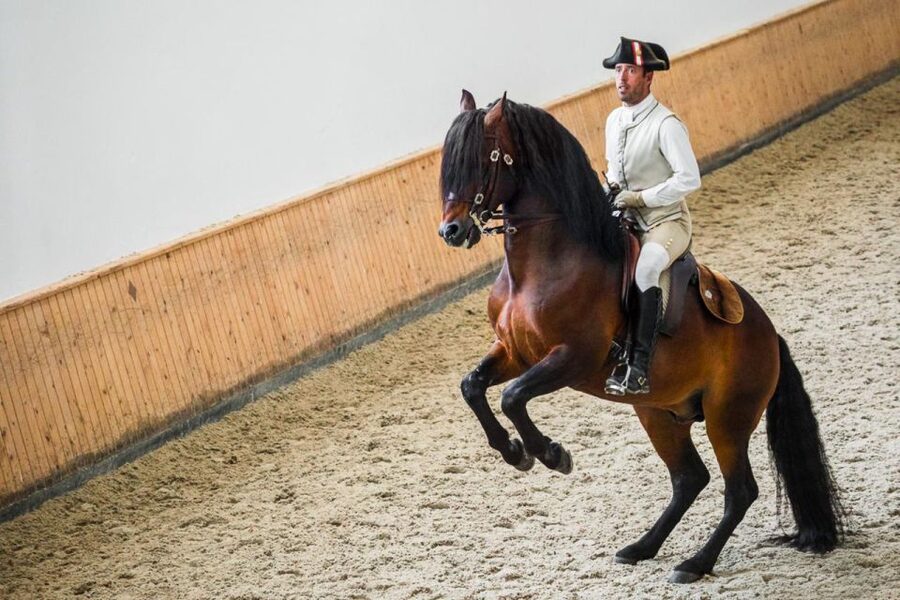
Meet Portugal’s elegant working horses. This Lisbon experience gives you a close look at Lusitano horses from the Alter Real Stud Farm, their daily care, and the precise training behind the Portuguese School of Equestrian Art. I especially like the chance to watch handlers care for the horses at the Henrique Calado Riding Ring, and I like seeing riders in period costume rehearse difficult movements to period music. The main drawback is the ticket process, which can be confusing, and the English guide is not a live tour guide.
The experience runs from 10 a.m. to 1 p.m., but I would aim for the 11 a.m. to 12:30 p.m. window, described as the best time to visit. At $17 per person, it is a strong-value choice for anyone interested in horses, Portuguese tradition, or unusual Lisbon sights. Just bring headphones, a charged phone, and patience with the separate ticket instructions.
In This Review
- Key points at a glance
- What this Lisbon horse experience really offers
- Starting at the Henrique Calado Riding Ring
- Meeting the horses and watching stable care
- The Nora Patio and the courtly atmosphere
- Understanding the Portuguese School of Equestrian Art
- Audio guide, headphones, and the ticket problem
- Timing your morning in Lisbon
- What the $17 price gets you
- Who should book this experience?
- Is the Lisbon Lusitano horse training worth booking?
- FAQ
- Where does the experience take place?
- How long does the activity last?
- What horses will I see?
- Do I get to ride a horse?
- Is a guide included?
- Do I need to bring headphones?
- Is transport included?
- Can I bring food and drinks?
- Is the activity wheelchair accessible?
- What ticket should I show at reception?
Key points at a glance
- Lusitano horses from Alter Real: Watch horses bred at Portugal’s Alter Real Stud Farm during their daily training.
- Stable access: See handlers caring for the horses at the Henrique Calado Riding Ring, with a chance to get unusually close to them.
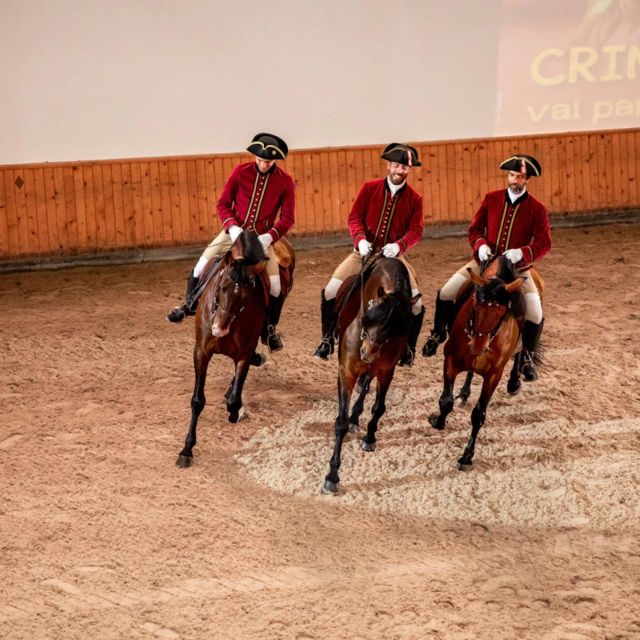
- Period costumes and music: Riders rehearse in traditional dress while music helps recreate the feel of an 18th-century court.
- Two different settings: The Nora Patio provides a more intimate historic atmosphere, while the riding ring gives you a clearer view of training.
- Audio guide included: English, Portuguese, and French audio commentary explain the stables and introduce the horses.
- Low-cost horse experience: At $17, the visit offers much more than a quick viewing, though food, transport, headphones, and photography are not included.
What this Lisbon horse experience really offers

This is not a standard horse-riding lesson, and you do not ride a horse yourself. Instead, you watch the daily work behind the Portuguese School of Equestrian Art. That means warm-ups, resourcefulness exercises, stable care, and rehearsals of advanced equestrian movements.
The value comes from seeing the full process rather than only a polished gala performance. You watch riders prepare the horses, observe how handlers look after them, and then see how the animals respond to careful instruction. That connection between routine care and formal performance gives the visit more substance than a quick photo stop.
The horses come from the Alter Real Stud Farm, an important detail for anyone interested in Portuguese horse culture. The program focuses on the horses’ rhythm, health, and physical needs. In practical terms, you are shown that training is not simply about making an animal perform a difficult movement. It depends on timing, fitness, trust, and knowing when not to push.
The tone is traditional rather than casual. Riders wear period costume, and period music accompanies the training and rehearsal work. This creates a small window into the courtly world that the Portuguese School of Equestrian Art seeks to recreate.
A few more reviews worth comparing before you book
- Horse Riding on the Beach
★ 4.5 · 171 reviews - From Lisbon: Horseback Riding on Comporta Beach
★ 4.7 · 167 reviews - From Lisbon: Comporta and Setúbal Trip with Horseback Riding
★ 4.3 · 90 reviews
Starting at the Henrique Calado Riding Ring
The Henrique Calado Riding Ring is the main working setting for the visit. Here, you can watch riders carry out warm-up routines and exercises designed to prepare the horses for more demanding work.
The warm-up matters. It lets you see the riders paying attention to each horse instead of treating every animal in exactly the same way. The program stresses rhythm, health, and physical needs, so the early exercises are part of the lesson, not filler before the more dramatic movements.
You may also see resourcefulness exercises performed by the riders. These are intended to show control, timing, and the horse’s ability to respond to subtle directions. Since the activity includes both training and rehearsal, you get a better sense of the work required before a formal equestrian-art performance.
I would pay close attention to the quiet moments. The most interesting details may be the way a rider prepares a horse, the pauses between exercises, or the handler’s routine in the stable. The dramatic movements attract the eye, but the ordinary care explains how the horses remain ready for high-level work.
The schedule runs across a three-hour morning period, but the most useful viewing time is said to be from 11 a.m. to 12:30 p.m. That narrower window is worth keeping in mind when planning your day. Arriving outside the recommended period might mean seeing less of the central training and rehearsal activity.
Meeting the horses and watching stable care
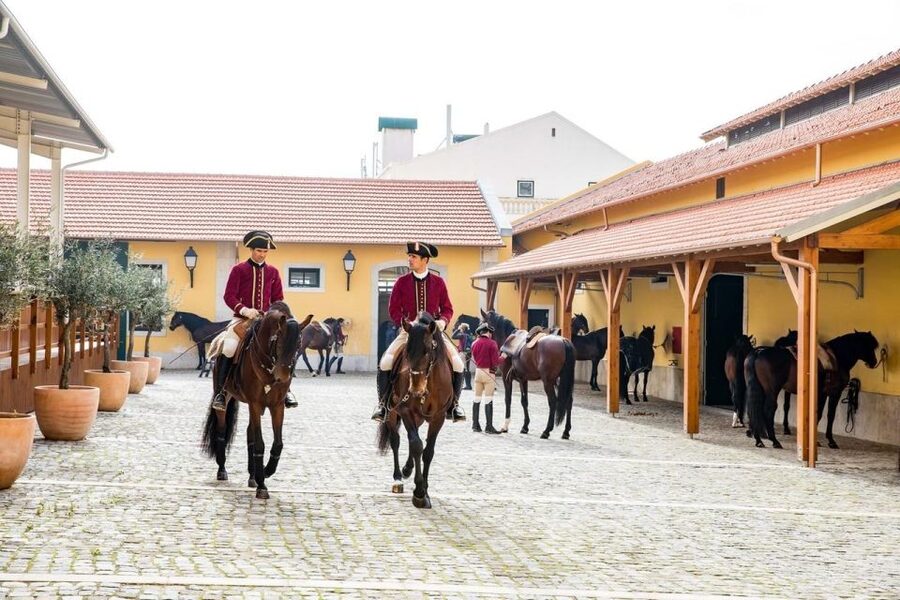
The stable portion is one of the strongest reasons to choose this visit. You can look behind the scenes and see handlers caring for the Lusitano horses at the riding ring.
This part feels more personal than watching a performance from a distance. You may get close enough to notice the horses as individual animals, rather than seeing them only as a line of identical performers. One piece of feedback described the chance to get much closer to the horses than expected, which fits the main appeal of this section.
The stable visit lasts about an hour according to one detailed account of the schedule. That gives you time to observe the handlers and take in the environment without rushing straight from arrival to the riding exercises. A request for another 30 minutes in the stables also suggests that horse lovers may wish the stable portion lasted longer.
That is an important expectation to set. If your main goal is close contact with the horses, the time may feel short. If you are mainly interested in the full program, an hour in the stable followed by an hour of riders in costume creates a well-balanced morning.
The audio guide helps here. It explains the stables and introduces the different horses, with audio available in English, Portuguese, and French. This is useful because you are not relying only on what you can see from the viewing area.
The guide is not a substitute for a live host walking beside you. The activity lists English and Portuguese host or greeter support, but direct feedback indicates that a traditional guide may not be present in the usual sense. Think of the staff as helping you enter and find your way, while the audio guide supplies most of the interpretation.
The Nora Patio and the courtly atmosphere
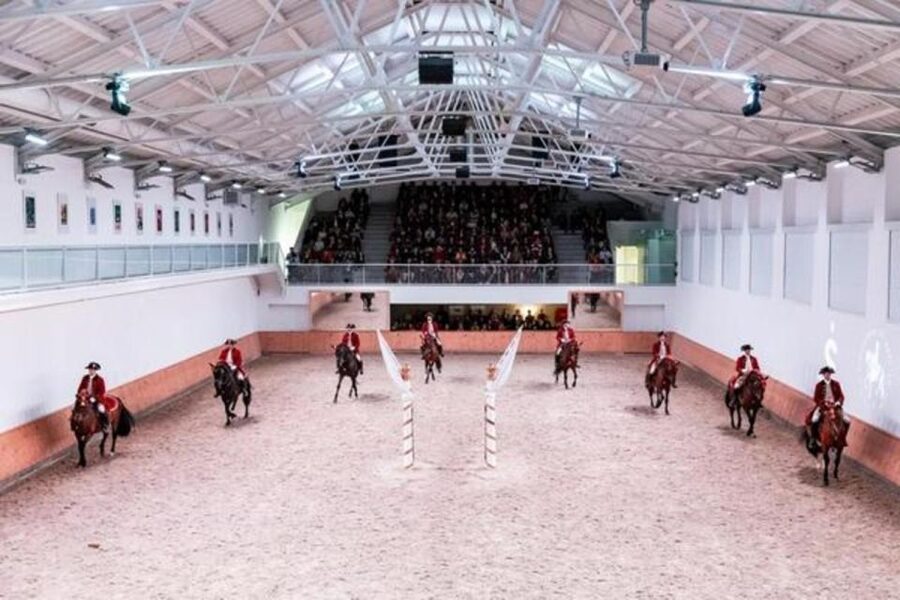
The Nora Patio provides a different mood from the working riding ring. The setting is connected with an 18th-century court atmosphere, and the period music and costumes make the rehearsals feel more formal here.
The attraction is not only the technical skill of the riders. It is also the way the setting, music, clothing, and choreography work together. The result is a presentation of Portuguese equestrian culture that feels tied to ceremony and court tradition.
You should not expect a full gala show at the price of this ticket. This is training and rehearsal, not simply a finished theatrical performance. That difference is valuable because it lets you see the preparation behind the formal art, but it also means the pace may be less polished or dramatic than a dedicated evening spectacle.
For me, that is part of the charm. A rehearsal can show how the riders correct, repeat, and refine an exercise. The program is built around the horses’ needs, so you may see a more measured rhythm than you would at a tightly staged show.
A different sort of day out around Lisbon:
- Lisbon City Center Tour – The Unmissable Lisbon
★ 5.0 · 22,234 reviews - Lisbon: Sintra, Pena, Regaleira, Cabo da Roca & Cascais
★ 4.7 · 19,656 reviews - Lisbon: Jerónimos Monastery Entrance Ticket
★ 4.1 · 14,164 reviews - Lisbon: History, Stories and Lifestyle Walking Tour
★ 4.8 · 10,902 reviews
Understanding the Portuguese School of Equestrian Art
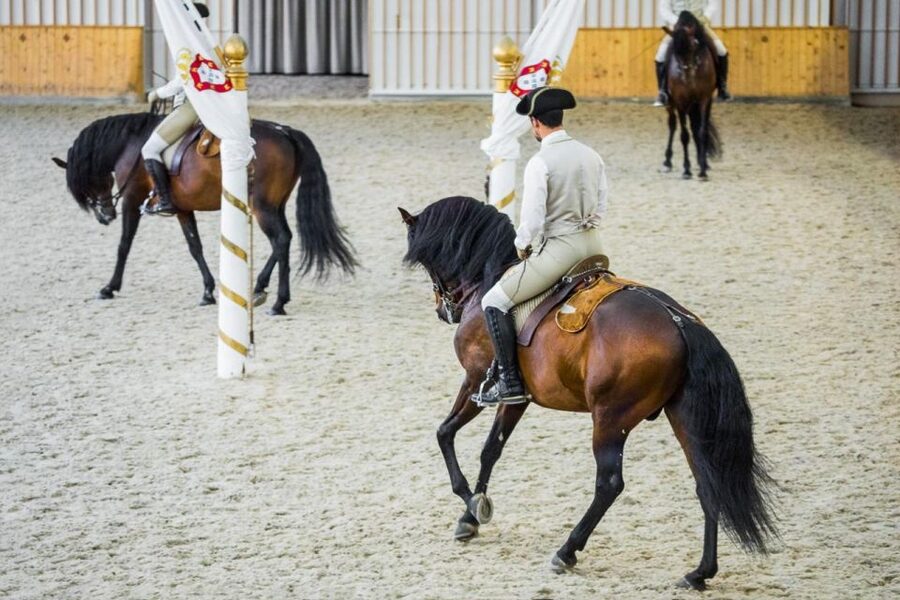
The Portuguese School of Equestrian Art presents riding as a disciplined art form, not just a sport. The exercises require the horse and rider to work together with controlled movement and precise timing.
You will see riders in period clothing carrying out complex exercises and choreographies. The clothing helps connect the modern training session with the courtly tradition being recreated, while the music gives the work a clear sense of occasion.
The emphasis on the horses’ health is especially important. High-level movements place demands on the animals, so the program explains how training must respect their physical condition and natural rhythm. That makes this visit worthwhile even for someone who knows little about dressage or equestrian performance.
You do not need to understand every technical term to enjoy it. Watch the relationship between rider and horse. Notice how the rider communicates through posture, movement, and timing. The audio guide can provide useful background, but simply observing the concentration and repetition will tell you a great deal.
This is also a good activity for parents introducing children to horses. It offers something more thoughtful than a quick animal encounter because it shows care, discipline, and training. Young children may be most interested in the horses themselves, while older children can follow the exercises and costumes.
Audio guide, headphones, and the ticket problem
The audio guide is included, but headphones are not. Bring your own headphones, a charged smartphone, and internet access. These are not minor extras. Without them, you may have trouble getting the full value from the commentary about the stables and individual horses.
After booking, you receive a separate email with instructions for accessing and downloading the ticket and audio guide. Check your spam folder if the message does not appear. This extra step is important because the booking confirmation itself may not be the entry document.
At reception, show the Book N Tour ticket. Do not rely on the GetYourGuide QR code, voucher, or paper confirmation as your entry ticket. The instructions specifically say that the GetYourGuide material is not the ticket, which is the clearest practical warning attached to this experience.
You should also provide at least one working WhatsApp number or email address. The operator says this is needed so staff can contact you. The ticket arrangement has caused confusion for some people, so I would download the correct document before leaving your hotel and keep it easy to find on your phone.
This is the weakest part of the visit. The attraction itself is straightforward, but the separate ticket system creates avoidable stress. Read every email from Book N Tour rather than assuming the first confirmation contains everything you need.
Timing your morning in Lisbon
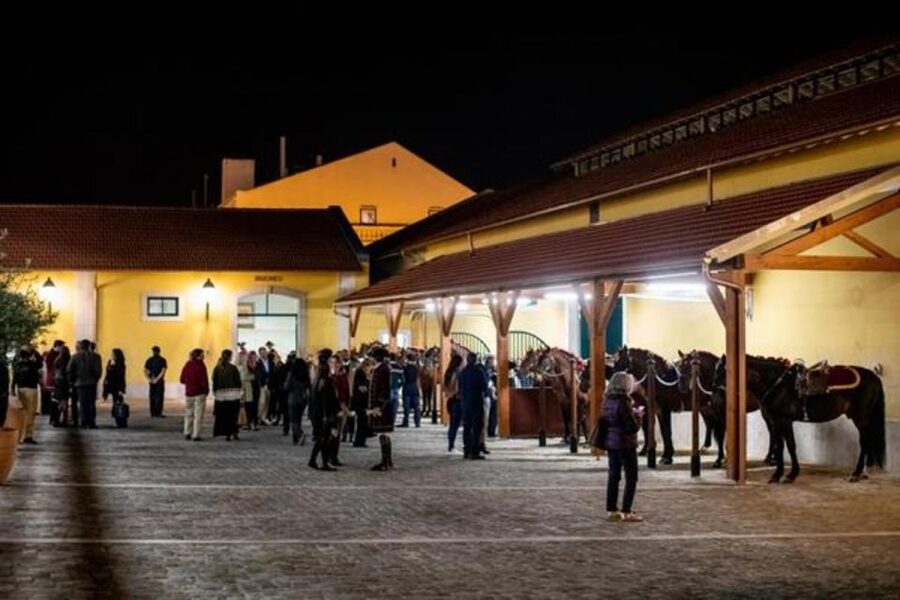
The activity is available from 10 a.m. to 1 p.m. and is valid for one day. Since the suggested best period is 11 a.m. to 12:30 p.m., check the available starting time carefully when you book.
The schedule matters because this is not a drop-in museum visit where any hour feels the same. The main attraction is live training, and the quality of your visit depends on catching the active portion of the morning.
Plan enough time to arrive without rushing. Transport is not included, so you must make your own way to the meeting point. The exact transport method is not specified here, so check the location details after booking and allow extra time for Lisbon traffic or a delayed connection.
Comfortable shoes are a wise choice. You may spend time moving between the stable area and riding spaces, and the activity is built around watching rather than sitting through a short presentation. Food and drinks are not included, so eat beforehand or plan something afterward.
The activity is wheelchair accessible, which makes it an option for visitors who need accessible facilities. You should still confirm any personal access needs with the operator before arrival, since the available information does not describe every surface or viewing position.
What the $17 price gets you
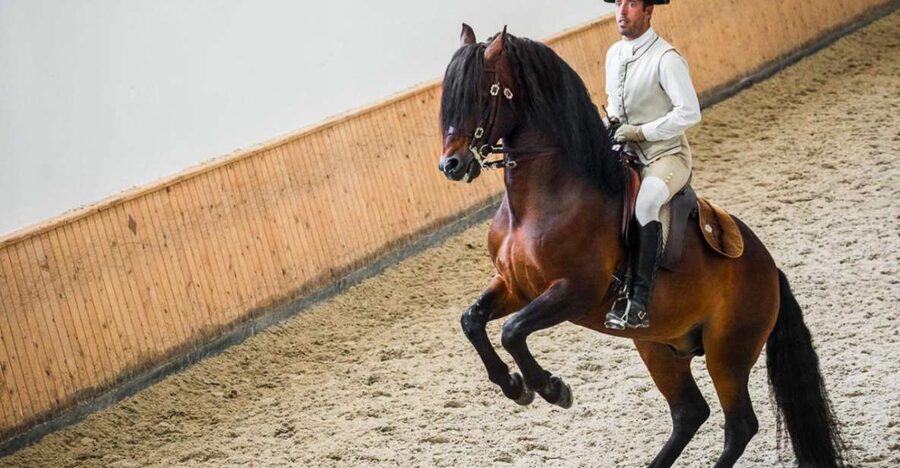
At $17 per person, this is one of the better-value specialty activities in Lisbon. The ticket includes entry to the Portuguese School of Equestrian Art, daily training by Lusitano horses from the Alter Real Stud Farm, and the audio guide.
The strongest value comes from the combination of stable access and live training. A short performance alone might justify a lower price, but this program gives you several connected parts of the equestrian world. You see the animals, the care routine, the warm-up, and the formal exercises.
The price does not include transport, food, drinks, headphones, or photography. Bring what you need instead of expecting a café stop or equipment rental. Flash photography is not allowed, and the activity information lists photography as not included, so treat the visit as an observation experience rather than a dedicated photo session.
At this price, I would book it for the subject matter, not for comfort or entertainment polish. Horse lovers get the most from it, particularly those who enjoy seeing how animals are trained and cared for. If you want a large-scale show with a fixed theatrical production, this may feel too modest.
Who should book this experience?
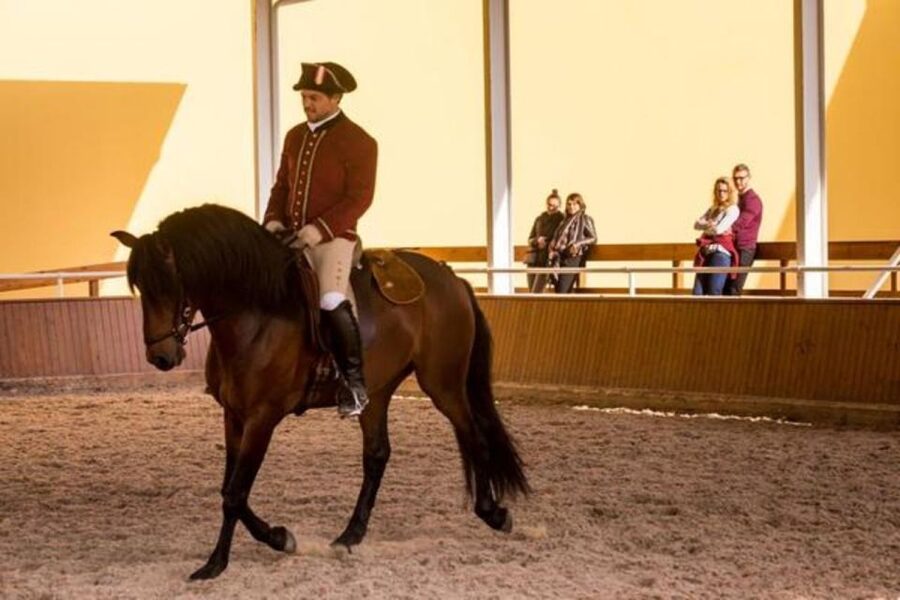
I would recommend it to anyone with a real interest in horses, Portuguese traditions, dressage, or working animals. It suits solo visitors and couples because you can spend time watching quietly and following the audio guide at your own pace.
Families can also enjoy it, especially if children already like horses. The stable section gives younger visitors something immediate to watch, while the period costumes and music add color to the riding exercises.
It is less suitable if you need a fully guided walking tour with constant explanation. The audio guide is useful, but the experience is not described as a live, detailed lecture. You need to be comfortable observing and learning through the supplied audio material.
It is also not ideal for someone who wants to photograph every part of the visit. Flash is forbidden, and photography is not included in the activity details. Bring your phone for the audio guide, but make the horses and training your main focus.
Is the Lisbon Lusitano horse training worth booking?
Yes, if you want an affordable and unusual Lisbon activity built around real horse care and training. The close stable access, Lusitano horses from the Alter Real Stud Farm, period-costume riders, and courtly music give the morning a clear sense of place.
Book it with realistic expectations. You are attending training and rehearsals, not a full gala performance. The audio guide does most of the explaining, the ticket instructions require care, and horse lovers may wish for more time in the stables.
I would choose the 11 a.m. to 12:30 p.m. period if available, bring headphones and a charged phone, and download the correct Book N Tour ticket before you go. For $17, the combination of access and authentic working detail makes this a sensible pick for visitors who would rather see the craft behind a performance than simply watch the finished show.
FAQ
Where does the experience take place?
It takes place in the Lisbon District of Portugal, at the Portuguese School of Equestrian Art, including the Henrique Calado Riding Ring and the Nora Patio.
How long does the activity last?
The activity takes place from 10 a.m. to 1 p.m. The 11 a.m. to 12:30 p.m. period is described as the best time to visit.
What horses will I see?
You will watch Lusitano horses from Portugal’s Alter Real Stud Farm.
Do I get to ride a horse?
No. The activity includes watching the horses being cared for and trained, but riding is not included.
Is a guide included?
An audio guide is included in English, Portuguese, and French. English and Portuguese host or greeter support is also listed.
Do I need to bring headphones?
Yes. Headphones are not included, so bring your own along with a charged smartphone and internet access.
Is transport included?
No. You must arrange your own transport to the meeting point.
Can I bring food and drinks?
Food and drinks are not included. The supplied information does not state that refreshments are provided.
Is the activity wheelchair accessible?
Yes, the activity is listed as wheelchair accessible.
What ticket should I show at reception?
Show the Book N Tour ticket. The GetYourGuide QR code, voucher, or paper confirmation is specifically not accepted as the ticket.
Just added around Lisbon
- Tuk tuk tour in Belem area★ 5.0 · 46 reviews
- Lisbon: Private Tour Sintra, Cabo da Roca and Cascais★ 4.9 · 46 reviews
- Private Sintra Tour from Lisbon★ 5.0 · 46 reviews
- Premium Porto Private Day Trip from Lisbon with Local Guide★ 5.0 · 47 reviews
- 4 Hours Tuktuk City Tour in Lisbon★ 5.0 · 47 reviews
- Small Group Pena Palace, Sintra, Regaleira and Cascais★ 5.0 · 47 reviews
- From Lisbon: Tour to Fátima, Batalha, Nazaré and Óbidos★ 4.6 · 47 reviews
- Private 4 hour Sintra Tour★ 5.0 · 47 reviews
Horses, compared.






Melides: Horse Riding on the Beach with Wine Tasting
Read our review →Browse the lists this tour appears in