Reviewed · LISBON TOURS
Lisbon Revelation Tour
Lisbon reveals itself one square at a time. This 3 to 4 hour walking tour links the city’s grand riverfront, rebuilt downtown, old Carmo quarter, and a fine hilltop view, giving you a useful first map of Lisbon without filling your whole day. I especially like the route’s clear historical story, from the 1755 earthquake to the 1974 democratic revolution, and the small local tasting of a pastel de nata or ginjinha.
I also like the morning start at 10:00, since you finish at Miradouro de São Pedro de Alcântara with much of the afternoon still open. The main drawback is physical: this is a real city walk with hills, steps, and plenty of pavement. Bring water and good shoes, and expect less time at each stop than you would get on a private tour.
The tour costs $30.25 per person and is limited to 16 people. That is a fair price for a professional art historian guide, a carefully connected route, and several hours of commentary. The tour is offered in English, though guide José once helped a Portuguese-speaking participant with translation, which suggests some flexibility when language needs arise.
In This Review
- Key points to know before you book
- Starting beside Lisbon’s riverfront power center
- Reading the rebuilt city in Baixa
- Rossio, the heart of downtown
- The Santa Justa lift and the climb toward Carmo
- Carmo and Chiado, where old and new Lisbon meet
- A Baroque pause at São Roque
- Finishing at São Pedro de Alcântara
- What the guide adds to the walk
- The tasting: pastel de nata or ginjinha
- Price, pace, and physical effort
- Who should book this Lisbon walk
- Should you book the Lisbon Revelation Tour?
- FAQ
- How long does the Lisbon Revelation Tour last?
- What time does the tour start?
- Where does the tour begin?
- Where does the tour end?
- What language is the tour offered in?
- How many people can join the tour?
- Is food or drink included?
- Is the tour suitable for people with limited fitness?
- Can I cancel for a full refund?
Key points to know before you book
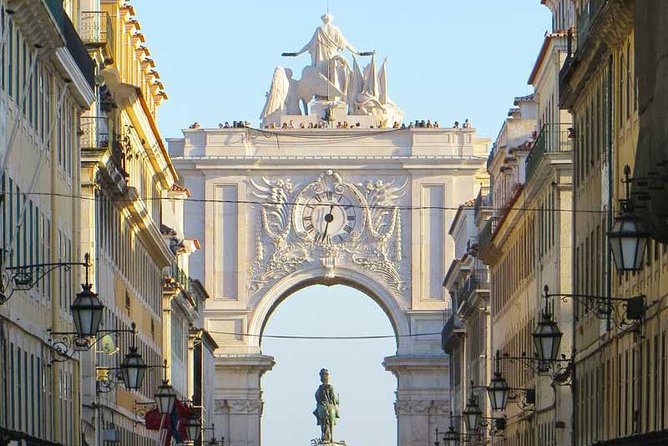
- The route begins at Praça do Comércio: You start beside one of Lisbon’s grandest civic spaces, right on the riverfront.
- The earthquake story ties the morning together: Baixa, Rossio, and Restauradores show how Lisbon was rebuilt after the 1755 disaster.
- You climb into older Lisbon: Largo do Carmo, Chiado, and Carmo bring you into the city’s upper districts and changing architectural styles.
- The final view is a strong payoff: Miradouro de São Pedro de Alcântara looks across toward Castle Hill and gives you a useful sense of Lisbon’s shape.
- A tasting is included: You receive either a pastel de nata or a small serving of ginjinha, Portugal’s cherry liqueur.
- The group stays fairly small: With a maximum of 16 people, the guide should be easier to hear and approach than on a large coach outing.
Starting beside Lisbon’s riverfront power center
Meet at Cervejaria Antártida Lisboa, in the western section of the old royal palace area at Praça do Comércio. Give yourself time to find the exact meeting point. The square is broad, open, and busy with pedestrians, so arriving a few minutes early is sensible.
Praça do Comércio, also called Terreiro do Paço, is an excellent place to begin. It was the enduring center of royal and political power, and its huge arcaded layout makes an immediate impression. The tour allows about 20 minutes here, enough for your guide to explain why this waterfront space matters before the route turns inland.
This opening stop also sets up Lisbon’s recurring theme: destruction followed by reinvention. The square and the downtown grid are closely tied to the rebuilding that followed the 1755 earthquake. You are not simply checking off a plaza. You are learning to read the city’s layout.
The square itself is free to visit, but the tour notes that admission is not included for the starting stop. Since this is primarily an outdoor walk, ask the guide what, if anything, that refers to before expecting an interior visit.
A few more reviews worth comparing before you book
- Lisbon City Center Tour – The Unmissable Lisbon
★ 5.0 · 22,234 reviews - Lisbon: Sintra, Pena, Regaleira, Cabo da Roca & Cascais
★ 4.7 · 19,656 reviews - Lisbon: Jerónimos Monastery Entrance Ticket
★ 4.1 · 14,164 reviews
Reading the rebuilt city in Baixa
From the riverfront, the group moves through Baixa, Rossio, and Restauradores. This section receives about 30 minutes, making it one of the most useful parts of the walk for first-time visitors.
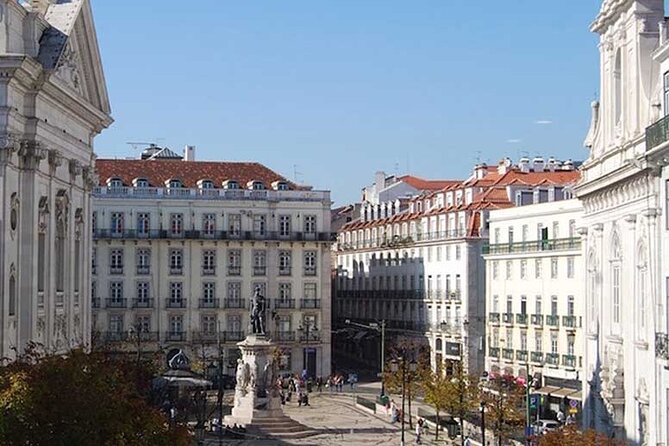
Baixa is the planned downtown rebuilt after the earthquake. Its regular streets and broad public spaces feel different from the tighter lanes higher up the hills. A good guide can help you notice that contrast instead of treating the area as one long shopping district.
The route continues to Praça da Figueira, once a traditional market square. The stop is short, about five minutes, but it adds another piece to the story of everyday Lisbon. Markets, transit, trade, and public gatherings all helped shape these central squares.
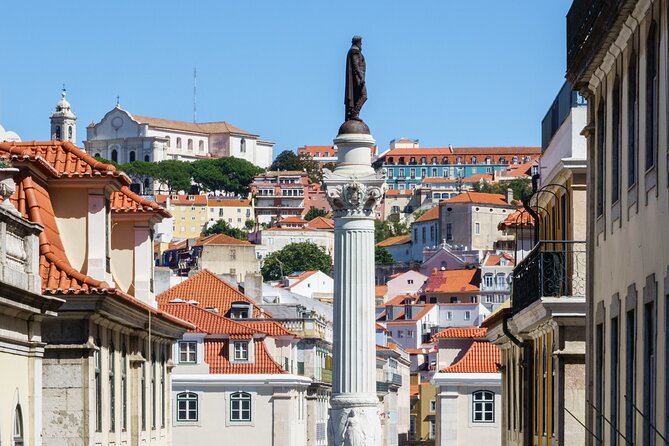
At Praça dos Restauradores, the tour pauses for another five minutes. The square presents Lisbon in a more formal, capital-city mode, with a large central monument and grand buildings around it. You will not spend long here, but the stop helps connect the rebuilt downtown to Portugal’s national story.
Rossio, the heart of downtown
Praça Dom Pedro IV is usually called Rossio, and the tour gives it about 10 minutes. This is one of Lisbon’s main meeting places, with a broad patterned pavement, a central monument, and constant movement through the surrounding streets.
Rossio is a good place to learn how Lisbon’s public spaces work. It is not an isolated monument in a quiet setting. It is part of daily city life, surrounded by cafés, shops, transport links, and people crossing in every direction.
The short time here is enough for orientation, though you should not expect a full architectural lecture on every surrounding building. That is the tradeoff of a route covering so much ground. You gain a broad understanding of the center, but you may want to return later for a slower look.
The Santa Justa lift and the climb toward Carmo
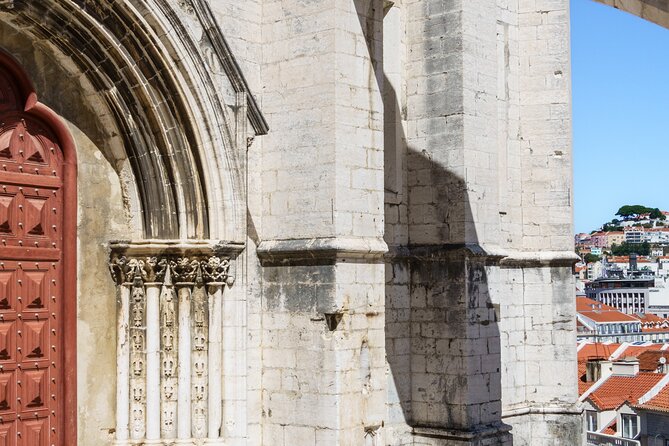
The next stop is the Elevador de Santa Justa, one of Lisbon’s most recognizable iron structures. The tour allows around 10 minutes and describes it as a place for a 360-degree view over downtown.
This is an important point to understand before booking: the itinerary lists the stop, but not a ride up the lift. Admission is shown as free for this part, while the starting stop specifically notes that admission is not included. Your guide may explain the structure and its view, but you should not assume a lift ticket or an extended lookout visit is part of the morning.
From here, the route moves toward Largo do Carmo. The city becomes hillier, and the walking demands increase. One person described the elevation as manageable, while another advised bringing water and walking shoes because the tour covers a lot of ground. That is a fair description. You do not need exceptional fitness, but you should be comfortable walking uphill for parts of the route.
Largo do Carmo is one of the morning’s most memorable historical settings. It is connected with Portugal’s democratic revolution of 1974, when military action and public pressure brought down the Estado Novo dictatorship. The square also gives the guide a chance to connect political history with the physical city around you.
A different sort of day out around Lisbon:
- Lisbon: History, Stories and Lifestyle Walking Tour
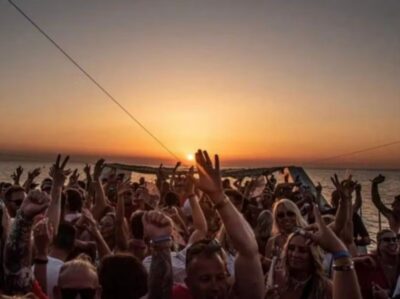
★ 4.8 · 10,902 reviews - Lisbon: Sunset Boat Party Cruise with DJ and Open Bar
★ 4.5 · 10,378 reviews - Lisbon: Pena Palace, Sintra, Cabo da Roca, & Cascais Daytrip
★ 4.7 · 9,981 reviews - Lisbon: Oceanário de Lisboa Entrance Ticket
★ 4.6 · 9,943 reviews
Carmo and Chiado, where old and new Lisbon meet
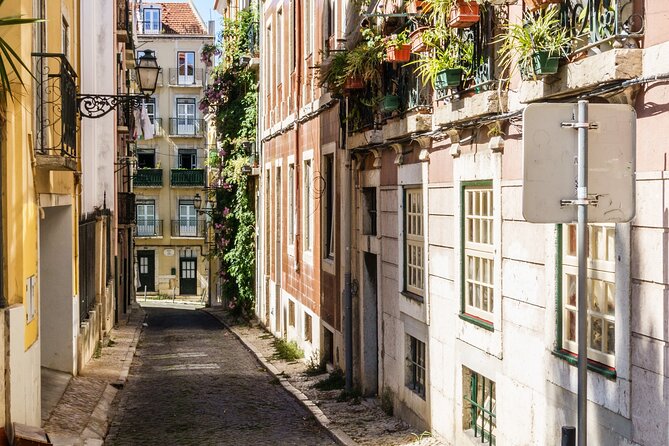
The route then explores Chiado and Carmo for about 10 minutes. This part of Lisbon has a different feel from the planned streets below. The upper district brings together shops, cafés, churches, theaters, and remnants of older architecture.
The itinerary points to the city’s only Gothic monument. That reference is to the Carmo church ruins, a dramatic remnant left open to the sky after the earthquake. Even from a short stop, the site makes the disaster feel less abstract. Stone arches and broken walls carry more weight than a date on a timeline.
The route also includes a tribute to Portugal’s great poet of the Discoveries era. The exact stop is not given, so your guide’s explanation matters here. This is a useful addition because Lisbon’s seafaring past can easily take over every city tour. A good presentation should place the poetry, empire, religion, and ordinary city life alongside one another rather than reducing Lisbon to ships and explorers.
You also pass through the lively bohemian district. The route does not promise a long stop, nightlife, or a meal there. Think of this as a guided introduction to the district’s character, with time to return later if you want to explore its streets at your own pace.
A Baroque pause at São Roque
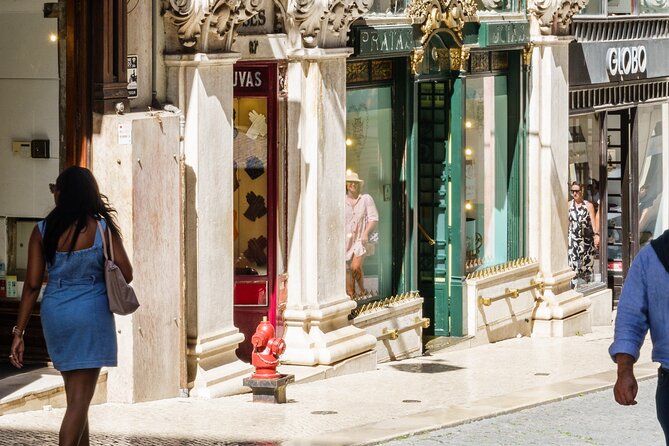
Igreja de São Roque receives about 10 minutes and is described as a Baroque extravaganza. The church is a strong counterpoint to the damaged Gothic Carmo site. Carmo shows loss and exposed stone, while São Roque represents ornament, decoration, and religious wealth.
The itinerary lists admission as free, but the schedule allows only a short visit. You may have time to see the main interior and hear why it matters, though not to study every chapel in detail. If the church is especially important to you, note the location so you can return independently.
This stop also shows why an art historian guide can add value. Lisbon’s churches can look impressive at first glance, but details of style and patronage make them easier to understand. The commentary is likely to be most useful for people who want more than a photo and a quick label.
Finishing at São Pedro de Alcântara
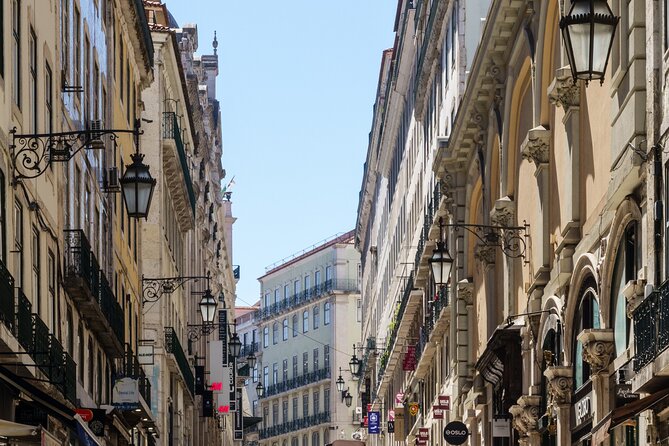
The final destination is Miradouro de São Pedro de Alcântara, reached after the route through the upper districts. The viewpoint looks across toward Castle Hill and offers one of the clearest visual payoffs of the tour.
This is a smart ending. After hearing about the earthquake, the rebuilt center, the old quarters, and the city’s political turning points, you can look back over Lisbon and place those areas in relation to one another. The view is especially useful early in a visit because it helps you understand where you have been and where you may want to go next.
The tour ends here rather than returning to Praça do Comércio. That is convenient if you plan to keep exploring the upper districts, but less convenient if your hotel is near the riverfront and you want to collect belongings. Plan your next move before the tour begins.
What the guide adds to the walk
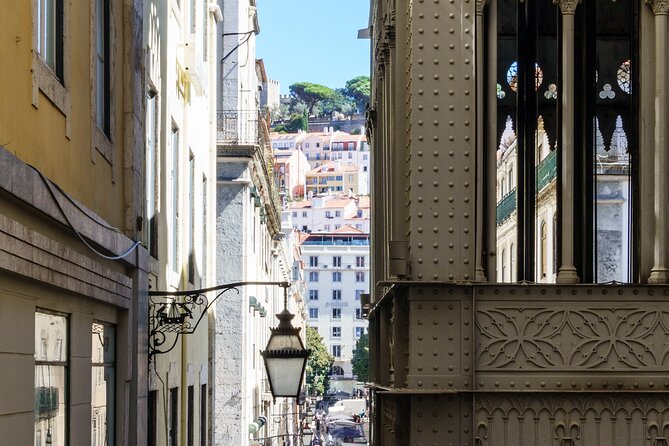
The strongest part of this experience is the guiding. The tour uses a professional art historian, and the best feedback repeatedly praises the guides for tying places, architecture, and political events together.
Several guides are named in the feedback, including Philippa, Filipa, Alex, Hugo, José, and Mia. Philippa was praised for adapting explanations to the group’s interests. Alex received praise for linking historical facts into one clear story. Hugo was singled out for the final view and for helping people get their bearings in different parts of Lisbon.
You should not expect every departure to have the same person. Still, these comments suggest that the operator has several guides who can make the route more than a basic walk between landmarks. José also helped with Portuguese translation during one English-language tour, a thoughtful touch for someone who might otherwise feel left out.
The tone appears friendly and open to questions. That matters because the route gives you useful chances to ask about restaurants, other sights, or how to spend the afternoon. Treat the guide as your first source of local orientation, not just as a voice reciting dates.
The tasting: pastel de nata or ginjinha
The included tasting is modest, but it fits the tour well. You receive either a pastel de nata, Lisbon’s familiar custard tart, or a ginjinha, a small serving of cherry liqueur.
Do not book this for a full food tour. The tasting is a brief local accent in a history walk. It adds pleasure without changing the main purpose of the experience.
If you do not drink alcohol, the pastel de nata is the obvious choice. If you want to try a classic Portuguese liqueur and are of legal drinking age, ginjinha offers a different taste of Lisbon. The supplied details do not explain how the choice is arranged, so ask your guide at the start.
Price, pace, and physical effort
At $30.25 per person, the tour offers solid value if you want a guided introduction rather than a simple self-guided route. You are paying for three to four hours of company, historical explanation, a professional art historian, a tasting, and a group capped at 16 people.
The price is less attractive if you already know central Lisbon well or prefer to linger inside churches and monuments. The schedule moves through many places, and several stops last only five or 10 minutes. Think of it as a framework for the city, not a series of full museum visits.
The physical effort is moderate. The route includes hills and steps, especially as it rises toward Carmo, Chiado, and the final viewpoint. Wear supportive shoes, carry water, and dress for changing weather. The walk operates in all weather, so a light rain layer can save the morning.
The morning timing is one of the best practical features. Starting at 10:00 and finishing around early afternoon leaves time for lunch, a return to Carmo or São Roque, shopping in Chiado, or a separate visit to another part of Lisbon.
Who should book this Lisbon walk
I would choose this tour for a first or second day in Lisbon. It gives you a working map, explains major events, and ends with a view that helps you plan the rest of your stay.
It suits people who enjoy history, architecture, and city walking. It also works well for anyone who wants a guide’s recommendations but does not want to spend a full day on a structured excursion.
Families can join, but children must be accompanied by an adult. The moderate fitness requirement should be taken seriously for anyone with trouble on hills or uneven streets.
English is the stated language. If you need another language, do not assume it will be available. Also check your confirmation carefully: one serious complaint involved a person going to Porto’s University because of the instructions they received, despite this experience being in Lisbon. The safest approach is to verify that your ticket clearly shows Praça do Comércio and the Cervejaria Antártida meeting point before setting out.
Free cancellation is available up to 24 hours before the start time. Changes or cancellations inside that window are not accepted for a refund, and the tour requires a minimum number of people to operate.
Should you book the Lisbon Revelation Tour?
Yes, if you want a well-priced introduction to central Lisbon with real historical context and a manageable half-day schedule. The strongest reasons are the thoughtful route, the final viewpoint, the art historian guide, and the way the earthquake and 1974 revolution give structure to the morning.
I would skip it only if you dislike hills, want long interior visits, or have already explored Baixa, Chiado, Carmo, and Rossio in detail. For most first-time visitors, this is a practical way to get your bearings fast, then use the free afternoon to return to the places that caught your attention.
FAQ
How long does the Lisbon Revelation Tour last?
The tour lasts approximately 3 to 4 hours.
What time does the tour start?
It starts at 10:00 am.
Where does the tour begin?
The meeting point is Cervejaria Antártida Lisboa, at Ala Poente do Palácio Real, Praça do Comércio, R. C 20-23, Lisbon.
Where does the tour end?
The tour ends at Miradouro de São Pedro de Alcântara, on R. de São Pedro de Alcântara.
What language is the tour offered in?
The tour is offered in English.
How many people can join the tour?
The maximum group size is 16 people.
Is food or drink included?
Yes. The experience includes either a pastel de nata or a ginjinha.
Is the tour suitable for people with limited fitness?
The tour requires a moderate level of physical fitness and includes hills and steps. Good walking shoes and water are recommended.
Can I cancel for a full refund?
Yes, if you cancel at least 24 hours before the experience start time. Cancellations made less than 24 hours in advance are not refunded.
Just added around Lisbon
- Central Lisbon E-Bike Tour★ 5.0 · 168 reviews
- From Lisbon: Sintra and Cascais Full-Day Private Tour★ 4.9 · 168 reviews
- Experience the Queen of Fado at Ah Amália Living Experience★ 5.0 · 171 reviews
- Lisbon – Vinho Verde Wine Premium Boat Experience★ 5.0 · 171 reviews
- Lisbon: 2-Hour Sunset Sailing Tour on Luxury Sailing Yacht★ 4.9 · 171 reviews
- Óbidos: Medieval Tales & Secrets Spots Guided Walking Tour★ 4.9 · 171 reviews
- From Lisbon: Small Group Fátima & Little Shepherds Town Tour★ 4.8 · 171 reviews
- Horse Riding on the Beach★ 4.5 · 171 reviews
Lisbon Tours, compared.
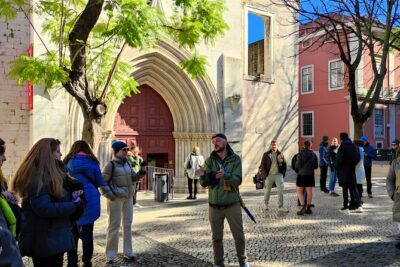
Lisbon City Center Tour – The Unmissable Lisbon
Read our review →
Sintra, Pena, Regaleira, Cabo da Roca & Cascais
Read our review →
Sunset Boat Party Cruise with DJ and Open Bar
Read our review →
Pena Palace, Sintra, Cabo da Roca, & Cascais Daytrip
Read our review →