Reviewed · LISBON TOURS
Marble Tour in Vila Viçosa
Marble changes the whole town. This two-hour tour makes Vila Viçosa’s famous stone easy to understand, from underground extraction to polished tiles and hand-shaped art. I especially like the access to active quarries and the chance to see marble being cut and finished in a factory. The main drawback is practical: you need your own vehicle to move between sites.
The tour also gives you a useful sense of why marble matters here, not just as a product but as part of local working life. Guides such as João Bravenho have earned strong praise for clear English, humor, and an ability to explain geology without turning the visit into a lecture. Bring closed-toe shoes, water, and a little patience for dust at the workshop.
In This Review
- Key things to know before you go
- Why Vila Viçosa is Portugal’s marble capital
- Starting at the Marble Interpretive Center
- Seeing the terrain shaped by quarrying
- Inside the quarries: scale, machinery, and risk
- From rough block to polished marble
- Marble as a craft, not just a building material
- What makes the guides important
- Is two hours enough?
- Is $29 good value?
- Who should book this experience?
- Practical advice for a better visit
- Should you book the Marble Tour in Vila Viçosa?
- FAQ
- Where does the Marble Tour in Vila Viçosa start?
- How long does the tour last?
- How much does the tour cost?
- Is transportation between the stops included?
- What languages are available?
- What does the price include?
- What should I bring?
- Are sandals or flip-flops allowed?
- Is the tour suitable for wheelchair users?
Key things to know before you go
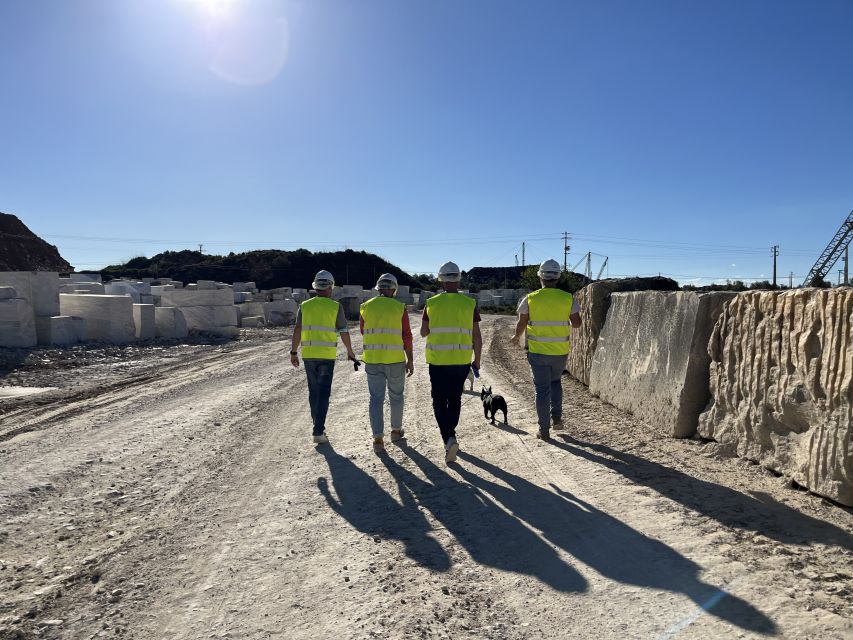
- Three quarries can reveal three very different scales of work, from large cut faces to huge extraction sites.
- The Marble Interpretive Center explains the basics first, covering geology, geography, history, and local employment.
- A working factory shows the full change from rough block to finished surface, including cutting, washing, and polishing.
- Artisan workshops add a human touch, with hand-shaped marble pieces and decorative work.
- Your own private vehicle is required, since transport between Vila Viçosa’s stops is not included.
- The $29 price is strong value if you want access to industrial sites that are difficult to understand from the road alone.
Why Vila Viçosa is Portugal’s marble capital
Vila Viçosa is not simply a pretty Alentejo village with marble used for paving and building fronts. Marble shapes the local identity. You see it in public spaces, buildings, decorative details, workshops, and household objects.
The stone has been valued here since Roman rule in the Iberian Peninsula. Alentejo marble has long been sent beyond Portugal, and Vila Viçosa remains closely tied to that trade. The town’s connection to marble is not just historical decoration. It is a working industry that affects families, businesses, skills, and the local economy.
That context gives the tour more weight than a quick stop at a quarry viewpoint. You are not only looking at a dramatic hole in the ground. You are seeing a source of employment and a material that passes through many hands before reaching a home, monument, shop, or overseas buyer.
I like that the experience begins in the town center rather than taking you straight to an extraction site. Starting in Vila Viçosa helps you notice how widely marble is used before you see where it comes from.
A few more reviews worth comparing before you book
- Lisbon City Center Tour – The Unmissable Lisbon
★ 5.0 · 22,234 reviews - Lisbon: Sintra, Pena, Regaleira, Cabo da Roca & Cascais
★ 4.7 · 19,656 reviews - Lisbon: Jerónimos Monastery Entrance Ticket
★ 4.1 · 14,164 reviews
Starting at the Marble Interpretive Center
Meet at the white building with three brick arches, marked with both the Rota do Mármore AE and CECHAP logos. This is the headquarters and the first stop, where you get an introduction to the marble world.
The Marble Interpretive Center covers geology, geography, and history. That preparation matters. Without it, a quarry can look like a vast stepped pit and little more. With the basic explanation in place, you can better understand how the stone formed, how the ground is assessed, and why different areas produce different colors and qualities.
The guide also explains the social role of the industry. This is one of the tour’s strongest points because it moves past the usual factory visit. You learn why quarrying matters to the community and how the trade has shaped local life.
The first guided section lasts about 30 minutes. It is a sensible length: long enough to establish the facts, but short enough to keep you eager to see the real sites. João Bravenho has been especially praised for making this part lively and clear, including for English-speaking visitors.
Seeing the terrain shaped by quarrying
From the center, you travel by private vehicle toward the marble-producing areas. Transportation is not included, and this is the one detail you need to plan around before booking. You cannot simply join the group and expect a shared minibus to carry you between every stop.
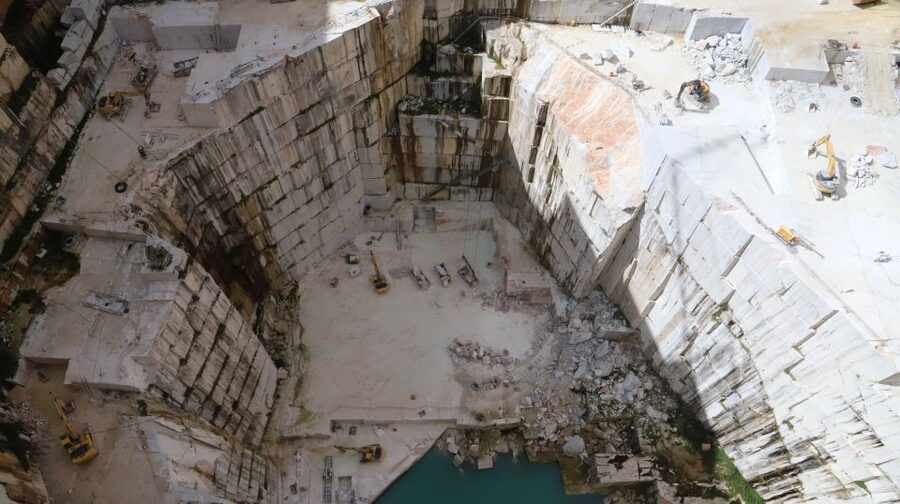
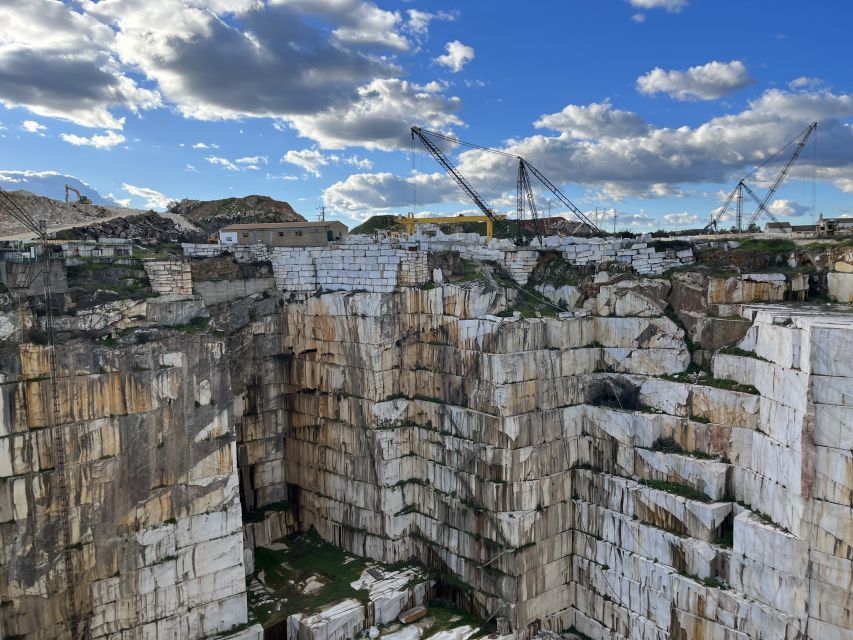
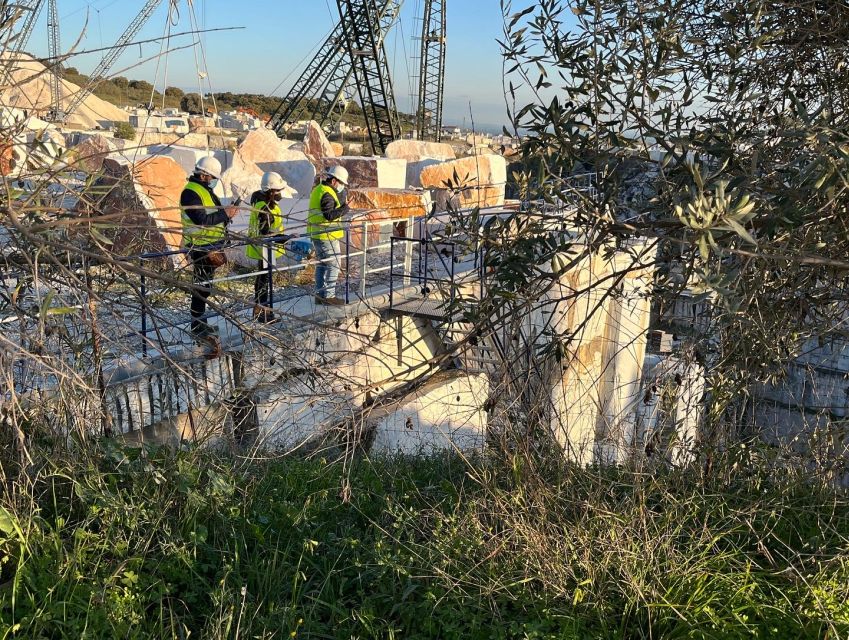
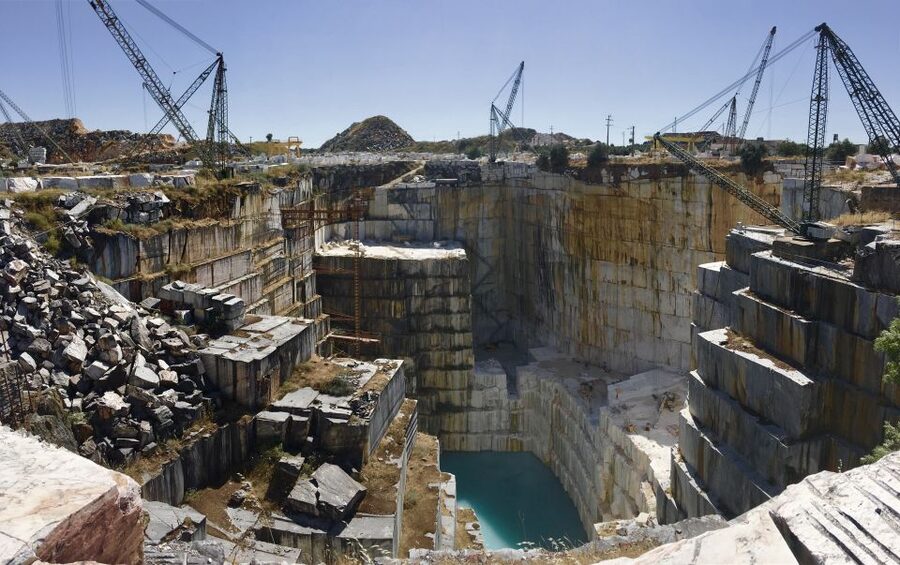
The trip between locations becomes part of the story. The terrain around Vila Viçosa has been altered by quarrying over many years, creating views that can feel startling and unfamiliar. Huge cut faces, exposed stone, machinery, and stepped areas show the scale of the work.
This is not polished sightseeing. It is an industrial setting, and that is exactly what makes it interesting. You may see an austere, almost otherworldly scene rather than the soft countryside associated with much of the Alentejo.
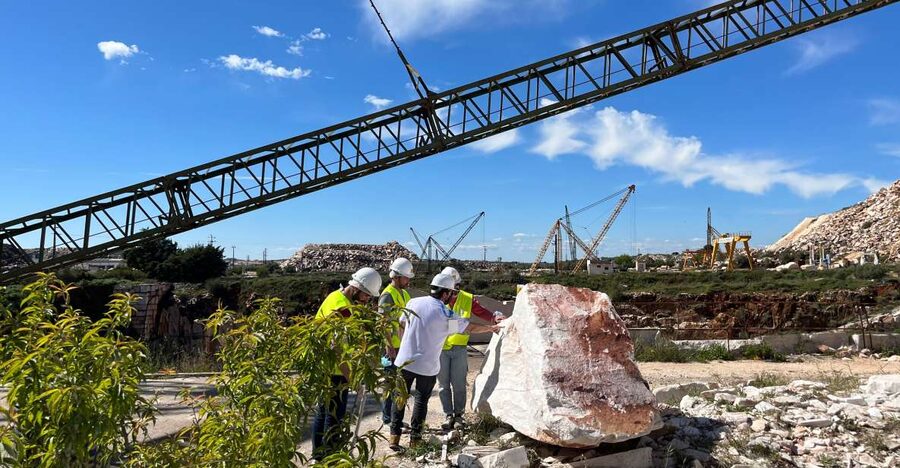
The second portion of the tour includes a photo stop, a guided visit, sightseeing, and views along the way. It lasts roughly 45 minutes. Give yourself time to look closely rather than treating the stops as quick photo opportunities. The quarry areas explain the cost, danger, and effort hidden behind a finished marble countertop.
Inside the quarries: scale, machinery, and risk
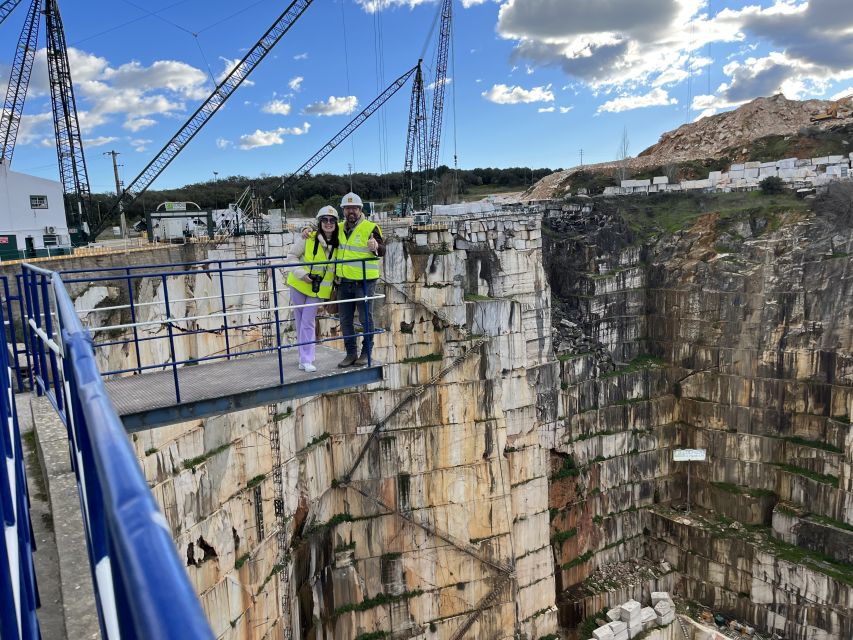
The quarry visits are the dramatic center of the experience. You see where marble is extracted and learn how the machinery works. You also hear about the risks connected with quarrying, which is important because the scenery can otherwise make the work look almost abstract.
A useful feature is the chance to visit several quarries, with some larger and deeper than others. That sequence helps you understand how extraction can vary from site to site. One quarry may give you an initial sense of the operation, while another makes the scale much clearer.
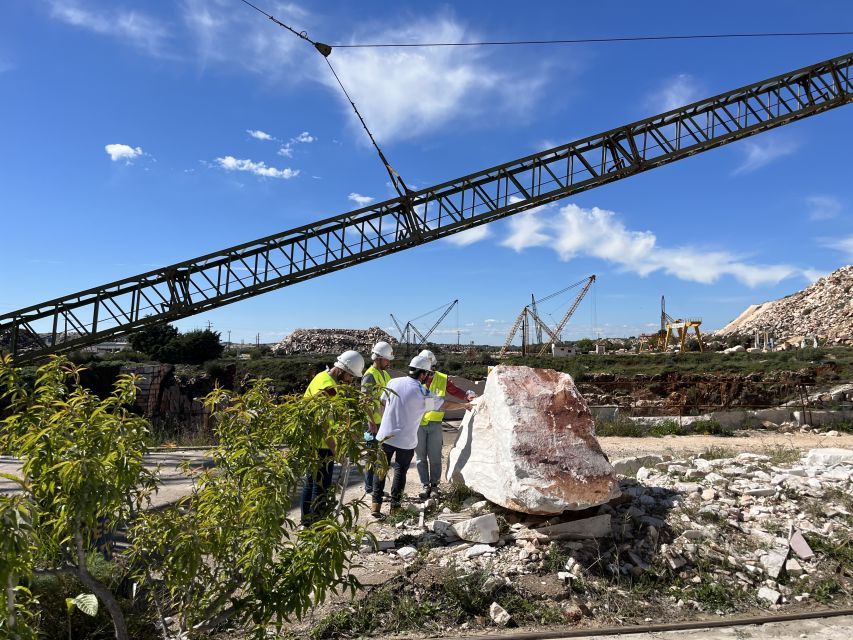
You might see workers cutting out large slabs or blocks, along with the equipment used to separate, move, and process the stone. The point is not simply to admire a giant pit. Your guide connects the machinery to the steps needed to produce a usable piece of marble.
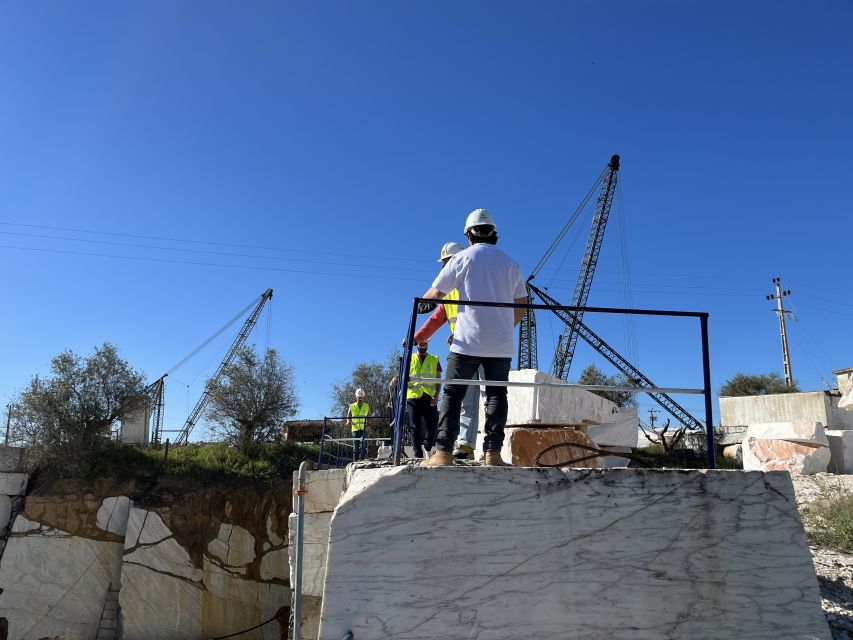
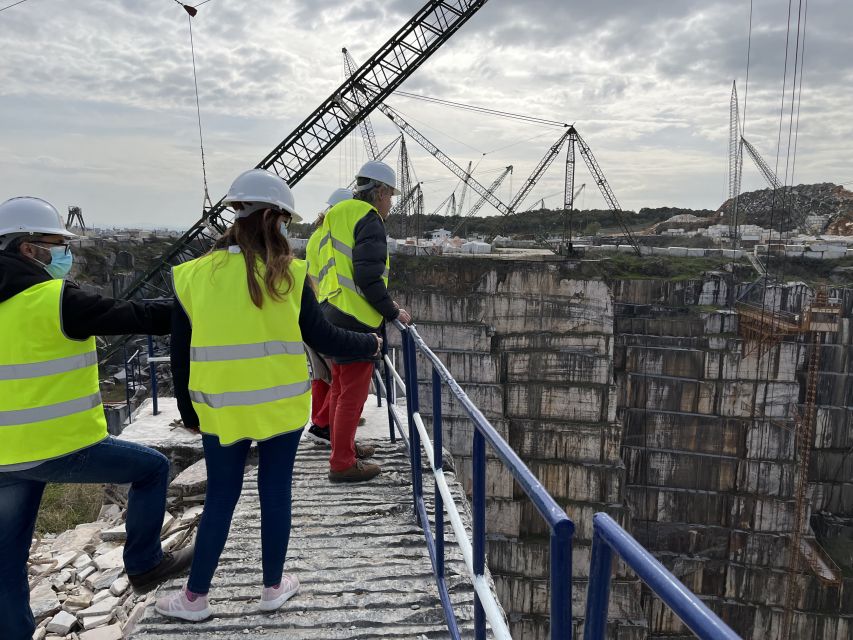
Safety is taken seriously, and safety equipment is included. Wear closed-toe shoes and comfortable clothing. Sandals and flip-flops are not allowed, so this is not a stop to combine with beach footwear or delicate city shoes.
The quarry portion can be visually powerful, but it may not suit everyone. People with mobility impairments and wheelchair users should not book this experience. Uneven industrial ground and the nature of the sites make it unsuitable for those needs.
A different sort of day out around Lisbon:
- Lisbon: History, Stories and Lifestyle Walking Tour
★ 4.8 · 10,902 reviews - Lisbon: Sunset Boat Party Cruise with DJ and Open Bar
★ 4.5 · 10,378 reviews - Lisbon: Pena Palace, Sintra, Cabo da Roca, & Cascais Daytrip
★ 4.7 · 9,981 reviews - Lisbon: Oceanário de Lisboa Entrance Ticket
★ 4.6 · 9,943 reviews
From rough block to polished marble
Marble is not ready for a kitchen, building, or artwork when it first leaves the quarry. The factory visit fills in the missing middle of the story.
Here you can see the stone being cut down, washed, and polished. The process gives you a practical understanding of how a heavy rough block becomes a smooth tile, worktop, slab, or other finished item. You may also see machinery working close to the stone, which makes the production stages easier to follow.
The factory stop is valuable because it links quarrying with everyday objects. A marble floor or countertop can look simple once installed. Seeing the cutting and polishing helps you grasp the labor, equipment, and waste involved before that final surface reaches the market.
One particularly useful point is that the tour shows more than extraction. You follow marble through several stages, including preparation for shipping around the world. That wider view makes the $29 fee feel reasonable, especially if you have never visited a stone-processing plant.
Dust is a practical concern. One visitor specifically recommended bringing a mask for the workshop area because of the dust. The tour information only requires comfortable clothing and water, but a lightweight mask could make the factory visit more pleasant if you are sensitive to airborne particles.
Marble as a craft, not just a building material
The final stop brings the experience back to human skill. In artisan workshops, you watch marble being shaped by hand and see finished pieces made as art.
This is a welcome change of pace after the heavy machinery and large quarry cuts. The workshop shows how the same material can move from industrial scale to careful, detailed work. Marble is not only flooring, walls, and countertops. In the hands of a craftsperson, it can become a sculpture or a small decorative object.
You may find that the workshop is the most personal part of the visit. The quarry explains size and force. The factory explains production. The artisan explains patience and touch.
This section lasts about 15 minutes, so it is brief. Still, it completes the chain from ground selection to finished artwork. If you enjoy architecture, sculpture, interior design, or traditional crafts, this last stop adds real value.
What makes the guides important
A local guide makes a major difference here. Quarrying involves technical terms, safety issues, geology, machinery, and local economics. Without explanation, you could easily miss what you are looking at.
João Bravenho is one guide associated with the experience, and the strongest praise focuses on his enthusiasm, humor, clear English, and ability to answer questions. One detail that adds local depth is that his father worked in a quarry. That kind of family connection can help explain why the subject feels like more than a standard commercial tour.
Language support is available in Portuguese, English, and Spanish. If you have questions, ask them early. The first stop is the best time to clarify how marble is selected and extracted, so you can recognize those stages later at the quarries and factory.
The tour’s 4.8 rating from 71 reviews also reflects a consistent strength: the guide is often the difference between merely seeing industrial machinery and understanding the whole process.
Is two hours enough?
Two hours is enough for an introduction, but not for a slow, exhaustive visit to every part of the marble trade. The schedule is tightly arranged:
- About 30 minutes at the interpretive center and introductory town visit
- About 45 minutes for quarry scenery, guided sightseeing, and photo stops
- About 30 minutes for another guided visit and industrial viewing
- About 15 minutes in an artisan workshop
That timing works well if you want a focused experience during a day in the Alentejo. You see the main stages without giving up half a day.
The trade-off is that some stops are necessarily short. At the artisan workshop, you may want more time to examine the pieces. At the quarry, the scale can make you wish for a longer viewpoint stop. Still, the compact schedule keeps the tour from becoming repetitive.
Plan your day around the fixed two-hour block and allow extra time for driving between locations. Since you provide the vehicle, you need to be ready to follow the group from the meeting point to the various sites.
Is $29 good value?
At $29 per person, I consider this good value for a guided industrial and cultural experience. The fee includes a professional local guide and safety equipment. It does not include transportation, food, drinks, hotel pickup, drop-off, or personal expenses.
The value comes from access and explanation. You might be able to see quarry areas from roads around Vila Viçosa, but it would be difficult to identify the machinery, understand the geology, enter working facilities, and follow the route from extraction to polished stone without local help.
The price is especially fair if you are already driving through the Évora District and can use your own vehicle. It becomes less convenient if you need to arrange separate transport, since the experience does not provide it.
You can reserve now and pay later, which helps if your Alentejo plans are still changing. Cancellation is free up to 24 hours before the start time for a full refund.
Who should book this experience?
I would recommend it to anyone curious about how ordinary materials reach finished buildings and homes. You do not need to be a geology expert. The guide supplies the background, and the sites provide the visual proof.
It is a good match for:
- People interested in architecture, construction, sculpture, or design
- Visitors who prefer working places to polished attractions
- Families with older children who can follow safety instructions
- Anyone exploring Vila Viçosa and wanting more than a town walk
- Photographers drawn to large-scale industrial scenery
- Visitors who want to understand a major local source of work
It is less suitable if you want a relaxed walking tour, have no access to a private vehicle, or need step-free access. It is also not a good fit for anyone wearing open shoes or looking for a quiet museum-only visit.
Practical advice for a better visit
Wear sturdy, closed-toe shoes. The tour takes place across quarries, factories, and workshops, so comfort and protection matter more than appearance.
Bring water and comfortable clothes. A mask may be useful in the workshop because dust can be present. Keep your hands free for safety and follow the guide’s instructions around machinery and extraction areas.
Look for the white building with three brick arches and the two organization logos at the meeting point. Check the starting time when booking, since availability varies.
If you are driving a motorhome or touring with limited storage, do not expect to carry home a marble pallet, even if the factory makes the idea strangely tempting. The tour is about seeing the production process, not arranging a large purchase.
Should you book the Marble Tour in Vila Viçosa?
Book it if you want to see the working side of Vila Viçosa and understand why marble is central to the town. The combination of quarry views, factory machinery, local context, and handcraft makes this more useful than a simple photo stop.
Skip it if you cannot provide a private vehicle, need accessible facilities, or prefer indoor cultural attractions. For most independent visitors with a car, $29 buys a clear, lively introduction to one of Portugal’s most distinctive industries. The quarries are the visual high point, but the guide’s explanations and the factory stages are what make the visit worth your time.
FAQ
Where does the Marble Tour in Vila Viçosa start?
It starts at Rota do Mármore AE in Vila Viçosa. Look for the white building with three brick arches and the Rota do Mármore AE and CECHAP logos.
How long does the tour last?
The tour lasts two hours.
How much does the tour cost?
The price is $29 per person.
Is transportation between the stops included?
No. You need a private vehicle to travel between the different sites during the tour.
What languages are available?
The live guide service is available in Portuguese, English, and Spanish.
What does the price include?
The price includes a professional local guide and safety equipment.
What should I bring?
Bring comfortable shoes, closed-toe shoes, water, and comfortable clothing. A mask may also be useful in the workshop because dust can be present.
Are sandals or flip-flops allowed?
No. Sandals and flip-flops are not allowed.
Is the tour suitable for wheelchair users?
No. The experience is not suitable for wheelchair users or people with mobility impairments.
Just added around Lisbon
- Tuk tuk tour in Belem area★ 5.0 · 46 reviews
- Lisbon: Private Tour Sintra, Cabo da Roca and Cascais★ 4.9 · 46 reviews
- Private Sintra Tour from Lisbon★ 5.0 · 46 reviews
- Premium Porto Private Day Trip from Lisbon with Local Guide★ 5.0 · 47 reviews
- 4 Hours Tuktuk City Tour in Lisbon★ 5.0 · 47 reviews
- Small Group Pena Palace, Sintra, Regaleira and Cascais★ 5.0 · 47 reviews
- From Lisbon: Tour to Fátima, Batalha, Nazaré and Óbidos★ 4.6 · 47 reviews
- Private 4 hour Sintra Tour★ 5.0 · 47 reviews
Lisbon Tours, compared.
Lisbon City Center Tour – The Unmissable Lisbon
Read our review →
Sintra, Pena, Regaleira, Cabo da Roca & Cascais
Read our review →

Sunset Boat Party Cruise with DJ and Open Bar
Read our review →
Pena Palace, Sintra, Cabo da Roca, & Cascais Daytrip
Read our review →