Reviewed · LISBON TOURS
Marble Tour in Vila Viçosa
Marble comes from the ground, not a showroom. In Vila Viçosa, this two-hour tour follows the stone from quarry to finished object, with stops at a working quarry area, a handcraft workshop, and an industrial marble mill. I like the clear look at both old and modern methods, and I like that guides such as Juaquina and João bring personal energy to the explanations. The main catch is practical: you need your own vehicle to travel between the meeting point and the sites.
At $30.25 per person, the tour offers useful value if you want more than a quick look at Alentejo scenery. You hear about geology, extraction, machinery, safety risks, artistic uses, and the human work behind the polished stone. Closed footwear is mandatory, and you should be comfortable walking and standing in work areas.
In This Review
- Key points to know before you book
- Why Vila Viçosa is the right place for a marble tour
- Start at Rota do Mármore AE
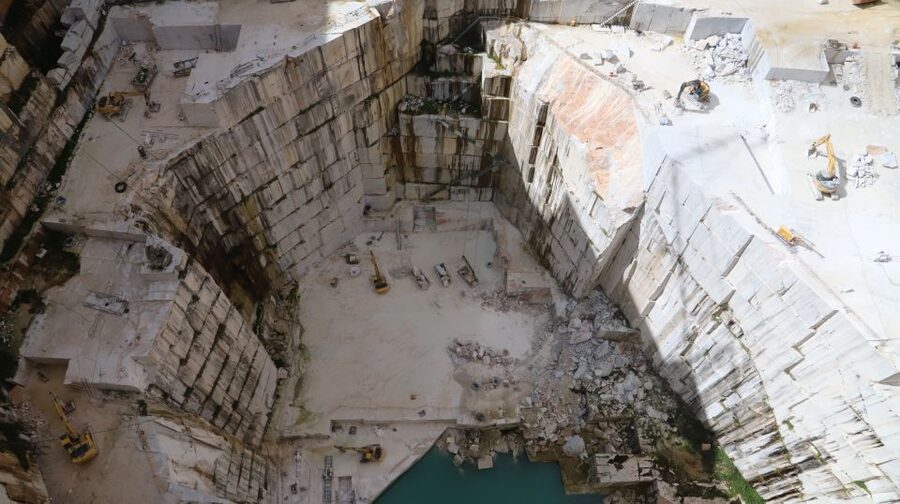
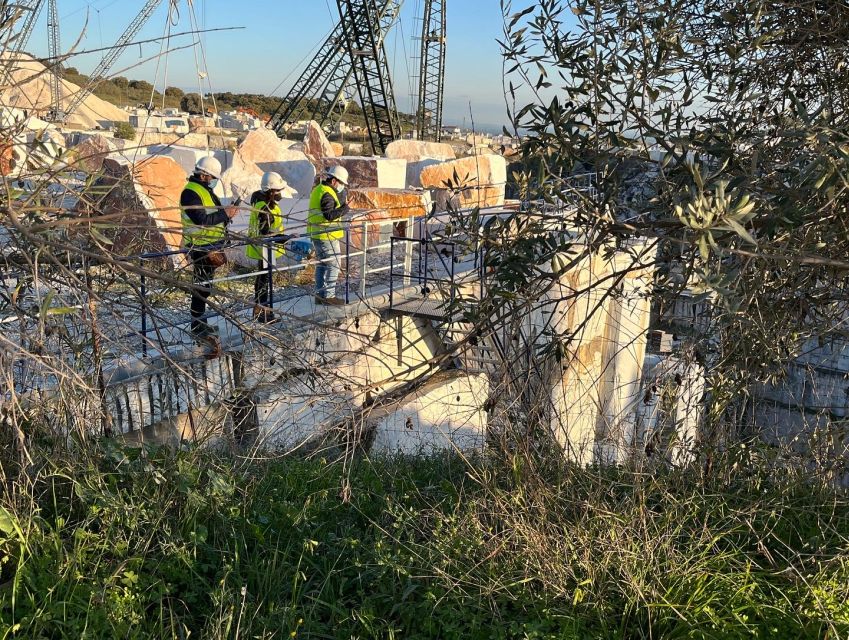
- At the marble quarry, stone begins its journey
- The artisan workshop shows the human side of marble
- Industrial processing explains the polished finish
- What guides Juaquina and João add
- Is $30.25 a fair price?
- Who will get the most from this experience?
- Practical advice for a smoother visit
- My verdict on the Vila Viçosa marble tour
- FAQ
- Where does the marble tour begin?
- Where does the tour end?
- How long does the tour last?
- Is transportation included?
- Is the tour offered in English?
- What footwear should I wear?
- What will I see during the tour?
- How many people can join the tour?
- Can I cancel for a full refund?
Key points to know before you book
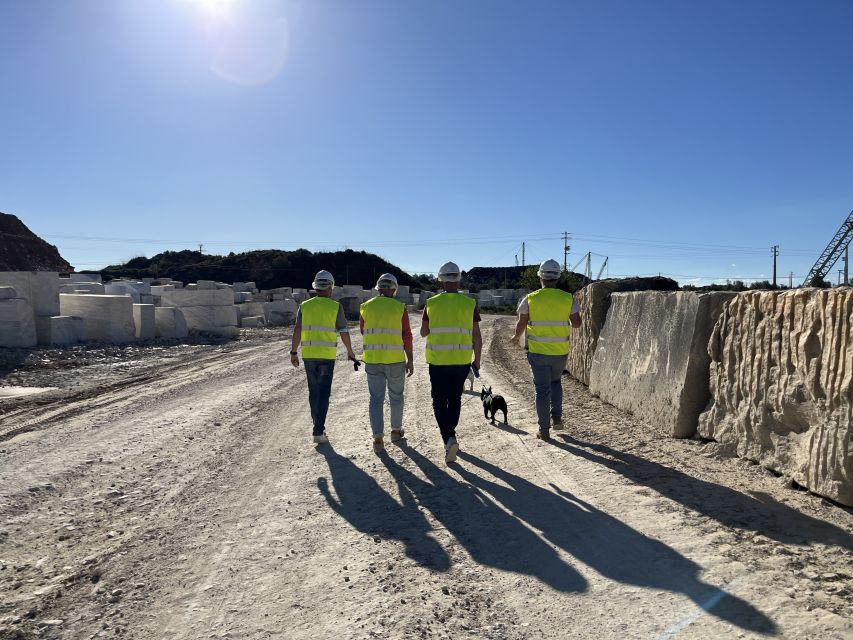
- Three stages of marble production: See quarrying, handcraft, and mechanized industrial processing in one compact visit.
- Your own vehicle is required: Transportation between the Vila Viçosa meeting point and the marble sites is not provided.
- Small groups make questions easier: The maximum group size is 10 people.
- The guides are a major strength: Juaquina and João are praised for friendly, enthusiastic explanations in English.
- Expect a working environment: You will hear about machinery, cutting, polishing, and workplace hazards, not just decorative stone.
- Flexible cancellation: You can cancel up to 24 hours before the start for a full refund, subject to the stated conditions.
Why Vila Viçosa is the right place for a marble tour
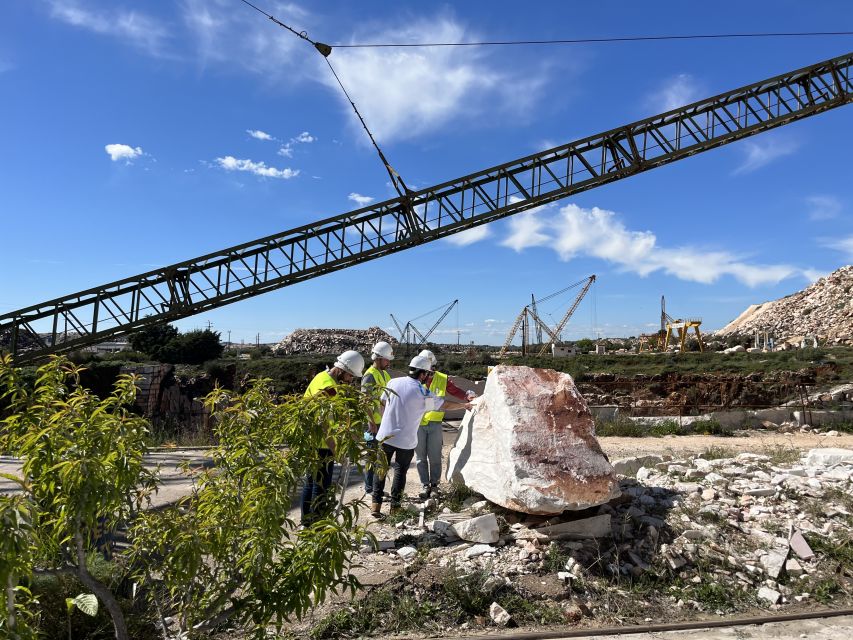
Vila Viçosa sits in Portugal’s Évora District, in the Alentejo region. The town is closely tied to marble, and this tour gives you a useful reason to look beyond the usual historic streets and monuments.
Marble can seem like a finished luxury product when you see it in a hotel lobby, church, kitchen, or sculpture. Here, you follow its working life. The stone begins underground, is cut from the earth, shaped by hand or machine, and eventually becomes a polished object.
I like that the experience does not treat marble as decoration alone. You learn about the economic side of the industry, the artistic side, and the physical risks involved in getting the stone out of the ground. That wider view makes the visit more meaningful than a simple photo stop at a quarry.
The tour is offered in English and lasts about two to three hours, with the main guided portion listed at roughly two hours. That is long enough to cover the process without taking up your whole day in Alentejo.
A few more reviews worth comparing before you book
- Lisbon City Center Tour – The Unmissable Lisbon
★ 5.0 · 22,234 reviews - Lisbon: Sintra, Pena, Regaleira, Cabo da Roca & Cascais
★ 4.7 · 19,656 reviews - Lisbon: Jerónimos Monastery Entrance Ticket
★ 4.1 · 14,164 reviews
Start at Rota do Mármore AE
The meeting point is Rota do Mármore AE at Avenida Duques de Bragança 4, 7160-209 Vila Viçosa. The tour also ends there, which makes the arrangement straightforward if you are driving through the area.
There is no hotel pickup or hotel drop-off. Food and drinks are also not included, so plan those separately. The most important planning detail is the vehicle requirement. You need your own car to move from the starting point to the quarry and workshops.
That requirement affects the value. The price is reasonable for the guided interpretation, but it is not an all-in transportation package. If you are already driving around the Évora District, this is easy to manage. If you are relying on public transportation or taxis, you will need to solve the transport question before booking.
The group limit is 10 people. That is small enough to make it easier to hear explanations and ask questions, while still keeping the price below what a private tour usually costs.
At the marble quarry, stone begins its journey
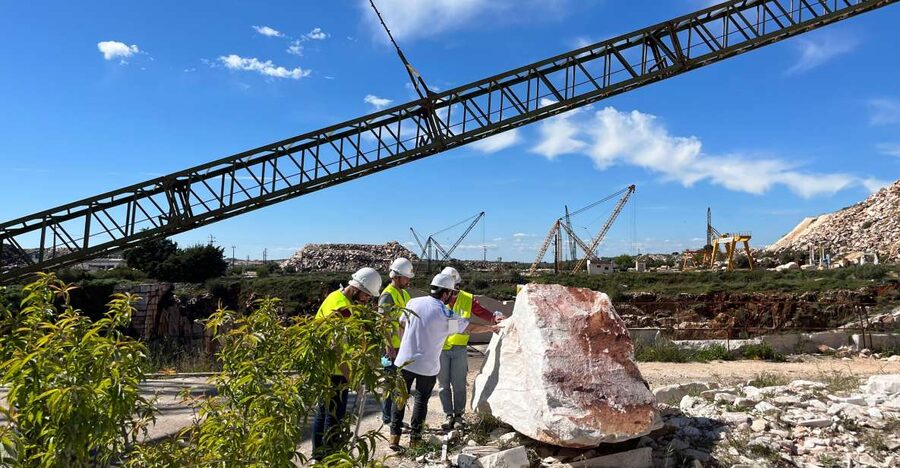
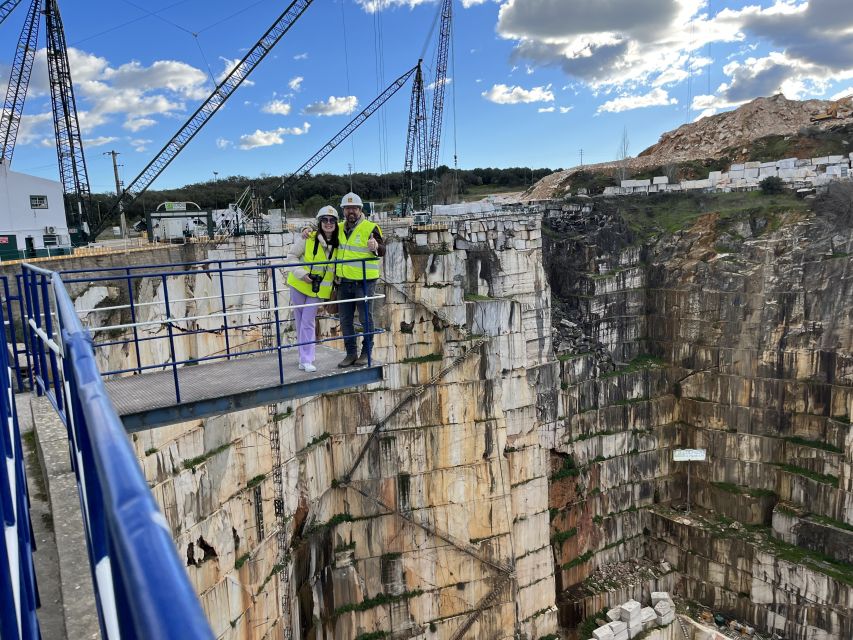
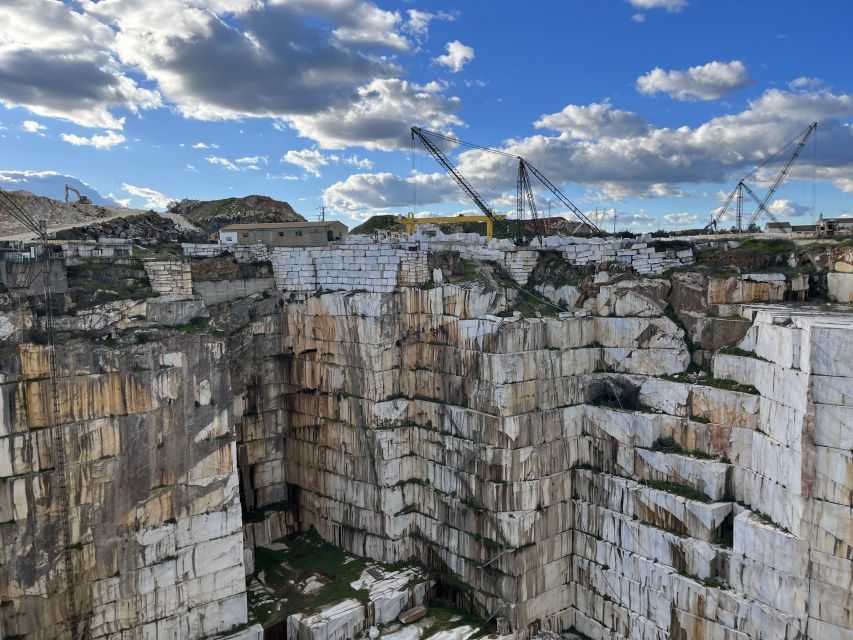
The first major stop focuses on the Nucleus of the Marble Quarries of the region. This is where the tour connects the stone under your feet with the blocks removed from the ground.
Your guide explains different types of stone, the processes used to extract marble, and the hazards that come with quarry work. You also learn about the machinery involved and the economic and artistic importance of marble in the region.
That combination is useful because quarrying is not simply a matter of cutting a pretty block. The work involves large equipment, careful planning, safety concerns, and decisions about how the stone can be used. The guide helps place each part of the process in context.
The quarry stop should appeal to you if you enjoy seeing how materials are produced. It is less suited to anyone expecting a polished museum visit. You are learning about an active industrial process, so the emphasis is on machinery, extraction, and working conditions rather than comfort or decoration.
Bring practical shoes. Closed footwear is required, and a moderate level of physical fitness is recommended. The supplied information does not promise a fully accessible route or a flat, easy walk at every stop, so anyone with mobility concerns should ask the operator for details before booking.
The artisan workshop shows the human side of marble
The second part takes you to an artisan workshop where marble is transformed by hand. This is an important contrast with the quarry and the industrial mill.
You learn about manual techniques, the tools and machinery used in the workshop, and the risks involved in shaping the stone. The finished work receives attention too, along with the personal stories of the master craftsperson.
I like this stop because it gives the material a human scale. At the quarry, marble is a massive block. In the workshop, it becomes the result of patience, skill, and repeated handwork. You can better understand why a finished marble piece is not priced only by the amount of stone it contains.
The personal stories also add something that machinery alone cannot provide. They connect the trade to real working lives and show how craft knowledge is passed along. The guide’s role matters here. Juaquina is praised for her enthusiasm and clear explanation of the geology and production process, while João is noted for making the information engaging and warm.
The word artisan should not lead you to expect a shopping stop. The purpose is to see the work and understand the techniques. No food, drinks, or purchases are included in the tour details.
A different sort of day out around Lisbon:
- Lisbon: History, Stories and Lifestyle Walking Tour
★ 4.8 · 10,902 reviews - Lisbon: Sunset Boat Party Cruise with DJ and Open Bar
★ 4.5 · 10,378 reviews - Lisbon: Pena Palace, Sintra, Cabo da Roca, & Cascais Daytrip
★ 4.7 · 9,981 reviews - Lisbon: Oceanário de Lisboa Entrance Ticket
★ 4.6 · 9,943 reviews
Industrial processing explains the polished finish
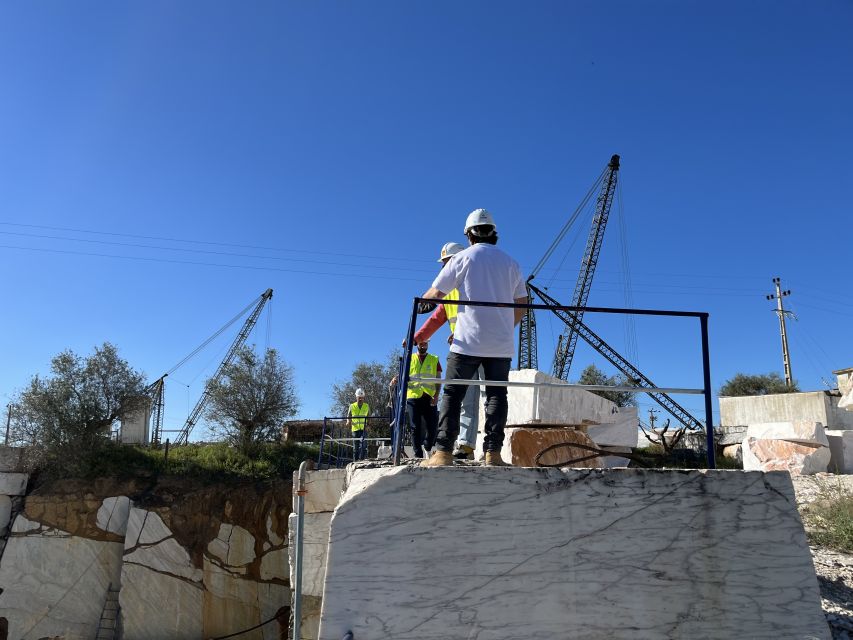
The final visit takes place in a marble milling or industrial processing workshop. Here, the focus shifts from hand methods to mechanized production.
You are shown the different machines used in industrial processing and the sequence of operations that turns raw marble into finished products. The guide also explains the hazards, the operational setting, and the range of final items that can be produced.
This stop completes the story. The quarry tells you where the marble comes from. The artisan workshop shows what a skilled person can do with it. The industrial mill explains how machinery handles larger-scale production.
For me, this is where the price makes the most sense. You are not just looking at a stone sample. You are seeing several parts of an industry in one visit, with a guide explaining why each stage exists.
The setting may feel functional rather than scenic. That is not a flaw, but it is worth knowing. This experience is about production, not a traditional sightseeing circuit. If you prefer old buildings, panoramic views, or a quiet cultural walk, the marble tour may feel specialized. If you want to understand an important local trade, it earns its place in your schedule.
What guides Juaquina and João add
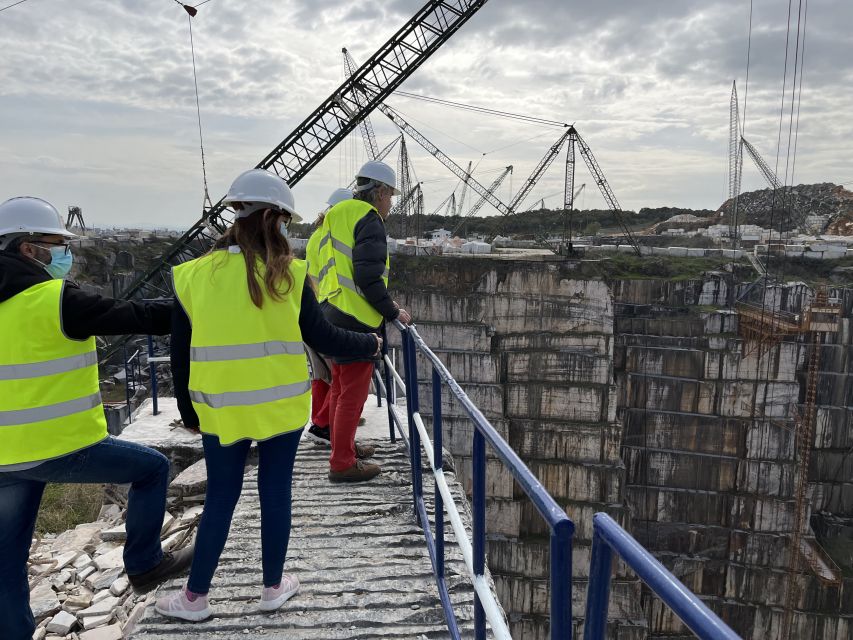
A good industrial tour depends heavily on the guide. Marble machinery can be loud, technical, and difficult to understand without explanation. A clear guide turns a collection of machines and stone blocks into a story.
Juaquina receives special praise for explaining marble geology and the cutting and polishing process with visible enjoyment of her work. That enthusiasm matters because geology can become dry when presented as a list of terms. Her approach appears to connect the underground material with the finished product.
João is also singled out for attention and strong information. The praise for both guides points to one of the tour’s best features: the people leading it are not simply reading out facts. They help you understand the process and keep the visit engaging.
The tour is informal and professional, which is a good fit for a small group. You can expect an educational visit without the stiffness of a formal lecture. Since the group maximum is 10, you should have a fair chance to ask questions, although the exact guide assigned to your date is not specified.
Is $30.25 a fair price?
At $30.25 per person, I consider this a fair price for a focused local experience, especially if marble production is new to you. The tour lasts around two to three hours and includes three distinct settings, a local guide, and explanations of geology, machinery, craft, safety, and finished products.
The value is strongest if you are already in Vila Viçosa with your own vehicle. You avoid paying for a separate excursion from Évora, and you get a much closer look at a local industry than a standard town visit provides.
The value is less clear if you must arrange extra transportation. Private transport is not included, and the tour does not cover meals or drinks. Those limits are easy to manage, but they should be part of your budget.
Group discounts are available, though the exact discount is not given. If you are traveling with several people, check the current group price before booking. The group cap of 10 keeps the experience from becoming a large coach-style visit.
Who will get the most from this experience?
I would recommend the tour to you if you enjoy seeing how everyday materials are made. It is a particularly good choice for people interested in geology, architecture, sculpture, design, local industry, or traditional crafts.
It also suits curious families and small groups, provided everyone can follow the footwear and physical fitness requirements. The English-language format and informal guiding make it approachable for people who do not have technical knowledge of stonework.
You may want to skip it if you dislike industrial environments or prefer a relaxed sightseeing stop with no machinery or safety discussion. The tour includes work areas and explanations of existing hazards, so it is not designed as a purely decorative marble experience.
You should also think carefully about timing. The stated duration is about two hours, while the wider estimate allows two to three hours. Leave room in your day for movement between the stops, parking, and the possibility that the visit runs toward the longer estimate.
Practical advice for a smoother visit
Wear closed shoes with a firm sole. This is not optional, and sandals are not a sensible choice around quarry and workshop settings.
Use your own vehicle and allow enough time to move between the meeting point and the sites. The tour does not provide private transportation, so the driver in your group needs to remain available throughout the visit.
Keep your group small if possible. The maximum is 10 people, and a smaller party can make technical explanations easier to follow. It also gives you more room to ask about the machines, the stone types, or the craft techniques.
Book ahead if your schedule is fixed. The experience is booked an average of 16 days in advance, which suggests that planning early is sensible during busy periods.
The cancellation terms are friendly. You can receive a full refund if you cancel at least 24 hours before the start time. Changes or cancellations inside that window are not accepted for a refund. The tour also depends on suitable weather and a minimum number of participants. If the operator cancels for either reason, you are offered another date or experience, or a full refund.
My verdict on the Vila Viçosa marble tour
I would book this tour if I had a car and wanted a closer look at Alentejo beyond the usual monuments. The strongest reason to go is the complete production story, from extraction to handwork to industrial finishing.
The guides are another clear advantage. Juaquina and João are praised for friendly, enthusiastic presentations, and that personal energy can make a technical subject easy to follow.
The main limitation is transportation. You must drive between locations, and the tour does not include hotel transfers. Keep that in mind, along with the closed-footwear rule and moderate fitness requirement.
For $30.25, this is a practical, specialized visit with real local character. It will not suit every itinerary, but if marble, craft, or working industries interest you, it gives you a memorable look at how Vila Viçosa’s signature stone becomes a finished product.
FAQ
Where does the marble tour begin?
The tour begins at Rota do Mármore AE, Avenida Duques de Bragança 4, 7160-209 Vila Viçosa, Portugal.
Where does the tour end?
The activity ends back at the original meeting point in Vila Viçosa.
How long does the tour last?
The tour takes about two to three hours. The guided itinerary is listed at approximately two hours.
Is transportation included?
No. You need your own vehicle to travel between the meeting point and the marble sites. Hotel pickup, hotel drop-off, and private transportation are not included.
Is the tour offered in English?
Yes. The tour is offered in English.
What footwear should I wear?
Closed footwear is mandatory. You should also have a moderate level of physical fitness for the activity.
What will I see during the tour?
You will visit a regional marble quarry area, an artisan workshop showing manual marble transformation, and an industrial workshop showing mechanized processing.
How many people can join the tour?
The activity has a maximum of 10 participants.
Can I cancel for a full refund?
Yes, if you cancel at least 24 hours before the experience starts. Cancellations or changes made less than 24 hours before the start are not refunded or accepted. The operator may also offer a new date or a full refund if poor weather or an insufficient number of participants causes a cancellation.
Just added around Lisbon
- Central Lisbon E-Bike Tour★ 5.0 · 168 reviews
- From Lisbon: Sintra and Cascais Full-Day Private Tour★ 4.9 · 168 reviews
- Experience the Queen of Fado at Ah Amália Living Experience★ 5.0 · 171 reviews
- Lisbon – Vinho Verde Wine Premium Boat Experience★ 5.0 · 171 reviews
- Lisbon: 2-Hour Sunset Sailing Tour on Luxury Sailing Yacht★ 4.9 · 171 reviews
- Horse Riding on the Beach★ 4.5 · 171 reviews
- Óbidos: Medieval Tales & Secrets Spots Guided Walking Tour★ 4.9 · 171 reviews
- From Lisbon: Small Group Fátima & Little Shepherds Town Tour★ 4.8 · 171 reviews
Lisbon Tours, compared.
Lisbon City Center Tour – The Unmissable Lisbon
Read our review →
Sintra, Pena, Regaleira, Cabo da Roca & Cascais
Read our review →

Sunset Boat Party Cruise with DJ and Open Bar
Read our review →
Pena Palace, Sintra, Cabo da Roca, & Cascais Daytrip
Read our review →