
Reviewed · HISTORICAL TOURS
Queer Lisbon – A Treasure Hunt in LGBT History
Lisbon keeps its queer stories close to the pavement. Queer Lisbon turns an ordinary walk through Príncipe Real, Bairro Alto, and nearby streets into a focused look at LGBT history, nightlife, politics, art, and daily life. I like the small-group limit of 15, and I like that Alex brings together serious subjects, funny scandals, and useful bar advice without making the experience feel like a lecture. The main consideration is physical: you will walk for most of the morning, with many stops packed into roughly three and a half hours.
This is also a social outing. You finish at Late Birds Hotel, where a drink, lounge, garden, pool, pub quiz, and prizes give the group time to relax. The tour is in English and costs $60.34 per person. That is more than a basic city walk, but the included PDF guide, normally valued at 15 euros, adds practical value for the rest of your stay.
In This Review
- Key points to know before booking
- Why this Lisbon walk feels different
- Starting among Príncipe Real’s queer landmarks
- HIV services, clubs, and the realities of queer nightlife
- Lesbian bars, drag, and the people who made room
- From dictatorship to constitutional protection
- Purex, Maria Caxuxa, and women who ignored convention
- Scandal, Josephine Baker, and queer writing
- São Roque and the darker pages of church history
- Fernando Pessoa and the Late Birds finale
- Pace, walking, and group comfort
- What the $60.34 price gives you
- Who should choose Queer Lisbon?
- Should you book this experience?
- FAQ
- Where does the Queer Lisbon tour begin?
- Where does the tour end?
- What time does the tour start?
- How long does the experience last?
- What language is the tour offered in?
- How many people can join the tour?
- Is transportation included?
- What is included with the booking?
Key points to know before booking
- Twenty-four stops, one connected story: The route links memorials, bars, churches, courts, theaters, and streets across central Lisbon.
- Alex is the heart of the experience: His warm style, personal connection, and broad reading help difficult subjects land with care.
- Expect a real walking tour: The pace includes rest and questions, but the route is extensive and can last close to four hours.
- History and nightlife share the same streets: You learn about dictatorship, censorship, HIV services, drag, lesbian bars, bears, clubs, and saunas.
- The PDF guide is useful after the walk: It points you toward LGBT venues, services, free activities, and less obvious places.
- The ending is unusually relaxed: Late Birds Hotel offers a friendly finish, with the possibility of a drink or, in good weather, a swim.
Why this Lisbon walk feels different
General sightseeing gives you Lisbon’s grand viewpoints, tiled facades, and famous monuments. This experience asks a more personal question: who lived, loved, performed, fought, and hid in these same streets?
That focus changes the city. A square is no longer just a pleasant place for coffee. A church can reveal stories of desire and punishment. A bar can represent decades of survival. A court building can connect Portugal’s past under dictatorship with legal protection today.
I especially like the balance between painful history and present-day life. The walk does not pretend that progress came easily. It also does not leave you stuck in the past. You move from memorials and police repression to Pride, nightlife, health services, and places where Lisbon’s queer community gathers now.
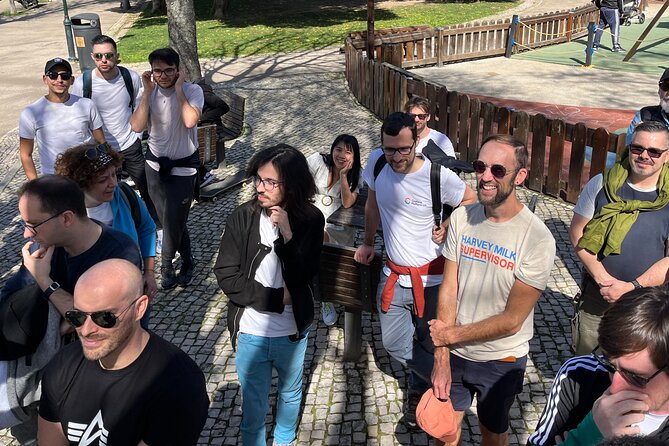
The group size matters. With no more than 15 people, you can hear Alex, ask questions, and meet others without the stiffness of a large coach group. The walk has enough structure to keep moving, but the guide adjusts when a subject catches the group’s attention.
More History Tours in Lisbon
- Lisbon: History, Stories and Lifestyle Walking Tour
★ 4.8 · 10,902 reviews - Lisbon: Live Fado Show with Port Wine in Historic Center
★ 4.7 · 4,166 reviews - Lisbon: Fado Show with Wine in a Historic Venue
★ 4.8 · 1,294 reviews
Starting among Príncipe Real’s queer landmarks
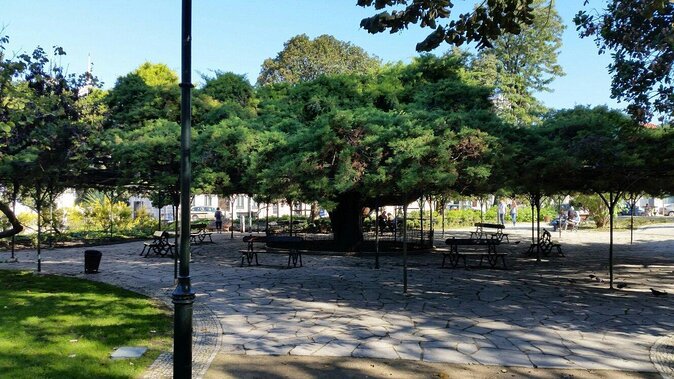
Meet at the Príncipe Real playground at 10:00 am. The tour begins in the gardens with introductions, then moves only a short distance to the monument honoring victims of homophobia.
That memorial is a sober opening. It gives the tour a clear moral center before the lighter stories begin. You will hear about the cruelty and silence that shaped earlier generations, then connect that past with Lisbon’s present queer scene.
Nearby Príncipe Real Square is the starting point for Lisbon Pride. Alex explains what makes the city’s Pride distinct and discusses the planned EuroPride 2025 connection described in the tour. This is a useful early lesson: public celebrations are not just parties. They show who feels able to claim space in a city.
I would arrive a few minutes early. The meeting point is in a public garden, and a calm start helps you settle in before the walk gathers speed.
HIV services, clubs, and the realities of queer nightlife
The stop at GAT Checkpoint LX shifts the conversation toward health. You hear how Lisbon handled the HIV and AIDS crisis and receive practical information about health services for queer men and women.
That is one of the tour’s stronger choices. LGBT history is not only about famous performers and political milestones. It also includes illness, fear, care, and the organizations that helped people survive. If you want more than party tips, this stop gives the tour weight.
From there, the route turns toward nightlife. Construction Lisbon Club introduces one of the city’s long-running queer dance venues, along with nearby lesbian venues and the stories attached to nights out in Lisbon.
The Botanical Garden brings a very different kind of nightlife story. Alex discusses cruising in the 1950s, a notorious incident in the gardens, morality laws, and the often ineffective attempts by police to control private behavior. The tone here can be cheeky, but the subject shows how much energy people once spent finding privacy in a hostile society.
At Trumps, you learn about Lisbon’s largest queer nightclub, operating since 1980. The two floors offer different moods, and Alex explains why the club has become part of the city’s modern LGBT identity. This is a good place to take notes if you want a night out later, since the guide connects venues with the kind of evening they offer.
Lesbian bars, drag, and the people who made room
The former site of O Gato Verde introduces Lisbon’s first lesbian bar. Its story helps correct a common weakness in LGBT tourism: gay male history often receives the most attention, while lesbian spaces disappear from the record.
The stop at Praça das Flores concerns Lisbon’s first drag bar. The 1974 revolution opened the door to a burst of drag enthusiasm, though that freedom later faced limits. Alex tells the rise and fall of Lisbon’s first drag queen, linking performance with politics, public taste, and pressure from authorities.
Bar 106 is a smaller, more playful stop. You can leave a message for friends there, and the place becomes part of the social thread running through the walk.
Then come the bear venues. Shelter Bar and Bar TR3S Lisboa show two sides of Lisbon’s bear scene. The discussion includes Bear Pride, beach clubs, party nights, a sauna, and sports sponsorship. These details are valuable because they show that queer culture is not one nightlife style. Different groups build their own meeting places, traditions, and networks.
Finalmente Club brings the route back to drag. It is described as the city’s oldest and best-known drag venue, with different shows at different times. Pay attention here if you might return later. The timing of a performance matters, and the tour helps you understand that the venue is more than a single generic night out.
More heritage sites and old towns:
- Explore Lisbon by Tuk Tuk: History and Viewpoints
★ 5.0 · 840 reviews - Lisbon: Daytime or Sunset Boat Cruise with History and Wine
★ 4.9 · 819 reviews - Private Tuk Tuk Tour Through Lisbon’s Historical Streets
★ 5.0 · 734 reviews - Lisbon Sunset Sailing with Portuguese Wine and History
★ 5.0 · 668 reviews
From dictatorship to constitutional protection
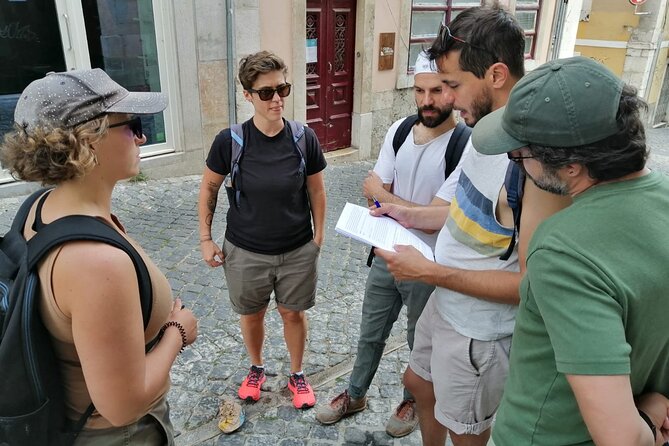
The Constitutional Court stop gives the political story a firm shape. Portugal’s queer rights did not appear by magic. Alex explains the long shift from dictatorship-era values to constitutional protection for LGBTQ people.
This section is especially useful if your knowledge of Portuguese history is limited. You see how law can both punish and protect, and how social change depends on people challenging old rules.
At Rua Luz Soriano, the focus turns to Long Live Homosexuality, described as Portugal’s first homosexual manifesto. Its early efforts were suppressed, but the story eventually moves toward success. I found this kind of stop important because it puts names and language to activism. Rights are easier to understand when you can see the people who first demanded them.
The route then follows a more scandalous thread at Rua do Trombeta. The story of the Two Fernandes concerns nineteenth-century love nests, luxury apartments, modern saunas, and the long connection between privacy, sex, and property. Lisbon’s queer past was not always hidden in remote corners. Sometimes it unfolded in places close to power and wealth.
Purex, Maria Caxuxa, and women who ignored convention
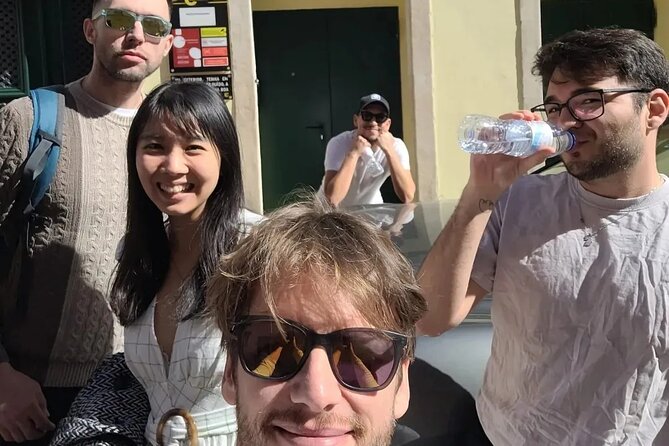
Purex provides another look at nightlife. It is a dance floor for everyone, run by women, with a memorable side note about vagina jewelry. This stop keeps the mood light after the legal and political material, while also highlighting women’s role in creating queer social spaces.
At Maria Caxuxa, Alex tells the story of an extraordinary woman who challenged convention and brushed aside intrusive journalists in the 1940s. The colorful title of this stop reflects the character at its center, but the larger point is serious: women who refused expected roles left traces even when the press or authorities tried to define them for the public.
The tour works best when these personal stories sit beside the larger political ones. Laws can tell you what a country permitted. Individual stories show you how people actually lived.
Scandal, Josephine Baker, and queer writing
Rua da Espera brings one of the walk’s more dramatic nineteenth-century episodes. The Marquis of Valada was found naked in the arms of a common soldier, leading to disgrace, political blackmail, and an eventual fight for survival.
It is an entertaining story, but it also reveals class and power. A scandal involving an aristocrat could become political ammunition, while the same behavior could carry far greater danger for people without status.
At Teatro da Trindade, the subject is Josephine Baker. The bisexual jazz icon performed in Lisbon while using the city as a cover for spy activities during wartime. This is one of the tour’s most memorable historical turns because it brings together performance, secrecy, bisexual identity, and international politics.
At Rua da Misericórdia, you hear about women in love with women, queer fiction, censorship, and censors who did not always follow their own rules. The story shows how literature can preserve emotional lives that official history leaves out.
These stops are also where Alex’s storytelling style matters most. The material is dramatic, but the tour does not reduce every person to a scandal. The best moments connect private choices with the pressures of the period.
São Roque and the darker pages of church history

The 15-minute stop at Igreja de São Roque is longer than most of the others. It examines the Portuguese Inquisition through stories of sex in church, lesbian nuns, a demonic penis, and a transgender love story from the sixteenth, seventeenth, and eighteenth centuries.
This is the most demanding section of the walk. The stories are unusual and sometimes startling, but the value lies in how they survived. They offer evidence of people making choices, forming attachments, and resisting control long before modern LGBT language existed.
I would expect a more serious tone here. The stop is not simply a collection of amusing church scandals. It shows how religious institutions, public morality, gender roles, and state power shaped queer lives.
Because the tour is in central Lisbon, you encounter these subjects in real places rather than in a museum room. That can make the past feel immediate, though it also means you are standing outdoors while listening. Bring water, wear comfortable shoes, and be ready for uneven pavement and hills.
Fernando Pessoa and the Late Birds finale
At Hospital St. Louis, the discussion turns to Fernando Pessoa. Alex explains how the great Portuguese writer is now recognized and reclaimed for gay writing, despite uncertainty about what the future would bring in his own time.
This is a fitting literary stop. Pessoa is one of Lisbon’s defining cultural figures, and the tour invites you to read him through a queer lens without separating him from the city around him.
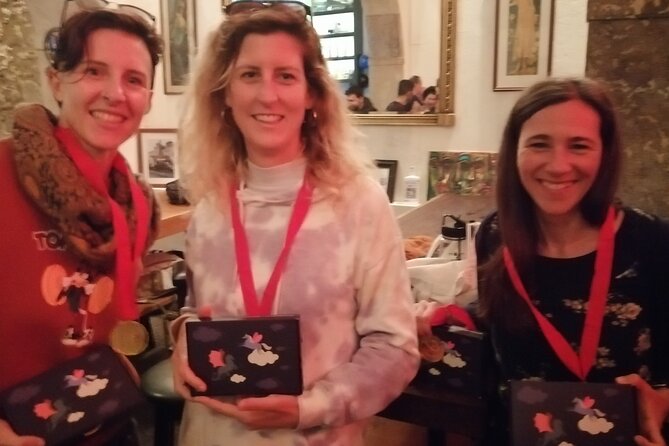
The final stop is Late Birds Hotel on Travessa André Valente. You finish in the lounge, bar, garden, and pool of Lisbon’s largest gay hotel. If the weather is good, bring a swimming costume. The tour also ends with a pub quiz and prizes, which gives the group a chance to laugh, compare notes, and keep talking after the formal walk ends.
I like this ending because it avoids the usual abrupt goodbye beside a monument or metro station. You can have a drink with new friends, ask Alex one more question, and turn the morning into an evening plan.
Pace, walking, and group comfort
The official duration is about three hours and 30 minutes. One account describes the experience lasting closer to four hours, so I would keep the rest of your day flexible.
There are 24 stops, most listed at about six minutes, with São Roque receiving 15 minutes. The real time also includes walking, questions, introductions, rest breaks, and the final social gathering. This is not a quick loop around two streets.
The walking is manageable for anyone with moderate physical fitness, but the route is extensive. You may feel it by the end, especially after several days of sightseeing. Comfortable shoes are essential, and an umbrella is sensible in uncertain weather. Alex has provided umbrellas during poor conditions and made sure the group had chances to rest.
The tour is offered in English only. Service animals are allowed, and the route is near public transportation, but private transport is not included.
What the $60.34 price gives you
At $60.34, this is not the cheapest way to see central Lisbon. You are paying for a specialist subject, an English-speaking guide, a small group, and a carefully linked route rather than a standard orientation walk.
The PDF guide improves the value. Alex’s LONG LIST of LGBTQ Lisbon recommendations normally costs 15 euros on its own and includes bars, services, free activities, and places you might not discover during a short visit. If you use it to plan another night or find a health resource, the cost becomes easier to justify.
I would book this early if the date matters to you. The experience is often reserved about 23 days in advance, and the group limit is 15 people. You can cancel for a full refund up to 24 hours before the 10:00 am start, but changes or cancellations inside that window are not accepted.
Who should choose Queer Lisbon?
I recommend it most strongly if you want LGBT history treated as a central part of Lisbon, not as a quick nightlife add-on. Queer visitors, couples, solo visitors, and allies can all get something useful from it.
It is also a good fit if you enjoy social tours. You meet people during the walk, then have a natural chance to continue the conversation at Late Birds.
You may prefer another activity if you want a short, relaxed introduction to the city, dislike walking, or only want major monuments. This route spends little time on conventional sightseeing. Its subject is the point.
The tour also suits anyone interested in Lisbon more broadly. The stories cover dictatorship, religion, writing, law, war, public health, class, journalism, and music. You learn about Portugal by following the lives of people often left out of the standard account.
Should you book this experience?
Book it if you want history with personality and a clear connection to present-day Lisbon. Alex’s warmth, strong preparation, and willingness to answer questions receive consistent praise, and the route offers far more than a list of bars.
Book it early, wear good shoes, and allow four hours rather than three and a half. If the PDF guide, small group, hotel finish, and personal storytelling appeal to you, the price is fair for a specialist walk that can shape the rest of your Lisbon stay.
FAQ
Where does the Queer Lisbon tour begin?
It begins at the Príncipe Real Playground in Praça do Príncipe Real, Lisbon.
Where does the tour end?
It ends at Late Birds Hotel at Tv. André Valente 25, Lisbon, in the hotel lounge, bar, garden, or pool area.
What time does the tour start?
The tour starts at 10:00 am.
How long does the experience last?
The stated duration is approximately three hours and 30 minutes. It may run closer to four hours, including walking, questions, and the final gathering.
What language is the tour offered in?
The experience is offered in English.
How many people can join the tour?
The maximum group size is 15 people.
Is transportation included?
Private transportation is not included. The tour takes place on foot and is near public transportation.
What is included with the booking?
You receive queer history stories and anecdotes, a walk through modern LGBT Lisbon, time to meet people in the group, a finish at a gay hotel lounge, and a PDF copy of Alex’s LONG LIST guide to LGBTQ Lisbon.
Just added around Lisbon
- Tuk tuk tour in Belem area★ 5.0 · 46 reviews
- Lisbon: Private Tour Sintra, Cabo da Roca and Cascais★ 4.9 · 46 reviews
- Private Sintra Tour from Lisbon★ 5.0 · 46 reviews
- Premium Porto Private Day Trip from Lisbon with Local Guide★ 5.0 · 47 reviews
- 4 Hours Tuktuk City Tour in Lisbon★ 5.0 · 47 reviews
- Small Group Pena Palace, Sintra, Regaleira and Cascais★ 5.0 · 47 reviews
- From Lisbon: Tour to Fátima, Batalha, Nazaré and Óbidos★ 4.6 · 47 reviews
- DayTrip from Lisbon to Sintra+Cascais PRIVATE TOUR-small groups★ 5.0 · 47 reviews
Historical Tours, compared.
Historical Sites, Wine Experience, Lunch & Cruise
Read our review →
Live Fado Show with Port Wine in Historic Center
Read our review →

Browse the lists this tour appears in