Reviewed · PRIVATE
Tour Évora and Alentejo in a private tour
Cork has a surprisingly good story. This private day trip from Lisbon pairs Évora’s Roman ruins, medieval streets, churches, and Chapel of Bones with a visit to a traditional cork factory. I especially like the chance to adjust the pace and the mix of major sights with a working local industry. The main tradeoff is the long road time, roughly 1.5 hours each way, which makes this a full nine-hour day.
The tour costs about $169.31 per person and includes hotel, apartment, or cruise-port pickup and drop-off, a private air-conditioned vehicle, guide service, WiFi, and insurance. Guides such as João, Anastasia, and Xavier have earned strong praise for clear explanations, humor, patience, and help with lunch. You should still budget for lunch and about €10 per person for museum or monument tickets.
In This Review
- Five things to know before you book
- Why this makes sense as a day beyond Lisbon
- The cork factory turns a familiar object into a story
- Évora’s old walls hold several Portugals
- The Chapel of Bones asks an uncomfortable question
- São Francisco reveals Portugal’s maritime age
- Giraldo Square is where Évora gathers
- The aqueduct shows how Évora solved a basic problem
- The Roman Temple and Diana’s Garden create the classic Évora view
- Évora Cathedral rewards the extra ticket
- Lunch is flexible, local, and not included
- Guides are a major part of the value
- Is $169.31 per person fair?
- Who should book this Évora day trip?
- Should you book it?
- FAQ
- How long is the Évora and Alentejo tour?
- Where does pickup take place?
- Is transportation included?
- Is this a private tour?
- Is lunch included?
- Are monument entrance fees included?
- What language is the tour offered in?
Five things to know before you book
- The cork factory is not filler: You see how cork bark is harvested, prepared, and turned into wine stoppers, bags, shoes, furnishings, and other goods.
- Évora packs centuries into a walkable center: Roman, Moorish, Jewish, medieval, Renaissance, and modern Portuguese influences meet inside the old walls.
- Private means flexible: You can move at your own pace, spend longer at the cathedral, shorten a stop, or choose a lighter lunch.
- The drive is part of the cost: From Lisbon, the return journey takes a substantial part of the day, though the guide provides background along the way.
- The darker sights are memorable: The Chapel of Bones is unusual, thoughtful, and not for anyone who dislikes human remains.
- Good guides shape the day: João and Anastasia receive repeated praise for history, local suggestions, communication, and care in hot or rainy weather.
Why this makes sense as a day beyond Lisbon
Lisbon is full of tiled façades, viewpoints, and busy streets. Évora offers a different Portugal: broad Alentejo scenery on the way there, a walled historic center, white houses, cork production, and a slower rhythm.
I like this trip because it does not treat Évora as a single monument. The day connects the city to the countryside that supports it. You learn about cork, see the aqueduct that brought water into Évora, walk streets shaped by several civilizations, and enter churches built when Portugal was expanding by sea.
The private format matters here. A fixed group schedule can make a historic city feel like a checklist. With your own guide, you can ask questions, stop for photographs, spend time shopping for Alentejo crafts, or take a relaxed meal. Several guides have also helped visitors adjust plans when they were not hungry for a full restaurant lunch.
Still, be realistic about the distance. One part of the day is spent in the vehicle. If you have only a few hours in Lisbon, this is not the right outing. If your stay allows a full day outside the capital, Évora is a sensible choice.
A few more reviews worth comparing before you book
- Lisbon City Center Tour – The Unmissable Lisbon
★ 5.0 · 22,234 reviews - Lisbon: Sintra, Pena, Regaleira, Cabo da Roca & Cascais
★ 4.7 · 19,656 reviews - Lisbon: Jerónimos Monastery Entrance Ticket
★ 4.1 · 14,164 reviews
The cork factory turns a familiar object into a story
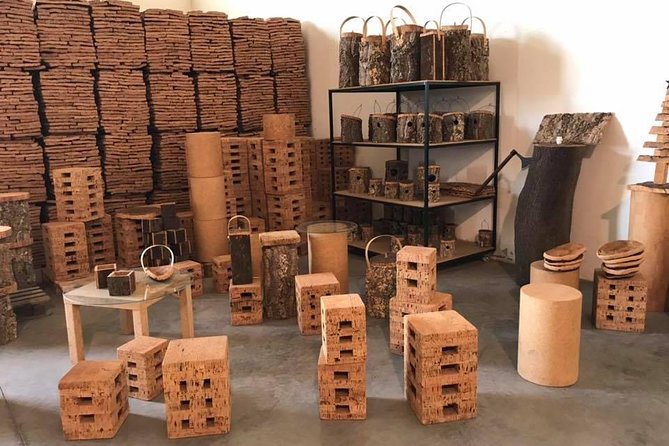
The first stop, Corticarte, introduces you to cork production in a traditional setting. You learn about the cork oak, the removal of its bark, sorting, preparation, and the making of finished goods.
The basic fact is useful: cork bark grows back, and it is removed from the tree about every nine years. The bark can reach around 25 centimeters in thickness. Portugal accounts for about 55 percent of global cork production, so this is not a novelty added for tourists. It is a major part of the country’s rural economy.
I find the process more interesting because cork is far more than a bottle stopper. The material is valued for resistance to heat, cold, and fire. It appears in decorative wall and floor coverings, sporting goods, fishing-rod handles, furniture, shoes, purses, and fabric-like products.
The wine connection is also worth understanding. Cork allows tiny amounts of oxygen to reach wine over time, helping it age while preserving quality. After this visit, opening a bottle gives you a small reminder of the Alentejo countryside.
The factory visit lasts about an hour and admission is included. It may feel more hands-on and practical than polished. That is part of its appeal. One direct account describes the facility as closer to a barn than a formal museum, with much of the work done by hand. You also have the chance to buy cork products, so allow room in your luggage if you are tempted.
Évora’s old walls hold several Portugals
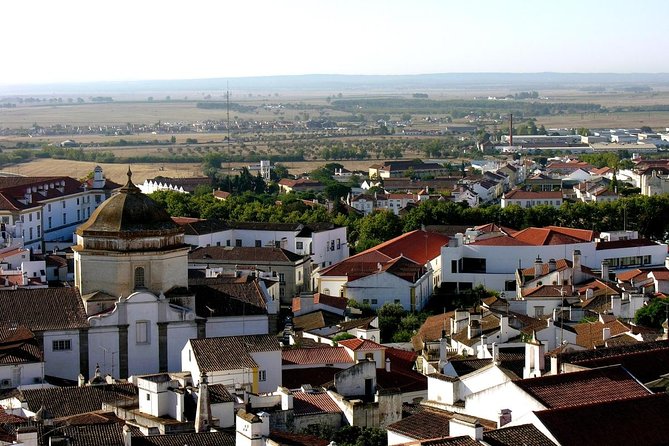
After the factory, the tour turns to Évora’s historic center, a UNESCO World Heritage Site since 1986. The old city covers about 107 hectares within medieval walls that extend for more than three kilometers.
You walk narrow lanes, patios, squares, and streets lined with white houses, tilework, and wrought-iron balconies. The city’s past includes Celtic, Roman, Arab, Jewish, and Christian chapters. Évora later enjoyed royal importance, especially in the 15th century, when Portuguese kings used it as a residence.
This layering is what makes the city rewarding. A Roman ruin may appear beside a church. A medieval street leads to a Renaissance façade. Alentejo crafts and ordinary city life continue among the monuments.
The scheduled historic-center visit is about 45 minutes, though the full sightseeing sequence gives you more time in the old town. Wear comfortable shoes. The narrow streets are easy to explore, but the route includes steps and uneven historic surfaces, especially if you enter the cathedral or climb for views.
The Chapel of Bones asks an uncomfortable question
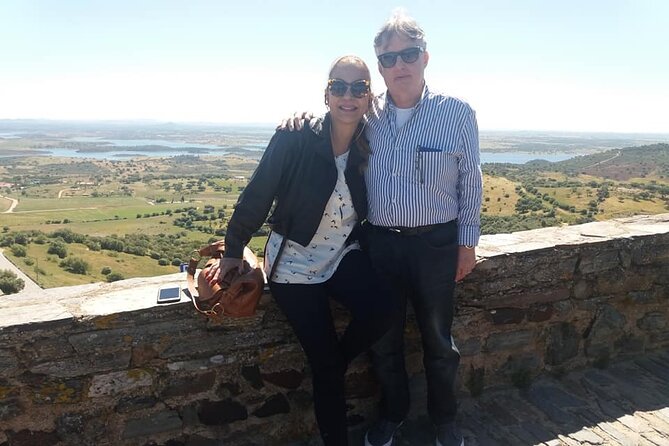
The Chapel of Bones is Évora’s most famous unusual stop. Its interior walls and pillars are lined with human skulls and bones, said to represent more than 5,000 monks.
This is not a quick spooky attraction. The chapel was designed to prompt reflection on mortality, and the entrance message makes that clear. I would plan to spend a quiet few minutes here rather than rushing through for a photograph.
The visit lasts about 30 minutes, and the entrance ticket is not included. The chapel can be confronting, so it suits people interested in religious art, social history, and Portugal’s more solemn traditions. If you dislike human remains, you can ask your guide how to adjust the visit.
Several people consider this one of the day’s highlights, while others find Évora’s streets and cork-making more appealing. That split makes sense. The chapel is memorable precisely because it is unlike the usual church interior.
A different sort of day out around Lisbon:
- Lisbon: History, Stories and Lifestyle Walking Tour
★ 4.8 · 10,902 reviews - Lisbon: Sunset Boat Party Cruise with DJ and Open Bar
★ 4.5 · 10,378 reviews - Lisbon: Pena Palace, Sintra, Cabo da Roca, & Cascais Daytrip
★ 4.7 · 9,981 reviews - Lisbon: Oceanário de Lisboa Entrance Ticket
★ 4.6 · 9,943 reviews
São Francisco reveals Portugal’s maritime age
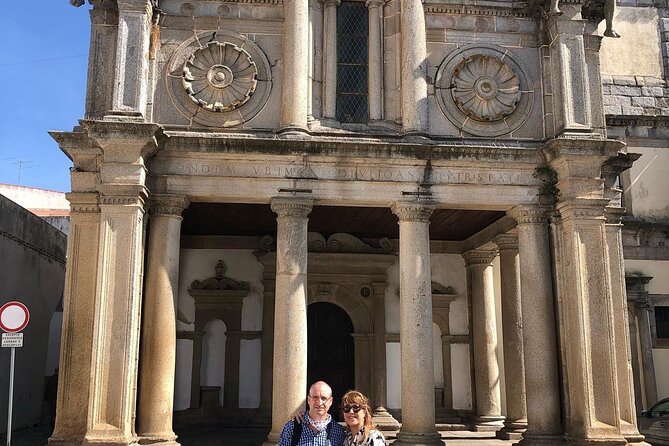
The nearby Church of São Francisco provides a different mood. Built between 1480 and 1510, it combines Gothic and Manueline architecture and is linked to the period of Portuguese maritime expansion.
Look for the Cross of the Order of Christ and the emblems of João II and Manuel I. The church’s monumental nave has an ogival vault, while royal artists helped decorate the building.
The scheduled stop is about 20 minutes, with admission included. That is enough for an introduction, but not for a slow study of every decorative detail. Your guide is especially useful here, explaining why the symbols matter rather than simply naming the architectural style.
The adjoining religious complex also connects with Évora’s nativity and museum displays, which some visitors particularly enjoy. Ask your guide what is open during your visit, since the day’s included and paid entries can vary among the monuments.
Giraldo Square is where Évora gathers
Praça do Giraldo is the city’s central meeting place. The square was built in the late 16th century and honors Geraldo Geraldes, who helped capture Évora from Moorish rule in 1167.
The planned stop is brief, around 15 minutes, but the square is useful for getting your bearings. Roads and lanes lead away in several directions, and this is also a convenient point for lunch, coffee, and Alentejo handicrafts.
I like the square as a pause between formal monuments. You can look at the surrounding façades, watch city life, and remember that Évora is not only an open-air history lesson. It is still a functioning Portuguese city.
The aqueduct shows how Évora solved a basic problem
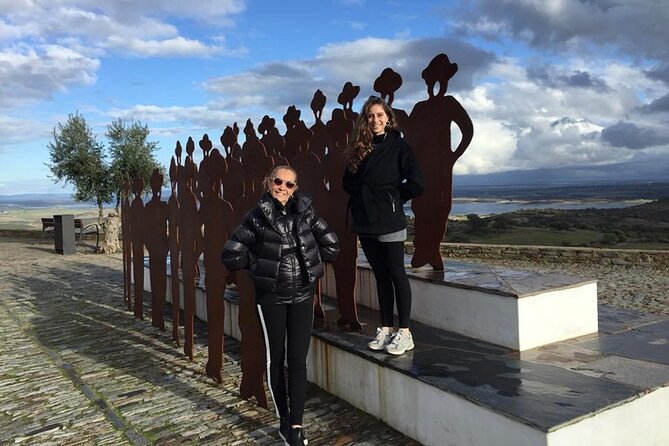
The Água de Prata Aqueduct is one of the tour’s best examples of practical engineering. Built during the reign of João III and inaugurated in 1537, it carried water from springs near Graça do Divor to Évora.
The system extends about 18 kilometers. Its designer, Francisco de Arruda, also worked on major royal projects, and the aqueduct reflects the ambition of Renaissance Portugal.
You may see sections of the structure outside and within the old city. The arches are not as instantly dramatic as a palace or cathedral interior, but they explain how Évora supported its population. The guide’s explanation helps connect the stonework to daily life: drinking water, sanitation, urban growth, and royal investment.
The aqueduct also gives you a useful visual counterpoint to the Roman Temple. Both structures moved or supported city life, but they belong to very different periods.
The Roman Temple and Diana’s Garden create the classic Évora view
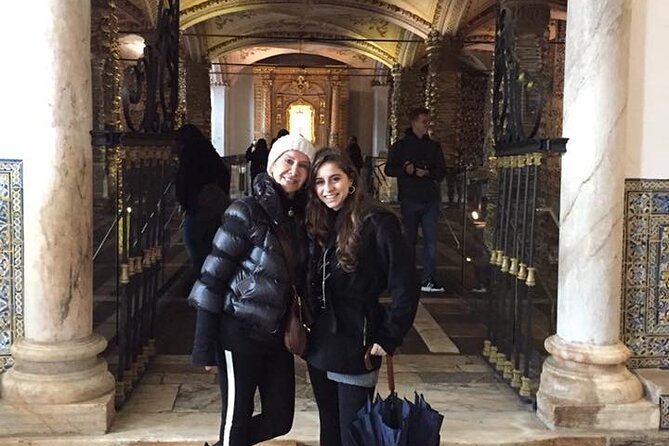
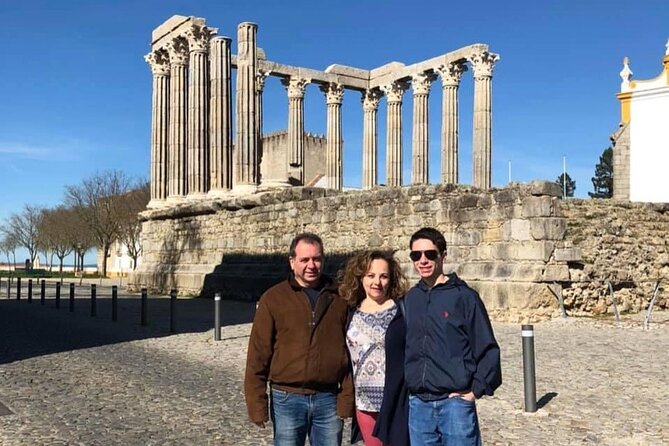
The Roman Temple of Évora, often called the Temple of Diana, is one of the city’s defining sights. Located near the cathedral, its surviving columns show the importance of Roman Évora.
The scheduled stop lasts about 15 minutes and admission is free. You will not enter a complete Roman temple, but the remaining structure is powerful against the surrounding historic buildings.
Diana’s Garden sits beside the temple in Largo do Conde de Villa Flor. It is a natural place to pause, take photographs, and look back across the city’s cultural center. I would save a few minutes here rather than treating it as a simple pass-through.
The aqueduct can also be seen from parts of the city, with some arches incorporated into the urban view. This is one reason a guide helps: the monuments are close together, but their stories span centuries.
Évora Cathedral rewards the extra ticket
The Cathedral of Évora, or Sé de Évora, is one of the day’s major interiors. Construction began in 1186, the cathedral was consecrated in 1204, and work continued until 1250.
The granite building shows the transition from Romanesque to Gothic design. Two medieval towers frame the façade, and the portal includes 14th-century sculptures of the Apostles by Mestre Pêro.
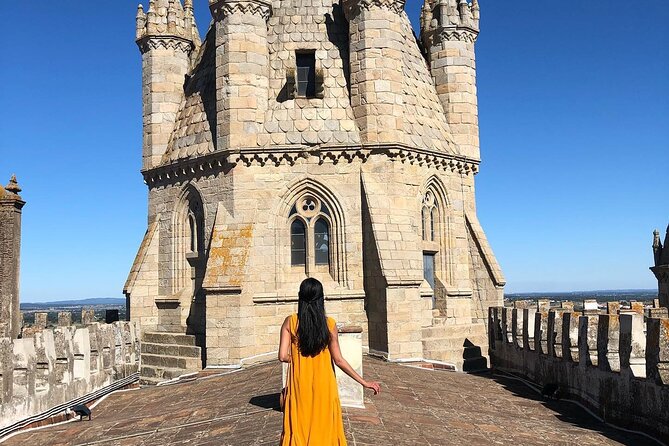
The most striking feature may be the lantern tower over the crossing. Its stone-scaled spire is a familiar symbol of Évora and gives the cathedral a strong profile from the surrounding streets.
The visit lasts about 45 minutes, with entrance not included. Some people specifically value the chance to climb to the cathedral roof and see the view. If that option is available during your visit, it is worth asking about, especially on a clear day.
The cathedral is one of the places where private guiding pays off. A guide can explain the building’s changing style, royal connections, and religious art while you look at the stone rather than read a long panel.
Lunch is flexible, local, and not included
Lunch is not part of the tour price, but your guide can arrange or recommend a traditional Portuguese meal. João is repeatedly praised for finding a good restaurant, and several accounts describe lunch as one of the best meals of the Portugal trip.
You are not locked into a long sit-down meal. If you are hungry, take the restaurant option and enjoy regional food at a relaxed pace. If you want to keep exploring, choose small bites in the walled center instead.
That flexibility is useful on a nine-hour day. A long lunch can be a pleasure, but it can also reduce your time inside the monuments. Tell your guide what matters most to you.
Guides are a major part of the value
The strongest part of this experience is the guiding. João is praised for fluent English, humor, storytelling, and broad knowledge of Portuguese and Iberian subjects. Anastasia is described as punctual, patient, warm, and clear, with special care for visitors in hot or rainy conditions.
The guide also provides background during the drive, which makes the road time more useful. Guides have helped with photographs, restaurant choices, monument tickets, and schedule changes.
This is a private activity, so only your group participates. The exact vehicle size and guide may vary, but the format is designed for personal attention rather than a large coach group. Pickup is offered at your hotel, apartment, or cruise port at 8:30 a.m.
The tour is offered in English. Confirmation is provided at booking, and the experience is near public transportation. Most people can participate, but anyone concerned about stairs or long walking should ask about the route before booking.
Is $169.31 per person fair?
At $169.31 per person, the price is not the cheapest way to reach Évora. You are paying for convenience, a private air-conditioned vehicle, hotel pickup and drop-off, a dedicated guide, WiFi, insurance, and the ability to shape the day.
The value improves when you are traveling as a small group and would otherwise need to arrange transport, navigate the city, find the cork factory, choose a restaurant, and buy several monument tickets yourself. The guide’s local connections and explanations also add something a train ride cannot provide.
Lunch and entrance fees are extra. Museum tickets are listed at about €10 per person, and the Chapel of Bones and cathedral both require paid admission. Keep this in mind when comparing the total cost.
Free cancellation is available up to 24 hours before the start time. Changes or cancellations inside that window are not accepted for a refund.
Who should book this Évora day trip?
I would choose this tour if you want to see Évora without renting a car, prefer a private guide, and like combining famous monuments with a working craft tradition.
It is particularly good for:
- First-time visitors who want context instead of a self-guided checklist
- Couples, families, and small groups that value flexible timing
- People interested in Portuguese history, churches, architecture, and food
- Anyone curious about cork beyond the wine bottle
- Cruise passengers or Lisbon visitors with one full day available
I would think twice if you dislike long drives, want a very relaxed schedule, or already plan to spend several nights in Évora. An overnight stay would give you more time for the city and Alentejo area without returning to Lisbon the same day.
Should you book it?
Yes, if you want an efficient and personal day outside Lisbon. The cork factory is an unexpected highlight, the cathedral and Roman Temple give Évora real historical weight, and the Chapel of Bones adds a memorable, serious edge.
The journey is long, and the day can feel full. But private transport, strong guides such as João and Anastasia, flexible lunch arrangements, and hotel pickup make the effort worthwhile. I would book it for a first visit to Évora, especially if you want local explanation and do not want to manage the logistics yourself.
FAQ
How long is the Évora and Alentejo tour?
The tour lasts approximately nine hours, beginning at 8:30 a.m.
Where does pickup take place?
Pickup and drop-off are available at your hotel, apartment, or cruise port.
Is transportation included?
Yes. The tour includes private transportation in an air-conditioned vehicle, along with WiFi on board.
Is this a private tour?
Yes. Only your group participates in the activity.
Is lunch included?
No. Lunch is not included, though the guide can help arrange or recommend a restaurant.
Are monument entrance fees included?
No. Entrance fees are not included. Museum tickets are listed at about €10 per person, and the Chapel of Bones and Évora Cathedral require paid admission.
What language is the tour offered in?
The tour is offered in English.
Just added around Lisbon
- Tuk tuk tour in Belem area★ 5.0 · 46 reviews
- Lisbon: Private Tour Sintra, Cabo da Roca and Cascais★ 4.9 · 46 reviews
- Private Sintra Tour from Lisbon★ 5.0 · 46 reviews
- Premium Porto Private Day Trip from Lisbon with Local Guide★ 5.0 · 47 reviews
- 4 Hours Tuktuk City Tour in Lisbon★ 5.0 · 47 reviews
- Small Group Pena Palace, Sintra, Regaleira and Cascais★ 5.0 · 47 reviews
- From Lisbon: Tour to Fátima, Batalha, Nazaré and Óbidos★ 4.6 · 47 reviews
- DayTrip from Lisbon to Sintra+Cascais PRIVATE TOUR-small groups★ 5.0 · 47 reviews
Private, compared.
True 4Hour Private Tuk Tuk Tour: Discover Lisbon with a Local!
Read our review →

Private Lisbon Sightseeing Tuk-Tuk Tour: Alfama, Belém & More
Read our review →
Lisbon Highlights: Private Tuk Tuk Tour Adventure Sightseeing
Read our review →
Discover Porto’s Highlights on a 2-Hour Private Electric Tuk Tuk
Read our review →
Welcome Lisbon Tour with Local Guide in Private Eco Tuk Tuk
Read our review →
Sintra Full-Day Private Tour – A Journey through Wonderland
Read our review →