
Reviewed · HISTORICAL TOURS
Authentic Braga & Guimarães: Small Historical Group Tour
Two medieval cities make one full day. This tour links Guimarães and Braga, two of northern Portugal’s most important historic centers, with hotel pickup, a small group of no more than eight people, and an English-speaking guide. I like the mix of old streets and grand religious sites, and I like that the day includes both guided visits and time to look around at your own pace. The main consideration is the ambitious schedule: you cover a lot of ground in eight hours, and lunch is not included.
I also like the comfortable air-conditioned vehicle, bottled water, and included monument entries. Guides such as Cheila, Nuno, Brahim, and Francisco have been praised for their clear explanations, good timing, and calm driving. If your group includes more than one language, though, the guide may need to repeat the commentary, which can make the day longer and less focused.
- Guimarães begins at its hilltop castle, then continues downhill through some of Portugal’s oldest streets.
- The tour visits Braga Cathedral, regarded as Portugal’s first cathedral.
- Bom Jesus do Monte includes the famous Staircase of the Five Senses and wide views over Braga.
- A maximum of eight people keeps the vehicle and walking portions personal, rather than bus-like.
- Hotel pickup and drop-off are included, which is useful for a full day away from Porto.
- The $70.60 price includes transportation, a guide, water, and monument entry, but not lunch.
In This Review
- Why Guimarães and Braga work so well together
- Starting above Guimarães Castle
- Igreja de São Miguel do Castelo and Portugal’s first king
- The ducal palace and Rua de Santa Maria
- Praça de São Tiago and Largo da Oliveira
- Padrão do Salado and Igreja de Nossa Senhora da Oliveira
- Braga Cathedral, Portugal’s first cathedral
- Bom Jesus do Monte and the Staircase of the Five Senses
- Sanctuary of Our Lady of Sameiro at 566 meters
- What the small group changes
- Lunch, timing, and who should book
- Should you book the Braga and Guimarães tour?
- FAQ
- How long does the tour last?
- What time does the tour start?
- Is hotel pickup included?
- How many people can join the tour?
- What language is the tour offered in?
- Is lunch included?
- Are monument admissions included?
- Is transportation provided?
- Is the walking difficult?
- What is the cancellation policy?
Why Guimarães and Braga work so well together
Guimarães gives you Portugal’s medieval beginning. Braga gives you centuries of religious power, grand churches, and hilltop sanctuaries. Together, they show two very different sides of northern Portugal in one outing.
The order is sensible. You start in upper Guimarães, near the castle, and walk downhill through the old center. Later, the vehicle takes you to Braga’s cathedral and mountain sanctuaries, saving your legs for the places where walking matters most.
At about eight hours, this is a full day rather than a quick side trip. Travel time from Porto is already included, so you do not need to organize trains, buses, taxis, or separate tickets. That convenience is a large part of the value.
The price is $70.60 per person. For that amount, you receive hotel pickup and drop-off, a premium air-conditioned vehicle, an English-speaking guide, bottled water, a small group, and admission to the included monuments. Lunch is extra, so plan for that cost. Some earlier visitors especially liked the large portions and local setting at the restaurant chosen by the guide, and vegetarian requests were accommodated in one case, but lunch is not part of the advertised price.
Starting above Guimarães Castle
The day starts at about 8:30 a.m., with the exact pickup time sent by email before the tour. You wait by the door of the address you provide, which makes the start simple, though you should check your inbox carefully the day before.
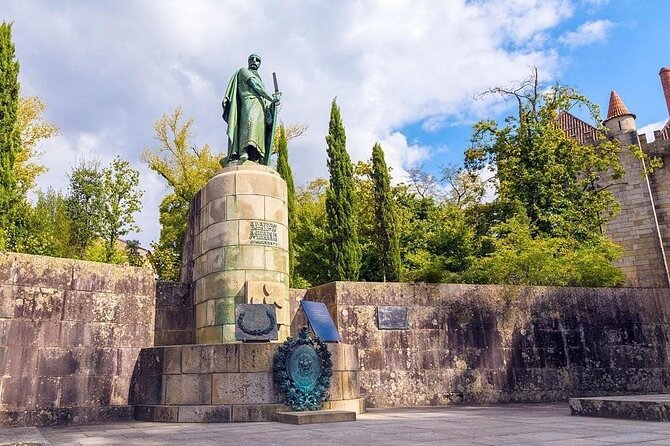
In Guimarães, the tour begins in the upper part of town. This is a smart introduction because the castle gives the guide a natural place to explain Portugal’s early formation before you move into the city below.
Guimarães Castle is one of Portugal’s oldest medieval castles. The route takes you past it as you begin the descent, so this first section combines a major monument with an easy sense of direction. You are not simply dropped into a square and handed a list of names. The guide connects the castle, the early monarchy, and the streets below.
The walk downhill is moderate rather than strenuous. That distinction matters. You should wear comfortable shoes, but this is not a demanding hike. The route is mainly about stone streets, historic buildings, and short stops.
More History Tours in Porto
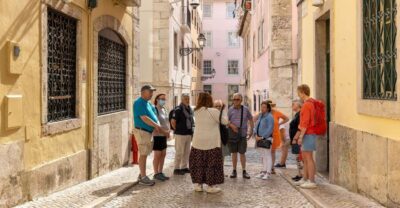
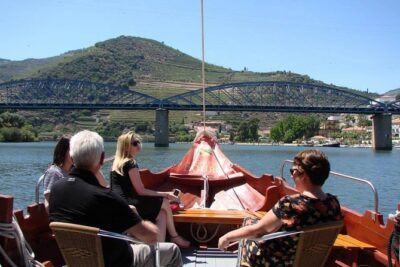
- Douro Valley: Historical Sites, Wine Experience, Lunch & Cruise
★ 5.0 · 5,133 reviews - Porto: Historic City Center Walking Tour
★ 4.7 · 1,172 reviews - Porto: An Intimate Fado Show in a Historical Tavern
★ 4.8 · 1,093 reviews
Igreja de São Miguel do Castelo and Portugal’s first king
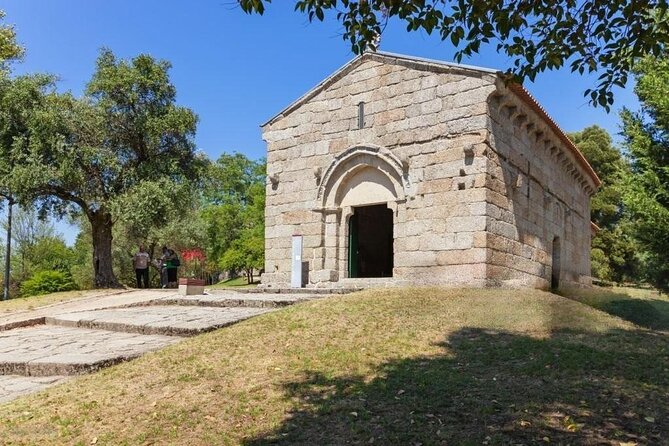
The small Igreja de São Miguel do Castelo dates from the 13th century and is built in the Romanesque style. It is now classified as a national monument, although the building was restored in the early 20th century to match its earlier appearance.
The church is tied to a local legend that Portugal’s first king, Afonso Henriques, was baptized here. The legend gives the stop extra interest, but your guide can help separate tradition from documented fact. You have about 10 minutes here, and entry is free.
This is a brief stop, not a long interior visit. Its value comes from location and context. You are near the castle, at the point where Guimarães’ royal story begins to turn into an urban one.
The ducal palace and Rua de Santa Maria
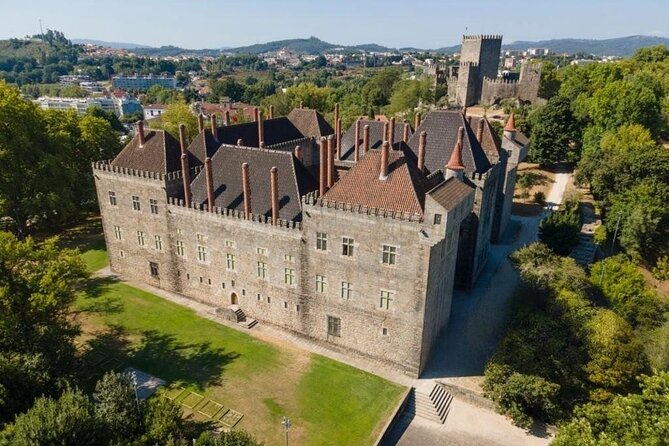
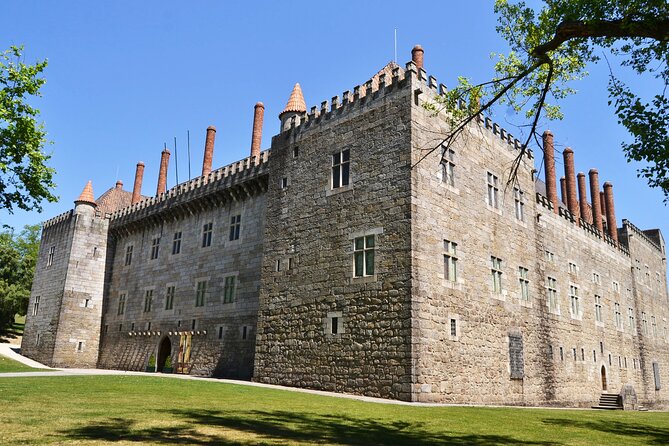
The route continues toward a large palace built at the beginning of the 15th century for Afonso, son of King João I, and his wife, Constança de Noronha. After years of changing use and wear, restoration began in the early 20th century. It now operates as a museum, with displays of furniture, tapestries, Chinese porcelain, and paintings.
The itinerary information does not give a separate timed stop for the palace, so your visit may be mainly an exterior introduction or part of the surrounding castle area. The included monument admission suggests that at least some entries are covered, but you should confirm with the guide which interiors are entered during the day.
From there, you follow Rua de Santa Maria. This is one of Guimarães’ oldest streets and once linked the convent founded by Mumadona Dias with the castle and residential quarter. Allow about 15 minutes for this part of the walk.
I like this portion because the history is built into the route. You are not only looking at isolated monuments. You are following an old connection between religious, royal, and residential parts of the city.
Praça de São Tiago and Largo da Oliveira
Praça de São Tiago is a social square, with restaurants, bars, terraces, and traditional architecture around it. The square’s name is linked to a story about the apostle James, who supposedly left an image of the Virgin Mary here during a pilgrimage. A church once occupied the site, but it was demolished in the 19th century.
You have about 10 minutes here. That is enough to understand the setting, but probably not enough for a relaxed coffee unless the group moves quickly. If you want time at a terrace, save that for later if the schedule allows.
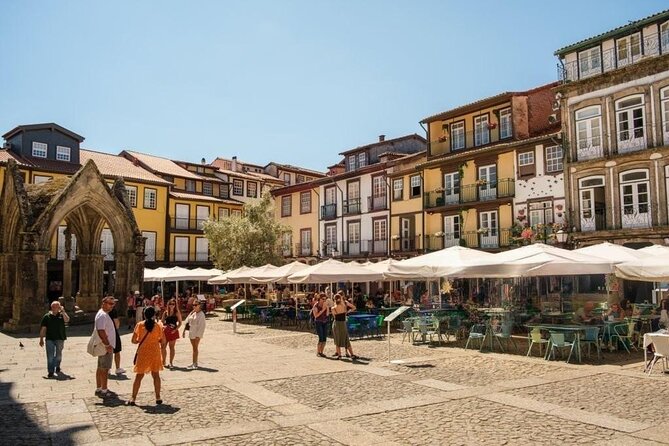
Next comes Largo da Oliveira, one of Guimarães’ most important squares. Its name comes from an old olive tree, associated with peace and local tradition. The square also played a part in medieval political life, including royal courts and important events connected with Portugal’s formation.
The planned stop lasts about 20 minutes. This is likely the most satisfying part of the Guimarães walk for people who enjoy town scenery. You can see the typical architecture, the church, the monument, and the square’s everyday life in one compact setting.
More heritage sites and old towns:
- Porto: Historical Center Walking Tour
★ 4.8 · 898 reviews - Historic Porto by Private Electric Tuk Tuk to Top Landmarks
★ 4.5 · 735 reviews - Porto:Private Tour of the Historic City in a Classic Ford T
★ 4.8 · 716 reviews - Porto Guided Tour to the Historical Center on a Tuk Tuk
★ 4.5 · 418 reviews
Padrão do Salado and Igreja de Nossa Senhora da Oliveira
At the edge of Largo da Oliveira is the Padrão do Salado, a small Gothic monument built to celebrate King Afonso IV’s victory over the Moors at the Battle of Salado in 1340. The stop lasts only about five minutes, so expect a concise explanation and a look at the monument rather than an extended visit.
The nearby Igreja de Nossa Senhora da Oliveira has origins in a monastery founded by Countess Mumadona Dias in the first half of the 10th century. The present church was built in 1387 under King João I, using Gothic forms.
The church is scheduled for about 15 minutes and admission is free. Its importance lies in the long link between Guimarães’ religious center and its political past. The stop also helps explain why the surrounding square has remained such a key gathering place.
The Guimarães section is tightly paced. You see several major sites in a fairly short walk, which is efficient but leaves little room for wandering down side streets or shopping. If independent exploration is your main goal, a full day in Guimarães would give you more breathing room.
Braga Cathedral, Portugal’s first cathedral
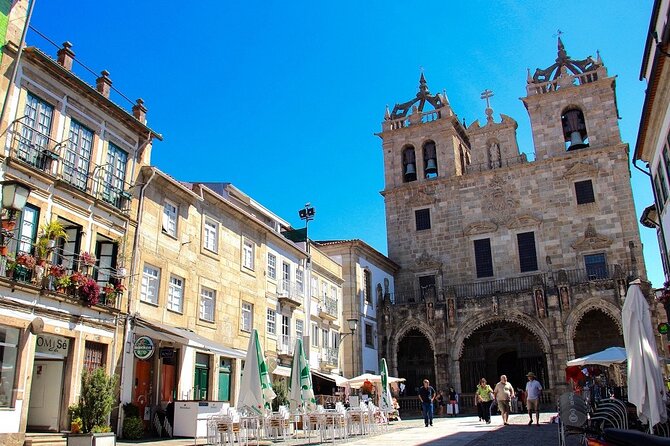
After Guimarães, the tour turns to Braga. The Sé de Braga dates to the late 11th century and was dedicated to the Virgin Mary by Bishop Pedro in 1089. It is considered the first Portuguese cathedral, built decades before Portugal became an independent kingdom.
You have about 30 minutes inside or around the cathedral, and admission is included. That is enough time for a guided look at the building and its role in Portuguese religious life, though not enough for a detailed study of every chapel or artwork.
Braga feels different from Guimarães. Guimarães presents a compact medieval core, while Braga’s identity is strongly tied to its cathedral and centuries of Catholic influence. The guide’s commentary matters here because the building’s importance is not always obvious from its exterior alone.
Bom Jesus do Monte and the Staircase of the Five Senses
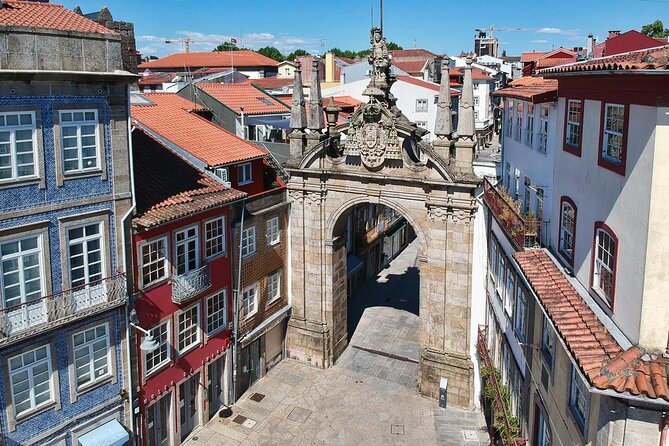
The longest stop is Bom Jesus do Monte, with about one hour. This sanctuary has more than 600 years of religious history and was recognized by UNESCO in 2019.
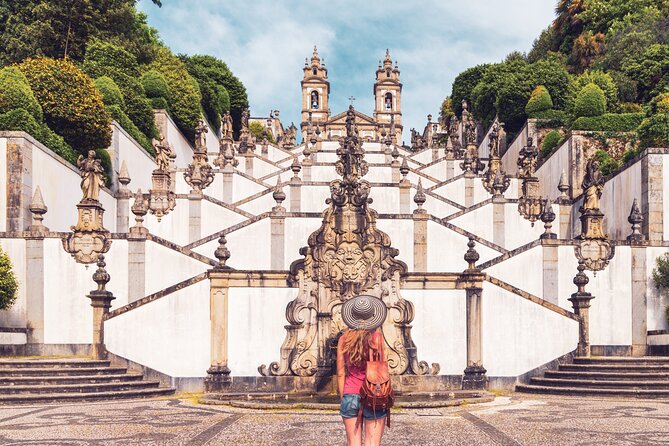
The site climbs the mountainside through chapels, fountains, and sculptures that represent the Passion of Christ. The route culminates in a Neoclassical church built between 1784 and 1811. Its best-known feature is the Baroque Staircase of the Five Senses, where fountains and statues represent human sight, hearing, smell, taste, and touch.
You do not need to treat this as only a religious site. The design combines architecture, sculpture, gardens, stairs, and mountain views. It is one of the day’s most visually varied stops.
The hour gives you useful time, but it is not unlimited. You may need to choose between studying the stairway, entering the church, taking photographs, and enjoying the view over Braga. Follow the guide’s timing closely. The stop is free according to the tour details, but the tour’s included monument policy covers the listed entries, not every possible optional charge.
The main practical point is footwear. The route includes steps and sloping sections, so comfortable shoes are a good idea. The walking is manageable for most people, but the stairs can feel tiring after the earlier city walk.
Sanctuary of Our Lady of Sameiro at 566 meters
The final major stop is the Sanctuary of Nossa Senhora do Sameiro, or Sanctuary of Our Lady of Sameiro. Founded in 1863 by Father Martinho António Pereira da Silva, it is one of Portugal’s major Marian pilgrimage centers.
Sameiro sits at about 566 meters above sea level and offers broad views over Braga and the surrounding area. You have about 30 minutes here, giving you time to see the sanctuary, take in the setting, and listen to the guide’s explanation of its religious importance.
This stop pairs well with Bom Jesus. Bom Jesus is known for its stairway and formal design, while Sameiro offers a calmer hilltop setting and a wider outlook. If the weather is clear, the view becomes one of the day’s best rewards. If clouds or mist roll in, the sanctuary still has cultural value, but the scenic part will be less impressive.
What the small group changes
The maximum group size is eight people. That is a major advantage on a day with several short stops. A guide can usually keep the group together more easily, and you spend less time waiting for people to get off a large coach.
The vehicle is described as premium and air-conditioned. That matters in northern Portugal, where a full day of city walking and hilltop visits can make a comfortable ride feel like a real benefit. Bottled water is included as well.
Several guides have received particularly warm praise. Cheila was appreciated for her history explanations, friendly manner, and smooth driving. Nuno was noted for his enthusiasm, safe driving, and ability to keep the day relaxed without rushing. Brahim was praised for patient explanations and for helping with restaurant arrangements, including vegetarian needs. Francisco was singled out for precise timing and an audiovisual experience in the vehicle.
These names do not guarantee who will lead your tour. They do show the sort of guide service you can expect: history-focused, organized, and attentive to the group.
One point deserves attention. The tour is offered in English, but a mixed-language group has occasionally required commentary in both English and Spanish. That can add significant time. It also means you may hear repeated explanations, and a noisy passenger can make it harder to follow. If focused English commentary matters greatly to you, ask about the language mix before booking.
Lunch, timing, and who should book
Lunch is not included, but the guide may recommend a local restaurant. The meal feedback has been positive, including generous portions and help with vegetarian requests. Still, you should budget separately and remember that a restaurant stop uses part of the day.
I would choose this tour if you want northern Portugal’s key sights without managing several transport connections. It suits first-time visitors to Porto who want a clear introduction to the region, couples and families who prefer a small group, and anyone who values historical explanation more than unstructured free time.
It is less suitable if you want to linger at every church, take long photographs, shop in Guimarães, or spend a leisurely afternoon over lunch. The schedule is well planned but full. Moderate walking, steps at Bom Jesus, and a long day in the vehicle all form part of the bargain.
Pickup and drop-off at your hotel make the day especially easy. In one case, the company also accommodated a request to start in Braga and finish there, but you should not assume that arrangement is automatic. Ask before booking.
Cancellation is free up to 24 hours before the start time for a full refund. Changes or cancellations inside that 24-hour window are not accepted for a refund.
Should you book the Braga and Guimarães tour?
Book it if you want a well-organized day with a small group, strong historical commentary, and the major sights in both cities. The included transport and admissions make $70.60 a fair price, especially when you add the convenience of hotel pickup and a comfortable air-conditioned vehicle.
Skip it if your ideal day means slow exploration or a long independent lunch. For most people with only a few days in Porto, though, this is a useful way to see Guimarães’ medieval center, Braga Cathedral, Bom Jesus do Monte, and Sameiro in one sweep. Check the pickup email, wear good shoes, allow extra money for lunch, and ask about the guide language if that is important to you.
FAQ
How long does the tour last?
The tour lasts approximately eight hours, including travel time between Porto, Guimarães, Braga, and the return journey.
What time does the tour start?
The listed start time is 8:30 a.m. The exact pickup time is sent by email before the tour.
Is hotel pickup included?
Yes. Hotel pickup and drop-off are included. You should wait by the door of the address you provided.
How many people can join the tour?
The tour has a maximum of eight travelers.
What language is the tour offered in?
The tour is offered in English. If a group includes Spanish-speaking passengers, the guide may repeat explanations in both languages.
Is lunch included?
No. Lunch is not included in the tour price.
Are monument admissions included?
The tour includes entrances to the listed monuments. Several stops, including the churches and hilltop sanctuaries, are marked as free admission, while Braga Cathedral has included admission.
Is transportation provided?
Yes. Transportation is provided in a premium air-conditioned vehicle, and bottled water is included.
Is the walking difficult?
Most travelers can participate, and the walking is described as moderate rather than strenuous. The route includes a downhill walk through Guimarães and steps at Bom Jesus do Monte.
What is the cancellation policy?
You can cancel up to 24 hours before the experience starts for a full refund. Cancellations or changes made less than 24 hours before the start time are not accepted for a refund.
Just added around Porto
- From Arouca: Paiva River Canoe Rafting Adventure Tour★ 5.0 · 46 reviews
- Jewish Walking Tour of Porto★ 4.5 · 46 reviews
- Porto Private Gourmet Food & Wine Historic Tour with a Sommelière★ 5.0 · 46 reviews
- Santiago and Valença do Minho Full Day Private Tour★ 5.0 · 47 reviews
- Porto: Aveiro with cruise, Costa Nova, Capelha do Senhor da Pedra★ 4.5 · 47 reviews
- Best of Porto Guided Tour: Cruise & Wine Tasting★ 4.5 · 47 reviews
- Water Canyoning★ 5.0 · 47 reviews
- Cruise Shore Excursion – Private Tuk Tuk Tour to the Historic Center★ 4.5 · 47 reviews
Historical Tours, compared.
Historical Sites, Wine Experience, Lunch & Cruise
Read our review →
Live Fado Show with Port Wine in Historic Center
Read our review →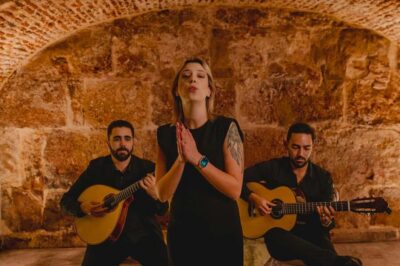
Browse the lists this tour appears in