
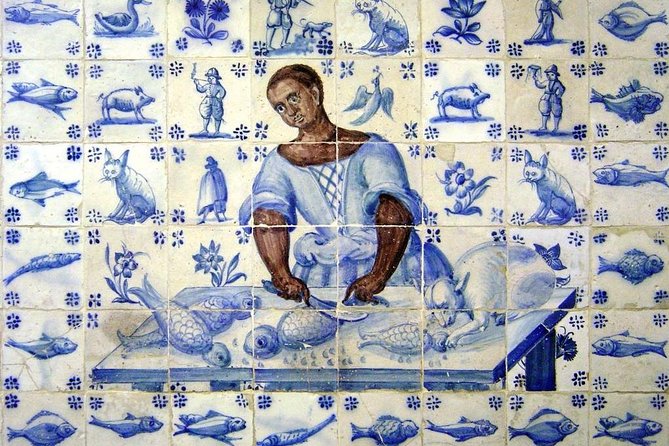
Reviewed · HISTORICAL TOURS
Half Day Historical Walking Tour about the Slave Trade in Lisbon
Lisbon’s postcard story is only half the picture. This three-hour walk connects Alfama, the waterfront, Baixa, Rossio, and Largo do Carmo to Portugal’s role in slavery, colonial trade, and the Atlantic world. I like that it places difficult history directly in the streets where it unfolded, rather than treating the subject as a footnote to the Age of Discovery.
I also like the small maximum group of eight, which gives you room to ask questions and follow the guide’s explanations. The use of historical images and documents is another strong point, especially when Rui Fernandes is leading the walk. The main drawback is the subject itself: this is a serious, sometimes painful tour, and the amount of historical information can feel heavy if you want a light introduction to Lisbon.
In This Review
- Key points before you book
- Why this history belongs in your Lisbon plans
- Starting at Largo do Chafariz de Dentro
- Alfama and the long story of slavery
- Campo das Cebolas and the question of public memory
- Praça do Comércio and Lisbon’s commercial center
- Baixa, Rossio, and Restauradores: daily life in Lisbon
- Igreja de São Domingos and religious institutions
- Largo do Carmo and the end of Portugal’s empire
- The guide, group size, and teaching style
- What the $39.78 price gets you
- Practical advice for a better walk
- Who should book this Lisbon walk?
- Should you book it?
- FAQ
- Where does the tour start?
- Where does the tour end?
- How long does the experience last?
- What language is the tour offered in?
- How much does the tour cost?
- What is included in the price?
- Are food and drinks included?
- Is hotel pickup available?
- How large is the group?
- Is the tour suitable for people with walking difficulties?
Key points before you book
- A three-hour route through Alfama and central Lisbon: You see major parts of the old city while following a specific historical theme.
- Portugal’s role is placed in a wider setting: The tour discusses slavery under the Romans and Moors, the Atlantic trade, colonialism, and Brazil.
- Rui Fernandes gives the tour a personal, research-based feel: His presentation uses images, documents, and answers to detailed questions.
- The route ends at Largo do Carmo: The final stop links slavery and empire to the 1974 revolution and Portugal’s withdrawal from its African colonies.
- The walk is moderate but not suitable for everyone: Comfortable shoes matter, and anyone with walking difficulties should choose with care.
- The $39.78 price buys context, not attractions: Admission is free at every stop, but the value rests in the guide’s teaching and the small group.
Why this history belongs in your Lisbon plans

Many first visits to Lisbon focus on tiled facades, viewpoints, codfish, and the heroic language once used to describe Portuguese seafaring. Those things are part of the city, but they do not tell the whole story.
This tour asks you to look again. Portugal’s maritime expansion depended not only on ships and trade routes, but also on the buying, selling, transport, and forced labor of human beings. The walk explains how slavery shaped Lisbon’s economy and society, and how Africa influenced Portuguese culture and modern history.
I appreciate the tour’s wider starting point. It does not suggest that slavery began with the Atlantic trade. The discussion reaches back to Roman and Moorish rule and considers how religious, political, family, and economic systems supported slavery at different times. From there, you follow Portugal’s involvement in the Atlantic trade from the mid-15th century onward.
That broader frame is useful. It helps you understand Portugal’s specific role without pretending that slavery was a single, simple system. You also hear how Portugal’s colonial past continued into the 20th century, before the 25 April 1974 revolution helped bring down the dictatorship and hastened the end of the colonial empire.
More History Tours in Lisbon
- Lisbon: History, Stories and Lifestyle Walking Tour
★ 4.8 · 10,902 reviews - Lisbon: Live Fado Show with Port Wine in Historic Center
★ 4.7 · 4,166 reviews - Lisbon: Fado Show with Wine in a Historic Venue
★ 4.8 · 1,294 reviews
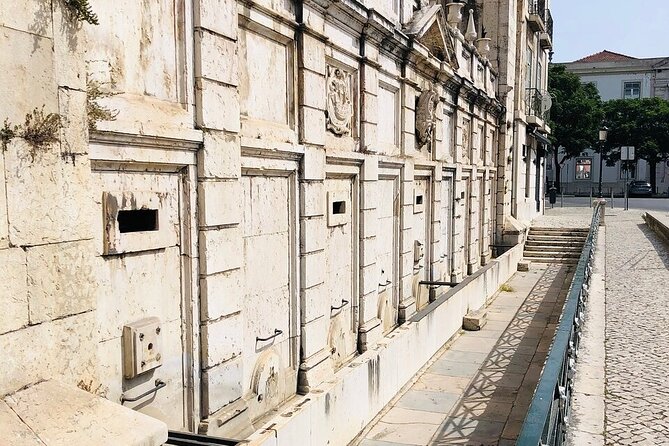
Starting at Largo do Chafariz de Dentro
The tour begins at Largo do Chafariz de Dentro, at number 30, in the Alfama area. The opening introduction takes about 10 minutes and sets the tone for the walk.
This is a good place to begin because Alfama is one of Lisbon’s oldest neighborhoods. Before the historical discussion gets more specific, you get a basic explanation of the systems and societies that practiced slavery in Portugal across the centuries.
The guide’s role matters here. A subject this broad can easily become a list of dates, rulers, and trade routes. Rui Fernandes is praised for making the material clear, using visual material to support the explanation, and leaving time for questions. He is also described as direct and willing to correct false claims with evidence, a useful quality when discussing a subject surrounded by myths and political arguments.
The small group should help. With no more than eight people, you are less likely to lose the thread of the discussion or feel awkward asking for clarification. The tradeoff is that the experience depends heavily on the guide. This is not a self-guided route with signs at every stop, so the quality of the explanation shapes the entire afternoon.
Alfama and the long story of slavery
The main Alfama stop lasts about 30 minutes. Here you learn how slavery existed under several civilizations that ruled or settled in Portugal, including the Romans and Moors.
The important point is not simply that slavery existed before the Portuguese Atlantic trade. The guide uses that history to show how systems of forced labor changed over time and how the Portuguese became involved in the Atlantic trade during the middle of the 15th century.
As you walk through Alfama, the neighborhood becomes more than a pretty maze of lanes. You are asked to think about who lived and worked here, how people were controlled, and how Lisbon’s streets connected to wider economic systems.
The tour does not present slavery as an abstract event far away in Africa or the Americas. It places the subject in Lisbon itself. That makes the history harder to ignore, but also easier to understand. You are looking at an old neighborhood while considering the people whose labor and status formed part of the city’s daily life.
The walking pace is described as moderate, with planned pauses. Still, Alfama is not the place for flimsy shoes. Lisbon’s old streets can be uneven, and anyone who struggles with walking should take the physical requirement seriously.
Campo das Cebolas and the question of public memory
The next stop is Campo das Cebolas, where a monument to the victims of the slave trade is planned for the future. The stop takes about 10 minutes.
This location introduces an important modern question: how does a city remember a past that was once minimized, softened, or left out of the standard sightseeing story?
A planned monument is not the same as a finished memorial, so you should not expect a major monument visit here. The value is in the conversation about recognition and public memory. The guide explains why acknowledging the victims matters and how Lisbon is still working through the meaning of this past.
I find this kind of stop especially useful because it connects historical facts to present-day choices. A city’s identity is shaped not only by its old buildings, but also by what it chooses to mark, explain, or leave unspoken.
More Walking Tours in Lisbon
- Best of Lisbon Small-Group Guided Walking Tour
★ 5.0 · 4,869 reviews - Lisbon: Food and Wine Small Group Walking Tour
★ 4.9 · 4,082 reviews - Best of Lisbon Walking Tour: Rossio, Chiado & Alfama
★ 4.9 · 2,700 reviews - Age of Discoveries Walking Tour in Belém
★ 5.0 · 1,513 reviews
Praça do Comércio and Lisbon’s commercial center
At Praça do Comércio, also called Terreiro do Paço, you spend about 15 minutes learning how colonial trade fitted into Lisbon’s commercial life.
This broad square was the commercial heart of the city, making it a fitting place to discuss the business side of empire. The tour explains that the slave trade was part of colonial trade, rather than a separate activity with no connection to ordinary commerce.
That distinction is valuable. It shows how the movement of people, goods, money, and power worked together. You are not merely hearing that Portugal participated in the slave trade. You are considering how that trade related to the city’s ports, merchants, institutions, and political structures.
The square is also one of Lisbon’s most popular public spaces, so this portion may feel more exposed and busy than the quieter streets of Alfama. The guide’s visual aids can help keep the discussion focused when there is plenty happening around you.
Baixa, Rossio, and Restauradores: daily life in Lisbon
The longest stop, about 30 minutes, covers Baixa, Rossio, and Restauradores. Here the focus shifts from large systems to the daily lives of enslaved people from Africa and other parts of the world who lived in Lisbon.
This is one of the tour’s strongest sections because it brings the subject down to a human scale. Trade figures and political decisions matter, but they can make people disappear behind the numbers. A discussion of daily life helps you consider work, social contact, religious practice, family connections, and the restrictions placed on enslaved people.
The route also gives you a different way to read central Lisbon. Streets that might otherwise seem like shopping areas or sightseeing corridors become places linked to labor, commerce, and social control.
The guide’s use of pictures and historical documents adds weight here. You are not asked to rely only on a spoken lecture. Images can make the explanation easier to follow, especially when the material covers several centuries and different forms of slavery.
Parents considering the tour for teenagers should note that the experience can hold the attention of young people who are interested in history. It is not entertainment, but the walking format, visuals, and questions can make the material more accessible than a long museum label or classroom lesson.
Igreja de São Domingos and religious institutions
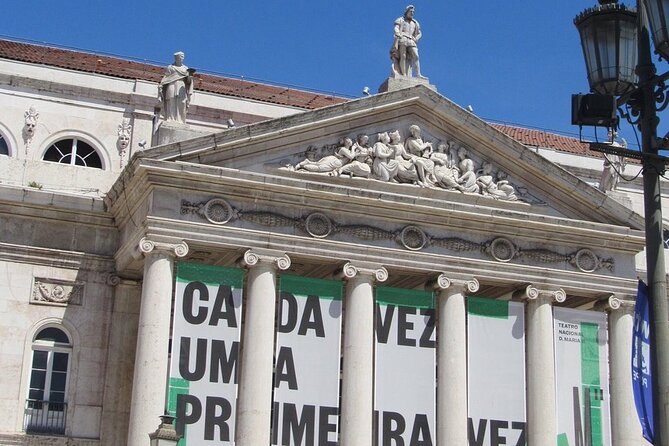
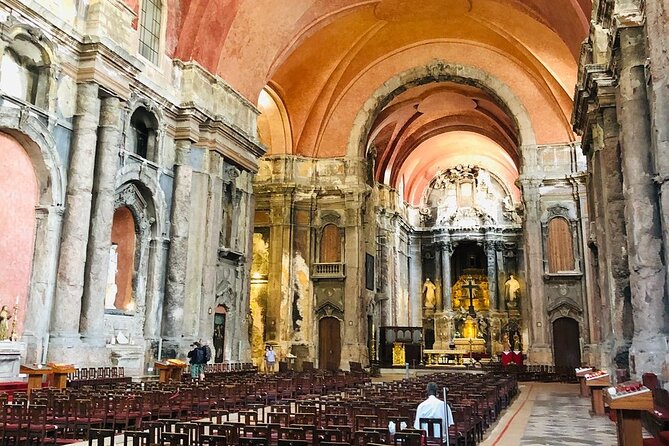
At Igreja de São Domingos, you spend about 10 minutes learning how enslaved people interacted with Lisbon’s religious organizations.
This stop adds another layer to the story. Religion was not outside the social and economic systems of the time. Churches and religious groups could shape community life, beliefs, charitable activity, and ideas about human status.
The brief stop works best as part of the larger route. Ten minutes is not enough for a full study of the church or religious history in Lisbon, but it gives you a focused point for thinking about how faith and slavery existed alongside one another.
If you are hoping to tour the church interior in detail, this walk is not designed for that. The emphasis is the historical connection, not an extended architectural visit.
Largo do Carmo and the end of Portugal’s empire
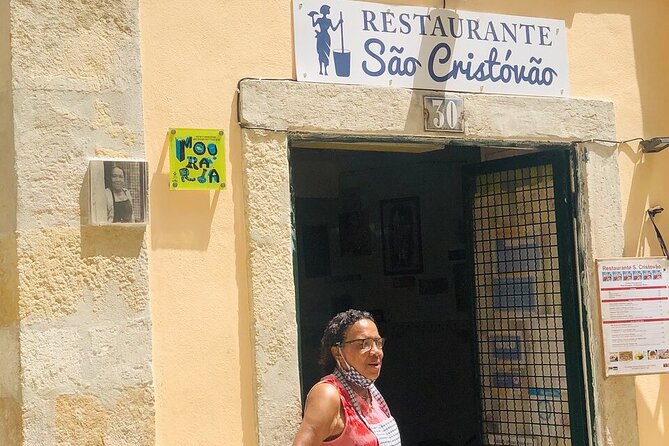
The tour finishes at Largo do Carmo, after about 15 minutes of discussion at the final stop. This place is linked to the 25 April coup and revolution, and the guide uses it to explain the later collapse of Portugal’s colonial empire in the mid-1970s.
Ending here is a smart choice. The walk begins with centuries of slavery and colonial expansion, then finishes with the political changes that brought Portugal’s authoritarian era to an end and helped close the colonial chapter.
This does not mean that the consequences of empire ended in 1974. Instead, the final stop gives you a clear timeline and a place to think about how political change, decolonization, and the legacy of racial hierarchy connect.
It also gives the tour a wider purpose. You are not only learning about a past economic system. You are looking at how that past continued to shape Portuguese politics and society into the modern era.
The guide, group size, and teaching style
Rui Fernandes receives especially strong praise for his preparation, clarity, and patience. He is described as able to answer detailed questions without losing the main thread, and his delivery is frequently singled out as passionate without becoming theatrical.
That balance matters. Slavery is a subject that can be handled badly through euphemisms, false balance, or shock tactics. The best parts of this experience appear to come from its factual approach and its willingness to address uncomfortable points directly.
The guide also uses personal connections to the subject, including a reference to his grandfather. That detail is shared near the end and gives the discussion a more personal note without replacing the larger historical evidence.
The group limit of eight is a real advantage. You get a closer conversation and more chances to ask about Portugal, Africa, Brazil, colonialism, or connections with the United States. The downside is simple: the small-group format does not guarantee that every question can receive a long answer within three hours.
What the $39.78 price gets you
At $39.78 per person, the tour is reasonably priced for a three-hour guided experience in central Lisbon. There are no attraction admission fees included because the route uses public streets and squares, but that is not the main product.
You are paying for interpretation. A free walk through Alfama and Baixa will show you beautiful streets, but it will not necessarily explain the historical systems behind them. Here, the guide connects locations that can otherwise seem unrelated.
The small group improves the value. A large tour can offer basic facts, but eight people or fewer allows more discussion and a better chance to ask questions about difficult points.
Food, drinks, and hotel transfers are not included. Plan to eat before or after the walk, and arrange your own way to Largo do Chafariz de Dentro. Since the tour ends at Largo do Carmo, you finish in a central area rather than returning to the starting point.
Practical advice for a better walk
Wear comfortable shoes. The route is described as moderate, but it covers several neighborhoods and lasts around three hours.
The tour is offered in English and includes a mobile ticket. Confirmation arrives when you book, and service animals are allowed. The starting point is near public transportation, which makes it easier to reach without a private transfer.
You should also allow some flexibility for the timing. The listed stops account for about two hours of discussion, while the full experience lasts approximately three hours. The remaining time is used to walk between places, gather the group, and move through the city.
If rain is in the forecast, bring suitable clothing. Rui has been praised for taking care to keep the group out of the rain where possible, but a walking tour still depends on outdoor conditions.
Free cancellation is available up to 24 hours before the start time for a full refund. Changes or cancellations made within 24 hours are not accepted for a refund, and the cut-off follows Lisbon local time.
Who should book this Lisbon walk?
I would choose this tour if you want history that goes beyond palaces, explorers, and scenic overlooks. It is especially suitable if you want to understand Portugal’s connection to Africa, Brazil, the Atlantic trade, and colonial rule in a direct way.
It also suits repeat visitors who have already seen the main Lisbon sights. The route passes through familiar areas, but the subject changes what you notice.
This is a strong option for students, history-minded families, and anyone who wants a more honest account of Portugal’s past. It can work well for Black visitors who want the subject of slavery acknowledged rather than hidden behind celebratory language, and for anyone interested in how colonial history continues to influence modern societies.
I would skip it if you want a relaxed sightseeing stroll with little discussion. The topic is serious, and the guide may cover a great deal in three hours. It is also not a good match for people with walking difficulties.
Should you book it?
Yes, if you want Lisbon presented with more honesty and context. The route is practical, the group is small, and the price is fair for a guide-led history lesson that uses the city as its classroom.
Book it early if your schedule is fixed, since this experience is often reserved well ahead of time. Most of all, arrive ready to listen and ask questions. You will still see Alfama, Praça do Comércio, Baixa, Rossio, and Largo do Carmo, but you will leave with a more serious understanding of what made Lisbon wealthy, powerful, and connected to the wider world.
FAQ
Where does the tour start?
The tour starts at Largo do Chafariz de Dentro 30, 1100-605 Lisboa, Portugal.
Where does the tour end?
The tour ends at Largo do Carmo, 1200-092 Lisboa, Portugal.
How long does the experience last?
The walking tour lasts approximately three hours.
What language is the tour offered in?
The tour is offered in English.
How much does the tour cost?
The listed price is $39.78 per person.
What is included in the price?
Local taxes and a professional guide are included.
Are food and drinks included?
No. Food and drinks are not included.
Is hotel pickup available?
No. Hotel pickup and drop-off are not included.
How large is the group?
The tour has a maximum of eight participants.
Is the tour suitable for people with walking difficulties?
No. It is not recommended for people with walking difficulties, and a moderate level of physical fitness is required.
More Guided Walks
- Sintra & Cascais Day Tour with Pena Palace Entry and Gardens Walk
★ 5.0 · 962 reviews - Lisbon Roots – Small group Food & Culture Walking Tour w/tastings
★ 5.0 · 910 reviews - Lisbon: Starter Walking Tour to the highlights in German
★ 4.9 · 781 reviews - Lisbon Tram No. 28 Ride & Walking Tour
★ 4.1 · 766 reviews
More Heritage Sites and Old Towns
- Explore Lisbon by Tuk Tuk: History and Viewpoints
★ 5.0 · 840 reviews - Lisbon: Daytime or Sunset Boat Cruise with History and Wine
★ 4.9 · 819 reviews - Private Tuk Tuk Tour Through Lisbon’s Historical Streets
★ 5.0 · 734 reviews - Lisbon Sunset Sailing with Portuguese Wine and History
★ 5.0 · 668 reviews
Just added around Lisbon
- Central Lisbon E-Bike Tour★ 5.0 · 168 reviews
- From Lisbon: Sintra and Cascais Full-Day Private Tour★ 4.9 · 168 reviews
- Experience the Queen of Fado at Ah Amália Living Experience★ 5.0 · 171 reviews
- Lisbon – Vinho Verde Wine Premium Boat Experience★ 5.0 · 171 reviews
- Lisbon: 2-Hour Sunset Sailing Tour on Luxury Sailing Yacht★ 4.9 · 171 reviews
- From Lisbon: Small Group Fátima & Little Shepherds Town Tour★ 4.8 · 171 reviews
- Horse Riding on the Beach★ 4.5 · 171 reviews
- Óbidos: Medieval Tales & Secrets Spots Guided Walking Tour★ 4.9 · 171 reviews
Historical Tours, compared.
Historical Sites, Wine Experience, Lunch & Cruise
Read our review →
Live Fado Show with Port Wine in Historic Center
Read our review →

Browse the lists this tour appears in