
Reviewed · HISTORICAL TOURS
Historical Walking Tour of Lisbon
Lisbon rewards curious walkers. This tour links the city’s grand squares, earthquake story, literary quarter, and revolution site in one lively introduction. I especially like the strong storytelling and the useful food, viewpoint, and neighborhood advice offered at the end. The price, about $3.62 per person, is another major plus, though you should expect hills, uneven cobblestones, and a steady walk.
You begin in Rossio and finish high above downtown near the Carmo Archaeological Museum. Guides such as Logan, Nuno, Bruno, Kiara, Constança, Antonio, and Andre have been praised for making difficult history easy to follow. One practical concern is that a canceled departure was reported without notice, so check your booking details and meeting point before setting out.
In This Review
- Key Points Before You Book
- Why This Lisbon Walk Works as a First Introduction
- Starting in Rossio Square and Praça da Figueira
- Rua Augusta and the Logic of Rebuilt Lisbon
- Praça do Comércio and the Riverfront Story
- Chiado, Bookshops, and Lisbon’s Literary Side
- Largo do Carmo and the Carnation Revolution
- Santa Justa and the Final Downtown View
- How Hard Is the Walking?
- The Guides Make the Difference
- Is $3.62 Really Good Value?
- Who Should Book This Lisbon Tour?
- Should You Book It?
- FAQ
- Where does the Historical Walking Tour of Lisbon begin?
- Where does the tour end?
- How long does the tour last?
- What language is the tour offered in?
- How much does the tour cost?
- What places are included on the walking route?
- Does the tour include admission tickets?
- How many people can join the tour?
- Is the tour suitable for most participants?
- What happens if the weather is poor?
Key Points Before You Book
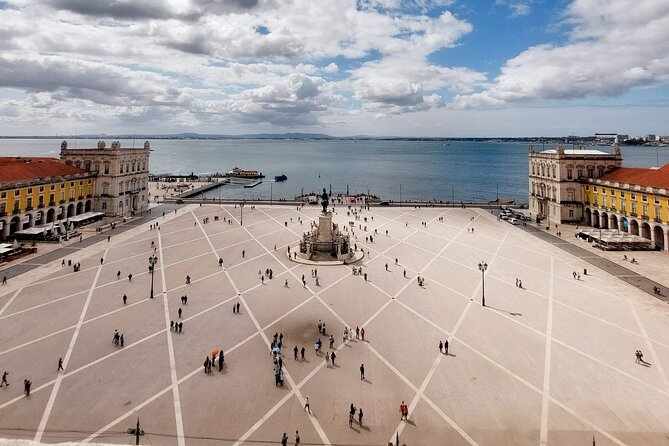
- Rossio to Carmo in 2 hours 45 minutes: The route covers Lisbon’s central squares, Rua Augusta, Chiado, and the upper downtown streets.
- History told through places: You’ll connect the 1755 earthquake, the Age of Discovery, the Carnation Revolution, and Portugal’s royal struggles.
- A real walking workout: Hills, stairs, and uneven calçada sidewalks make comfortable shoes and water essential.
- A helpful first-day orientation: The guide shares suggestions for local food, shops, viewpoints, and later sightseeing.
- Small enough for conversation: The maximum group size is 20 people, and guides encourage questions.
- An unusually low price: At about $3.62, the tour offers excellent value if you want a broad city introduction without paid admissions.
Why This Lisbon Walk Works as a First Introduction
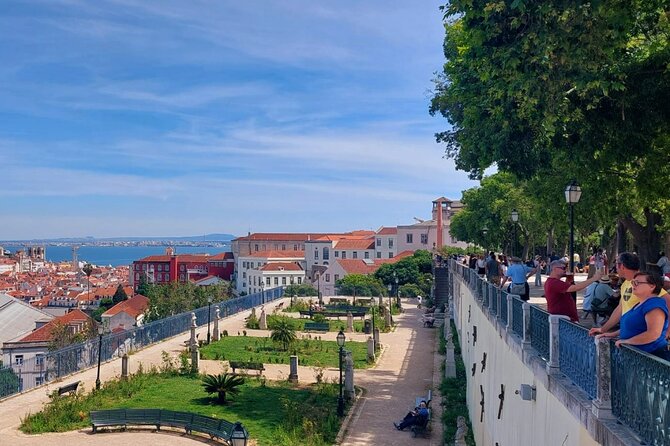
Lisbon can feel confusing at first. Its streets rise and fall, its neighborhoods have several names, and major events often overlap in the same few blocks. This tour gives you a useful framework by walking from Rossio toward the river and then uphill into Chiado and Carmo.
I like that the route is not just a parade of statues and photo stops. The guide uses each place to explain a different chapter of Lisbon’s past. Rossio introduces the city’s early beginnings. Praça da Figueira brings in royal conflict and the 1755 earthquake. Praça do Comércio explains the riverfront, overseas expansion, and the rebuilding of the city.
By the end, you have seen the downtown core from several angles. You also finish with a view, which helps you understand how the neighborhoods fit together.
The tour is offered in English and lasts about two hours and 45 minutes. That is long enough to cover serious ground, but short enough to leave your afternoon open. I would schedule it near the start of your stay, since the practical advice about restaurants, viewpoints, and things to do can shape the rest of your visit.
More History Tours in Lisbon
- Lisbon: History, Stories and Lifestyle Walking Tour
★ 4.8 · 10,902 reviews - Lisbon: Live Fado Show with Port Wine in Historic Center
★ 4.7 · 4,166 reviews - Lisbon: Fado Show with Wine in a Historic Venue
★ 4.8 · 1,294 reviews
Starting in Rossio Square and Praça da Figueira
The meeting point is Rossio Square, officially Praça Dom Pedro IV, in central Lisbon. This is a sensible place to begin because it is easy to locate and close to public transportation.
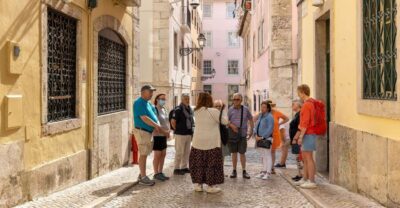
The square itself gives the guide plenty to work with. You’ll hear about the earliest people who settled in the Lisbon area roughly 3,000 years ago, while looking at the distinctive black-and-white pavement patterns underfoot. The stone designs are attractive, but they also offer your first reminder that Lisbon is a city best seen on foot.
The stop lasts about 15 minutes. Do not expect an extended archaeological lesson or a museum visit. Instead, this is a quick grounding in the city’s beginnings and a chance to understand why Rossio has long been a central meeting place.
From there, you walk to Praça da Figueira, or Fig Tree Square. The guide explains how the area once held Lisbon’s largest public hospital before the building was destroyed in the 1755 earthquake. The stop also reaches back to the contests for Portugal’s crown and the wars fought with neighboring powers.
This is where a good guide matters. Names, dates, and royal disputes can blur together quickly. Guides such as Logan, Nuno, and Constança have been praised for using memorable stories rather than simply reciting facts. If you enjoy political history, this section may be one of the most useful parts of the walk.
Rua Augusta and the Logic of Rebuilt Lisbon
The route then moves through Rua Augusta, one of downtown Lisbon’s main arteries. This pedestrian street leads toward the river, passing shops, cafes, and the steady movement of central Lisbon.
The important point is not simply that Rua Augusta is attractive. It shows how deliberately the lower city was rebuilt after the 1755 earthquake. The architecture reflects Enlightenment ideas about order, function, and planned streets.
That rebuilding changed Lisbon in a lasting way. Instead of winding medieval lanes, the Baixa district received a more regular design, with broad streets and organized blocks. As you walk, the guide helps you see the city as a response to disaster, not just a collection of old buildings.
This section also gives you a break from standing in one spot. The explanations continue while you move, which helps the tour feel active. You should still listen carefully, since street noise and crowds can make it harder to hear. A smaller group is useful here, and the maximum of 20 people is reasonable for a central-city walk.
Praça do Comércio and the Riverfront Story
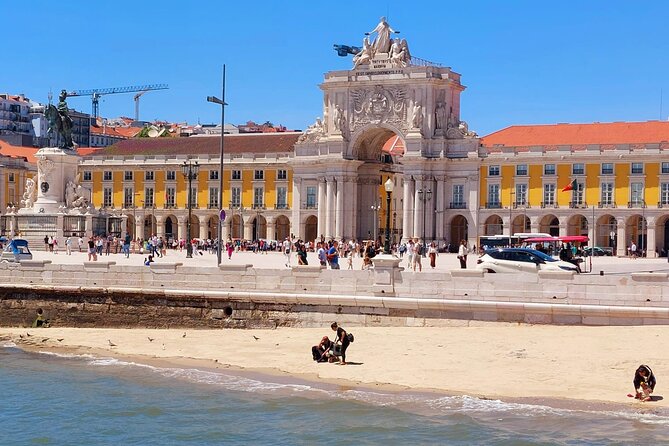
Praça do Comércio, also called Terreiro do Paço, is the tour’s longest stop at about 30 minutes. It is one of Lisbon’s great urban spaces, with an open riverfront setting and a grand sense of scale.
The square has served for thousands of years as an entry point to the city. That location explains much of Lisbon’s power. Goods, people, rulers, and ships arrived through the riverfront, making this more than an elegant plaza. It was a working gateway.
Here you’ll hear about the Age of Discovery and Portugal’s role in overseas exploration. The guide also returns to the 1755 earthquake, the destruction that followed, and the people who directed Lisbon’s reconstruction.
I value this stop because it ties several periods together in one place. Portugal’s maritime expansion brought wealth and influence. The earthquake exposed the city’s weaknesses. The rebuilding effort then reshaped downtown into the ordered district you see today.
The open square is also a good place to pause and take in the geography. Looking toward the river, you can better understand why Lisbon developed where it did. Looking back toward the city, you can see how the lower streets lead into the rising neighborhoods.
The tour does not include a paid attraction here. You are learning outdoors, which keeps the cost low and lets the guide control the pace.
More Walking Tours in Lisbon
- Best of Lisbon Small-Group Guided Walking Tour
★ 5.0 · 4,869 reviews - Lisbon: Food and Wine Small Group Walking Tour
★ 4.9 · 4,082 reviews - Best of Lisbon Walking Tour: Rossio, Chiado & Alfama
★ 4.9 · 2,700 reviews - Age of Discoveries Walking Tour in Belém
★ 5.0 · 1,513 reviews
Chiado, Bookshops, and Lisbon’s Literary Side
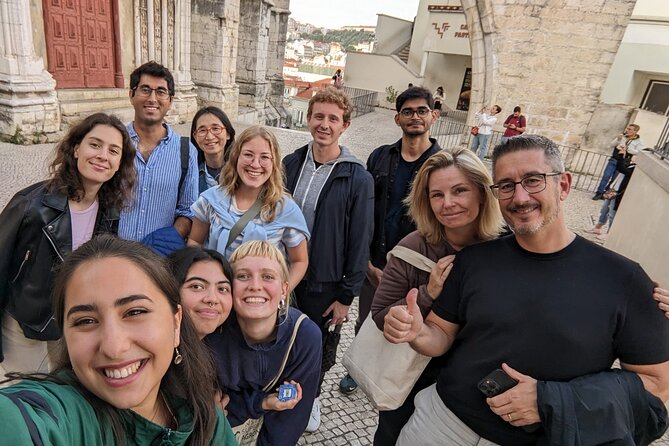
From the lower city, the walk continues into Chiado, Lisbon’s art and literary district. This part feels different from the formal spaces along the river. Cafes, theaters, bookshops, and evening meeting places give the neighborhood a more creative character.
The guide introduces Portuguese poets and writers connected with the area. This is useful even if you do not know much about Portuguese literature, since the stories help explain Lisbon’s cultural identity beyond kings, battles, and earthquakes.
The tour also offers a chance to visit Bertrand Bookshop, widely recognized as the oldest operating bookshop in the world. The supplied details do not promise an extended indoor visit, so think of this as an opportunity rather than a guaranteed private stop. If the group enters, you’ll have a quick cultural highlight in the middle of the walk.
The Chiado stop lasts around 20 minutes. I would have liked more time here if literature and local culture were my main interests, but the shorter stop makes sense within a route that covers several centuries and neighborhoods.
This is also a good place to ask the guide about later stops in Lisbon. Several guides, including Kiara and Andre, have been praised for giving specific suggestions about restaurants, shops, and activities. Take notes on your phone if you hear something you want to remember.
Largo do Carmo and the Carnation Revolution
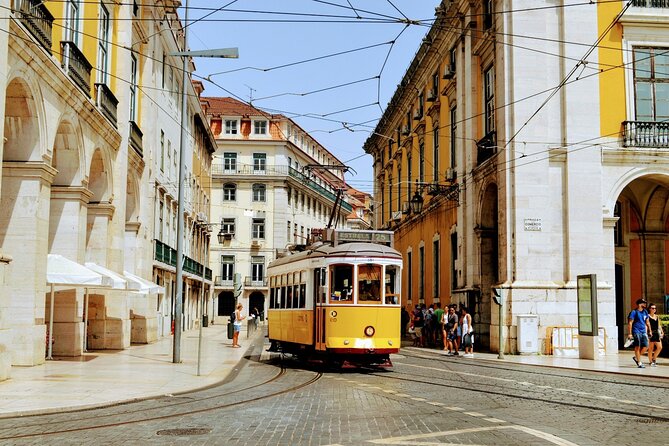
Largo do Carmo is the most politically charged stop. The square is home to the ruins of the Convento do Carmo, described on the tour as the second-oldest building in the city. Its damaged arches remain a visible reminder of the 1755 earthquake.
The convent did not collapse completely, and its open roofline gives the site an unusual appearance. You do not need a long museum visit to understand the force of the disaster. The surviving structure makes the past feel close and physical.
The square also played a major role in modern Portuguese history. In 1974, it became one of the key settings of the Carnation Revolution, the largely peaceful coup that ended Portugal’s authoritarian regime. The tour presents this event as one of the country’s most important social turning points.
This is a strong example of the tour’s method. The guide moves from medieval architecture to a twentieth-century political change without leaving the same small square. A good storyteller can make that connection memorable, and guides such as Antonio, Bruno, and Nuno have received praise for their clear, animated delivery.
The stop takes about 30 minutes, matching Praça do Comércio as the longest part of the route. It is worth staying engaged here, even if your main interest is architecture. The events of 1974 help explain modern Portugal.
Santa Justa and the Final Downtown View
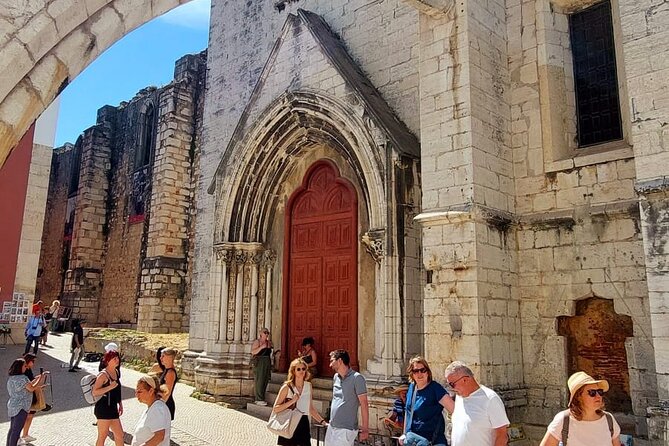
The final stop is the Elevador de Santa Justa, where you take a break and enjoy a bird’s-eye view of central Lisbon. The details describe this as a viewpoint stop, not a promise that the group will ride the elevator.
That distinction matters. The famous lift can have lines, and the tour’s value does not depend on boarding it. The viewpoint gives you a chance to look across the downtown area after walking through it. From above, the regular shape of Baixa and the rise toward Chiado and Carmo make more sense.
The guide also uses this pause to offer practical suggestions. You may hear ideas for local food, scenic overlooks, and ways to use the rest of your time in Lisbon. These tips are one of the tour’s most useful extras, especially if you have only a few days in town.
The tour ends at the Carmo Archaeological Museum, in Largo do Carmo. You finish in the upper part of downtown rather than back at Rossio, so plan your next step before the tour ends. The final location is central, but the route has already taken you uphill.
How Hard Is the Walking?
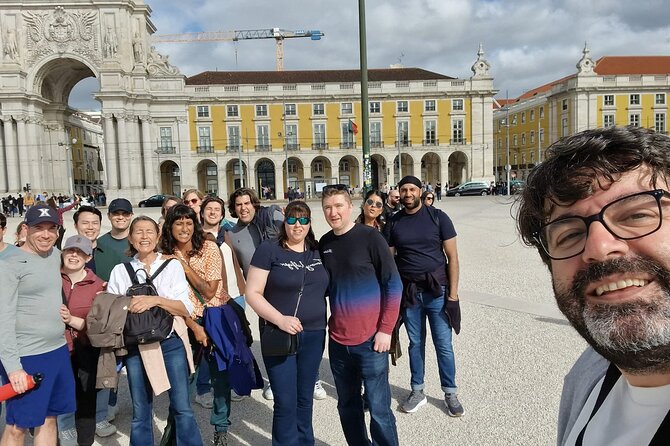
You should take the physical demands seriously. The route covers a lot of ground, and Lisbon’s sidewalks are made from small stones that can be beautiful but uneven. Hills are part of the experience, not an occasional surprise.
Wear shoes with good grip and support. Bring water, and use sunscreen in sunny weather. One guide, Constança, was praised for adjusting the uphill pace for a group with a wide age range, but you should not count on every departure moving slowly.
Most people can participate, and service animals are allowed. Still, the route is not ideal if uneven pavement or uphill walking is difficult for you. Ask about the physical demands before booking if mobility is a concern.
The stop structure helps. You spend 15 minutes in Rossio, 15 in Praça da Figueira, 30 at Praça do Comércio, 20 in Chiado, 30 at Largo do Carmo, and 15 near Santa Justa, with walking between each. Those pauses give your feet some relief, but this remains an active walking tour.
The Guides Make the Difference
The most praised quality is the guides’ storytelling. Logan is repeatedly described as animated and engaging, with a gift for making historical events easy to remember. Nuno is praised for a captivating style, while Andre is noted for checking that everyone could hear him and keep up.
Bruno is described as friendly and able to spend more time on subjects that mattered to the group. Kiara is praised for adding cultural context, and Constança for combining energy, useful facts, and a considerate pace.
The guide on your departure may be someone else. Names and styles can vary, so I would not book solely because you hope for one particular person. The broader pattern is clear: this tour depends heavily on an engaging guide, and the available feedback gives that part a very strong record.
You should also be willing to ask questions. The group format allows interaction, and several guides have encouraged discussion rather than delivering a fixed speech. That makes the tour more useful for families, first-time visitors, and people who want to connect history with places they can explore later.
Is $3.62 Really Good Value?
At about $3.62 per person, this is an exceptional price for nearly three hours with a professional guide. You are not paying for entry to a museum or a private vehicle, but you receive a structured introduction to central Lisbon and practical advice for the rest of your stay.
The value comes from the route and the guide. You could walk through Rossio, Rua Augusta, Praça do Comércio, Chiado, and Carmo on your own, but you would miss the connections between the places. You might see the Convento do Carmo ruins without understanding their role in both the earthquake and the Carnation Revolution.
The low price also means you should keep expectations sensible. This is a shared walking tour, with up to 20 people. It is not a private history seminar, and outdoor explanations can be affected by noise, weather, and the pace of the group.
The tour has a 4.9 rating from 73 reviews, with 97 percent of participants recommending it. One person reported arriving to find a canceled departure with no notice. That appears to be an exception within otherwise strong feedback, but it is a useful reminder to check confirmation messages and contact details before leaving.
Who Should Book This Lisbon Tour?
I would choose this tour if you want a clear introduction to central Lisbon and enjoy learning while walking. It suits first-time visitors who need orientation, families with older children, and anyone who likes history presented through stories rather than long indoor lectures.
It is also a good fit if you want local suggestions early in your visit. Guides have offered advice on food, viewpoints, bookshops, and additional activities. A 13-year-old enjoyed one departure, which suggests that the storytelling can work for young people when the guide keeps the pace lively.
You may want another kind of experience if you dislike hills, cobblestones, or group tours. The route covers famous locations, so it is not designed for travelers seeking a quiet village walk or a specialized food tour. History helps, too. One participant specifically noted that an interest in the subject adds to the experience.
Should You Book It?
Yes, if you want a low-cost, story-driven way to get your bearings in Lisbon. The route covers the city’s central squares, riverfront, literary quarter, earthquake ruins, revolution site, and a final viewpoint in less than three hours.
Bring comfortable shoes, water, and an open mind. Book it near the beginning of your stay so the guide’s restaurant and sightseeing suggestions can still help you. I would skip it only if uphill walking is a serious problem or you prefer exploring at your own pace without a group.
Free cancellation is available up to 24 hours before the start time. Cancellations made later are not refunded, and poor weather may lead to a new date or a full refund.
FAQ
Where does the Historical Walking Tour of Lisbon begin?
It begins at Rossio Square, also known as Praça Dom Pedro IV, at Praça do Rossio, 1100-200 Lisboa, Portugal.
Where does the tour end?
The tour ends at the Carmo Archaeological Museum in Largo do Carmo, 1200-092 Lisboa, Portugal.
How long does the tour last?
The tour lasts approximately 2 hours and 45 minutes.
What language is the tour offered in?
The tour is offered in English.
How much does the tour cost?
The listed price is $3.62 per person.
What places are included on the walking route?
The route includes Rossio Square, Praça da Figueira, Rua Augusta, Praça do Comércio, Chiado, Largo do Carmo, and the Elevador de Santa Justa area.
Does the tour include admission tickets?
The listed stops have free admission included. The tour description does not state that paid entry to the Carmo Archaeological Museum, Bertrand Bookshop, or a ride on the Santa Justa elevator is included.
How many people can join the tour?
The maximum group size is 20 people.
Is the tour suitable for most participants?
Most people can participate, and service animals are allowed. You should be prepared for hills, uneven cobblestone sidewalks, and considerable walking.
What happens if the weather is poor?
The experience requires good weather. If it is canceled because of poor weather, you will be offered another date or a full refund.
More Guided Walks
- Sintra & Cascais Day Tour with Pena Palace Entry and Gardens Walk
★ 5.0 · 962 reviews - Lisbon Roots – Small group Food & Culture Walking Tour w/tastings
★ 5.0 · 910 reviews - Lisbon: Starter Walking Tour to the highlights in German
★ 4.9 · 781 reviews - Lisbon Tram No. 28 Ride & Walking Tour
★ 4.1 · 766 reviews
More Heritage Sites and Old Towns
- Explore Lisbon by Tuk Tuk: History and Viewpoints
★ 5.0 · 840 reviews - Lisbon: Daytime or Sunset Boat Cruise with History and Wine
★ 4.9 · 819 reviews - Private Tuk Tuk Tour Through Lisbon’s Historical Streets
★ 5.0 · 734 reviews - Lisbon Sunset Sailing with Portuguese Wine and History
★ 5.0 · 668 reviews
Just added around Lisbon
- Tuk tuk tour in Belem area★ 5.0 · 46 reviews
- Lisbon: Private Tour Sintra, Cabo da Roca and Cascais★ 4.9 · 46 reviews
- Private Sintra Tour from Lisbon★ 5.0 · 46 reviews
- 4 Hours Tuktuk City Tour in Lisbon★ 5.0 · 47 reviews
- Premium Porto Private Day Trip from Lisbon with Local Guide★ 5.0 · 47 reviews
- Small Group Pena Palace, Sintra, Regaleira and Cascais★ 5.0 · 47 reviews
- From Lisbon: Tour to Fátima, Batalha, Nazaré and Óbidos★ 4.6 · 47 reviews
- DayTrip from Lisbon to Sintra+Cascais PRIVATE TOUR-small groups★ 5.0 · 47 reviews
Historical Tours, compared.
Historical Sites, Wine Experience, Lunch & Cruise
Read our review →
Live Fado Show with Port Wine in Historic Center
Read our review →

Browse the lists this tour appears in