

Reviewed · HISTORICAL TOURS
Lisbon: 3-Hour The Slave Trade – An Historical Walking Tour
Lisbon’s beauty has a difficult backstory. This three-hour walk connects the city’s squares, churches, monuments, and older streets with Portugal’s role in the Atlantic slave trade, a subject often left out of standard sightseeing tours. I especially like the small group format and the chance to learn from Rui Fernandes, an African guide with training in history, political science, and economics. The main consideration is the subject itself: this is serious, painful history, not a light introduction to Lisbon.
I also like the relaxed pace, the built-in coffee and restroom stop, and the room Rui gives you to ask questions. The route is reported to be mostly flat or only gently inclined, which helps during a long walk. At roughly three to three and a half hours, though, it demands more time and attention than a quick city orientation.
In This Review
- Key points to know before booking
- Why this Lisbon walking tour matters
- Starting in Alfama at Largo do Chafariz de Dentro
- Reading Lisbon’s monuments and public squares differently
- The human story behind the trade
- Portugal, Brazil, and the wider Atlantic world
- Rui Fernandes and the small-group advantage
- The mid-tour café stop
- Price, timing, and practical value
- Who should book this experience
- Should you book the slave trade walking tour?
- FAQ
- Where does the tour meet?
- How long does the walking tour last?
- What language is the tour conducted in?
- Who leads the tour?
- How many people can join the group?
- Is hotel pickup included?
- Is a break included?
- What should I bring?
Key points to know before booking

- Largo do Chafariz de Dentro begins the story: Meet in Alfama, Lisbon’s oldest district, at the named square.
- Rui Fernandes leads the walk: His teaching covers history, economics, religion, politics, and Portugal’s connections with Africa and Brazil.
- Lisbon becomes the classroom: Streets, buildings, public squares, churches, and monuments are used to explain how slavery shaped the city.
- The group is intentionally small: The information gives a maximum of six participants in one place and eight in another, so confirm the exact cap when booking.
- A coffee and restroom break is included: A café stop may include a pastel de nata, giving you a short pause during the demanding subject matter.
- Bring sensible footwear: You will walk on Lisbon streets and cobbles, even though the route is described as mostly flat.
Why this Lisbon walking tour matters
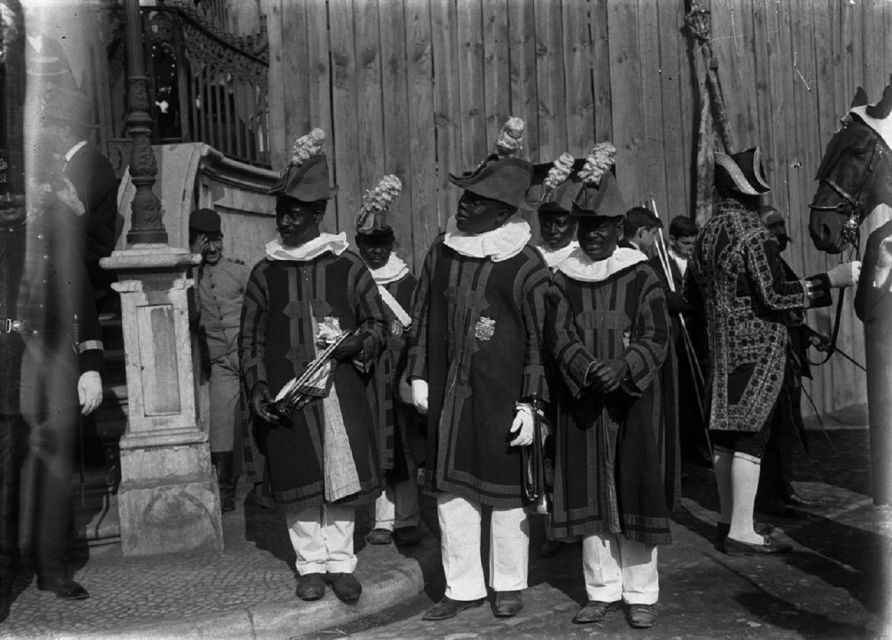
Many visitors first meet Lisbon through tiled façades, grand plazas, hilltop views, and the polished story of the Age of Discovery. Those sights are real, but they do not tell the whole story. This tour asks you to look again at the wealth, buildings, and ambitions of Portugal’s maritime era, then consider the human cost behind them.
Portugal began the Atlantic slave trade in the first half of the 15th century, during the period associated with Prince Henry the Navigator. Over the following four centuries, an estimated 12 to 14 million Africans were sold into slavery and transported across the Atlantic to the Americas.
The walk is not limited to ship routes or royal policy. It also addresses the origins of slavery in the Iberian Peninsula, daily life for enslaved people in historic Lisbon, Brazil’s economic importance, abolition in Portugal, Portuguese colonies in Africa, and African nationalist struggles for liberation.
That range is one of the tour’s greatest strengths. You are not given a single isolated tale. Instead, Portugal’s role is placed within a longer chain of political, commercial, religious, and social decisions. I find that approach useful because it helps explain how slavery affected both individuals and the development of a country.
More History Tours in Lisbon
- Lisbon: History, Stories and Lifestyle Walking Tour
★ 4.8 · 10,902 reviews - Lisbon: Live Fado Show with Port Wine in Historic Center
★ 4.7 · 4,166 reviews - Lisbon: Fado Show with Wine in a Historic Venue
★ 4.8 · 1,294 reviews
Starting in Alfama at Largo do Chafariz de Dentro
The meeting point is Largo do Chafariz de Dentro, a square in Alfama. This is a practical starting place because Alfama is the oldest neighborhood in Lisbon and one of the areas where the city’s layered past is easiest to read in the streets.
From here, expect the guide to connect the physical setting with the history of Lisbon’s African population and Portugal’s overseas activity. The point is not simply to look at an old building and attach a date to it. You learn how places were used, what they represented, and how the city’s past can still be seen in street names, building features, and the changing purposes of major structures.
The cobbled lanes give the opening section a strong sense of place, but they also require care. Wear comfortable shoes with a firm sole. Lisbon’s paving can be hard on your feet, particularly after several hours.
The route has been described as slow and manageable, with no steep uphill sections. That makes it suitable for many age groups, though you should still be prepared to walk continuously through an urban setting. The route’s exact length and final stopping points are not specified, so do not treat the mostly flat description as a promise of a fully step-free outing.
Reading Lisbon’s monuments and public squares differently
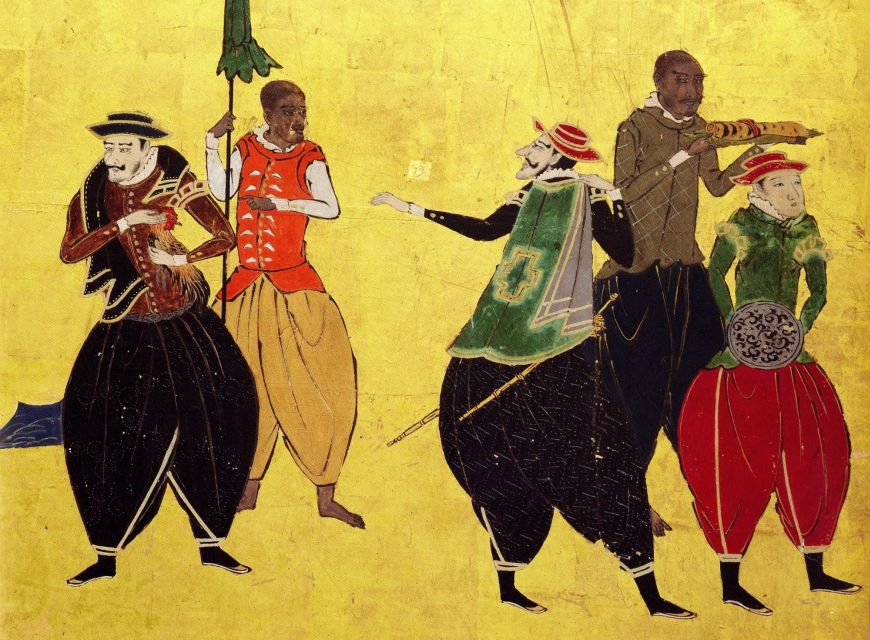
The central idea of the tour is that ordinary sightseeing landmarks can carry more than one story. You move through back streets and main avenues, stopping at monuments, churches, and public squares that have a connection to this history.
This is where a live guide adds real value. A plaque or museum label may tell you who commissioned a building or when it was completed. Rui’s approach, as described by the many detailed comments about his tours, is to connect those facts to wider questions about money, labor, religion, law, and political power.
You might pass a grand structure that looks like a symbol of national achievement. The discussion then adds another layer: who paid for it, which overseas connections made it possible, and which people were excluded from the usual public story.
Rui also uses relevant images to help explain key points. That matters when the places around you no longer look as they did in earlier centuries. A visual reference can make an old use of a building or a vanished feature easier to picture.
The route is not a performance built around dramatic surprises. Its value comes from patient explanation. Rui is praised for speaking clearly, keeping a steady pace, remembering group members’ names, and allowing frequent questions. If you prefer a tour that moves quickly from landmark to landmark, this may feel slow. If you want time to think and ask why, the pace works well.
The human story behind the trade
The tour’s title may suggest a narrow focus on ships, ports, and commerce. In practice, the content reaches into the daily reality of enslaved people living in Lisbon.
That shift from trade systems to human lives is important. Statistics can show the scale of the crime, but they do not explain how enslavement affected work, family life, status, movement, and identity in a city. The tour addresses those day-to-day aspects alongside the larger political and economic story.
The wording of the subject requires care. Portugal’s role is presented as a crime against the humanity of the people who were captured, sold, and transported. At the same time, the tour examines the systems that allowed the trade to continue for centuries, including religious arguments, commercial interests, government decisions, and colonial power.
I appreciate that balance. A useful historical tour should not soften the past to protect a pleasant holiday mood. It should also give you enough context to understand how institutions operated, rather than reducing everything to a list of villains and dates.
Several comments about the tour describe Rui as passionate, patient, respectful, and willing to answer difficult questions. That combination is especially valuable here. You may arrive with gaps in your understanding or with family connections to slavery. The guide’s inclusive approach helps make space for different backgrounds without turning the walk into a personal debate.
More Walking Tours in Lisbon
- Best of Lisbon Small-Group Guided Walking Tour
★ 5.0 · 4,869 reviews - Lisbon: Food and Wine Small Group Walking Tour
★ 4.9 · 4,082 reviews - Best of Lisbon Walking Tour: Rossio, Chiado & Alfama
★ 4.9 · 2,700 reviews - Age of Discoveries Walking Tour in Belém
★ 5.0 · 1,513 reviews
Portugal, Brazil, and the wider Atlantic world
Portugal’s relationship with Brazil is a major part of the explanation. Brazil’s importance helps show why the Atlantic trade was not a side chapter in Portuguese history. It was tied to colonial development, commerce, and the wider Portuguese imperial system.
The tour also deals with the Age of Discovery, a familiar phrase that can sound heroic when presented without context. Here, the period is connected to the expansion of Portuguese power and to the growth of the slave trade.
That broader framing can improve the rest of your Lisbon visit. After the walk, monuments associated with maritime expansion may feel less simple. You can still admire architecture and artistic skill, but you are less likely to accept a polished national story without asking who benefited and who suffered.
The discussion then moves toward abolition in Portugal, Portuguese colonies in Africa, and African nationalist struggles for liberation. This prevents the walk from ending in the distant past. Portugal’s colonial history continued long after the early Atlantic trade, and the effects of those systems are tied to the modern history of Portugal and Africa.
For anyone interested in international affairs, colonialism, economics, or the history of the Atlantic world, this section may be the most useful part of the tour.
Rui Fernandes and the small-group advantage
The guide is Rui Fernandes, described as an African guide with an academic background in history, political science, and economics. His personal connection to the subject, including family history discussed during one tour, gives the walk a human dimension. It does not replace research, but it can help explain why the subject is presented with such care and commitment.
A small group changes the experience. You can hear more easily in city streets, stop without blocking a large crowd, and ask questions without waiting through a long line of hands. Rui can adjust the pace, respond to the group’s interests, and make sure people have time to absorb difficult material.
The group-size information is slightly inconsistent. One set of details gives a limit of eight participants, while another says the maximum is six. In either case, this is designed as a small-group walk, not a large coach excursion. Confirm the exact number when you reserve.
The English delivery is repeatedly described as clear and easy to follow. That matters because this is an information-heavy tour, with terms and events spanning centuries. A rushed or unclear presentation would make the subject tiring. Rui’s steady delivery and willingness to pause for questions appear to be central to the experience.
The mid-tour café stop
One coffee break and one restroom break are included. The stop is a small but welcome detail, especially because the walk can last three and a half hours in practice rather than exactly three.
The café pause also gives you a chance to reset before the second half. One account describes a pleasant café and pastel de nata, although the exact café and food should not be treated as guaranteed. You may want to carry water, particularly in warm weather, even though the break provides a chance to rest.
The stop is not the reason to book this tour, but it shows sensible planning. The subject is demanding, and a short pause helps keep your attention from fading.
Price, timing, and practical value
At $35 per person, this tour is reasonably priced for a three-hour guided walk with a specialist subject, a live English-speaking guide, local taxes, and a small group. You are paying less for entry tickets or entertainment than for interpretation and access to a carefully organized historical discussion.
The value is strongest if you would otherwise walk through Lisbon without understanding how slavery shaped the city. A standard sightseeing route may show you major landmarks, but this experience supplies a framework for reading them. It can also improve the rest of your visit by giving familiar places a more honest context.
The price is less attractive if you want only a general introduction to Lisbon or prefer a tour built around food, viewpoints, or quick photo stops. This is an education-focused walk. You will spend much of the time listening, thinking, and asking questions.
The booking terms are flexible: you can reserve now and pay later, and cancellation is allowed up to 24 hours before the start for a full refund. Hotel pickup and drop-off are not included, so you must make your own way to Largo do Chafariz de Dentro.
Who should book this experience
I would recommend this tour to:
- People who want a fuller account of Portugal’s Age of Discovery
- Visitors interested in African history, colonialism, and the Atlantic world
- Anyone who prefers a small group and plenty of time for questions
- Students, teachers, and history-minded families
- Visitors who want to understand Lisbon beyond its postcard views
It may not suit you if you want a casual stroll with little commentary, if you dislike serious historical subjects on holiday, or if three hours of sustained listening sounds tiring.
Families can make it work if older children are ready for difficult material and a long walk. The relaxed pace and gentle route help, but the subject is not designed as a children’s entertainment program.
Should you book the slave trade walking tour?
Yes, if you want to understand Lisbon more honestly. This is one of the few experiences in the city built around Portugal’s role in the Atlantic slave trade, rather than treating it as a footnote to maritime expansion.
Book it early in your Lisbon stay if possible. The walk can give you useful context for later visits to historic neighborhoods, churches, monuments, and public squares. Bring comfortable shoes, allow up to three and a half hours, and arrive ready to ask questions.
At $35, the tour offers strong value for anyone who wants substance rather than another quick landmark checklist. It will not make Lisbon’s beauty disappear. It will make that beauty more complicated, and your understanding of the city much stronger.
FAQ
Where does the tour meet?
Meet your guide at Largo do Chafariz de Dentro, a square in Lisbon’s Alfama district.
How long does the walking tour last?
The stated duration is three hours. It may run closer to three and a half hours depending on the pace and discussion.
What language is the tour conducted in?
The live tour is conducted in English.
Who leads the tour?
The guide is Rui Fernandes, an African guide with a background in history, political science, and economics.
How many people can join the group?
The available information gives two limits: one says a maximum of eight participants, while another says a maximum of six. Confirm the exact group size when booking.
Is hotel pickup included?
No. Hotel pickup and hotel drop-off are not included.
Is a break included?
Yes. The tour includes one coffee break and one restroom break.
What should I bring?
Bring comfortable shoes. Pets are not allowed on the tour.
More Guided Walks
- Sintra & Cascais Day Tour with Pena Palace Entry and Gardens Walk
★ 5.0 · 962 reviews - Lisbon Roots – Small group Food & Culture Walking Tour w/tastings
★ 5.0 · 910 reviews - Lisbon: Starter Walking Tour to the highlights in German
★ 4.9 · 781 reviews - Lisbon Tram No. 28 Ride & Walking Tour
★ 4.1 · 766 reviews
More Heritage Sites and Old Towns
- Explore Lisbon by Tuk Tuk: History and Viewpoints
★ 5.0 · 840 reviews - Lisbon: Daytime or Sunset Boat Cruise with History and Wine
★ 4.9 · 819 reviews - Private Tuk Tuk Tour Through Lisbon’s Historical Streets
★ 5.0 · 734 reviews - Lisbon Sunset Sailing with Portuguese Wine and History
★ 5.0 · 668 reviews
Just added around Lisbon
- Central Lisbon E-Bike Tour★ 5.0 · 168 reviews
- From Lisbon: Sintra and Cascais Full-Day Private Tour★ 4.9 · 168 reviews
- Experience the Queen of Fado at Ah Amália Living Experience★ 5.0 · 171 reviews
- Lisbon – Vinho Verde Wine Premium Boat Experience★ 5.0 · 171 reviews
- Lisbon: 2-Hour Sunset Sailing Tour on Luxury Sailing Yacht★ 4.9 · 171 reviews
- Óbidos: Medieval Tales & Secrets Spots Guided Walking Tour★ 4.9 · 171 reviews
- From Lisbon: Small Group Fátima & Little Shepherds Town Tour★ 4.8 · 171 reviews
- Horse Riding on the Beach★ 4.5 · 171 reviews
Historical Tours, compared.
Historical Sites, Wine Experience, Lunch & Cruise
Read our review →
Live Fado Show with Port Wine in Historic Center
Read our review →

Browse the lists this tour appears in