
Reviewed · CITY TOURS
Lisbon: City of Spies Guided Walking Tour
Spies made Lisbon unforgettable. This three-hour walk turns the city into a WWII stage, where double agents, refugees, royal families, profiteers, and movie stars crossed paths. I like the unusual subject and the way guides such as José and Rita connect espionage to Portuguese politics, Salazar’s dictatorship, and everyday city life. The main drawback is that the advertised three hours may not always be fully delivered, so confirm the timing when you book.
I also like the choice of a private or small-group format. That matters here because the best part is often the guide’s storytelling and willingness to answer questions. The walk takes place rain or shine, and some guests have reported a format split between sitting and walking, so comfortable shoes and a little weather tolerance are wise.
In This Review
- Key points about Lisbon’s spy walk
- Why wartime Lisbon makes such a good tour subject
- The opening: Lisbon as a neutral crossroads
- Double agents and the game of shadows
- Garbo, Nazi gold, and the darker side of neutrality
- Royal exiles, movie stars, and the James Bond connection
- What the walking route adds to the stories
- The guides are the heart of the experience
- Private or small group: which format fits you?
- Is $29 a fair price?
- Who should book this Lisbon walking tour?
- Final verdict: a smart choice for curious Lisbon visitors
- FAQ
- Where does the Lisbon City of Spies Guided Walking Tour meet?
- How long does the tour last?
- How much does the tour cost?
- What languages are available?
- Is the tour private or shared?
- What subjects does the tour cover?
- Does the tour run in bad weather?
- What should I bring?
- Can I cancel for a full refund?
Key points about Lisbon’s spy walk
- WWII Lisbon becomes the main character, a neutral city where enemies, exiles, agents, and escapees could meet.
- José, Rita, Joana, Filippa, Phillipa, Phillips, and Ze have all led highly praised tours, with storytelling and local knowledge earning special attention.
- The Garbo story and Nazi gold add famous spy cases and murky financial dealings to the walk.
- Portuguese neutrality gets a closer look, including the political pressure surrounding Salazar’s dictatorship.
- The route connects espionage with cinema and literature, including inspirations linked to James Bond, Ian Fleming, and Graham Greene.
- The tour suits curious history fans, but the walking format and rain-or-shine policy may not fit everyone.
Why wartime Lisbon makes such a good tour subject
Lisbon can look sunny, relaxed, and easygoing. During WWII, it had a far more complicated role. Portugal was officially neutral, yet Lisbon became a meeting place for people on every side of the conflict.
That neutrality created unusual conditions. Spies could operate. Refugees could wait for passage overseas. Royal families in exile could pass through. Artists, writers, and socialites heading toward the United States added another layer of glamour. Behind the polished surface were escape routes, secret networks, political deals, and people trying to profit from the chaos.
I like this subject because it avoids the usual Lisbon checklist. You are not simply looking at a church or viewpoint and hearing dates. You are using the city streets to understand how a neutral country handled pressure from the Allies, the Axis powers, refugees, and its own authoritarian government.
The guide also places Portugal inside the wider war. You hear about Allied ship convoys, RAF and Luftwaffe battles along the Portuguese coast, and the lonely efforts of a Portuguese consul in Brussels. These details help you see that Portugal was not isolated from WWII simply because it did not enter the war in the same way as the major combatants.
More Walking Tours in Lisbon
- Lisbon: History, Stories and Lifestyle Walking Tour
★ 4.8 · 10,902 reviews - Best of Lisbon Small-Group Guided Walking Tour
★ 5.0 · 4,869 reviews - Lisbon: Food and Wine Small Group Walking Tour
★ 4.9 · 4,082 reviews
The opening: Lisbon as a neutral crossroads
The tour begins at a meeting point that can vary according to the option you book. That is worth checking carefully, since a private tour and a small-group outing may not begin at the same place.
The first part sets the political scene. You learn about Portuguese neutrality and the challenges faced by the country under António de Oliveira Salazar’s dictatorship. This background matters. Without it, the spy stories can sound like a string of colorful anecdotes. With it, you can better understand why Lisbon became useful to so many competing interests.
A good guide has to balance national politics with human stories. José has been praised for doing exactly that, using humor without making the subject feel trivial. Rita has also been singled out for linking WWII events with wider Portuguese culture and history.
I would pay close attention here to the difference between official neutrality and life on the ground. A neutral government still had to manage outside pressure, internal politics, and the movement of people through its territory. That tension gives the rest of the walk its shape.
Double agents and the game of shadows
The central appeal of the tour is its cast of spies and double agents. You hear about the people who worked for one side, both sides, or perhaps mainly themselves.
This is where the walk becomes more than a standard military history lesson. The focus is not only on generals and battles. It is on networks, information, deception, and personal risk. The stories cover escape routes, agents connected to Allied ship convoys, and the way Lisbon served as a stage for secret operations.
The guide’s delivery makes a real difference. Ze has been praised for bringing undercover agents to life, while José is known for explaining complex material with humor and energy. Phillips has led a particularly relaxed tour when only two people were booked, showing one benefit of a small group: you may get more room for questions and discussion.
The subject can become confusing if every name and operation arrives too quickly. I would ask the guide to pause and place each person on a simple timeline. Who was working for whom? Which country benefited? What did Lisbon provide that other cities could not?
That sort of conversation is part of the value. You are not just collecting spy trivia. You are learning how information moved through a city where official neutrality allowed rival interests to operate close to one another.
Garbo, Nazi gold, and the darker side of neutrality
The Garbo story is one of the tour’s headline subjects. It brings the famous world of wartime deception into the streets of Lisbon and gives the guide a way to explain how carefully shaped information could influence military decisions.
The tour also examines Nazi gold in Portugal. This part shifts the mood from adventure to moral and political uncertainty. Neutral countries could become places where money, goods, and influence changed hands. Listening to this section, you are likely to think less about the romantic image of the clever spy and more about who benefited from war.
I appreciate that the experience does not limit itself to heroic Allied narratives. Its subject includes profiteers, escapees, refugees, and people caught in difficult political circumstances. That broader view makes the walk more useful for anyone trying to understand Portugal’s wartime position rather than simply hunt for James Bond connections.
The exact balance between these stories may vary by guide. Some guides appear to lean into the thrilling characters, while others spend more time on politics and cultural context. If you have a particular interest in Nazi gold, the Garbo story, or Portuguese neutrality, say so early in the walk.
More guided walks:
- Best of Lisbon Walking Tour: Rossio, Chiado & Alfama
★ 4.9 · 2,700 reviews - Age of Discoveries Walking Tour in Belém
★ 5.0 · 1,513 reviews - Sintra & Cascais Day Tour with Pena Palace Entry and Gardens Walk
★ 5.0 · 962 reviews - Lisbon Roots – Small group Food & Culture Walking Tour w/tastings
★ 5.0 · 910 reviews
Royal exiles, movie stars, and the James Bond connection
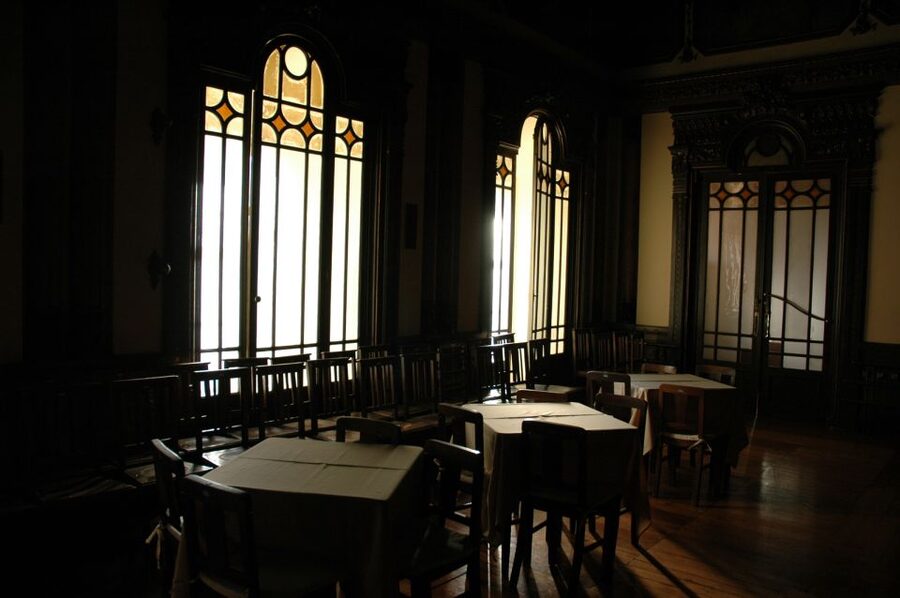
Lisbon’s wartime story also includes European royalty in exile and famous artists, writers, and socialites waiting to travel to the United States. This gives the tour a touch of old-world drama, but it also shows how uneven wartime movement could be.
For some people, Lisbon was a temporary refuge or a route out. For others, it was a place to conduct business, gather information, or enjoy a level of comfort unavailable elsewhere in Europe. The city brought together people who would normally never meet on equal terms.
The tour links this atmosphere to the stories associated with James Bond. Ian Fleming and Graham Greene drew on the world of wartime espionage, and Lisbon’s mix of spies, hotels, exiles, glamorous figures, and uncertain loyalties forms a natural backdrop for that kind of fiction.
You should not book this as a James Bond-themed attraction in the narrow sense. The literary and film connections are part of a larger story about real people and real political pressures. The Bond angle works best as a doorway into the period, not as the entire purpose of the walk.
What the walking route adds to the stories
A three-hour walk gives the guide time to connect separate themes rather than rush through a list of facts. You move through Lisbon while hearing how different people used the city during the war.
The precise street sequence is not provided, and the meeting point varies by booking option. That means you should think of the route as a guided story through central Lisbon rather than a fixed collection of named monuments.
The physical movement still matters. A story about an escape route feels different when you are walking through the city instead of hearing it in a classroom. A discussion of exiles and agents gains more force when the guide points out how Lisbon functioned as a place of passage and contact.
The pace appears to be manageable for many people. Claire described the walk as well paced, and several guides have been praised for keeping the group motivated. Still, this is a real walking tour. Wear comfortable shoes, and do not treat the rain-or-shine policy as a throwaway note.
There is one important timing caution. One booking was reported to last about one hour and forty minutes instead of the advertised three hours. Another experience was adapted for people with hearing and walking impairments, with roughly ninety minutes seated and ninety minutes walking. That flexibility is encouraging, but it also shows that the format can change.
If the full three hours matter to your plans, confirm the expected duration with the provider before setting a tight dinner reservation afterward.
The guides are the heart of the experience
The strongest praise centers on the guides, not on a particular building or photo stop. José is repeatedly described as a strong storyteller who combines local knowledge, humor, and command of the subject. Rita has been praised for passion, cultural context, and thoughtful accommodation. Joana, Filippa, Phillipa, Phillips, and Ze have also received warm feedback for bringing the material to life.
That range of names suggests that the experience depends partly on who leads your departure. This is common with specialist walking tours. A good subject can fall flat if the guide reads a script without responding to the group. Here, the best accounts point to guides who explain, improvise, and discuss.
José’s approach seems especially suited to people who enjoy asking questions. One particularly enthusiastic assessment described him as having no fixed script and being willing to discuss almost anything connected with Lisbon and Portugal.
You do not need to be a serious WWII enthusiast. The tour has enough human drama, political intrigue, and cultural material to hold the attention of a general visitor. But you will get the most from it if you enjoy listening closely rather than racing from one sight to the next.
Private or small group: which format fits you?
The experience is available as a private or non-private tour, with small groups offered. Your choice affects the feel of the afternoon.
A private tour is the better pick if you want to shape the conversation around a specific interest, such as Portugal under Salazar, royal exile, literary connections, or espionage. It also gives you more control over the pace and questions.
A small group can offer good value. One guide-led walk had only two participants and was described as pleasant and easygoing. A small group also makes it easier to hear the guide and follow complicated names and events.
The non-private option may be the sensible choice if you want the subject without paying for exclusive attention. Just remember that the exact meeting point may vary, and the guide may need to balance several interests.
I would choose private if your group contains serious history fans or anyone with mobility needs. I would choose a small group if you want conversation but do not need a custom route.
Is $29 a fair price?
At $29 per person, the tour sits in a reasonable range for a three-hour guided walk, especially if you receive the advertised length and a strong specialist guide. You are paying for interpretation, not admission to a major monument. The value comes from the connections the guide makes between politics, people, literature, and places.
That can be a better use of money than a generic city walk if you have already seen Lisbon’s main sights. Maureen, who was returning to Lisbon, found that the tour offered a fresh way to understand the city. That is a useful clue for repeat visitors: the experience is built around a different layer of Lisbon rather than basic orientation.
For a first visit, the value depends on your priorities. If you want a quick introduction to neighborhoods, viewpoints, and food, choose another walk. If you want a three-hour story about spies, exiles, neutrality, and WWII, $29 is easy to justify.
The main value risk is duration. Since one booking lasted less than the advertised three hours, ask about the expected schedule before booking if every minute matters to you.
Who should book this Lisbon walking tour?
I would recommend it to:
- People interested in WWII, espionage, and political history
- Repeat visitors seeking a different view of Lisbon
- Readers who enjoy Ian Fleming or Graham Greene
- Anyone curious about Portugal’s neutrality and Salazar’s dictatorship
- Visitors who prefer stories and discussion to standard monument tours
- Small groups that want a specialist guide without a full private booking
I would be more cautious if you dislike walking, want a highly visual sightseeing tour, or have no interest in 20th-century history. The subject is the point. There is not much benefit in booking it and hoping the tour turns into a general introduction to Lisbon.
The tour is also not ideal for a rigid schedule unless you verify both the meeting point and duration. The rain-or-shine policy means you should bring suitable clothing as well as comfortable shoes.
Final verdict: a smart choice for curious Lisbon visitors
Book this tour if you want Lisbon to feel less like a postcard and more like a place where difficult choices were made. The best elements are the unusual WWII focus, the links to espionage fiction, and guides who can turn names and events into memorable stories.
I especially like the combination of glamour and unease: royal families in exile alongside refugees, movie stars alongside agents, and neutral diplomacy alongside Nazi gold. That mix gives the walk substance without losing its entertainment value.
Before you commit, confirm the meeting point, ask whether your option is private or shared, and check that the expected duration is close to three hours. If those details work for you, this is a strong pick for history-minded visitors and one of the more original guided walks in Lisbon.
FAQ
Where does the Lisbon City of Spies Guided Walking Tour meet?
The meeting point may vary depending on the option you book. Check the details for your selected tour before setting out.
How long does the tour last?
The advertised duration is three hours. One booking was reported to last about one hour and forty minutes, so confirm the expected timing if your schedule is tight.
How much does the tour cost?
The listed price is $29 per person.
What languages are available?
The tour is offered in English and Portuguese.
Is the tour private or shared?
You can choose between a private tour and a non-private option. Small groups are also available.
What subjects does the tour cover?
The tour covers spies, double agents, refugees, Nazi gold, the Garbo story, royal families in exile, Portuguese neutrality, Salazar’s dictatorship, escape routes, famous movie stars, Allied ship convoys, and RAF and Luftwaffe battles on Portugal’s coast.
Does the tour run in bad weather?
Yes. The tour takes place rain or shine.
What should I bring?
Bring comfortable shoes, since the experience is a walking tour.
Can I cancel for a full refund?
You can cancel up to 24 hours in advance for a full refund. You can also reserve now and pay later.
Just added around Lisbon
- Tuk tuk tour in Belem area★ 5.0 · 46 reviews
- Lisbon: Private Tour Sintra, Cabo da Roca and Cascais★ 4.9 · 46 reviews
- Private Sintra Tour from Lisbon★ 5.0 · 46 reviews
- Premium Porto Private Day Trip from Lisbon with Local Guide★ 5.0 · 47 reviews
- 4 Hours Tuktuk City Tour in Lisbon★ 5.0 · 47 reviews
- Small Group Pena Palace, Sintra, Regaleira and Cascais★ 5.0 · 47 reviews
- From Lisbon: Tour to Fátima, Batalha, Nazaré and Óbidos★ 4.6 · 47 reviews
- Private 4 hour Sintra Tour★ 5.0 · 47 reviews
City Tours, compared.
Lisbon City Center Tour – The Unmissable Lisbon
Read our review →
Daytime/Sunset/Night City Sailboat Tour with Drink
Read our review →
City Highlights 3-Hour Guided Electric Bike Tour
Read our review →


Browse the lists this tour appears in