
Reviewed · HISTORICAL TOURS
Lisbon Essential Walking Tour: History, Stories and Lifestyle
Lisbon reveals itself one hill at a time. This three-hour walking tour links Bairro Alto, Baixa, Alfama, major churches, city viewpoints, and a Tram 28 ride, giving first-time visitors a useful map of the city’s past and present. I especially like the strong mix of big sights and local stories, plus the coffee and pastry stop. The main catch is simple: this is a demanding walk, with hills, steps, and close to four miles underfoot.
I also like the small group limit of 15 people and the chance to ask a local guide for practical advice about restaurants, fado, and getting around. Guides such as Ricardo, Beatrice, Paulo, Ana, and Sofia have received especially warm praise for making Lisbon’s story clear and personal. Still, the experience can suffer if meeting details are not handled well, and one poor rating noted unclear explanations.
In This Review
- Key things to know before booking
- Why this three-hour route works so well
- Bairro Alto begins the city story
- São Pedro de Alcântara delivers the first great view
- San Roque hides a spectacular interior
- Carmo connects architecture with revolution
- Santa Justa is impressive, but check what is included
- Baixa adds a welcome coffee and pastry break
- Praça da Figueira sets up the tram ride
- Portas do Sol opens the door to Alfama
- Alfama is the most atmospheric walking section
- What the guides add to the experience
- The walking conditions and group size
- Who should book this Lisbon tour?
- Should you book the Lisbon Essential Walking Tour?
- FAQ
- How long does the Lisbon Essential Walking Tour last?
- What sights are included?
- Is the Tram 28 ride included?
- Is food included?
- How large is the group?
- Can I cancel for a full refund?
Key things to know before booking
- Close to four miles of walking: Expect hills, uneven streets, and plenty of time on your feet. Comfortable shoes and water are essential.
- A smart first-day route: You cover several central neighborhoods before reaching Lisbon Cathedral, so you can get your bearings quickly.
- Churches tell the story: San Roque and Carmo offer very different views of Lisbon’s art, politics, and disasters.
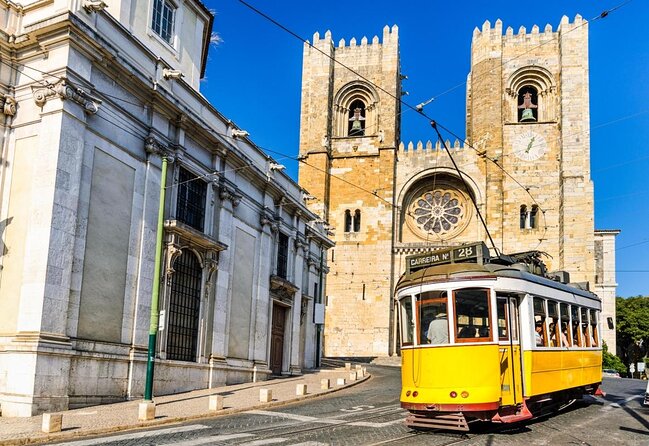
- Tram 28 is part of the experience: The included tram ride takes you from the Baixa area toward Portas do Sol and Alfama.
- Coffee and cake are included: A short café break gives your feet a rest and adds a local food stop.
- Small group, local storytelling: The maximum group size is 15, which should make questions and conversation easier.
Why this three-hour route works so well
Lisbon is not a city you understand from one central square. Its neighborhoods sit on different hills, and each one carries a different part of the city’s story. This tour connects those pieces in a logical direction, beginning in Bairro Alto and finishing near Lisbon Cathedral in Alfama.
That route matters. You are not simply ticking off isolated monuments. You see how Lisbon changed after the earthquake of 1755, walk through areas shaped by religious orders, pass the site of the 1974 Carnation Revolution, and finish in one of the city’s oldest districts.
The cost is $30.25 per person. For three hours with a professional guide, an included tram ride, coffee and cake, and insurance, I consider that a fair price. You are paying mainly for context and navigation. Lisbon’s steep streets and winding lanes can be confusing, especially on a first visit, so a good guide can help you understand what you are seeing rather than leaving you with a pile of disconnected photographs.
The strongest part of the experience is the guides. Ricardo is repeatedly praised for his clear explanations and enthusiasm, while Beatrice is singled out for being attentive, organized, and helpful with city tips. Paulo is described as friendly and funny, and Ana is praised for knowing the back streets and keeping the tour interesting. Your guide will vary, but the company has several guides who clearly know how to bring the city to life.
More History Tours in Lisbon
- Lisbon: History, Stories and Lifestyle Walking Tour
★ 4.8 · 10,902 reviews - Lisbon: Live Fado Show with Port Wine in Historic Center
★ 4.7 · 4,166 reviews - Lisbon: Fado Show with Wine in a Historic Venue
★ 4.8 · 1,294 reviews
Bairro Alto begins the city story
The starting point is five-centuries-old Bairro Alto, a neighborhood better known by many visitors for nightlife than for its place in Lisbon’s development. Here, the guide introduces the city’s changing shape and explains how the 1755 earthquake altered daily life and the built environment.
After the disaster, families from Baixa and other parts of Lisbon moved into or helped renew this area. That gives the opening stop a useful purpose. You begin with a lesson in how Lisbon recovered instead of jumping straight into grand monuments.
The stop lasts about 15 minutes and does not require an admission ticket. It is more about orientation and storytelling than entering a major attraction. Pay attention here, because the later churches, plazas, and streets make more sense once you understand how the earthquake affected the city.
São Pedro de Alcântara delivers the first great view
From Bairro Alto, you pass through the garden at Miradouro de São Pedro de Alcântara. This is one of the tour’s best early pauses, with broad views over Baixa and across the Tagus to the south bank.
Lisbon’s hills are part of its appeal, but they also explain why the city can feel hard to read. A viewpoint lets you see the pattern all at once: the lower central district, the river, and the rise toward the castle and eastern neighborhoods.
You have about 15 minutes here. That is enough for photographs and a quick look around, though not a long relaxed stop. If views are a priority for you, this is one of the most rewarding parts of the route.
San Roque hides a spectacular interior
The Igreja de São Roque is a classic Lisbon surprise. From outside, the church has a restrained, almost plain façade. Inside, it becomes a display of gilding, tiles, and paintings in Mannerist and Baroque styles.
The church was built by the Jesuits and was one of the first Jesuit churches in Portugal, as well as one of the earliest in the world. That makes the stop useful for more than decoration. Your guide can connect the building to the spread and influence of the Jesuits, while the interior gives you a close look at the visual language of Catholic Portugal.
The visit lasts around 20 minutes and admission is listed as free. That is a good amount of time for the guide to point out details you could easily miss on your own. The contrast between the exterior and interior also makes this one of the most memorable stops.
More Walking Tours in Lisbon
- Best of Lisbon Small-Group Guided Walking Tour
★ 5.0 · 4,869 reviews - Lisbon: Food and Wine Small Group Walking Tour
★ 4.9 · 4,082 reviews - Best of Lisbon Walking Tour: Rossio, Chiado & Alfama
★ 4.9 · 2,700 reviews - Age of Discoveries Walking Tour in Belém
★ 5.0 · 1,513 reviews
Carmo connects architecture with revolution
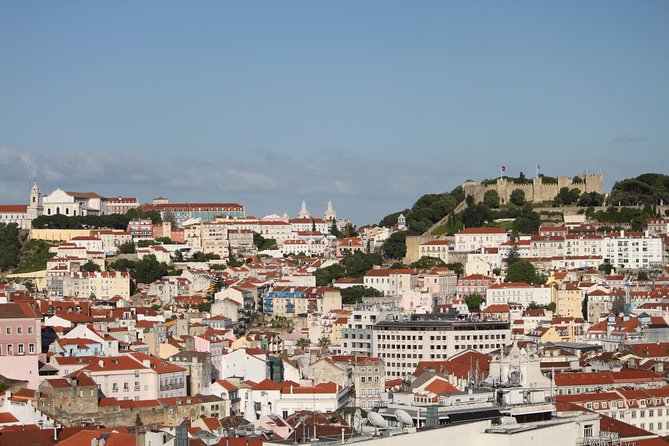
Heading downhill, the route reaches the Carmo convent and church. The Gothic remains are visually striking, but the site also carries modern political importance. The Carnation Revolution began here in 1974, ending almost 50 years of dictatorship in Portugal.
That combination is one reason I like this tour. You are not hearing only about kings, churches, and earthquakes. You also get a direct link to recent Portuguese history and the political change that shaped the country you see today.
The stop takes about 20 minutes. The Carmo area is also a natural place to slow down and listen, since the story has real weight. Your guide may explain the events in different ways, but guides praised on this route, including Ricardo and Beatrice, are known for connecting major events to understandable personal stories.
Santa Justa is impressive, but check what is included
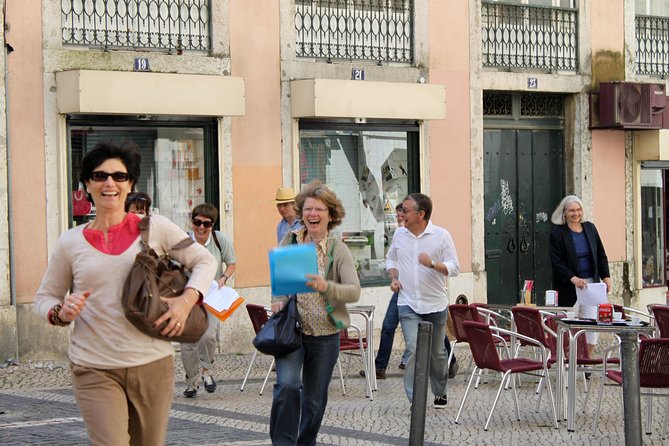
The Santa Justa elevator is one of Lisbon’s most recognizable structures. Built in the Gothic Revival style, it rises above the Baixa streets and offers one of the city’s best viewpoints.
The tour gives you about 15 minutes here. The elevator’s admission is not included, so do not assume the tour price covers a ride or access to every viewing area. The itinerary brings you to the monument, while any additional paid entry is your responsibility.
Even from street level, the structure is worth seeing. Its vertical design feels unusual in a city of tiled façades and narrow lanes. This is also a good point to understand the relationship between Lisbon’s upper and lower districts. The city’s famous lifts and trams are not just tourist decorations. They help connect hills that would otherwise require a serious climb.
Baixa adds a welcome coffee and pastry break
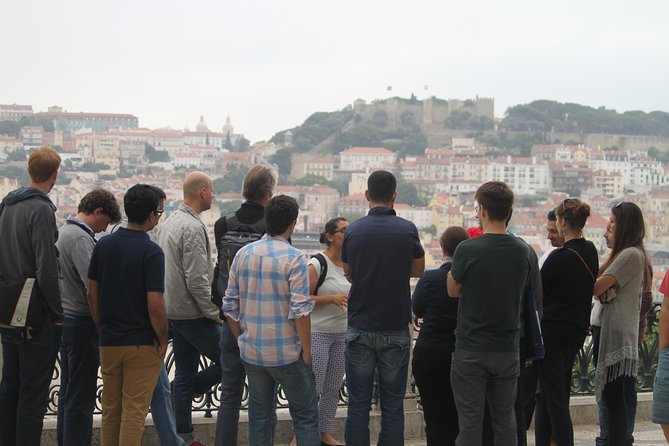
The route then moves into Baixa, the central district rebuilt after the earthquake. This is the most formal part of the city, with broad streets and a more regular plan than the older hill neighborhoods.
A coffee and pastry stop at a local café is included and lasts about 15 minutes. Several people have singled out this pause as a particularly nice touch, and I can see why. Three hours of walking through Lisbon’s hills calls for a break, and the pastry adds a small taste of everyday local life without turning the tour into a food outing.
The exact café experience can vary, but the stop is associated with coffee and a Portuguese pastry, including pastéis de nata in some tour experiences. You should not count on a full meal. Other food and drinks are not included, so bring water and plan another meal afterward.
Praça da Figueira sets up the tram ride
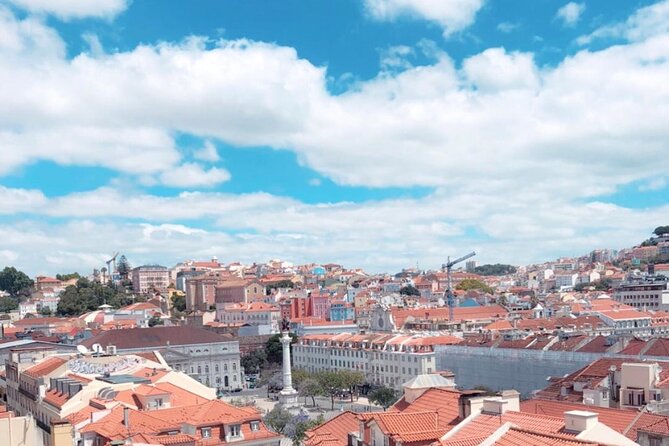
After the café break, the tour continues through Baixa and reaches Praça da Figueira. This open square is part of the central city route and acts as a transition between the walking portion and the tram trip.
The included tram ride goes uphill from the castle area toward Portas do Sol. That short ride is valuable because it changes your pace and gives your feet a rest while showing how Lisbon’s public transport works in the old quarters.
This is not a private tram or a reserved sightseeing vehicle. You are using the city tram as part of the route, so conditions can vary. The ride is a useful local experience, but it may feel less comfortable if the tram is crowded. Guides who know the system well can make the difference, particularly when explaining where you are going and what you will see next.
Portas do Sol opens the door to Alfama
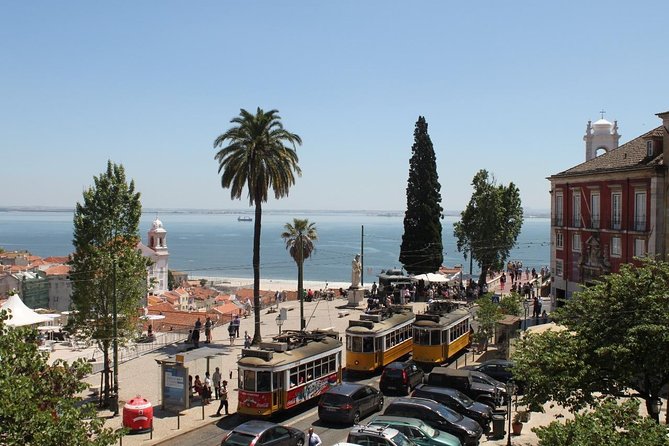
At Portas do Sol, the city spreads out below you again. From here, you can see or learn about the Monastery of São Vicente de Fora, the National Pantheon, and Alfama running downhill toward the Tagus.
This is one of the tour’s strongest changes in mood. Baixa feels planned and open. Alfama is older, tighter, and more irregular. Your guide helps you read that contrast as part of Lisbon’s story rather than as a confusing jumble of streets.
The view is also a good reason to keep your camera ready. You get another angle on the city and river, with Alfama’s rooftops leading the eye toward the water. The stop is about 20 minutes, including time for photographs and questions.
Alfama is the most atmospheric walking section
Alfama is one of Lisbon’s oldest and most traditional neighborhoods. Its narrow streets lead through a district known for fado houses and the festivals of local saints, especially St. Anthony.
This is where the tour feels most connected to daily culture. The lanes are not laid out for quick sightseeing, and you should expect a slower pace. The guide can explain the origins of fado and point out how the neighborhood’s music, celebrations, and old streets fit together.
Do not expect a flat stroll. The tour has already climbed and descended several hills, and Alfama adds more uneven ground. One especially positive account describes walking about four miles over the full three hours. That is why comfortable shoes and water are not optional extras here.
The end point is Lisbon Cathedral, or Sé, built in 1150, three years after Lisbon was retaken from the Moors. Centuries of alterations have left the cathedral with a blend of architectural styles. It is a fitting finish because the building brings together the city’s medieval foundations and its later changes.
What the guides add to the experience
The company assigns different guides, so the tone will not be identical each time. The strongest guide comments focus on clear history, personal stories, humor, and practical advice.
Ricardo receives especially strong praise. He is described as a professor and as someone who can explain Lisbon’s past with unusual depth while keeping the group interested. Beatrice is praised for caring about the whole group, giving useful navigation tips, and recommending restaurants and places to hear fado.
Paulo is praised for warmth, humor, and stories that work well for families of different ages. Ana receives credit for finding back alleys and making the historic center feel less predictable. Sofia is noted for her passion and command of Portuguese history, while Lucie is praised for combining information with time for photographs and questions.
That range is important. A tour like this depends heavily on the person holding the guidebook and leading the conversation. Most of the praise points to lively, articulate guides, but one lower rating found the narration unclear and felt that the tram was the main enjoyable part. I would book this expecting a good guide, while remembering that the experience can vary by assignment.
The walking conditions and group size
The maximum group size is 15 people. That is small enough for questions and personal attention without the cost of a private tour. It also makes it easier for the guide to keep the group together in narrow streets.
The route is not suitable for anyone who has serious difficulty walking. You will tackle hills, cobbled or uneven streets, and several neighborhoods over three hours. The tour information says most people can participate, and service animals are allowed, but it does not promise a step-free route.
I would wear shoes with good grip and carry water. Give yourself extra energy for the final part in Alfama, when the route may feel more tiring than it did at the start. If you are arriving in Lisbon after a long flight, booking this for your first full day may be wiser than squeezing it in immediately after landing.
Who should book this Lisbon tour?
This is best for first-time visitors who want a clear introduction before exploring independently. It suits people who enjoy city history, viewpoints, local neighborhoods, and a guide who can answer questions along the way.
It also works well for families with older children and teenagers, especially if you get a guide with Paulo’s friendly style. The coffee break and tram ride help break up the walking, while the churches, revolution story, and fado background give the route variety.
You may want something else if your main goal is museum time, a relaxed food tour, or a private schedule. Santa Justa admission is not included, other food and drinks cost extra, and the walking distance is substantial. The tour also does not include transfers to or from the meeting point, so you need to arrange your own way there.
The tour is offered in English, with other language options available when selected during booking. Confirmation is normally sent at booking, though bookings made within 18 hours of departure are subject to availability. Free cancellation is available up to 24 hours before the start time, but changes or cancellations inside that window are not refunded.
Should you book the Lisbon Essential Walking Tour?
Yes, if you want to understand Lisbon quickly and do not mind hills. At $30.25, the combination of a local guide, tram trip, café stop, and small group offers solid value, especially on your first day in the city.
Book it early if your dates are fixed, since it is commonly reserved well ahead of time. Choose this route for context, viewpoints, and practical orientation, not for a leisurely pace. Wear sensible shoes, bring water, and ask your guide for restaurant and fado suggestions before the tour ends.
If you want a short, useful introduction to Lisbon that connects Bairro Alto, Baixa, and Alfama in one outing, this is a strong choice. Just remember that Lisbon’s charm comes with inclines.
FAQ
How long does the Lisbon Essential Walking Tour last?
The tour lasts approximately three hours.
What sights are included?
The route includes Bairro Alto, Miradouro de São Pedro de Alcântara, Igreja de São Roque, Igreja do Carmo, the Santa Justa elevator area, Baixa, Praça da Figueira, Alfama, and Lisbon Cathedral.
Is the Tram 28 ride included?
Yes. The tram trip is included in the tour price.
Is food included?
Coffee and cake are included during a short café break. Other food and drinks are not included.
How large is the group?
The tour has a maximum of 15 participants.
Can I cancel for a full refund?
Yes. You can cancel up to 24 hours before the experience starts for a full refund. Cancellations or changes made less than 24 hours before the start time are not accepted or refunded.
More Guided Walks
- Sintra & Cascais Day Tour with Pena Palace Entry and Gardens Walk
★ 5.0 · 962 reviews - Lisbon Roots – Small group Food & Culture Walking Tour w/tastings
★ 5.0 · 910 reviews - Lisbon: Starter Walking Tour to the highlights in German
★ 4.9 · 781 reviews - Lisbon Tram No. 28 Ride & Walking Tour
★ 4.1 · 766 reviews
More Heritage Sites and Old Towns
- Explore Lisbon by Tuk Tuk: History and Viewpoints
★ 5.0 · 840 reviews - Lisbon: Daytime or Sunset Boat Cruise with History and Wine
★ 4.9 · 819 reviews - Private Tuk Tuk Tour Through Lisbon’s Historical Streets
★ 5.0 · 734 reviews - Lisbon Sunset Sailing with Portuguese Wine and History
★ 5.0 · 668 reviews
Just added around Lisbon
- Central Lisbon E-Bike Tour★ 5.0 · 168 reviews
- From Lisbon: Sintra and Cascais Full-Day Private Tour★ 4.9 · 168 reviews
- Experience the Queen of Fado at Ah Amália Living Experience★ 5.0 · 171 reviews
- Lisbon: 2-Hour Sunset Sailing Tour on Luxury Sailing Yacht★ 4.9 · 171 reviews
- Lisbon – Vinho Verde Wine Premium Boat Experience★ 5.0 · 171 reviews
- Óbidos: Medieval Tales & Secrets Spots Guided Walking Tour★ 4.9 · 171 reviews
- From Lisbon: Small Group Fátima & Little Shepherds Town Tour★ 4.8 · 171 reviews
- Horse Riding on the Beach★ 4.5 · 171 reviews
Historical Tours, compared.
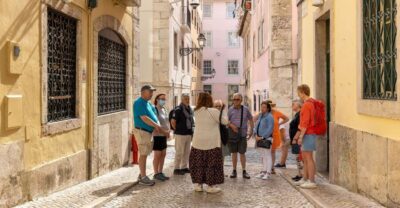
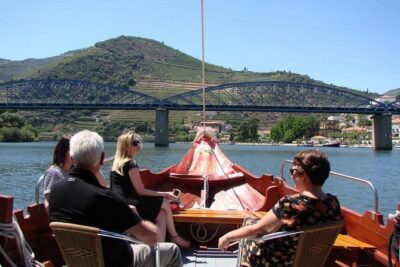
Historical Sites, Wine Experience, Lunch & Cruise
Read our review →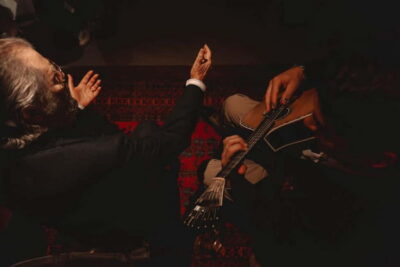
Live Fado Show with Port Wine in Historic Center
Read our review →

Browse the lists this tour appears in