
Reviewed · WALKING TOURS
Lisbon: Jewish Quarter Guided Walking Tour
Lisbon’s Jewish story is written in fragments. This two-hour walk brings those fragments together across Praça do Comércio, Alfama, Baixa, and Rossio, linking medieval Jewish life with forced conversions, the 1506 massacre, and the later passage of Jewish refugees through Lisbon. I especially like the small group of up to 10 people and the way the route connects Jewish history to wider Portuguese culture, science, food, and migration. The main consideration is that little physical evidence remains, and the route includes Lisbon’s steep castle-hill streets.
The tour also earns praise for its guides, especially Amber, whose clear explanations and ability to answer detailed questions have made the experience a highlight for many visitors. At $57 per person, it is not Lisbon’s cheapest walk, but the price can make sense if you want a focused history lesson rather than a quick look at monuments. The two-hour limit means the tour covers a lot, so some people may wish for more time on modern Jewish life.
In This Review
- Key points to know before you book
- Starting beside the Tagus at Praça do Comércio
- From Ribeira to the old city’s Jewish story
- Alfama and the narrow streets of the medieval Judiarias
- Baixa and the painful story of forced conversion
- Rossio and the 1506 Pessah massacre
- From medieval communities to twentieth-century refugees
- The people and ideas that make the history memorable
- What $57 means for the value
- Who will get the most from this Lisbon walk?
- Practical details for a smoother walk
- Should you book the Jewish Quarter Guided Walking Tour?
- FAQ
- How long does the Jewish Quarter Guided Walking Tour last?
- Where does the tour start?
- Where does the tour end?
- What language is the tour conducted in?
- How large is the group?
- Are food and drinks included?
- Can I cancel the tour for a refund?
Key points to know before you book
- The route begins at Praça do Comércio, then moves through the old riverside and central districts before reaching Rossio.
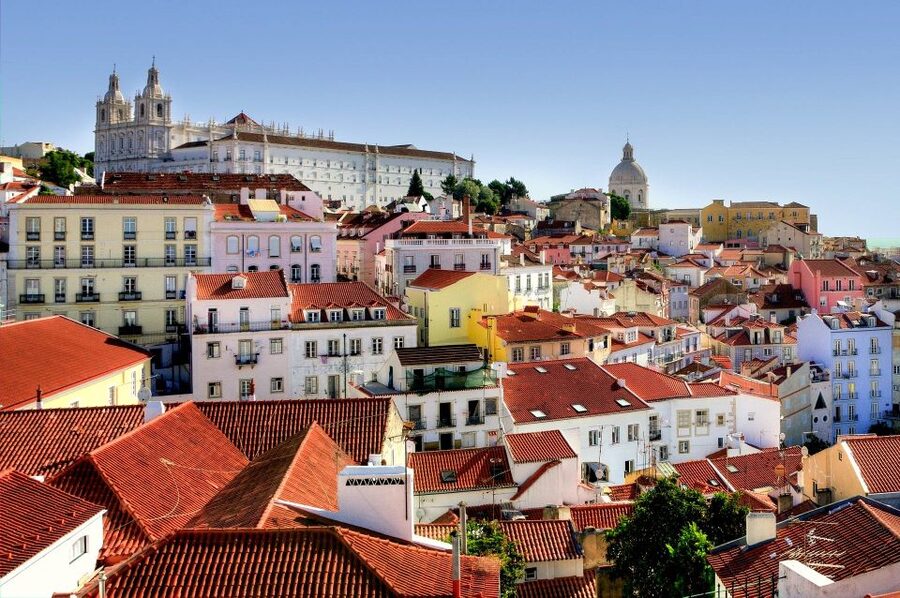
- Alfama’s narrow streets and steep climbs put the medieval Jewish quarter into its physical setting.
- Rossio carries the darkest story, including the 1506 Pessah massacre and the persecution of Lisbon’s Jewish population.
- The tour covers Jewish and New Christian history, including forced conversions and the changes associated with Marquis de Pombal.
- Amber receives especially strong praise for her clear, engaging explanations and command of Portuguese and Jewish history.
- The walk also reaches the modern era, including Jewish refugees passing through Lisbon during the 1940s.
Starting beside the Tagus at Praça do Comércio
Praça do Comércio is a strong place to begin because the tour does not treat Lisbon’s Jewish past as an isolated subject. The opening discussion connects the square and the riverfront with the Exodus, movement, departure, and the long story of Jewish communities spreading from Lisbon to other parts of the Atlantic world, the Mediterranean, Asia, and northern Europe.
You start by the water and then move toward the streets where Lisbon’s political, commercial, and religious life once overlapped. That shift matters. It helps you see Jewish history as part of the city’s daily workings, not as a separate chapter tucked away from the main story.
The guide carries a dark red umbrella or a sign. You should contact the number on your voucher through WhatsApp or iMessage to confirm the meeting details. This is a small practical step, but it is worth doing in a crowded square with several possible meeting points.
From Praça do Comércio, the route passes Praça do Município, Rua do Comércio, Casa dos Bicos, and the Ribeira area. These stops give the guide room to explain the city’s commercial life and the communities that helped shape it.
More Walking Tours in Lisbon
- Lisbon: History, Stories and Lifestyle Walking Tour
★ 4.8 · 10,902 reviews - Best of Lisbon Small-Group Guided Walking Tour
★ 5.0 · 4,869 reviews - Lisbon: Food and Wine Small Group Walking Tour
★ 4.9 · 4,082 reviews
From Ribeira to the old city’s Jewish story
The Ribeira portion adds useful context before the walk turns uphill. Lisbon’s Jewish presence was tied to trade, work, religion, and civic life, so the riverfront is a fitting setting for discussing how people and ideas moved through the city.
You will not simply pause at one preserved synagogue or a clearly marked medieval quarter. The physical remains are limited. Instead, the guide helps you read the city through street patterns, historical locations, and the stories attached to them.
That is one of the tour’s strengths, but also one of its limits. If you want a long list of intact Jewish buildings, this will not provide it. If you enjoy piecing together a past from place names, political changes, and surviving urban clues, the approach is much more rewarding.
The route also includes the Resistance Museum. The museum stop connects the older story of persecution with more recent political history and the movement of people through Portugal during the Second World War. The supplied information does not promise an indoor museum visit or admission, so you should think of this as a historical location on the walking route rather than a separate museum tour.
Alfama and the narrow streets of the medieval Judiarias
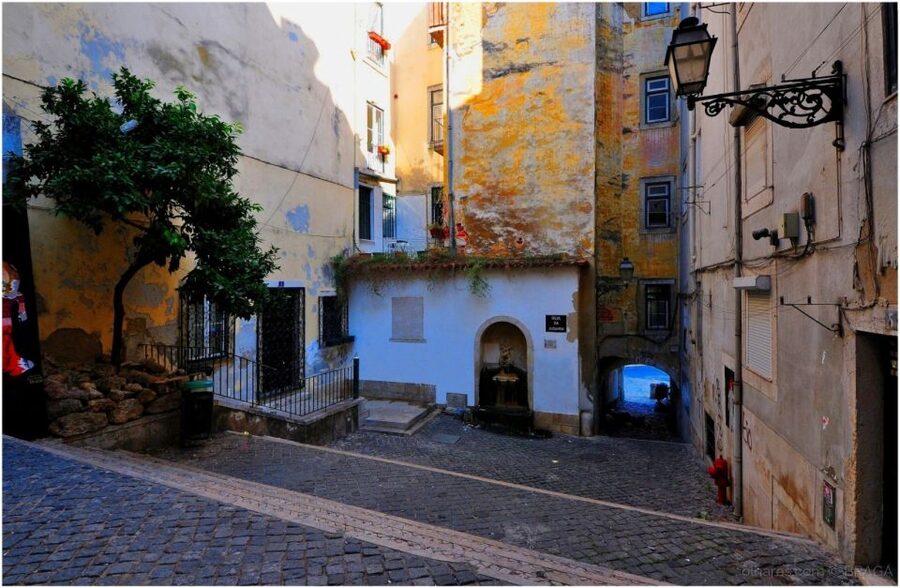
The walk then reaches Alfama, one of the most important areas for understanding medieval Jewish Lisbon. The route explores the former Judiarias, or Jewish quarters, and explains the idea of medieval segregation. The narrow streets make the subject easier to picture than a lecture in a modern square would.
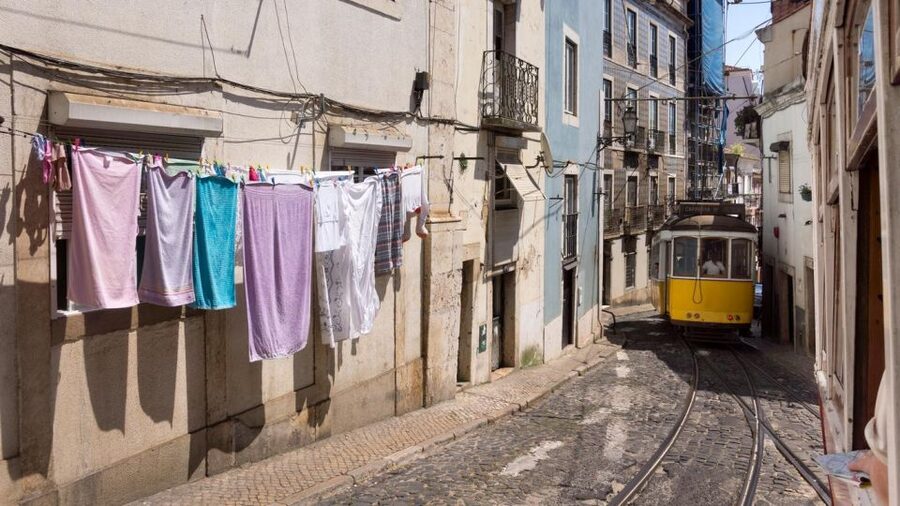
You will walk through an old, hilly part of Lisbon. One visitor specifically advised being ready to climb the steep hills, and that is practical advice. Wear shoes with a firm grip and avoid treating this as a flat promenade. The tour lasts only two hours, but the physical effort can still shape how much attention you have left for the final stops.
The guide’s role is especially important in Alfama because there may be few obvious signs announcing what happened here. Amber is praised for taking people to places they would not have found on their own and for adjusting the route to personal interests. That flexibility can turn a general walk into a more useful one if you have a family connection, research question, or particular interest in medieval Jewish life.
The Alfama section also helps explain how communities lived within boundaries set by the authorities. The subject is not presented as a simple tourist label. It involves questions of residence, religious identity, power, and the pressure placed on Jewish residents as Portugal changed.
Baixa and the painful story of forced conversion
From the older hill districts, the tour moves toward Baixa. Here the emphasis turns to forced conversions and the history of New Christians, the term used for Jews who converted to Christianity, often under pressure.
This is an essential part of the walk because Jewish history in Portugal did not end when official policies changed. Conversion altered public identity, family life, and the way people were treated. The guide places those events within Portuguese history rather than presenting them as isolated religious facts.
Several visitors found the tour particularly strong when it covered both Jewish and Portuguese history. That balance is important for you. A good guide needs to explain not only what happened to Jewish communities, but also how royal decisions, religious institutions, public fear, and political reforms shaped those events.
The route can reach Casa dos Bicos and Rua do Comércio before continuing through the central city. These places help keep the conversation tied to ordinary urban movement. You are walking where business, government, religion, and public life came together, which gives the history a physical scale.
The guide also discusses the later role of the Marquis de Pombal and the eighteenth-century reforms that removed some of the formal divisions between Old and New Christians. The subject adds an unexpected later chapter to the tour. One detailed account found the discussion of King José I and Pombal especially impressive because it showed how Jewish and New Christian history continued into the eighteenth century.
More guided walks:
- Best of Lisbon Walking Tour: Rossio, Chiado & Alfama
★ 4.9 · 2,700 reviews - Age of Discoveries Walking Tour in Belém
★ 5.0 · 1,513 reviews - Sintra & Cascais Day Tour with Pena Palace Entry and Gardens Walk
★ 5.0 · 962 reviews - Lisbon Roots – Small group Food & Culture Walking Tour w/tastings
★ 5.0 · 910 reviews
Rossio and the 1506 Pessah massacre
Rossio is the emotional center of the walk. Here you learn about the 1506 Pessah massacre, one of the darkest episodes in Lisbon’s Jewish history.
The tour does not use the square merely as a scenic stop. It gives the place a historical weight that can be easy to miss when you pass through it on the way to another attraction. The discussion brings together religious tension, public violence, and the vulnerability of a minority community.
This part may feel heavy, and that is appropriate. The tour deals with persecution directly, rather than smoothing the story into a pleasant tale of coexistence. At the same time, the guide places the massacre within the wider sequence of events that includes forced conversion and the changing status of Jewish residents.
Rossio also gives the walk a clear endpoint before it returns to the meeting point. Depending on the exact route and starting arrangement, the final discussion may connect earlier history with Pombal’s reforms and later Portuguese society. The activity ends back at the meeting point, but the supplied information does not specify the exact final street for every departure time.
From medieval communities to twentieth-century refugees
The tour is not limited to the medieval period. It also covers Lisbon’s contemporary Jewish presence and the passage of Jewish refugees through the city in the 1940s.
That modern section is valuable because it prevents the story from ending with expulsion, conversion, or eighteenth-century reform. Lisbon also became part of the twentieth-century story of people trying to cross Europe during the Second World War. The information provided does not promise a full study of wartime refugee routes, so you should expect a concise treatment within a two-hour walk.
The modern section is also where I would most like additional detail. One person specifically wished for more about the current Jewish population and present-day activity. If modern community life matters most to you, ask the guide early in the walk how much time can be given to that subject.
The tour’s broader theme is diaspora. From Lisbon, Jewish families and their descendants became part of communities across the Atlantic, the Mediterranean, Asia, and northern Europe. That outward movement gives the walk a wider reach than a local neighborhood tour. You are learning how one city fits into a much larger story of travel, settlement, survival, and cultural exchange.
The people and ideas that make the history memorable
The guide uses historical figures to help carry the story from one period to another. The focus is not just on dates. You hear about the Jewish community’s influence on Portuguese culture, science, and gastronomy, as well as the political forces that changed its status.
Amber receives the strongest praise in the available feedback. She is described as articulate, personable, clear, and able to keep the group engaged for the full two hours. Several people valued her ability to answer questions, while others appreciated the depth of her explanations and her command of both Portuguese and Jewish history.
That matters in a subject where a polished speech is not enough. You may want to ask about terminology, family names, migration, conversion, or the meaning of a particular location. A guide who can respond thoughtfully makes a major difference, especially when the visible evidence is sparse.
The tour can also be adapted to different time frames and starting points. That does not mean every request is guaranteed, but it gives the experience some flexibility. If you have limited time in Lisbon or want to begin somewhere other than Praça do Comércio, ask about the available arrangement before booking.
What $57 means for the value
At $57 per person, this is a specialist walking tour. You are paying for a live English-speaking guide, a small group capped at 10 participants, and a route that links several Lisbon districts rather than staying on one short street.
The value is strongest if you would otherwise struggle to connect the locations. Praça do Comércio, Alfama, Baixa, Praça da Figueira, and Rossio are easy to visit independently, but the Jewish significance of each place is not always obvious. The guide supplies the links between them.
The price is less compelling if you want a long stop at each site, a food tasting, or entry to an attraction. Food and drinks are not included, and the tour is a walking experience rather than a museum package. You also need to account for the fact that two hours passes quickly when the route includes medieval history, forced conversions, the 1506 massacre, Pombal’s reforms, and twentieth-century refugees.
Small groups improve the value. A limit of 10 people makes it easier to hear the guide and ask questions. In one case, poor weather and the start of Passover resulted in a private-feeling tour for one couple. You should not count on having a private tour, but the small-group format gives you a better chance of personal attention than a large city walk.
Free cancellation up to 24 hours before the tour and the option to reserve now and pay later also reduce the risk of fitting this into a changing Lisbon schedule.
Who will get the most from this Lisbon walk?
I would choose this experience if you want history tied to real streets and if Jewish life in Portugal is a central reason for your interest. It is also a good choice if you want more than the usual castle, tram, and viewpoint tour.
You will get the most from it if you:
- Enjoy listening to political and religious history while walking through old neighborhoods.
- Are comfortable with steep streets around the castle hill and Alfama.
- Want a guide who can answer questions rather than deliver only a fixed script.
- Have an interest in the Jewish diaspora beyond Portugal.
- Prefer a small English-speaking group.
- Can accept that some sites are historical locations with limited visible remains.
I would hesitate if you need a flat route, dislike difficult historical subjects, or want a tour focused mainly on present-day Jewish institutions. The modern section is included, but the main weight falls on medieval, early modern, and wartime history.
Practical details for a smoother walk
The tour lasts two hours, with starting times depending on availability. It begins at Praça do Comércio and ends back at the meeting point. Confirm the meeting details through the WhatsApp or iMessage number connected to your voucher, and look for the dark red umbrella or sign.
The guide speaks English. Food and drinks are not included, so plan those separately before or after the walk. Because Lisbon’s old quarters involve hills and narrow streets, comfortable walking shoes are more important here than stylish footwear.
Ask questions early if you have a special interest. The tour can be tailor-made to different time frames and starting points, and the guide has shown a willingness to add places or subjects when possible. If you want more about today’s Jewish community, say so at the start rather than waiting until the final minutes.
Should you book the Jewish Quarter Guided Walking Tour?
Book it if you want a focused, thoughtful account of Lisbon’s Jewish past and you are willing to walk uphill for it. The strongest reasons are the compact small-group setting, the route through Alfama, Baixa, and Rossio, and Amber’s praised ability to make difficult history understandable and engaging.
Do not book it expecting a preserved Jewish quarter filled with open historic buildings. Much of the experience depends on explanation, context, and careful attention to streets where the evidence is easy to miss. At $57, it is a fair choice for a specialist history walk, especially early in your Lisbon stay, when the route can give meaning to places you later pass on your own.
FAQ
How long does the Jewish Quarter Guided Walking Tour last?
The tour lasts two hours. Starting times depend on availability.
Where does the tour start?
It starts at Praça do Comércio in Lisbon. The guide will have a dark red umbrella or a sign.
Where does the tour end?
The activity ends back at the meeting point.
What language is the tour conducted in?
The live tour guide speaks English.
How large is the group?
The tour is limited to 10 participants.
Are food and drinks included?
No. Food and drinks are not included in the tour price.
Can I cancel the tour for a refund?
Yes. You can cancel up to 24 hours in advance for a full refund. You can also reserve now and pay later.
Just added around Lisbon
- Tuk tuk tour in Belem area★ 5.0 · 46 reviews
- Lisbon: Private Tour Sintra, Cabo da Roca and Cascais★ 4.9 · 46 reviews
- Private Sintra Tour from Lisbon★ 5.0 · 46 reviews
- Premium Porto Private Day Trip from Lisbon with Local Guide★ 5.0 · 47 reviews
- 4 Hours Tuktuk City Tour in Lisbon★ 5.0 · 47 reviews
- Small Group Pena Palace, Sintra, Regaleira and Cascais★ 5.0 · 47 reviews
- From Lisbon: Tour to Fátima, Batalha, Nazaré and Óbidos★ 4.6 · 47 reviews
- DayTrip from Lisbon to Sintra+Cascais PRIVATE TOUR-small groups★ 5.0 · 47 reviews
Walking Tours, compared.
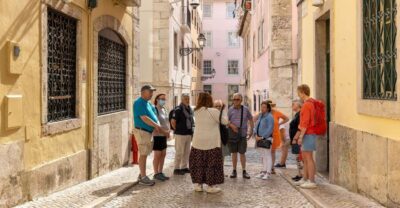
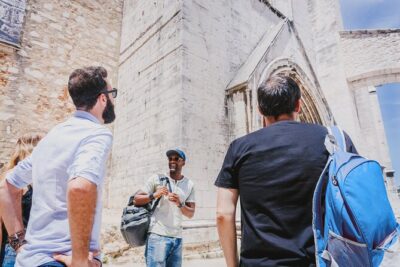
Best of Lisbon Small-Group Guided Walking Tour
Read our review →
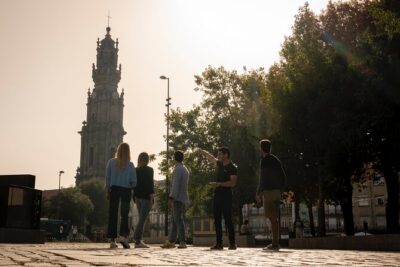
Porto Walking Tour, Lello Bookshop, River Cruise and Cable Car
Read our review →
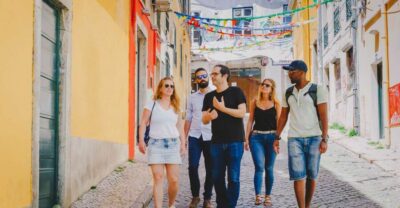
Best of Lisbon Walking Tour: Rossio, Chiado & Alfama
Read our review →
Experience Porto’s Charm: 3-Hour Guided Walking Tour
Read our review →
Enjoy a Guided Levada Walk in the Rabaçal Valley
Read our review →Browse the lists this tour appears in