
Reviewed · WALKING TOURS
Lisbon: Jewish Walking Tour
Lisbon’s Jewish past is easier to miss than to find. This three-hour walk brings that story into view through Alfama, old Jewish quarters, archaeological sites, and the Jewish Cultural Center, with archaeologist Luciano Waldman adding context that ordinary sightseeing often skips. I like the way the tour connects Jewish history with Lisbon’s wider story, and I like that part of the fee supports local cultural work. The main drawback is simple: many Jewish buildings and monuments no longer exist, so this is a history-led walk rather than a parade of preserved landmarks.
Luciano is repeatedly praised for his warmth, humor, and command of the subject. I also like the route’s practical shape: it begins at the Portas do Sol viewpoint and generally works downhill, which can be welcome on Lisbon’s steep streets. Still, heavy tourist traffic can make explanations hard to follow, and the English tour may be challenging if you have difficulty with accents or hearing.
In This Review
- Key points at a glance
- Starting at Portas do Sol with Lisbon below you
- Through Alfama, where the city keeps changing
- Archaeological excavations and the evidence beneath the streets
- Former Jewish quarters and Lisbon’s overlooked story
- The Jewish Cultural Center and the city’s present
- Around Rossio and toward Largo de São Domingos
- What the guide adds to the experience
- Comfort, pace, and who should book
- Is the $90 fee good value?
- Should you book the Lisbon Jewish Walking Tour?
- FAQ
- How long does the Lisbon Jewish Walking Tour last?
- Where does the tour meet?
- Where does the tour finish?
- What language is the group tour conducted in?
- Who guides the tour?
- Is the tour suitable for people with mobility impairments?
- Are food and drinks included?
- Can I cancel the tour for a refund?
Key points at a glance
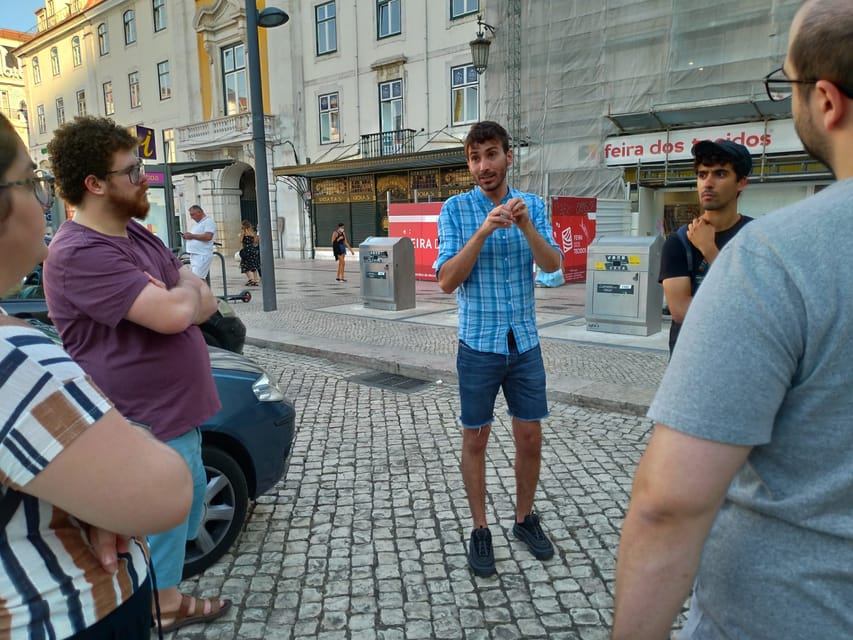
- Begin above Alfama at Portas do Sol: Meet beside the statue of Saint Vicente, with broad views over the Tagus and the old district.
- See Jewish Lisbon through traces and evidence: The route uses streets, excavations, former quarters, and surviving historical locations to reconstruct a past that was largely erased.
- Archaeologist Luciano Waldman leads the walk: His archaeological background helps turn fragments, gaps, and altered streets into a readable story.
- Finish at Largo de São Domingos: This square carries painful and important connections to Portuguese Jewish history.
- Support present-day cultural work: The tour benefits the Jewish Cultural Center and efforts to preserve memory and encourage Jewish life in Lisbon.
- Allow for hills, crowds, and a strong history lesson: Wear comfortable shoes, bring water, and expect serious subject matter alongside Lisbon views.
Starting at Portas do Sol with Lisbon below you
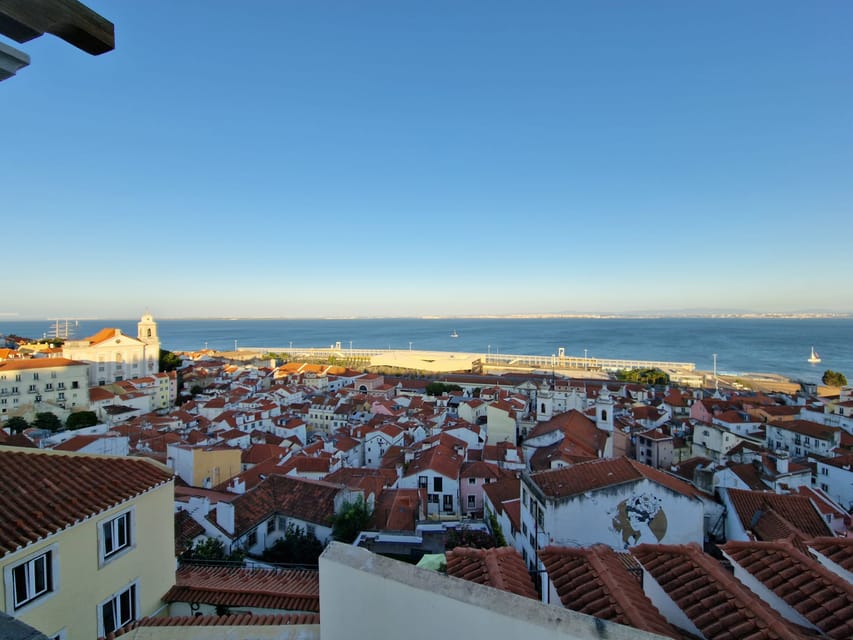
The meeting point is Largo Portas do Sol, one of Lisbon’s finest viewpoints. Look for the statue of Saint Vicente, where you meet the guide. This is a useful place to start because you immediately see two sides of the tour: the postcard Lisbon of tiled roofs and the Tagus, and the dense old streets of Alfama below.
The opening view helps place the Jewish story within the city rather than treating it as an isolated subject. As you look across Alfama, you are beginning a walk through a district shaped by many communities, changes of rule, religious conflict, trade, and reconstruction.
You should arrive ready to walk soon after meeting. Hotel pickup is not included, and food and drinks are your responsibility. Bring water before you start, since the route lasts about three hours and Lisbon’s stone streets can be tiring even when much of the route slopes downhill.
Luciano Waldman is the guide most often associated with this experience. He is described as an archaeologist, a native Portuguese and Hebrew speaker, and an active supporter of Jewish cultural memory in Lisbon. His personal connection to Jewish life adds another layer, since he can discuss not only earlier centuries but also the present-day effort to preserve and revive a local community.
More Walking Tours in Lisbon
- Lisbon: History, Stories and Lifestyle Walking Tour
★ 4.8 · 10,902 reviews - Best of Lisbon Small-Group Guided Walking Tour
★ 5.0 · 4,869 reviews - Lisbon: Food and Wine Small Group Walking Tour
★ 4.9 · 4,082 reviews
Through Alfama, where the city keeps changing
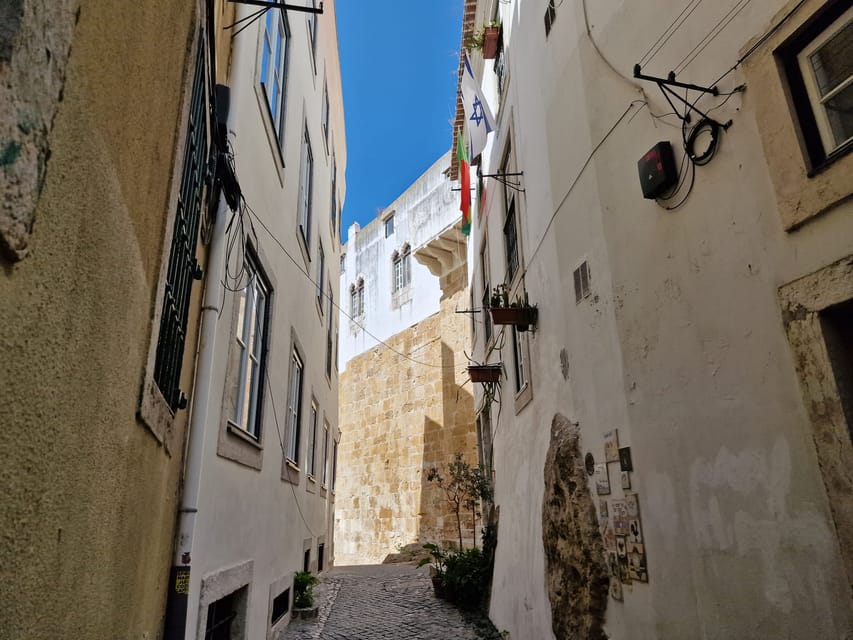
The route passes through Alfama and other parts of Lisbon’s Old Town. Alfama is not a museum set aside for one period. It is a living neighborhood, and that makes the walk more interesting, but it also means you need to watch your footing and share narrow streets with heavy tourist traffic.
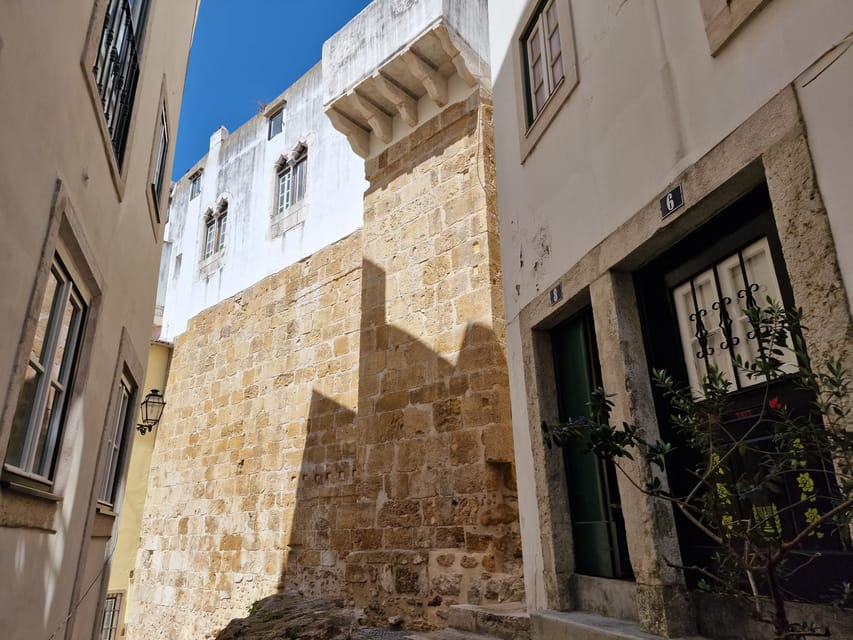
Here, the guide’s role matters. The Jewish sites are not always obvious. Some are marked by archaeology, some by street patterns, and some by historical records rather than intact buildings. You may pause at a place that looks ordinary at first, then learn how it fits into the former Jewish quarters or the city’s wider religious and commercial life.
That approach gives the tour its main value. If you want a string of impressive synagogues and preserved medieval facades, Lisbon may disappoint. Much of the physical evidence has been destroyed, altered, or absorbed into later city life. But if you want to understand how a community lived, contributed, suffered, and was pushed out of public memory, the lack of obvious monuments becomes part of the subject.
The walk also provides a useful introduction to Lisbon beyond Jewish history. Several people who took the tour found that it helped them understand the city in general, not only its Jewish past. The guide explains the surrounding streets and historical setting rather than treating each stop as a disconnected fact.
Archaeological excavations and the evidence beneath the streets
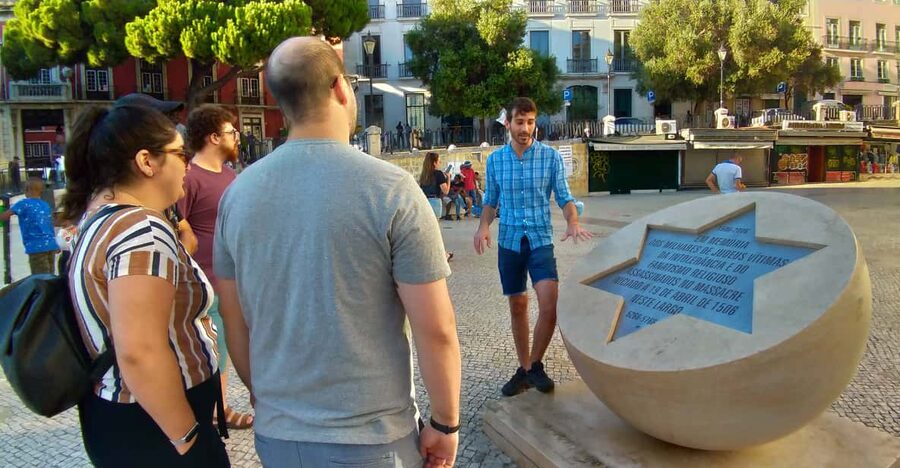
The archaeological stops are likely to be the most distinctive part of the experience. An archaeologist can explain what physical remains reveal, what they cannot prove, and how later construction can hide earlier layers of city life.
You should not expect a large archaeological museum experience during this walk. Instead, the excavations and traces along the route work as clues. Luciano uses them to help you picture places that no longer look the way they once did. That skill was praised often, especially because Lisbon has so few intact Jewish monuments left to view.
This also means the tour rewards attention. You will get more from it if you listen closely and ask questions. The experience is not built around quick photo stops. It asks you to imagine streets, buildings, and neighborhoods that have been changed by time, disaster, persecution, rebuilding, and modern development.
The subject can be painful. The history includes loss, displacement, forced conversion, and the near disappearance of visible Jewish life from Lisbon. The guide presents this seriously, but his friendly and personable manner keeps the walk from becoming stiff or academic. Several people found his humor and warmth helpful during a difficult story.
Former Jewish quarters and Lisbon’s overlooked story
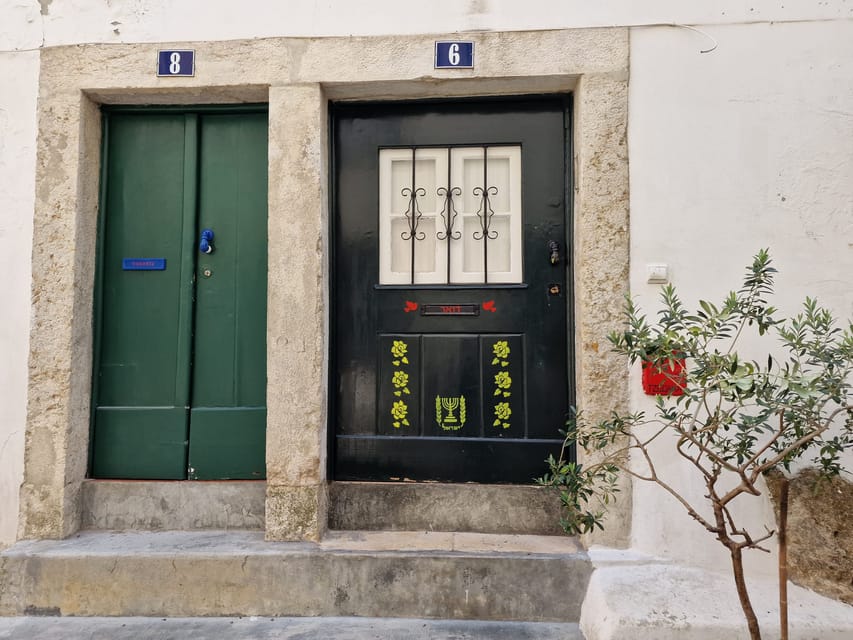
One of the tour’s central aims is to show where Lisbon’s Jewish quarters once were. You may walk through areas that offer few clear signs today, which is exactly why an informed guide is useful.
Luciano explains the difference between the former neighborhoods and their present appearance. This can be more revealing than seeing a single surviving monument. You learn how a community was connected to the city, where Jewish life was located, and why the modern streets do not immediately announce what happened there.
The tour also places Portugal within a wider Jewish story that reaches beyond Lisbon. The subject may include Portugal, Spain, North Africa, and the movement of people, ideas, and family lines across those regions. The time span is large, with the guide presenting roughly 2,500 years of history in a few hours.
That is a lot to cover. The benefit is breadth and connection. The tradeoff is that some topics cannot receive the same attention as others. If you already have a strong academic background in Iberian Jewish history, you may want to use the walk to ask focused questions rather than expect a full scholarly treatment of every period.
For most visitors, the wide view works well. The guide makes the past easier to follow by linking large historical events to streets and places in front of you. You are not simply hearing about Jewish Lisbon in the abstract. You are standing where parts of that story unfolded.
More guided walks:
- Best of Lisbon Walking Tour: Rossio, Chiado & Alfama
★ 4.9 · 2,700 reviews - Age of Discoveries Walking Tour in Belém
★ 5.0 · 1,513 reviews - Sintra & Cascais Day Tour with Pena Palace Entry and Gardens Walk
★ 5.0 · 962 reviews - Lisbon Roots – Small group Food & Culture Walking Tour w/tastings
★ 5.0 · 910 reviews
The Jewish Cultural Center and the city’s present
The Jewish Cultural Center is an important stop because this experience is not only about what has disappeared. The center represents ongoing work to preserve Jewish memory and support Jewish life in Lisbon today.
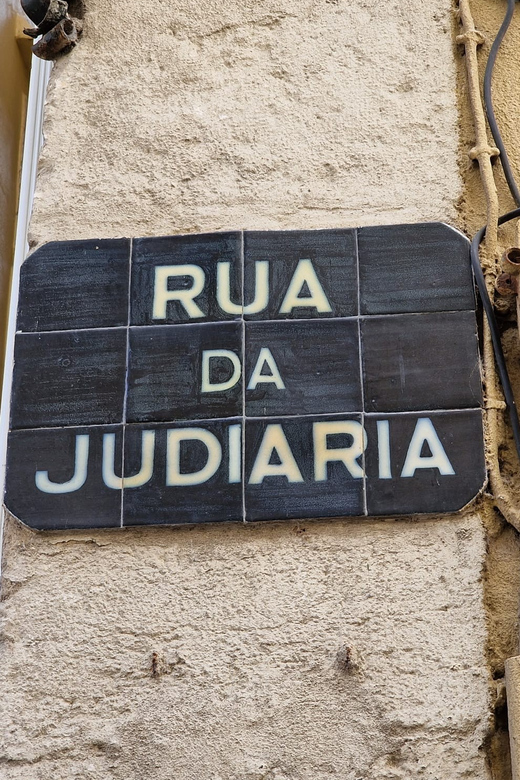
That present-day connection is one of the tour’s strongest features. You hear about efforts to honor the past while rebuilding a visible community in the city. The experience provider, Jewish Cultural Center Rua da Judiaria, also gives the tour a direct local purpose. Your fee is not only paying for a guide and a walk. It helps support cultural work tied to remembrance and community life.
This makes the $90 price easier to assess. It is not cheap for a three-hour walking tour, especially when food, drinks, and transportation are not included. But you are paying for a specialist guide, a small-scale cultural experience, liability and personal accident insurance, and support for a local institute rather than a generic route through central Lisbon.
Value depends on your priorities. If you want the lowest-cost way to see Lisbon’s main sights, this is not the right purchase. If you care about Jewish heritage, archaeology, local cultural preservation, and a guide-led interpretation of places you might otherwise pass without noticing, the fee is more defensible.
Around Rossio and toward Largo de São Domingos
The route continues through the Old Town and includes areas around Rossio station. This section helps connect the Jewish story with some of central Lisbon’s busiest public spaces. The contrast can be striking: the city moves quickly around you, while the guide points out memories that are easy to overlook.
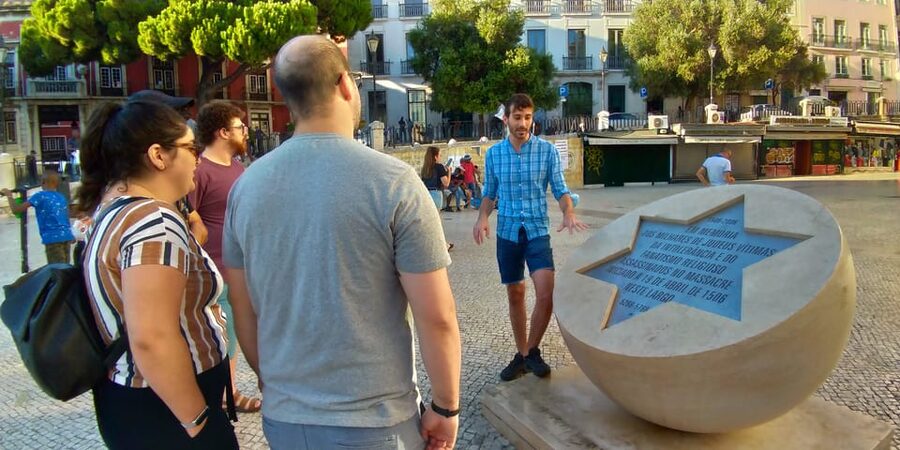
The tour ends at Largo de São Domingos, a place of major importance to Portuguese Judaism. Finishing here gives the experience a serious final note. It is not simply a scenic square where the guide says goodbye. It carries historical weight and brings the walk back to the themes of memory, loss, and the question of how cities choose what to remember.
You should expect the ending to be reflective rather than cheerful. That is appropriate for the subject. The tour’s purpose is not to soften difficult history, but to make it visible and understandable.
Because the walk ends in the central Old Town, you can continue sightseeing afterward. The tour does not include return transportation, so plan your next stop from Largo de São Domingos. Since the route begins at Portas do Sol, think about how you will reach the starting point before booking. You need to make your own way there.
What the guide adds to the experience
The guide is the main reason to book this particular walk. Luciano Waldman is praised for presenting complex material in a clear, engaging way and for adjusting the conversation to the group. One person who booked alone received what became a personal tour, while another small group appreciated the chance to ask questions and exchange ideas.
Group size is not specified, so you should not assume a private tour or a guaranteed tiny group. Still, the available feedback suggests that the guide works well with small groups and can adapt when numbers are low.
His archaeological training is useful in a city where the evidence is incomplete. He can help you understand a street, excavation, or altered building as part of a larger story. His work in preserving Jewish memory also gives the walk a clear sense of purpose.
There is one communication point to consider. The group tour is conducted in English, and the guide may have a slight accent. The accent was not a problem for most people, but one person found it difficult to follow. If you have hearing impairments, crowded streets may make the explanations harder to catch. Ask in advance about a tour in Hebrew, Spanish, or Portuguese if one of those languages would help you.
Comfort, pace, and who should book
Comfortable shoes are essential. Lisbon’s Old Town has steep streets, uneven paving, and busy pedestrian areas. Even with a route that may spend much of its time going downhill, you should be prepared for three hours on foot.
The tour is not suitable for people with mobility impairments. It is also less suitable if you want a relaxed sightseeing outing with frequent pauses for food or shopping. Food and drinks are not included, so plan refreshments before or after the walk.
I would recommend this experience to:
- People researching family connections to Portuguese or Iberian Jewish communities
- Visitors interested in Jewish history, archaeology, and cultural preservation
- First-time Lisbon visitors who want historical context alongside Old Town sightseeing
- Travelers who prefer a serious, guide-led experience over a checklist of famous sights
- Anyone who wants to support a local cultural institute while learning about Lisbon
I would be more cautious if you need fully accessible streets, prefer tours in another language without advance arrangements, or mainly want preserved Jewish buildings. The experience is built around interpretation and memory. It cannot replace a visit to a city with a large number of intact historic Jewish sites.
Is the $90 fee good value?
At $90 per person, this is a premium walking tour. The three-hour length helps, but the real question is what you are buying.
You are paying for a guide with archaeological training, a focused subject, a route through places that are easy to miss, and a direct connection to the Jewish Cultural Center. You also receive liability and personal accident insurance. You do not receive hotel pickup, meals, drinks, or a private vehicle.
I think the price works best for someone who considers cultural purpose part of the value. The tour supports local efforts to preserve Jewish memory and encourage Jewish life in Lisbon. That gives your spending a local benefit beyond the immediate service.
The 4.9 rating from 96 reviews also suggests a consistently strong experience, especially in the guide’s presentation. The repeated praise is not for grand scenery or a long list of surviving buildings. It is for Luciano’s preparation, passion, personal manner, and ability to make absent places understandable.
Should you book the Lisbon Jewish Walking Tour?
Book it if you want to understand Lisbon’s Jewish past rather than simply photograph Jewish monuments. You will see views, streets, excavations, former quarters, and important public places, but the lasting value comes from learning how to read what is missing.
I would especially choose this tour early in a Lisbon visit. It can give you a stronger sense of the Old Town and help you notice details on later walks. Bring water, wear solid shoes, and allow yourself time to listen.
Skip it if mobility is a serious concern, if you need a fully accessible route, or if you expect a large collection of intact Jewish buildings. For everyone else with a real interest in history and cultural memory, the combination of archaeology, local advocacy, and a highly praised guide makes this one of Lisbon’s more meaningful specialist walks.
FAQ
How long does the Lisbon Jewish Walking Tour last?
The tour lasts three hours. Some experiences may run slightly longer if the guide continues answering questions, but the stated duration is three hours.
Where does the tour meet?
The meeting point is Largo Portas do Sol, beside the statue of Saint Vicente. The tour does not include hotel pickup.
Where does the tour finish?
The route ends at Largo de São Domingos, a location of major historical importance to Portuguese Judaism.
What language is the group tour conducted in?
The group tour is conducted in English. Tours in Hebrew, Spanish, or Portuguese may be possible if you request one in advance.
Who guides the tour?
The guide most often associated with the experience is Luciano Waldman, an archaeologist and native speaker of Portuguese and Hebrew. He may have a slight accent when speaking English.
Is the tour suitable for people with mobility impairments?
No. The experience is listed as unsuitable for people with mobility impairments. The route includes Lisbon’s Old Town streets, so comfortable shoes are recommended.
Are food and drinks included?
No. Food and drinks are not included. You should bring water for the walk.
Can I cancel the tour for a refund?
Yes. You can cancel up to 24 hours in advance for a full refund. You can also reserve now and pay later, subject to the booking terms.
Just added around Lisbon
- Tuk tuk tour in Belem area★ 5.0 · 46 reviews
- Lisbon: Private Tour Sintra, Cabo da Roca and Cascais★ 4.9 · 46 reviews
- Private Sintra Tour from Lisbon★ 5.0 · 46 reviews
- Premium Porto Private Day Trip from Lisbon with Local Guide★ 5.0 · 47 reviews
- 4 Hours Tuktuk City Tour in Lisbon★ 5.0 · 47 reviews
- Small Group Pena Palace, Sintra, Regaleira and Cascais★ 5.0 · 47 reviews
- From Lisbon: Tour to Fátima, Batalha, Nazaré and Óbidos★ 4.6 · 47 reviews
- DayTrip from Lisbon to Sintra+Cascais PRIVATE TOUR-small groups★ 5.0 · 47 reviews
Walking Tours, compared.
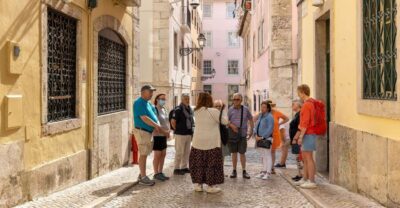
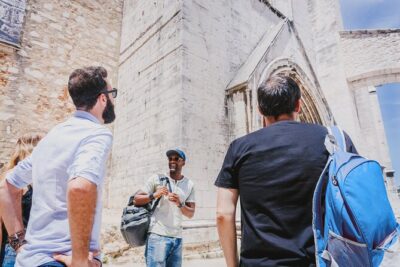
Best of Lisbon Small-Group Guided Walking Tour
Read our review →
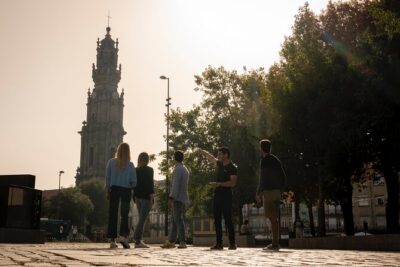
Porto Walking Tour, Lello Bookshop, River Cruise and Cable Car
Read our review →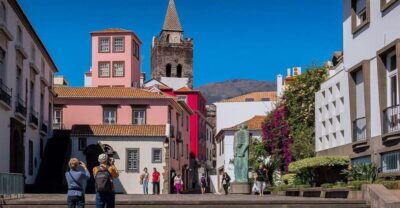
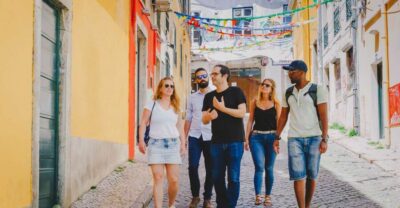
Best of Lisbon Walking Tour: Rossio, Chiado & Alfama
Read our review →
Experience Porto’s Charm: 3-Hour Guided Walking Tour
Read our review →
Enjoy a Guided Levada Walk in the Rabaçal Valley
Read our review →Browse the lists this tour appears in