
Reviewed · STREET ART
LISBON Street Art Tour
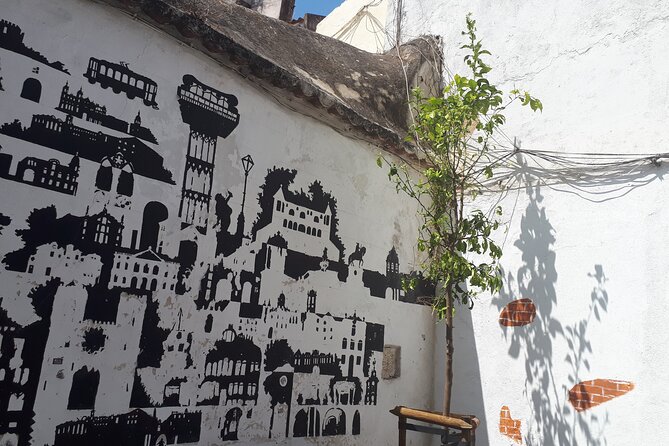
Lisbon paints its stories on the walls. This three-hour walk through Mouraria, Graça, and São Vicente pairs street art with local culture, from fado roots to political murals and everyday neighborhood scenes. I like the small maximum of 10 people, and I especially like that guides such as Diogo, Vero, Ben, and Luisa bring real art-world experience rather than simply pointing at walls. The main catch is physical: expect steep hills, long stretches on foot, and plenty of stairs.
At $24.20 per person, this is a strong-value way to see a side of Lisbon that is easy to miss from a tram window. You will also need sensible shoes, water, and some patience with the weather. In January, bring an umbrella. On hot days, the uphill sections can be demanding.
In This Review
- Key points before you book
- Why Lisbon’s street art deserves a walking tour
- Starting at Largo da Graça 13
- Mouraria and the Escadinhas de São Cristóvão
- The climb to Miradouro da Graça
- Graça and São Vicente: the main art walk
- Jardim Botto Machado and the long azulejo wall
- What the $24.20 price gets you
- The physical demands you should take seriously
- Guide quality and the feel of a small group
- Timing, meeting point, and the finish
- Who should book this Lisbon street art tour?
- Should you book it?
- FAQ
- How much does the Lisbon Street Art Tour cost?
- How long does the tour last?
- Where does the tour begin?
- Where does the tour end?
- What language is the tour offered in?
- How many people can join the tour?
- Does the tour include paid admissions?
- How physically demanding is the walk?
- What should I wear or bring?
- Can I cancel for a full refund?
Key points before you book
- Three hours through four distinct stops: The route links Mouraria’s fado connections with Graça’s murals, a hilltop viewpoint, and a long azulejo wall.
- Small groups, up to 10 people: A compact group gives you more time to ask about artists, techniques, and the meaning behind each piece.
- Artist-led insight: Guides including Diogo, Vero, Ben, and Luisa explain both legal street art and underground work, along with the social and political ideas behind it.
- A serious walking workout: The route includes steep uphill and downhill sections, hundreds of stairs in some outings, and little sitting time.
- Art changes over time: Some works may be painted over, tagged, or replaced, so the exact selection can change from one visit to the next.
- Easy central meeting point: You meet at Largo da Graça 13, with the route beginning and ending in the Graça area, though the final spot may shift toward Alfama.
Why Lisbon’s street art deserves a walking tour

Lisbon is often introduced through tiled façades, old trams, lookout points, and fado. Those are all worth your time, but the city’s walls tell another story. Murals, paste-ups, graffiti, photography, and tile work reflect neighborhood identity, public debate, migration, memory, and the changing face of the city.
The value of this tour is not simply seeing large paintings. You can find some murals on your own, especially around Graça. The hard part is knowing what you are looking at, who made it, which work was approved, and how to read the smaller pieces hiding beside a doorway or stairway.
The guides add that missing layer. They explain the difference between street art and graffiti, point out legal and underground work, and discuss the artists and movements behind each piece. Several guides are practicing artists, and Vero is also described as an anthropologist who studies Portuguese culture through street art. That gives the walk a wider purpose. You are not just collecting photographs. You are learning how public art fits into Lisbon’s daily life.
The route also takes you into streets you might not choose while following a standard sightseeing plan. You move through Mouraria, Graça, São Vicente, and parts of the Graça and Alfama area. These neighborhoods provide the setting, not just a backdrop. The artwork is tied to the buildings, the residents, and the way Lisbon has changed.
A few more reviews worth comparing before you book
- Lisbon: Street Art Tour
★ 4.9 · 1,324 reviews - Lisbon: Kickstart Street Art Walking Tour
★ 4.9 · 717 reviews - Lisbon: Street Art Tuk Tuk Tour
★ 4.9 · 372 reviews
Starting at Largo da Graça 13
The meeting point is Largo da Graça 13, in Lisbon’s Graça neighborhood. This central location makes the start straightforward, especially if you are already visiting the hilltop districts.
The tour is offered in English, and confirmation arrives when you book. A mobile ticket keeps the start simple. The group can have no more than 10 people, which matters on narrow streets and stairways. You are less likely to lose the guide in a crowd, and there is room for questions without turning every stop into a formal lecture.
The exact rhythm depends on the group. A small party that asks many questions may run beyond the advertised three hours. That can be a benefit if you enjoy discussion, but it also means you should avoid scheduling a tight appointment immediately afterward.
The walk is not designed for people who want a gentle, level stroll. You may climb steep hills and stairways, including hundreds of steps in some versions of the route. Wear shoes with solid support. Eat something before setting out, since the walk uses the full time and there is no meal included.
Mouraria and the Escadinhas de São Cristóvão
The first stop lasts about one hour and focuses on the Escadinhas de São Cristóvão and the surrounding Mouraria neighborhood. This is where the tour begins to connect art with place.
Mouraria is closely linked with the roots of fado, and the walls here reflect that identity. The area is presented as an open-air museum, with murals, photography, and local scenes showing the character of the neighborhood. One particularly memorable element is the collection of photographs of fado singers. They give the art a human face and make the connection between music, memory, and streets easy to understand.
This part of the tour is less about racing from one famous mural to another. You stop to notice details. A small image may sit beside a large painting. A piece may show a local figure, a neighborhood concern, or a style that makes more sense once the guide explains its background.
I like this opening because it gives you context before the route reaches the larger works in Graça. You start with a neighborhood shaped by music and community, then see how art records that identity on walls and stairways.
Mouraria is also a useful reminder that street art is temporary. New work can appear without warning, while older pieces may fade, be painted over, or receive unwanted additions. A guide who works within Lisbon’s art scene can explain that changing quality rather than treating it as a problem.
The climb to Miradouro da Graça

The route then takes about 15 minutes at Miradouro da Graça, also known as the Sophia de Mello Breyner Andresen viewpoint. The stop itself is short, but reaching it is part of the experience.
Graça sits high above much of Lisbon, so the climb is real. You may find both gentle and steep sections, along with stairs. If the day is hot, this can be the point where the walk starts to feel like exercise rather than casual sightseeing.
The reward is one of the best street art views in the city, along with a chance to pause and look across Lisbon. The viewpoint helps you understand the city’s hills in practical terms. After walking upward, you can see why the route requires moderate physical fitness.
Bring water and protect yourself from the weather. An umbrella is useful in January, while hot weather makes the climbs harder. The tour includes regular stops, so you are not expected to walk uphill without breaks, but this is still not a good choice if stairs are difficult for you.
A different sort of day out around Lisbon:
- Lisbon City Center Tour – The Unmissable Lisbon
★ 5.0 · 22,234 reviews - Lisbon: Sintra, Pena, Regaleira, Cabo da Roca & Cascais
★ 4.7 · 19,656 reviews - Lisbon: Jerónimos Monastery Entrance Ticket
★ 4.1 · 14,164 reviews - Lisbon: History, Stories and Lifestyle Walking Tour
★ 4.8 · 10,902 reviews
Graça and São Vicente: the main art walk
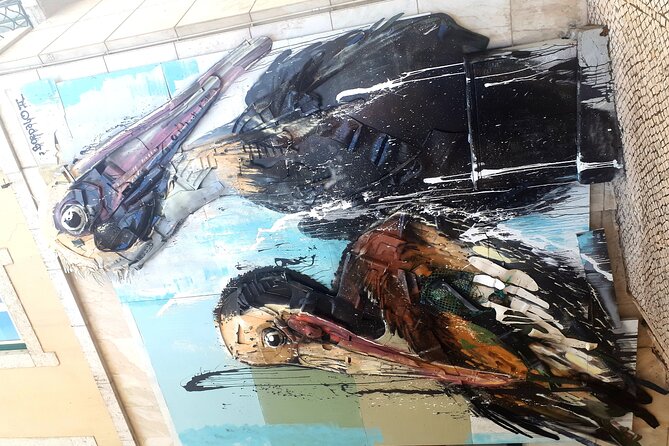
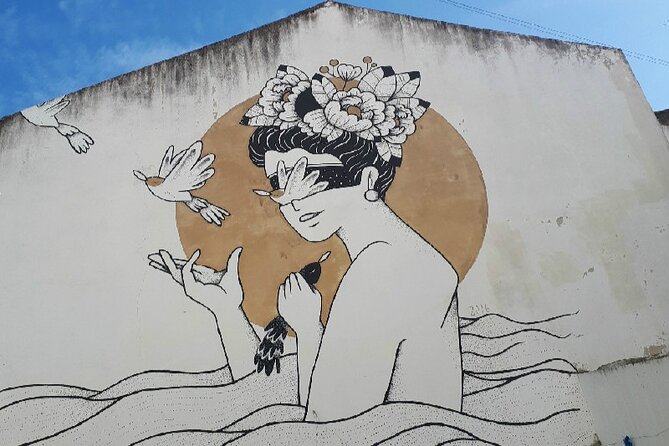
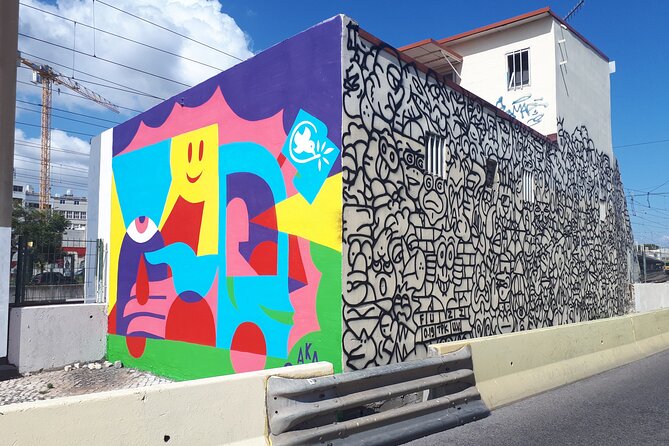
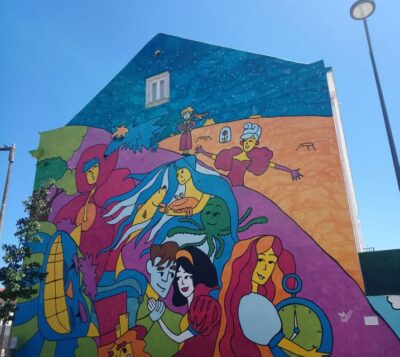
The longest section lasts about an hour and a half in Graça and São Vicente. This is the heart of the experience, with large murals by both local and international artists covering building façades.
Graça feels more residential and less polished than the grand central squares. That makes it a strong setting for public art. You see how large paintings sit within ordinary streets, beside homes, small businesses, and aging façades. The art does not feel separated from daily life.
The route also passes the tour group’s Walls of Fame. This gives the guides a natural way to explain the local art scene and the artists connected with it. Depending on the day, you might see work that the guide helped create, or newly added pieces that have not yet been tagged or changed.
The guide’s role is especially useful here. Ben, Diogo, Vero, and Luisa have each been praised for making the art clear and engaging. Their strengths are not limited to identifying artists. They discuss technique, legal permission, social themes, politics, and the movements that shaped Lisbon’s street art.
That distinction matters. A large mural can be attractive, but the reasons behind it are often more interesting. You may learn why an artist chose a certain wall, how a work was made, or how the piece relates to a cultural issue. You may also hear why one work belongs to street art while another is better described as graffiti.
The route encourages conversation rather than a one-way speech. Guides have been noted for talking with everyone in the group, including people traveling alone. If you have questions about a mural, neighborhood, artist, or nearby places to eat, this is the section where you will have the most time to ask.
There is a practical tradeoff. The art selection is not fixed like a museum collection. Some pieces may be gone or altered by the time you arrive. That uncertainty is part of street art, but it means you should book this for the guide’s interpretation and the overall neighborhood experience, not for a guaranteed checklist of specific murals.
Jardim Botto Machado and the long azulejo wall
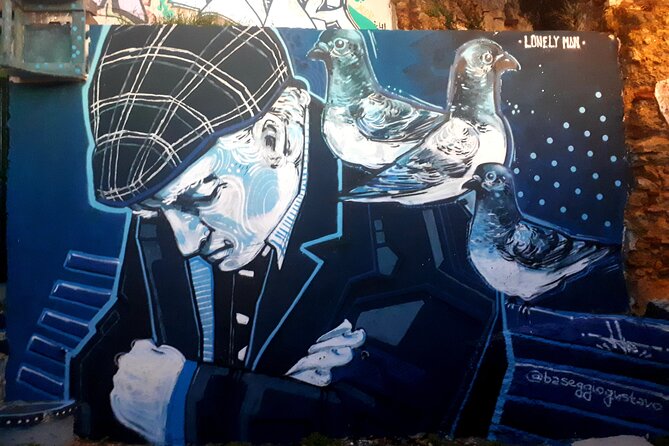
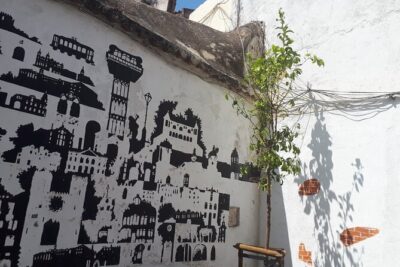
The final listed stop is Jardim Botto Machado, with about 15 minutes set aside for the visit. The highlight is a very long azulejo wall, described as the longest in the world.
Azulejos are one of Lisbon’s most recognizable visual traditions, so this stop broadens the tour beyond spray paint and contemporary murals. The wall uses color and tile to represent Lisbon in a more traditional way. It is a good final note because it shows that the city’s public art story has more than one chapter.
After the large murals and underground work, the azulejo wall lets you compare different ways of decorating shared space. The materials, techniques, and age may differ, but both forms turn ordinary urban surfaces into something people stop to study.
Allow time for photographs here. The colorful wall is one of the easiest stops to capture, while the narrow streets and stairways earlier in the route offer more intimate images. Bring a phone or camera with enough battery, since the tour is built around visual details.
What the $24.20 price gets you
At $24.20, the tour is priced below many large commercial sightseeing activities, but its value does not come from transport or admissions. All the stops are free. You are paying for a small-group guide who can help you see and understand work that would otherwise pass unnoticed.
That is worthwhile if you care about art, photography, local culture, or seeing Lisbon beyond the main monuments. A self-guided walk costs less, of course, but you would need to find the route, identify the artists, understand the local context, and notice the smaller works yourself.
The group limit of 10 improves the value. You are not paying for a huge crowd moving from wall to wall. The guide can point out details, answer questions, and adjust the pace to the people present. A very small group may even run longer if everyone is interested.
The price does not cover food, drinks, transport, or any paid admission. Plan accordingly. Eat before you start, and carry water. Since the route is uphill and takes about three hours, a little preparation makes the price feel much better spent.
The physical demands you should take seriously

The clearest warning is the walking. The route includes hills, steep downhill areas, and stairs. One account describes hundreds of steps, while others note that the walk can be challenging in hot weather.
You should have a moderate fitness level and be comfortable walking for the full duration. This is not a suitable pick if you are unable to manage stairs. Even if you normally walk a lot, Lisbon’s hills can be tiring because the route keeps changing between climbs, descents, and uneven urban streets.
Good walking shoes are essential. Sandals with poor support may leave you uncomfortable before the tour ends. Bring water, dress for the forecast, and take an umbrella in wet winter weather.
The pace includes frequent stops, which helps. You are not walking continuously for three hours. Still, do not mistake the stops for a relaxed sightseeing stroll. The route is active, and the hills are part of the experience.
Guide quality and the feel of a small group
The strongest part of the tour is the guide’s ability to connect art with Lisbon. Diogo is praised for his passion and detailed explanations. Vero is noted for her background in anthropology and her understanding of the cultural meaning behind the work. Ben and Luisa are also described as enthusiastic and well informed about both legal and underground art.
The exact guide can vary, so you should not book expecting one named person unless your confirmation specifies it. Some outings may include two guides. One guide has occasionally brought a dog named Billy, which can be a pleasant extra for people who enjoy canine company, though it should not be treated as a guaranteed feature.
The small format suits solo visitors, couples, and families who can handle the walk. Guides make an effort to include everyone in the conversation, rather than speaking only to the most outgoing person in the group.
The tour also has a community-minded side. Information from the experience indicates that proceeds help empower artists, including women, and give them a public voice. That may matter to you if you prefer activities that support local creative work rather than simply passing through a neighborhood.
Timing, meeting point, and the finish
The advertised duration is approximately three hours. The route starts at Largo da Graça 13 and is listed as returning to that point, but the final location may be somewhere in Graça or Alfama depending on the available time and the group’s energy.
That flexibility is useful, especially if the guide finds extra art or the group wants more explanation. It also means you should not plan an immediate timed attraction at the end. Leave a buffer for the possibility of a longer walk or a finish a little away from the starting point.
The tour is near public transportation, and the central meeting point makes it practical to reach from other parts of Lisbon. The mobile ticket is accepted, and confirmation is provided at booking. Service animals are allowed.
Cancellation is free up to 24 hours before the start time for a full refund. Cancellations or changes made within 24 hours are not refunded or accepted, so check your plans before the deadline.
Who should book this Lisbon street art tour?
I would choose this walk if you want to understand Lisbon through its public art rather than simply photograph murals. It is especially good for people who enjoy local neighborhoods, cultural context, photography, and guides who can explain artistic choices.
It also works well early in a Lisbon stay. The guide may point you toward other neighborhoods and restaurants, and the walk can help you get your bearings in Graça, Mouraria, São Vicente, and Alfama.
You should skip it if stairs are a serious problem, if you dislike walking uphill, or if you need a tightly timed schedule. It is also less suitable for anyone looking for a polished museum-style collection with guaranteed works on view.
Should you book it?
Book it if you want a thoughtful, active introduction to Lisbon’s street art and the communities around it. The $24.20 fee is fair for a small group, an English-speaking guide, and three hours of context you would be unlikely to gather on your own.
Bring good shoes, water, a snack, and weather protection. Expect the art to change, expect the hills to work your legs, and let the guide show you why these walls matter. For an art-minded visit to Lisbon, this is a practical way to see the city from a fresh angle.
FAQ
How much does the Lisbon Street Art Tour cost?
The tour costs $24.20 per person.
How long does the tour last?
The tour lasts approximately three hours. It may run longer if the group has many questions or if the guide spends extra time explaining the art.
Where does the tour begin?
The meeting point is Largo da Graça 13, 1170-364 Lisboa, Portugal.
Where does the tour end?
The listed end point is Largo da Graça 13, but the tour may finish somewhere in Graça or Alfama depending on the available time and the group’s energy.
What language is the tour offered in?
The tour is offered in English.
How many people can join the tour?
The maximum group size is 10 people.
Does the tour include paid admissions?
The listed stops have free admission. The tour price covers the guided experience rather than entry to a paid attraction.
How physically demanding is the walk?
You should have a moderate level of physical fitness. The route includes uphill walking, steep downhill areas, and stairs, with some outings involving hundreds of steps.
What should I wear or bring?
Wear comfortable walking shoes. Bring water, a snack, and suitable weather protection. An umbrella is useful in January, and hot weather can make the hills more challenging.
Can I cancel for a full refund?
Yes. You can cancel at least 24 hours before the experience start time for a full refund. Cancellations or changes made less than 24 hours before the start time are not refunded or accepted.
Just added around Lisbon
- Central Lisbon E-Bike Tour★ 5.0 · 168 reviews
- From Lisbon: Sintra and Cascais Full-Day Private Tour★ 4.9 · 168 reviews
- Experience the Queen of Fado at Ah Amália Living Experience★ 5.0 · 171 reviews
- Lisbon: 2-Hour Sunset Sailing Tour on Luxury Sailing Yacht★ 4.9 · 171 reviews
- Lisbon – Vinho Verde Wine Premium Boat Experience★ 5.0 · 171 reviews
- Óbidos: Medieval Tales & Secrets Spots Guided Walking Tour★ 4.9 · 171 reviews
- From Lisbon: Small Group Fátima & Little Shepherds Town Tour★ 4.8 · 171 reviews
- Horse Riding on the Beach★ 4.5 · 171 reviews
Street Art, compared.


3-Hour Guided Street Art Walking Tour of Lisbon
Read our review →
Browse the lists this tour appears in