
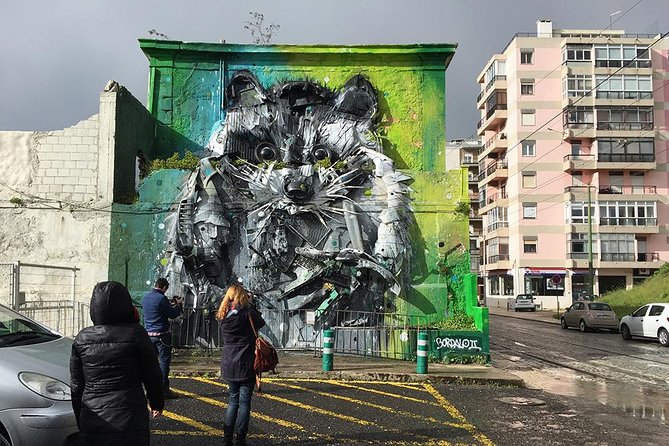
Reviewed · WALKING TOURS
3-Hour Guided Street Art Walking Tour of Lisbon
Street art has a civic story. This three-hour walk links Lisbon’s murals, tags, tiles, cobbles, politics, and working-class neighborhoods in a way that gives the city a fresh visual map. You are not simply stopping to photograph painted walls. You are learning why certain art appeared, how artists work in Lisbon, and why some pieces stay while others disappear.
I like the small-group format, capped at 12 people according to the tour details, because it gives you room to ask questions. I also like the guides’ wider view of art. Erika, Maria, and Laith are praised for connecting street art with local history, social issues, artists’ methods, and international trends. The main caution is simple: Lisbon is hilly, and this is a serious three-hour walk over cobbled and uneven ground.
In This Review
- Key things to know before you book
- Why this Lisbon art walk feels different
- Starting in Bairro Alto: nightlife on the walls
- Calçada da Glória: Lisbon’s open-air art gallery
- Baixa: tiles, symbols, and the city underfoot
- Graça and the viewpoint above Lisbon
- Alfama and the five-floor Chão do Loureiro gallery
- What the guides add to the experience
- The pace, walking conditions, and practical side
- Is $42.27 a fair price?
- Who should book this Lisbon walking tour?
- Final verdict: book it if you want Lisbon beyond the postcard
- FAQ
- How long is the Lisbon street art walking tour?
- Where does the tour begin?
- Where does the tour end?
- What language is the tour offered in?
- Is food or drink included?
- Is the tour suitable for people with mobility issues?
- What happens if the weather is poor?
Key things to know before you book
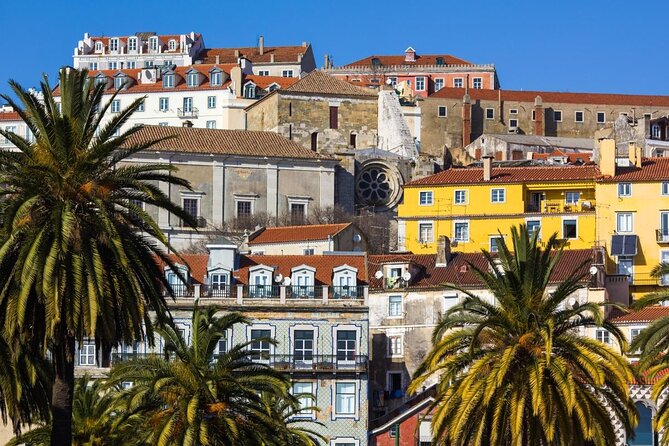
- You see five distinct parts of Lisbon: Bairro Alto, Calçada da Glória, Baixa, Graça, and Alfama each reveal a different side of the city’s art scene.
- The art lesson goes beyond graffiti: Expect murals, tags, decorated buildings, azulejos, cobblestone patterns, and references to older forms of public art.
- The guide adds the real value: The best moments come from learning the social, political, and artistic background behind each work.
- Plan for hills and uneven streets: Comfortable shoes are essential, and the tour is not recommended for people with mobility issues.
- A rest stop breaks up the walk: The schedule includes a break around the halfway point, with scenic stops and places to buy drinks.
- The end point gives you a view: The walk finishes at Miradouro da Graça, a useful place to pause and see Lisbon from above.
Why this Lisbon art walk feels different
Lisbon has plenty of famous sights, but its street art often appears in the spaces between them: on retaining walls, along stairways, beside old buildings, and across large blank façades. Without a guide, you may see the paint but miss the argument, joke, symbol, or neighborhood story behind it.
This tour treats public art as part of city life. In Bairro Alto, the focus connects with nightlife and the quarter’s late-night identity. In Graça, the art reflects the district’s links to workers’ unions and workers’ rights. In Baixa, the discussion widens to azulejos and the patterned stone under your feet.
That wider approach explains the unusually strong rating of 4.9 from 278 reviews, with 99 percent recommending the experience. The praise is not only for the number of pieces you see. It centers on guides who explain what you are looking at and make connections you would probably miss alone.
The experience is offered in English and costs $42.27 per person. I consider that fair value if you enjoy guided walking and want context rather than a quick photo stop. You are paying for three hours of local interpretation, route planning, and access to parts of the city that do not usually appear on a first-time sightseeing route.
More Walking Tours in Lisbon
- Lisbon: History, Stories and Lifestyle Walking Tour
★ 4.8 · 10,902 reviews - Best of Lisbon Small-Group Guided Walking Tour
★ 5.0 · 4,869 reviews - Lisbon: Food and Wine Small Group Walking Tour
★ 4.9 · 4,082 reviews
Starting in Bairro Alto: nightlife on the walls
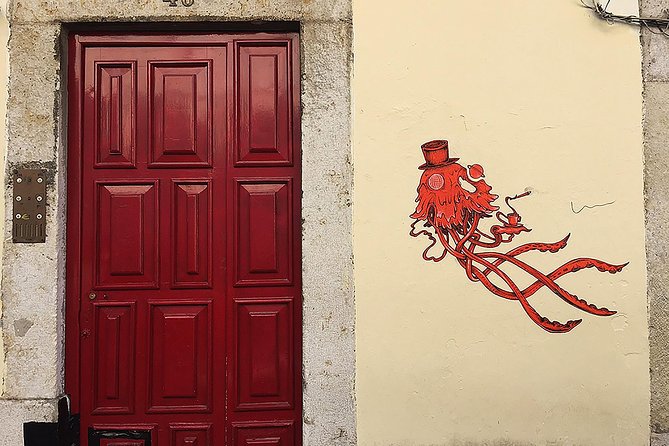
The tour begins at R. Luz Soriano 67 in Bairro Alto. This is a central starting point, but the walk quickly shifts away from a standard historic sightseeing route.
The street art here is tied to nightlife traditions. That makes sense for Bairro Alto, a quarter known for its narrow streets and evening energy, but the guide’s job is to show how the visual identity of the area reaches beyond bars and restaurants. Look for the way art fits into old façades, side streets, and the rhythm of a district that changes character after dark.
The first section lasts about 30 minutes. That is enough time to establish the vocabulary of the tour without using up all your walking energy at the start. Your guide may explain different styles, symbols, and methods, then ask you to look more closely at details that seem easy to overlook.
This is a good place to arrive with an open mind. If you think street art means only large colorful murals, the tour will broaden that idea early. Small marks and temporary pieces can matter too, even when they are less polished or easier to dismiss.
Calçada da Glória: Lisbon’s open-air art gallery
From Bairro Alto, the route continues to Elevador da Glória and Calçada da Glória. This section is presented as one of Lisbon’s urban art galleries, with artists from different parts of the world contributing work.
It is an especially useful stop for photographers. The steep street, old transport route, and painted surfaces create a strong contrast between Lisbon’s traditional appearance and its modern art scene. Your guide can help you sort out what you are seeing, explain the artists’ approaches, and place Lisbon within the broader international street art world.
Several guides are also active artists or have direct experience with street art. Laith, in particular, is praised for explaining methods, styles, jargon, and the reasons artists choose particular locations. On some tours, he has brought a spray can so participants could try the technique themselves. That detail should not be treated as guaranteed on every departure, but it shows the practical tone the guiding can take.
You spend roughly 30 minutes here. The short stop works well because street art changes. A work may be painted over, altered, or removed. Your guide helps you understand that impermanence is part of the subject, not a flaw in the tour.
Baixa: tiles, symbols, and the city underfoot
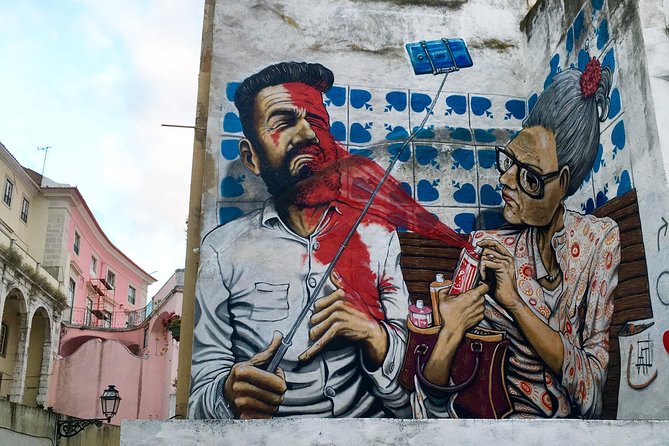
The Baixa portion is where this experience becomes more than a graffiti walk. Here, the guide turns your attention to azulejos, the painted tiles that are central to Lisbon’s visual character, along with the patterns and construction of the cobblestone streets.
This connection is one of the tour’s strongest ideas. Lisbon’s public art did not begin with spray paint. Decorative tilework, patterned paving, painted façades, and older artistic traditions have long shaped how people experience the city outdoors. By placing contemporary murals beside these older forms, the tour encourages you to see public art as a continuing conversation.
You may also learn how designs and symbols communicate identity, memory, and local pride. The exact works can change, but the method remains useful: stop, look at the surrounding building, notice the materials, and ask why the artwork belongs in that particular place.
Baixa is also a practical transition point. The streets are part of the experience, but cobbles can be tiring, especially after walking uphill and downhill earlier in the route. Wear shoes with good grip. Thin soles and slippery footwear are poor companions here.
A few more reviews worth comparing before you book
- Lisbon: Street Art Tour
★ 4.9 · 1,324 reviews - Lisbon: Kickstart Street Art Walking Tour
★ 4.9 · 717 reviews - Lisbon: Street Art Tuk Tuk Tour
★ 4.9 · 372 reviews - LISBON Street Art Tour
★ 5.0 · 371 reviews
Graça and the viewpoint above Lisbon

The route then climbs toward Miradouro da Graça, officially named Miradouro da Graça Sophia de Mello Breyner Andresen. This is one of the sections where the city’s physical shape becomes part of the tour.
Graça is a residential district with connections to workers’ unions and workers’ rights. Its street art reflects that background, giving the walls a social and political edge. The guide does not simply identify an artist or tell you when a mural was painted. The stronger explanations connect the work to community concerns, political ideas, and the people who live around it.
That context is why the tour suits people who know little about street art. You do not need to arrive with a list of artists or an opinion about graffiti. The guide supplies the starting point and invites questions. Erika is repeatedly praised for making those connections clear, while Maria is noted for encouraging thoughtful discussion about the city and the forces shaping its art.
The route includes a rest break around the middle of the experience. Scenic parks and viewpoints have been used for pauses, and cafes may be available for buying water or other drinks. Food and drinks are not included, so bring water or budget for a purchase during the break.
The climb is real. A previous participant described the walk as appropriate for a city of hills, which is a polite way of saying you should not underestimate it. The rest stops help, but they do not turn this into an easy stroll.
Alfama and the five-floor Chão do Loureiro gallery
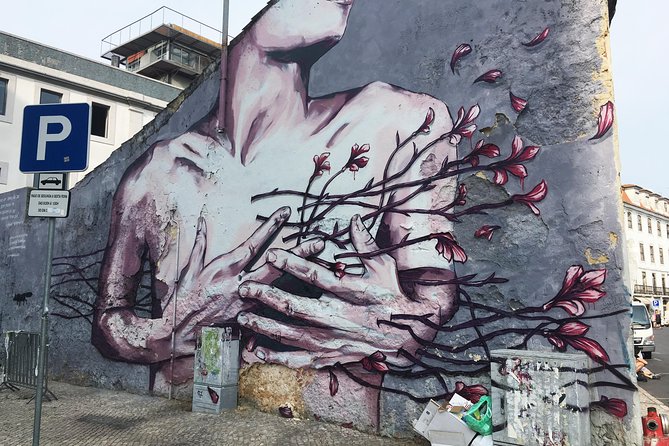
The final major art stop is in Alfama at Chão do Loureiro. Here, a car park has been transformed into a five-floor street art gallery.
That setting is part of the appeal. Instead of viewing a mural as an isolated decoration, you see how an ordinary structure can be reused as a public exhibition space. The building presents work by prominent artists from Lisbon’s south bank, adding a different scale and atmosphere to the earlier street scenes.
This is also where the route can deliver some of its biggest visual surprises. Large murals and tall walls give the art room to expand, while the building itself provides a practical frame for the work. Several people describe seeing more than three dozen pieces during the full walk, though the exact number will change with the route, the guide, and what is on view that day.
The final half hour at Chão do Loureiro helps the tour finish with large, memorable images. It is a good place to use the camera, but do not rush through it. Ask about the artists, how the work was made, and how Lisbon decides what remains on a wall.
What the guides add to the experience

The guide is the heart of this tour. The strongest praise goes to the people leading it, not just to the art itself.
Erika is described as warm, clear, and skilled at placing street art within cultural and political context. Maria is praised for fluent English, careful interpretation, and her personal connection to Lisbon. Laith is repeatedly singled out for his energy, humor, artistic experience, and ability to explain both local work and the wider European scene.
Names and guides can change, so you may not receive one of these particular leaders. Still, the repeated pattern is useful. The tour works best when the guide treats the group as part of a conversation rather than marching everyone from wall to wall.
Expect explanations of:
- Street art styles and basic terminology
- The stories and symbols behind individual pieces
- Artists’ methods and choice of location
- The role of politics and social issues
- How the city permits, removes, or preserves public art
- Links between Lisbon’s older decorative traditions and modern murals
The small group matters here. The tour details give a maximum of 12 people in one place and a maximum of 15 in the activity information. Since those figures do not match, check the current booking details if group size is important to you. Either way, the experience is designed as a small-group walk rather than a large bus excursion.
The pace, walking conditions, and practical side
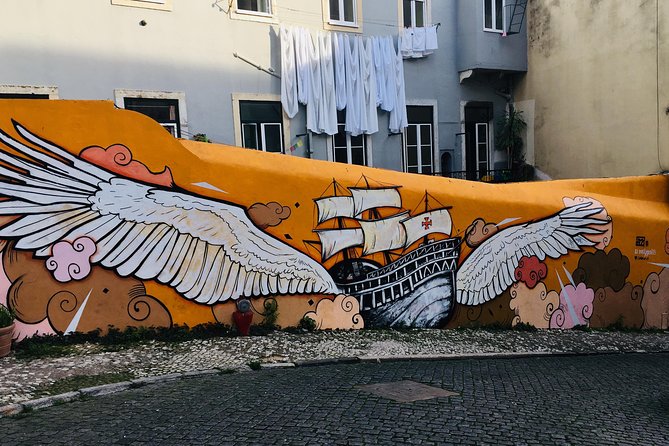
The activity lasts about three hours, with roughly 30 minutes assigned to each of five main areas and a rest break during the route. That is enough time to cover a wide slice of Lisbon, but it also explains why the walk can feel long to some people.
A few participants wished it lasted closer to two hours. Others felt the full length was exactly right because the guide covered so much ground and included scenic pauses. Your ideal experience depends on your walking habits. If you enjoy city walks and stop often for stories and photographs, three hours should feel productive. If you prefer short guided visits with frequent transport, this may test your patience.
You need to manage:
- Hills, including the climb toward Graça
- Cobblestone streets
- Unpaved or uneven sections
- Three hours on foot
- Outdoor conditions that may change during the day
The tour is not recommended for people with mobility issues, and most people can participate only if they are comfortable walking on uneven terrain. Service animals are allowed. The route is near public transportation, but hotel pickup and drop-off are not included.
The start is at R. Luz Soriano 67, Lisbon. The tour ends at Miradouro da Graça, Calçada da Graça. That final location is useful because you can continue exploring Graça, rest at the viewpoint, or use public transportation from the surrounding area.
Is $42.27 a fair price?
At $42.27, this is not the cheapest way to see Lisbon’s streets, but it offers more than a self-guided mural hunt. You get a local guide, an organized route through five districts, a small group, a rest break, and explanations that connect art to politics, history, and city planning.
I would especially value the tour early in a Lisbon visit. Afterward, you will look at walls, tiles, paving, and construction sites with a sharper eye. The guide may also suggest artists, districts, and places to explore during the rest of your stay.
The value is lower if you already know Lisbon’s street art scene well or dislike long walks. You can find public art without paying an admission fee, since all the stops are free. The fee is for the interpretation and the time saved by having someone choose the route and explain the setting.
Free cancellation is available if you cancel at least 24 hours before the start time. If poor weather forces cancellation, you are offered another date or a full refund. Because the experience depends on outdoor walking, that weather policy is practical rather than a minor footnote.
Who should book this Lisbon walking tour?
I would choose this experience if you enjoy photography, public art, local politics, urban design, or neighborhood walks. It is also a strong choice if you have already seen Lisbon’s main monuments and want a different way to read the city.
You do not need to be an art expert. The guides explain enough for beginners while offering plenty for people who already follow murals and graffiti. Solo visitors may appreciate the small group and the chance to ask questions. One solo participant even received extra help getting safely back to a hotel, though that kind of personal assistance should not be assumed as part of the standard service.
Families with older children may enjoy the visual variety, but the hills and three-hour length matter. Anyone with limited mobility should choose a flatter or shorter activity instead.
Final verdict: book it if you want Lisbon beyond the postcard
I recommend the tour for anyone who wants street art explained rather than merely photographed. Its best feature is the link between contemporary walls and Lisbon’s older tiles, paving, neighborhood struggles, and political life.
Book it early in your stay if you can. The tour is often reserved about 26 days ahead, and its route can help you decide which districts deserve a second look. Skip it if steep streets, cobbles, or a long walk sound unpleasant.
For $42.27, you get a lively art lesson, a broad city walk, and a better set of eyes for the rest of your time in Lisbon. That is a sound deal, especially with a guide who can turn an overlooked wall into part of the city’s story.
FAQ
How long is the Lisbon street art walking tour?
The tour lasts approximately three hours, including time at five main stops and a rest break during the route.
Where does the tour begin?
The meeting point is R. Luz Soriano 67, 1200-246 Lisboa, Portugal.
Where does the tour end?
The walk finishes at Miradouro da Graça, Calçada da Graça, 1100-265 Lisbon.
What language is the tour offered in?
The tour is offered in English.
Is food or drink included?
No. Food and drinks are not included, though the rest stops may have cafes where you can buy refreshments.
Is the tour suitable for people with mobility issues?
The tour is not recommended for people with mobility issues. You must be able to walk for about three hours over hills, cobblestones, and unpaved or uneven terrain.
What happens if the weather is poor?
The experience requires good weather. If it is canceled because of poor weather, you will be offered a different date or a full refund. You can also cancel for a full refund up to 24 hours before the start time.
More 3-Hour Experiences
- Lisbon: 3-Hour Tour by E-Bike
★ 4.8 · 1,150 reviews - 3-Hour Lisbon 7 Hills Electric Bike Tour
★ 5.0 · 818 reviews - Lisbon: 3-Hour The Slave Trade – An Historical Walking Tour
★ 4.9 · 179 reviews - Porto: City Highlights 3-Hour Guided Electric Bike Tour
★ 4.8 · 3,092 reviews
More Guided Walks
- Best of Lisbon Walking Tour: Rossio, Chiado & Alfama
★ 4.9 · 2,700 reviews - Age of Discoveries Walking Tour in Belém
★ 5.0 · 1,513 reviews - Sintra & Cascais Day Tour with Pena Palace Entry and Gardens Walk
★ 5.0 · 962 reviews - Lisbon Roots – Small group Food & Culture Walking Tour w/tastings
★ 5.0 · 910 reviews
Just added around Lisbon
- Central Lisbon E-Bike Tour★ 5.0 · 168 reviews
- From Lisbon: Sintra and Cascais Full-Day Private Tour★ 4.9 · 168 reviews
- Experience the Queen of Fado at Ah Amália Living Experience★ 5.0 · 171 reviews
- Lisbon – Vinho Verde Wine Premium Boat Experience★ 5.0 · 171 reviews
- Lisbon: 2-Hour Sunset Sailing Tour on Luxury Sailing Yacht★ 4.9 · 171 reviews
- From Lisbon: Small Group Fátima & Little Shepherds Town Tour★ 4.8 · 171 reviews
- Horse Riding on the Beach★ 4.5 · 171 reviews
- Óbidos: Medieval Tales & Secrets Spots Guided Walking Tour★ 4.9 · 171 reviews
Walking Tours, compared.

Best of Lisbon Small-Group Guided Walking Tour
Read our review →
Porto Walking Tour, Lello Bookshop, River Cruise and Cable Car
Read our review →

Best of Lisbon Walking Tour: Rossio, Chiado & Alfama
Read our review →
Experience Porto’s Charm: 3-Hour Guided Walking Tour
Read our review →
Enjoy a Guided Levada Walk in the Rabaçal Valley
Read our review →Browse the lists this tour appears in