
Reviewed · STREET ART
Lisbon: Street Art Tour
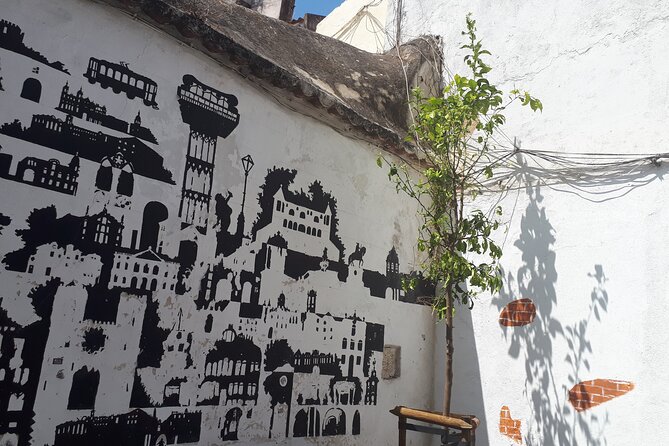
Lisbon wears its stories on the walls. This three-hour walk connects major murals, small pieces, and street sculptures across five neighborhoods, with guides such as Erica, Maria, and Laith explaining the art and the city behind it. I like the strong cultural context and the chance to see Lisbon away from the usual sightseeing route. The main catch is simple: this is a hilly walk over uneven ground, so comfortable shoes are not optional.
I also like the small-group feel and the guides’ clear passion for their subject. Erica receives especially warm praise for her storytelling, while Maria and Laith are noted for bringing history, politics, art techniques, and local life into the conversation. The tour costs $40 per person, which is fair if you want more than a quick mural-spotting stroll, but less appealing if you only want photographs and little explanation.
In This Review
- Key things to know before you go
- Why Lisbon is a fine city for a street art walk
- Starting in Bairro Alto at R. Luz Soriano 67
- Chiado brings art into a busy city center
- Baixa de Lisboa shows the city from street level
- Mouraria adds neighborhood character
- Graça finishes with more time and more walking
- The guides make or break this experience
- What the $40 price really buys you
- Who should book this Lisbon street art tour?
- Final verdict: a strong choice for seeing Lisbon differently
- FAQ
- Where does the Lisbon Street Art Tour start?
- How long does the tour last?
- What language is the tour in?
- Is hotel pickup included?
- What should I bring?
- Is the tour suitable for wheelchair users?
Key things to know before you go
- Five central neighborhoods in three hours: The route links Bairro Alto, Chiado, Baixa, Mouraria, and Graça, giving you several views of Lisbon in one outing.
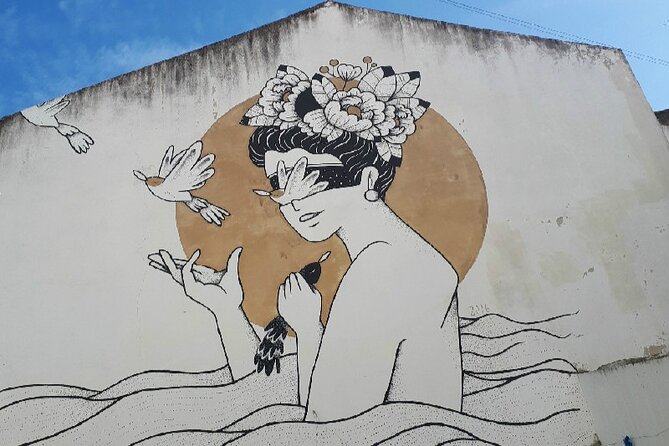
- Small works matter here: Guides point out tiny pieces and details you could easily miss while walking alone, not just the biggest painted walls.
- Art comes with context: You learn how Portuguese history, social issues, politics, and neighborhood life shape the city’s street art.
- Expect hills and rough paving: The route includes unpaved or uneven terrain and is not suitable for wheelchair users.
- English-language guiding: The tour includes a live English-speaking guide, with guides praised for clear explanations and friendly conversation.
- Bring light luggage and good shoes: Oversize bags are not allowed, and three hours on Lisbon’s slopes can test flimsy footwear.
Why Lisbon is a fine city for a street art walk

Lisbon is easy to admire from a viewpoint, a tram window, or a tiled square. Street art gives you another way in. It adds voices to the older city, sometimes in large public murals and sometimes in details tucked beside a doorway or along a narrow lane.
The useful thing about this tour is that it does not treat graffiti as decoration alone. Your guide explains how artists use walls to comment on society, local identity, politics, and daily life. That gives the art more weight. You begin to see why a piece belongs in one neighborhood rather than another.
The experience also helps you notice how quickly urban art can change. A wall may be painted over, weathered, or joined by a new work. The route is therefore not just a list of permanent sights. It is a look at Lisbon as a city that keeps rewriting parts of itself.
I especially like the way the tour connects older districts with newer creative work. You are not taken to one isolated art zone and then returned to the standard sightseeing circuit. Instead, you move through areas with different moods and physical character, seeing how the art changes with them.
A few more reviews worth comparing before you book
- Lisbon: Kickstart Street Art Walking Tour
★ 4.9 · 717 reviews - Lisbon: Street Art Tuk Tuk Tour
★ 4.9 · 372 reviews - LISBON Street Art Tour
★ 5.0 · 371 reviews
Starting in Bairro Alto at R. Luz Soriano 67
The meeting point is in front of the Interpress building at R. Luz Soriano 67. Check the exact location before setting out, since Lisbon’s streets can twist around hills and squares in a way that makes a short map distance feel longer than expected.
Bairro Alto receives about an hour of guided attention, making it the longest single stop early in the walk. That gives your guide time to set up the main ideas: how street art differs from simple tagging, how artists choose a surface, and how scale, color, technique, and placement affect the work.
This is also a useful place to get comfortable with the pace. You may stop often, look up at larger works, then pause for smaller pieces at eye level or lower down. One of the most praised features of the tour is this attention to overlooked details. You may pass familiar streets later and suddenly spot art you would previously have ignored.
The guide’s role matters here. Erica is repeatedly praised for explaining art in a way that is lively rather than academic for its own sake. Laith is also noted for combining storytelling with careful discussion of technique and artist intent. You should have room to ask questions, and the strongest feedback points to guides who make conversation part of the walk.
Chiado brings art into a busy city center

The Chiado section lasts about 20 minutes. That is shorter than the Bairro Alto and Graça portions, but it serves as a useful bridge between neighborhoods.
Chiado is a central area where shoppers, commuters, historic buildings, and visitors all share tight streets. Street art here can feel different because it appears within a more polished and heavily used part of Lisbon. Your guide can help you read the contrast between the public setting and the work placed within it.
Do not expect every stop to be a huge mural. A major strength of this experience is its range. You might see a prominent wall piece, then learn why a small stencil, sticker, or sculptural detail matters. The tour’s value is partly in training your eye to notice both.
The short time here also means the walk keeps moving. If you prefer a slow, museum-like experience with long periods at each artwork, this may feel brisk. If you like seeing how art fits into ordinary city life, Chiado should be one of the more useful sections.
Baixa de Lisboa shows the city from street level
The Baixa portion also takes about 20 minutes. This district is known for its ordered streets and central location, so it offers another change in setting from the slopes and lanes around Bairro Alto.
Street art in Baixa can be read against a more formal urban design. The contrast helps explain why placement matters. A work on a large facade has a different effect from one tucked into a side street, and a piece in a busy commercial area reaches a different audience from one in a residential lane.
Your guide may also use this section to link present-day art with Portugal’s past. Many of the strongest tour comments praise this blend of old and new. You are not simply told who made a painting. You are given reasons to think about what the work says about Lisbon now.
This part is compact, so it is worth staying close to the guide. Lisbon streets can be distracting, and there is plenty to look at beyond the artwork being discussed. A small group helps, since you can hear the explanation without standing in a large crowd.
A different sort of day out around Lisbon:
- Lisbon City Center Tour – The Unmissable Lisbon
★ 5.0 · 22,234 reviews - Lisbon: Sintra, Pena, Regaleira, Cabo da Roca & Cascais
★ 4.7 · 19,656 reviews - Lisbon: Jerónimos Monastery Entrance Ticket
★ 4.1 · 14,164 reviews - Lisbon: History, Stories and Lifestyle Walking Tour
★ 4.8 · 10,902 reviews
Mouraria adds neighborhood character
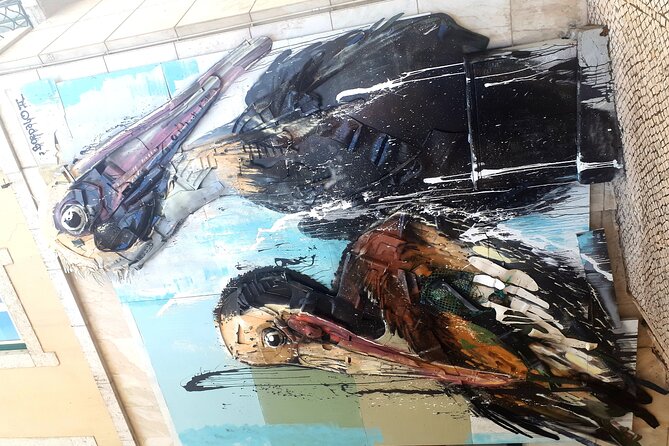
The route then moves to Mouraria for about 30 minutes. This is where the neighborhood focus becomes especially clear. Your guide explains how local culture and community life influence the art, rather than treating the district as a blank outdoor gallery.
Mouraria is also a good place to listen for connections between street art, Portuguese culture, and Fado. One particularly enthusiastic account praised the tour for providing more useful insight into Fado than a separate museum visit. That does not mean this is a Fado tour, but it shows how the guide may connect music, identity, history, and public art in a single conversation.
I like this kind of explanation because it gives you a way to interpret the city after the tour ends. You may not remember every artist’s name, but you are more likely to ask why a certain image appears in that neighborhood, who it speaks to, and how residents view it.
The Mouraria section is not presented as a formal attraction with a ticket desk and a neat entrance. It is part of the living city. That is a strength for anyone wanting local context, though it also means you should be ready for ordinary street conditions, passing traffic, and uneven surfaces.
Graça finishes with more time and more walking
The final section is in the Graça Historic District and lasts about an hour. This is another substantial part of the walk, and it gives the guide time to bring together the ideas introduced earlier.
Graça is known for its slopes, older streets, and views across Lisbon. The tour description specifically points to the district’s charm, while several accounts praise the route for including striking views along with the art. You get a sense of the city’s shape as you walk, not just a collection of walls at eye level.
The longer stop also gives you time to discuss different artists, styles, and methods. Guides have been praised for explaining how works are made, not merely identifying them. That is valuable if you are new to street art and want a basic visual vocabulary for murals, stencils, paste-ups, lettering, and sculptural work.
Graça is also where the physical demands may become most noticeable. Three hours of walking through Lisbon can be tiring even at a comfortable pace, and the route includes slopes and uneven ground. One practical detail from the experience is worth taking seriously: a participant needed help finding onward transport because Graça does not have a metro stop. The tour ends there, so ask your guide for local transport advice before saying goodbye.
The guides make or break this experience
The praise for the guides is unusually consistent. Erica is often described as an excellent storyteller with a strong grasp of both art and Lisbon. Maria is praised for her warmth, clear explanations, and ability to answer questions about neighborhoods and Portuguese culture. Laith is noted for his links to the local street art scene, his personal interest in artists, and his ability to explain technique without making the walk heavy.
Guide assignments can change, so you should not book on the assumption that one particular person will lead your departure. Still, the repeated pattern is encouraging: the experience depends on a guide who can connect visual details with broader social and cultural ideas.
A good guide also adjusts the walk to the group. One account describes a pace that suited the group’s fitness, while others mention a relaxed and friendly atmosphere. That does not remove the need for reasonable mobility, but it suggests the tour is not designed as a race from wall to wall.
The English is described as fluent and easy to follow. If you like asking questions, this is a strong match. The tour seems best when you engage with the guide rather than simply trail behind with a camera.
What the $40 price really buys you
At $40 per person, this is not the cheapest way to see Lisbon’s walls. You can walk through central districts for free and find plenty of artwork on your own.
The difference is interpretation. You are paying for three hours of route planning, a guide who knows what to look for, and explanations that link art to Lisbon’s neighborhoods, history, culture, and current social concerns. Several people describe the tour as a highlight of a short Lisbon visit, and that makes sense if you want your sightseeing to teach you something.
The price is easier to justify for first-time visitors, art fans, and anyone who wants to understand the city beyond its postcard views. It is also useful early in your stay, since the walk helps you learn the shape of several neighborhoods and gives you ideas for places to explore later.
The value drops if you dislike walking, want only the largest murals, or prefer to explore at your own pace. You may also find the route tiring in hot weather or rain. Rain has not stopped people from enjoying the experience, but waterproof layers and sensible shoes would make the day easier.
The tour allows free cancellation up to 24 hours before departure, and you can reserve now and pay later. Those policies help if your Lisbon plans are still shifting.
Who should book this Lisbon street art tour?
I would choose this tour if you want to understand the city through its public art rather than simply collect photographs. It suits curious visitors, first-time Lisbon guests, repeat visitors looking for a new angle, and people who enjoy history when it is tied to real streets and present-day life.
It is also a good pick for anyone who normally walks past murals without knowing what to make of them. By the end, you should have a better sense of style, placement, artist intent, and the relationship between artwork and neighborhood.
Families with older children may enjoy it, provided everyone can handle three hours on foot. Art students and photographers may appreciate the range of styles, but the tour is not only for specialists. The guides are praised for making complex ideas accessible.
I would think twice if you use a wheelchair, have difficulty on slopes, or need a very smooth walking surface. Wheelchair users are specifically excluded, and unpaved or uneven terrain is part of the route. Oversize luggage is also not permitted, so leave large bags at your accommodation.
Final verdict: a strong choice for seeing Lisbon differently
I recommend the Lisbon Street Art Tour for the quality of its guiding and the way it links five neighborhoods into one clear story. The murals and sculptures are the draw, but the real benefit is learning to see small details, local voices, and layers of meaning that you might otherwise walk past.
Book it if you want thoughtful explanations, a small-group feel, and a route that reaches beyond the usual central sights. Skip it if you want a short, flat photo stop. For $40, it offers solid value to anyone willing to put in the steps and pay attention.
FAQ
Where does the Lisbon Street Art Tour start?
Meet the guide in front of the Interpress building at R. Luz Soriano 67.
How long does the tour last?
The activity lasts three hours. The route includes Bairro Alto, Chiado, Baixa de Lisboa, Mouraria, and the Graça Historic District.
What language is the tour in?
The live tour guide speaks English.
Is hotel pickup included?
No. Hotel pickup and drop-off are not included, so you need to reach the meeting point yourself.
What should I bring?
Bring comfortable shoes. You must be able to walk on unpaved or uneven terrain, and oversize luggage is not allowed.
Is the tour suitable for wheelchair users?
No. The experience is not suitable for wheelchair users because the route includes uneven and unpaved terrain.
Just added around Lisbon
- Central Lisbon E-Bike Tour★ 5.0 · 168 reviews
- From Lisbon: Sintra and Cascais Full-Day Private Tour★ 4.9 · 168 reviews
- Experience the Queen of Fado at Ah Amália Living Experience★ 5.0 · 171 reviews
- Lisbon: 2-Hour Sunset Sailing Tour on Luxury Sailing Yacht★ 4.9 · 171 reviews
- Lisbon – Vinho Verde Wine Premium Boat Experience★ 5.0 · 171 reviews
- Óbidos: Medieval Tales & Secrets Spots Guided Walking Tour★ 4.9 · 171 reviews
- From Lisbon: Small Group Fátima & Little Shepherds Town Tour★ 4.8 · 171 reviews
- Horse Riding on the Beach★ 4.5 · 171 reviews
Street Art, compared.

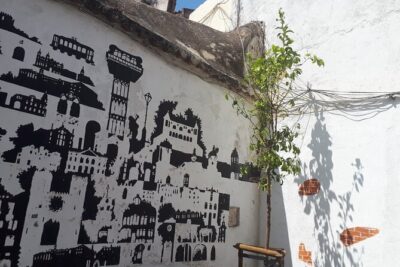

3-Hour Guided Street Art Walking Tour of Lisbon
Read our review →
Browse the lists this tour appears in