
Reviewed · WORKSHOPS
Pastel de Nata | Workshop from scratch | Porto’s city center
Pastry, wine, and a little Porto know-how. This two-and-a-half-hour baking class at R. do Souto 67 teaches you to make pastel de nata from scratch, including the dough, rather than simply handing you a tart and calling it a lesson. I like the mix of hands-on cooking and Portuguese culture, and I like that local wine, coffee, and tea are part of the experience.
The class costs $48.36 per person, which feels fair for a small-group activity with food, drinks, instruction, and a recipe you can use at home. The main thing to understand is that this is a shared group workshop, not a private cooking lesson. You take turns at the different stages, and groups can include up to 12 people.
In This Review
- The best parts of the workshop
- Why pastel de nata makes a good Porto lesson
- Arriving at R. do Souto 67
- How the 2.5-hour class unfolds
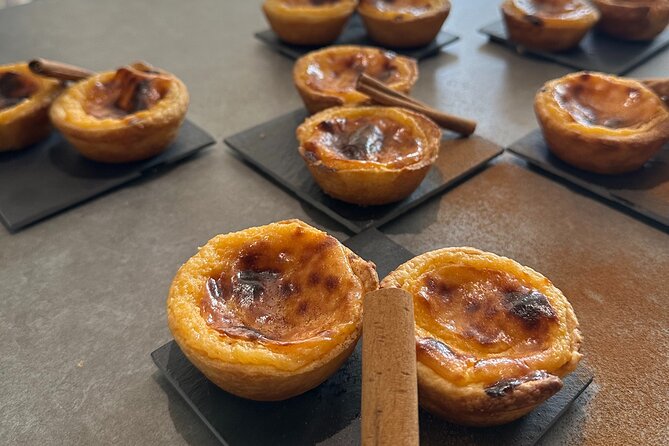
- The warm pastry payoff
- The instructors shape the experience
- Group size, participation, and expectations
- Is $48.36 good value?
- Who should book this Porto pastry class?
- Booking tips for a smoother morning or afternoon
- Should you book the pastel de nata workshop?
- FAQ
- Where does the pastel de nata workshop take place?
- How long does the experience last?
- What is included in the price?
- Is the workshop offered in English?
- How many people can join the class?
- Is this a private cooking lesson?
- Can children participate?
- Can I arrive after the scheduled start time?
- Is the workshop suitable for people with gluten or lactose intolerance?
The best parts of the workshop
- You make the pastry from scratch: The dough is part of the lesson, a valuable detail for anyone who wants to recreate the tarts at home.
- Warm pastel de nata comes at the end: Fresh from the oven, the pastries are served as the payoff for your work.
- Local wine keeps the class social: A regional glass is included while you learn about Portuguese food and culture.
- Instructors get high marks: Vanessa, Ana, Anna, Clara, and Mariah are praised for clear explanations, patience, humor, and active teaching.
- Small groups make a difference: Four or 10 people allows the instructor to give each person a turn, while the maximum group size is 12.
- It suits adult food lovers: Children under 15 cannot join, and participants aged 15 to 17 need an accompanying adult.
Why pastel de nata makes a good Porto lesson
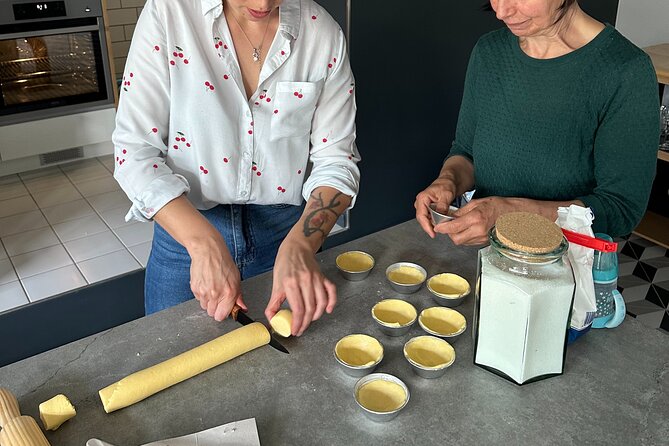
Pastel de nata is one of Portugal’s most recognizable sweets, but eating one in a café tells you little about how it is made. This workshop changes that. You work through the dough, the filling, and the baking process, so the pastry becomes more than a snack. It becomes a small piece of Portuguese food culture you can carry home.
I like that the class does not cut the pastry down to a shortcut version. The dough is included, and one especially useful part of the lesson is learning the rough puff pastry technique. That gives the experience more value than a demonstration built around premade pastry.
You also get cultural context as you cook. The host discusses Portuguese history and food traditions while the class moves through the recipe. It is a good fit for you if you enjoy learning the story behind a local dish, but do not want a long formal lecture.
The pace sounds relaxed rather than stressful. Instructors demonstrate each part, explain what is happening, and then bring participants into the process. You do not need to arrive as a baker. One participant with no baking background found the class easy to follow, while experienced home cooks appreciated the tips about dough and simple syrup.
More Pastel de Nata Workshops in Porto
- Porto: Pastel de Nata Cooking Class with Grandma’s Recipe
★ 5.0 · 1,565 reviews - Porto: Pastel de Nata Pastry-Making Workshop
★ 4.9 · 1,542 reviews - Porto: Pastel de Nata Cooking Class with Port Wine – Sé
★ 4.8 · 888 reviews
Arriving at R. do Souto 67
The meeting point is R. do Souto 67, 4050-595 Porto, in the city center. The activity begins and ends at this same location, so you do not need to arrange a taxi or shuttle between the lesson and another part of town.
The experience is offered in English and accepts mobile tickets. It is near public transportation, which helps if you are staying outside the central area. Still, give yourself extra time to arrive. The door closes at the scheduled start time, and late entry is not allowed for logistical reasons.
This rule is firm. You should not plan to arrive at the exact minute, especially if you are unfamiliar with Porto’s streets or public transport. Missing the opening can mean missing the whole session, so arrive early enough to find the address without rushing.
Only people with reservations may enter. You cannot bring along a friend, child, or family member who is not booked, even if that person plans to watch rather than participate.
How the 2.5-hour class unfolds
The class begins with an introduction to pastel de nata and the process ahead. The host also brings in Portuguese food culture and history, giving the recipe a clear local setting.
From there, the group works through the pastry. You learn how the dough is made and prepared, including the rough puff method. This is one of the strongest reasons to book this particular class. Many pastry activities focus on assembling a prepared shell. Here, the dough itself is part of the work.
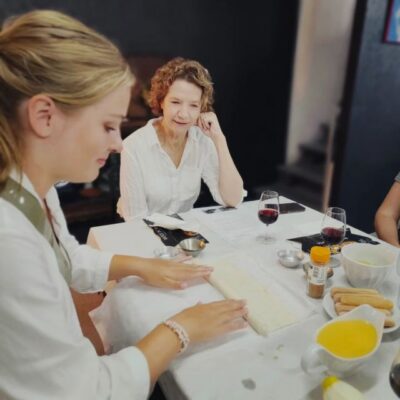
The class is organized around shared participation. The host demonstrates the steps, then participants take turns handling different parts of the recipe. With four people, each person may get frequent turns. With 10 or 12, you should expect a more rotational format.
That distinction matters. You will be involved, but not necessarily at every moment. If you want to make an entire batch independently, a private lesson would be a better choice. For a social activity, the group format works well because you can watch other people handle the same techniques and compare results.
The filling is prepared as part of the process. The instruction includes useful details about the cream and the simple syrup, two areas where small mistakes can affect the final texture. Ana, a professionally trained pastry chef, is specifically praised for sharing tips and tricks, while Vanessa is praised for being patient, funny, and responsive.
After shaping and filling, the pastries go into the oven. The final stage is the part everyone is waiting for: eating them warm. Coffee or tea is included, along with local wine, so the ending feels like a proper tasting rather than a quick sample at the counter.
The warm pastry payoff
Pastel de nata is at its best when it is still warm. The pastry should have a crisp, layered shell, while the custard offers a soft contrast. The class lets you taste the result immediately, when the connection between technique and flavor is clearest.
You may also have enough to save some for later. One class produced enough pastries for breakfast the next day. Keep in mind, though, that the texture changes as they cool. A useful tip from the instruction is to eat them soon, unless you have access to an oven for reheating.
That advice is worth taking seriously. A freshly baked pastel de nata can be crisp and delicate. After sitting around, the pastry may lose some of that quality. The lesson is partly about the recipe, but it is also about learning how the finished tart should taste when served properly.
Coffee or tea gives you a nonalcoholic option, while the local wine adds a distinctly Portuguese touch. You do not have to treat the wine as the main event. It simply makes the class more relaxed and social.
More pastry workshops:
- Workshops Pasteis de Nata in Porto, Portugal
★ 4.9 · 520 reviews - Porto: Pastel de Nata Cooking Class from Scratch
★ 4.9 · 468 reviews - Porto: Pastel de Nata Cooking Class with Porto Wine (Sé do Porto)
★ 5.0 · 340 reviews - Lisbon: Pastel de Nata Baking Class
★ 4.9 · 2,106 reviews
The instructors shape the experience
The teaching is a major strength here. Several instructors lead the sessions, so your experience may vary by date, but the names that come up most often are Vanessa, Ana, Anna, Clara, and Mariah.
Vanessa is described as engaging, humorous, patient, and good at involving everyone. That matters in a group class, where a quiet participant could otherwise spend two hours watching someone else work. Mariah is praised for clear instruction and an educational approach, while Clara is described as cheerful, energetic, and thorough without making the class feel rushed.
Ana brings professional pastry training and practical advice. Anna is also praised for making the session social and easy to follow. These details suggest a teaching style that is friendly but still focused on the actual baking.
The tone is not formal culinary school instruction. It is more approachable. You can ask questions, try a technique, and enjoy the occasional mistake without the room turning tense. That makes the workshop a strong choice for couples, friends, solo participants, and families with older teenagers who meet the age rules.
Group size, participation, and expectations
The maximum group size is 12. That is still small enough for an instructor to manage, but your level of hands-on time depends on how many people attend.
Groups of four offer the most personal involvement. Several sessions had only four participants, which allowed everyone to take part often. A full group of 10 can still work well, especially when the host organizes the turns clearly, but you should not expect to control every step from beginning to end.
The important point is that this is not an individual or paired lesson. You are part of a shared activity. You may mix ingredients, handle dough, prepare a stage of the filling, or help with shaping, then step back while another person takes a turn.
I see this as a benefit if you want a social Porto activity. You can meet other people, learn by watching, and enjoy wine and pastries together. It is less ideal if your only goal is intensive pastry training.
The class is for adults. Children under 15 are not permitted to participate or accompany booked participants. Those aged 15 to 17 may attend only with an adult. Animals, including service animals, are not allowed in the workshop space.
Is $48.36 good value?
At $48.36 per person, this is not the cheapest way to eat pastel de nata in Porto. A café tart costs much less. But the comparison is not really fair, since this price includes a 2.5-hour activity, instruction, ingredients, several pastries, coffee or tea, and local wine.
I think the value is strongest if you want a memorable activity rather than another food stop. You are paying for the time, the teaching, the chance to handle the dough, and the ability to repeat the recipe at home.
The price is also easier to justify for people who enjoy cooking classes or food-focused trips. If you have little interest in baking, the class may feel long compared with simply visiting a pastry shop.
There is no pickup or drop-off service. That is not a major problem because the workshop is in central Porto and ends where it begins, but you need to make your own way there.
Who should book this Porto pastry class?
I would choose this workshop if you want a break from sightseeing that still feels local and useful. It works especially well during a longer Porto visit, when you can spend a relaxed morning or afternoon doing something indoors.
It is also a good option for:
- First-time bakers: The instructions are clear, and the process is broken into manageable stages.
- Experienced home cooks: The rough puff pastry, custard, and syrup techniques offer details beyond a basic demonstration.
- Couples and friends: The shared work and wine create an easy social setting.
- Solo participants: The group format gives you a natural way to meet people.
- Food-focused visitors: You learn about a famous Portuguese pastry while making it yourself.
- Older teenagers with adults: Participants aged 15 to 17 can join with an accompanying adult.
I would skip it if you cannot eat gluten or lactose. The workshop is not suitable for people intolerant to either ingredient. You should also skip it if you need a private lesson unless you book that arrangement separately.
Booking tips for a smoother morning or afternoon
This activity is often reserved about 23 days ahead, so I would book before arriving in Porto, especially if your dates are fixed. The high rating and limited group size can make popular times fill early.
Choose a start time that leaves room for transport and finding the address. The workshop will not accept late arrivals, and no exceptions are made once the door closes.
You can cancel for a full refund up to 24 hours before the start time. Changes or cancellations made within 24 hours are not refundable. The activity also requires a minimum number of participants, so if the provider cancels for that reason, you are offered another date or experience, or a full refund.
Should you book the pastel de nata workshop?
Yes, if you want more than a quick taste of Porto. The strongest features are the from-scratch dough, the warm pastries at the end, and instructors who make the shared format feel active rather than passive.
Book with realistic expectations. You will not have a private workstation or complete control of every stage in a group of 12. But you will learn a traditional recipe, taste local wine, drink coffee or tea, and leave with a better understanding of why pastel de nata is so beloved.
For $48.36, I think it is a worthwhile Porto activity for food lovers, curious beginners, and anyone who wants a practical souvenir. Just arrive early, check the age and dietary rules, and eat the pastries while they are warm.
FAQ
Where does the pastel de nata workshop take place?
The workshop starts and ends at R. do Souto 67, 4050-595 Porto, Portugal.
How long does the experience last?
The activity lasts approximately 2 hours and 30 minutes.
What is included in the price?
The experience includes coffee and/or tea, local wine, the baking activity, and the pastel de nata made during the class.
Is the workshop offered in English?
Yes. The workshop is offered in English.
How many people can join the class?
The group can include a maximum of 12 participants.
Is this a private cooking lesson?
No. It is a shared group activity. Participants take turns during the different stages of making the pastries. A private lesson must be booked if you want a fully individual or paired class.
Can children participate?
Children under 15 are not permitted to participate or accompany people with reservations. Participants aged 15 to 17 may attend only when accompanied by an adult.
Can I arrive after the scheduled start time?
No. The door closes at the scheduled start time, and late entry is not allowed.
Is the workshop suitable for people with gluten or lactose intolerance?
No. The experience is not suitable for people intolerant to gluten or lactose.
Just added around Porto
- Matosinhos: Conservas Pinhais Factory Tour★ 4.8 · 173 reviews
- Private Geres National Park Tour with Lunch and Transfers★ 5.0 · 174 reviews
- Porto: Tour on the Douro River in a Classic Boat★ 5.0 · 178 reviews
- Porto: Santiago de Compostela and Valença do Minho Day Trip★ 4.5 · 181 reviews
- Porto: 6 Bridges Port Wine River Cruise with 4 Tastings★ 4.8 · 182 reviews
- Private Rafting Experience in Melgaço★ 5.0 · 186 reviews
- Tile Painting and Cocktails in Downtown Porto★ 5.0 · 187 reviews
- Porto: Combined Ticket for WOW Cultural District★ 4.7 · 188 reviews
Workshops, compared.
Pastel de Nata Cooking Class with Grandma’s Recipe
Read our review →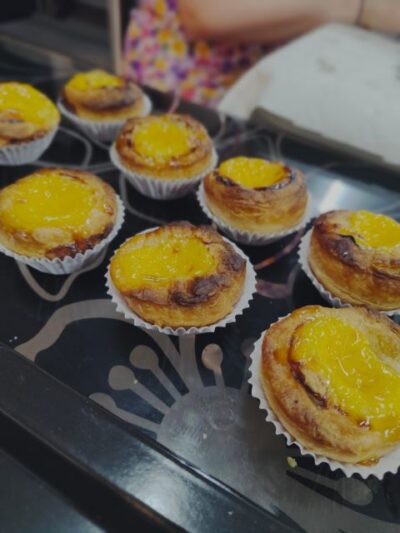
Pastel de Nata Cooking Class with Port Wine – Sé
Read our review →

Browse the lists this tour appears in