
Reviewed · WORKSHOPS
Porto: Pastel de Nata Cooking Class with Grandma’s Recipe
Fresh pastries make good memories.
This two-hour class takes you into Joana’s home, about 10 minutes by car from central Porto, to make pastel de nata from scratch. I like the family recipe and the chance to learn about Joana and her grandmother before baking. I also like that everyone takes part, rather than watching a demonstration from the sidelines.
The main drawback is the location. The home is outside Porto’s central tourist area, so you need to allow time and money for the trip. A Bolt or Uber is the simplest choice, especially for groups, though bus 800 or 801 and the Orange Metro Line also work.
- A genuine home kitchen: You cook in Joana’s comfortable, naturally lit home instead of a commercial studio.
- The pastry is made from scratch: You learn the dough as well as the custard, a step some baking classes skip.
- Grandmother’s recipe: Joana shares a family method that gives the lesson a personal Portuguese connection.
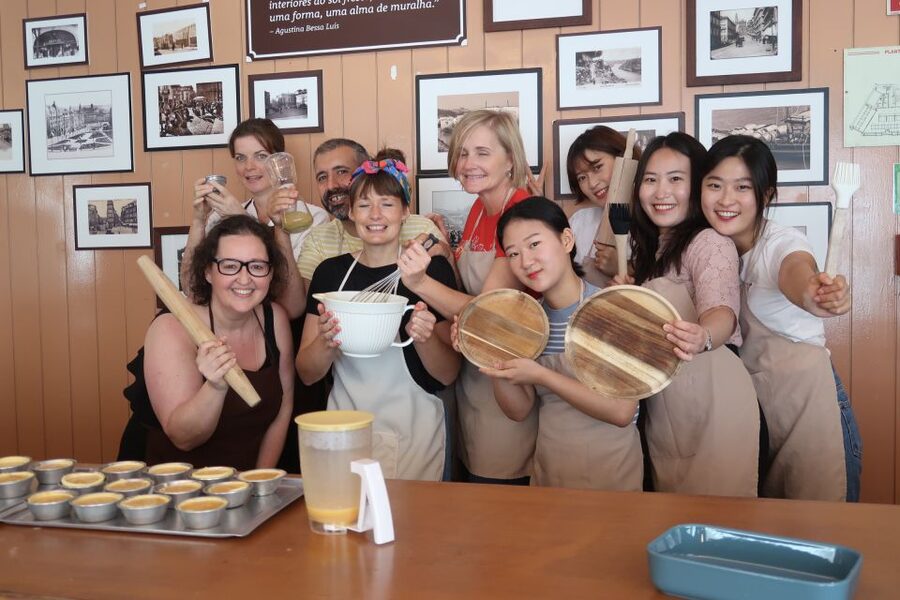
- Everyone gets involved: Groups of up to 10 work in turns, often split into two teams so each person can help.
- Warm pastries at the table: The class ends with coffee, tea, orange juice, and freshly baked tarts.
- Good value at $33: Ingredients, utensils, instruction, drinks, and pastries are included.
In This Review
- Why Pastel de Nata Belongs in Your Porto Plans
- Arriving at Joana’s Home Outside Central Porto
- The Welcome: Portuguese Food Through a Family Story
- Making the Dough From Scratch
- Preparing the Creamy Custard Filling
- Baking, Sharing, and Eating the Results
- What Makes the Home Setting Special
- Is $33 a Good Deal?
- Who Will Enjoy This Class Most?
- Practical Details Before You Book
- Should You Book the Pastel de Nata Class?
- FAQ
- How long does the pastel de nata class last?
- Where does the cooking class take place?
- How can I reach the host’s home from Porto?
- Is the recipe made completely from scratch?
- What is included in the price?
- Is the class suitable for wheelchair users?
Why Pastel de Nata Belongs in Your Porto Plans
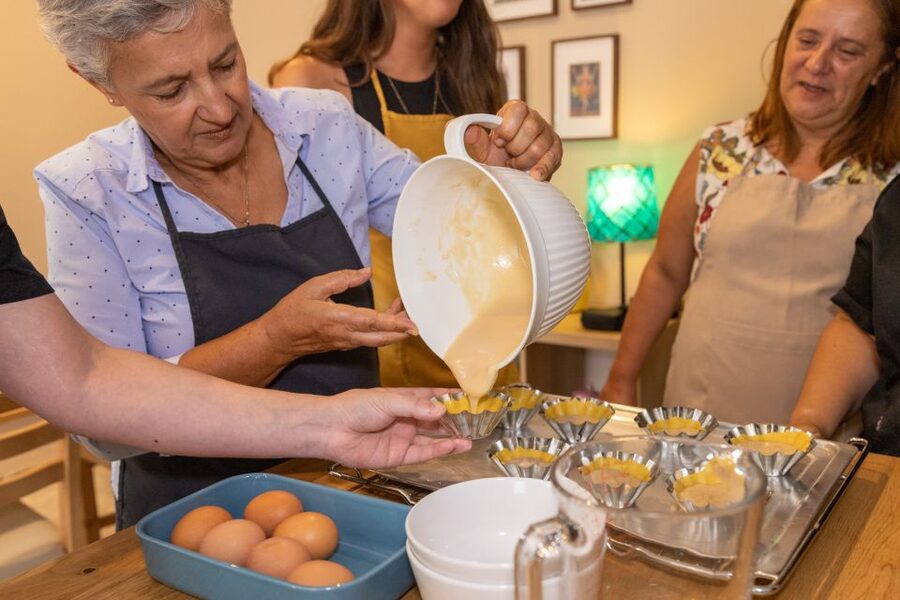
Pastel de nata is one of Portugal’s best-known pastries: crisp pastry wrapped around a soft, sweet custard, usually finished with a little cinnamon if you like. In Porto, you can buy one almost anywhere, but eating one is different from learning how it is made.
This class gives you a better look at the work behind the simple-looking tart. The pastry needs care, and the custard needs the right balance. You learn why the result has two very different textures: flaky layers outside and a creamy center inside.
I like food classes that connect a dish to a person. Here, the recipe has belonged to Joana’s grandmother for years. That detail changes the mood. You are not simply following an anonymous recipe printed for tourists. You are learning a method that has been kept in a family and passed on.
The setting helps, too. Joana welcomes you into her apartment, where the class takes place in a calm kitchen with plenty of natural light. Several people specifically appreciated the home’s comfortable decoration and the care put into the table setting. It feels more personal than a standard cooking school, though that also means you are entering someone’s private home rather than a purpose-built classroom.
Arriving at Joana’s Home Outside Central Porto
The meeting point is roughly 10 minutes by car from Porto city center, though traffic and your exact starting point can affect the journey. For most people, Bolt or Uber will be the quickest option. If you are traveling with more than two people, sharing a ride is also described as the cheapest and fastest way to get there.
Drivers should know that free parking is available on the street. That makes the class easier if you have a rental car, although you should still leave enough time to find a space.
Public transport takes longer but is possible. From Bolhão, bus 800 or 801 offers a direct ride of about 20 minutes and stops across the street from the house. There is one practical catch: the bus ticket can only be bought onboard with coins.
From Trindade Station, take the Orange Metro Line directly to Fânzeres. The ride takes about 30 minutes, followed by a walk of about 700 meters, or around 10 minutes. This is a useful option if you prefer not to pay for a car, but it takes more planning than a ride-hailing service.
When you reach the address, ring the doorbell marked 2 Andar. Joana waits inside her home. Double-check your route before leaving central Porto, since the class is not in the historic center itself. That extra journey is the one repeated consideration in an otherwise highly praised activity.
More Cooking Classes in Porto
- Porto: Pastel de Nata Cooking Class with Port Wine – Sé
★ 4.8 · 888 reviews - Porto: Pastel de Nata Cooking Class from Scratch
★ 4.9 · 468 reviews - Porto: Pastel de Nata Cooking Class with Porto Wine (Sé do Porto)
★ 5.0 · 340 reviews
The Welcome: Portuguese Food Through a Family Story
The class begins with an introduction to Joana, her family, and the story behind her grandmother’s recipe. This is more than a quick hello while ingredients are laid out. It gives you a sense of the person teaching you and explains why this particular recipe matters.
Joana teaches in English, and the class is limited to 10 participants. That is a useful size for a home kitchen. It is large enough to meet people from different countries, but small enough for Joana to keep an eye on the work.
Her teaching style is warm, patient, and clear. People with little baking experience can follow the instructions, while experienced bakers still have room to ask questions and pay attention to technique. One participant who already considered themselves a seasoned baker still found the class enjoyable and easy to follow.
The atmosphere is relaxed rather than formal. Music may play from Joana’s record player, and the kitchen has the feel of a friend’s home rather than a training room. That informality is one of the strongest reasons to choose this class. You get a slice of everyday hospitality along with the recipe.
Making the Dough From Scratch
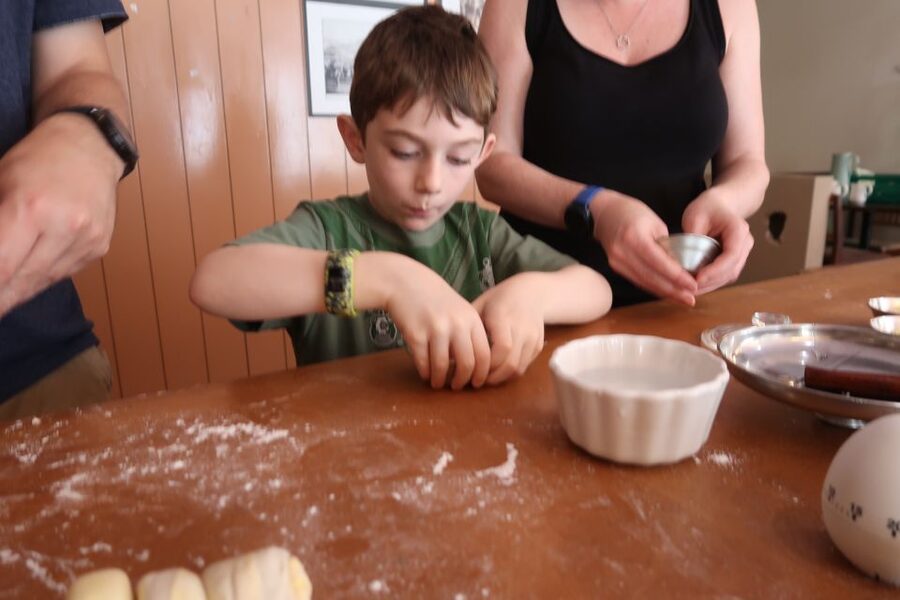
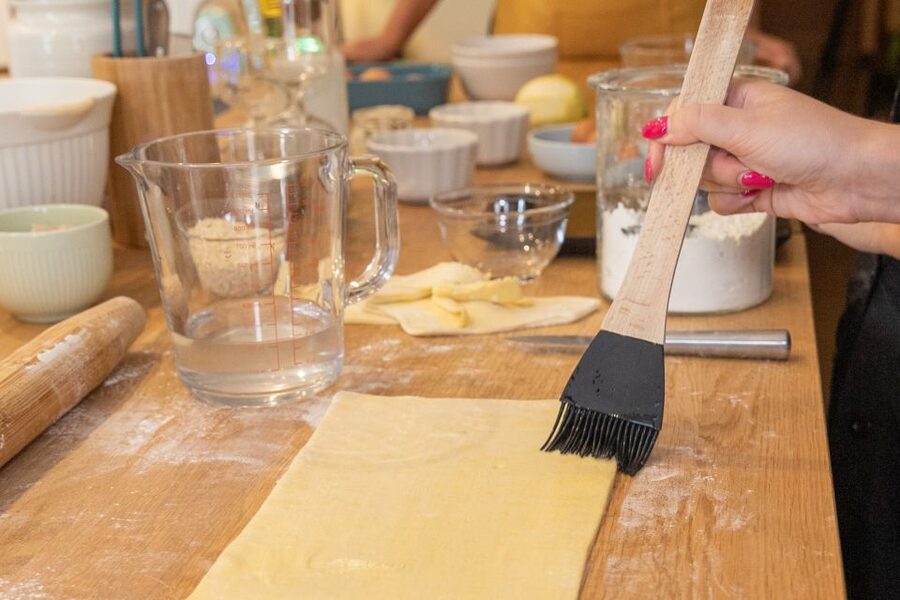
The most useful part of the class is that the pastry itself is prepared from scratch. Some cooking classes prepare the dough ahead of time, leaving you to mix the filling or assemble the tarts. Here, you get to see more of the process.
Joana explains each stage and shows you how to work with the pastry. Participants take turns, so you may not personally handle every second of the preparation, especially when the group is full. Still, the setup is interactive, and everyone contributes to the finished batch.
The dough requires more care than the finished tart suggests. You learn through demonstration and guided practice, with Joana correcting or helping when needed. Her patience matters here. Beginners are not left guessing, and more confident cooks can watch closely for the small details that affect the flaky layers.
A full class of 10 may be divided into two teams. This keeps the work manageable in a home kitchen and gives the group a clear way to share tasks. The tradeoff is simple: with two teams and both dough and custard to prepare, you may not get equal hands-on time at every stage.
That is worth knowing before you book. This is a participatory lesson, not a private one-on-one workshop. You will help make the pastries, but some steps are done in rotation.
Preparing the Creamy Custard Filling
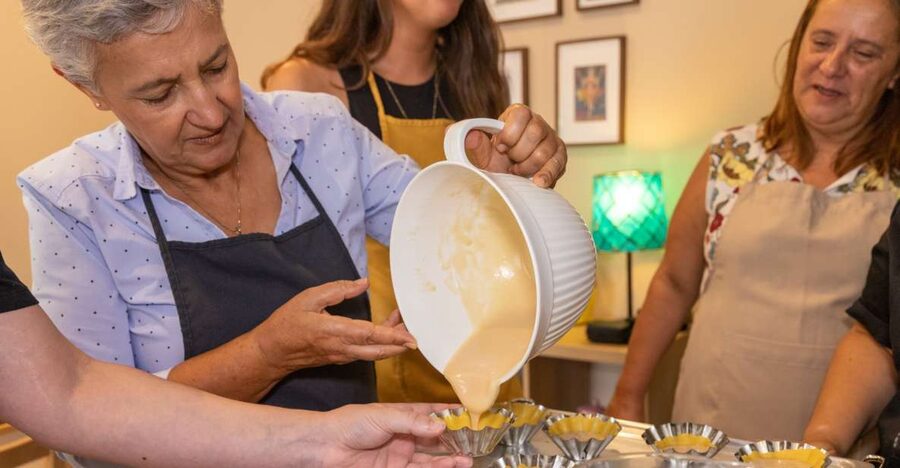
Once the pastry work is underway, you learn how to make the custard. The filling is the heart of the pastel de nata, and the finished texture depends on getting it smooth and creamy.
Joana explains the process carefully and shares practical tips as the group works. The instructions are aimed at ordinary home cooks, not pastry professionals. That makes the recipe useful after your holiday. You are learning something you can reasonably try in your own kitchen.
The class also gives you a better appreciation for why a good pastel de nata is not just a sweet tart. A successful one depends on the contrast between the crisp pastry and the soft custard. Several participants were especially pleased with the creamy result, and the recipe was good enough that people asked to receive it afterward.
The experience is not designed as a technical masterclass in advanced pastry. If you want highly specialized instruction, you might find the two-hour format too short. But if your aim is to understand the basic method, practice the important steps, and leave with a recipe, it does the job well.
More Pastel de Nata Workshops in Porto
- Porto: Pastel de Nata Pastry-Making Workshop
★ 4.9 · 1,542 reviews - Workshops Pasteis de Nata in Porto, Portugal
★ 4.9 · 520 reviews - Pastel de Nata | Workshop from scratch | Porto’s city center
★ 5.0 · 449 reviews
Baking, Sharing, and Eating the Results
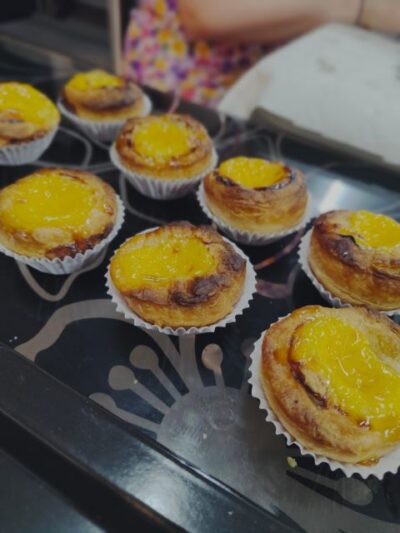
The best part comes when the pastries leave the oven. You sit down at a prepared table with the fresh pastel de nata, along with non-alcoholic drinks including coffee, tea, and orange juice.
The timing matters. You eat the pastries warm, when the pastry is at its crispest and the custard is still soft. A bakery tart can be excellent, but one you helped prepare has a different satisfaction. You know how much work went into those neat little layers.
The table also gives the class a social finish. You can talk with Joana and the other participants, compare your baking, and share Porto suggestions. People who arrive alone can easily become part of the group, while couples and families get a shared activity that feels more memorable than simply ordering dessert.
One participant also received a small taste of Port wine, but the listed drinks are non-alcoholic, so do not book this expecting a wine tasting. The reliable finale is coffee, tea, orange juice, and your pastries.
This final sit-down is not an afterthought. It completes the home-hosted feel. You are not rushed out as soon as the oven work ends. The meal gives the recipe a place in a wider conversation about Portuguese food and local life.
What Makes the Home Setting Special
Cooking in Joana’s home is the feature that gives the class its character. You see a lived-in space, a carefully prepared kitchen, and a host who is opening a part of her daily life to visitors.
That personal setting was repeatedly praised for making people feel welcome. Joana’s kindness and patience are central to the experience, but so is the care in the small details: a clean kitchen, organized ingredients, a comfortable table, and music in the background.
I would choose this over a commercial class if you value conversation and atmosphere as much as technique. You get a chance to ask about Portuguese culture, hear family stories, and receive local recommendations for Porto. Joana has also sent participants recipe details and food suggestions after the class, which makes the experience useful beyond the two hours.
The home setting has limits. Space is naturally more confined than in a cooking school, and a full group of 10 may feel busy during hands-on steps. The class works because the group rotates through tasks. If you want to control every part of every pastry yourself, a smaller private lesson would suit you better.
Is $33 a Good Deal?
At $33 per person, this is a strong value for Porto. The fee includes the ingredients, cooking utensils, guided lesson, drinks, and the pastries you make. You are also paying for two hours of personal instruction in a local home, not simply for a pastry tasting.
The value gets even better if you are traveling with friends or family. You can share the ride from central Porto and take part in an activity that combines food, culture, and social time. For solo visitors, the small group provides an easy way to meet people without signing up for a large bus-style outing.
You should factor in transportation. A ride-hailing trip may add a noticeable cost, especially if you are alone. One participant estimated an extra $12 Uber ride, though the exact fare depends on where you start and current demand.
Even with that addition, the total can compare well with other paid activities in Porto. You leave with a recipe, new baking skills, a meal, and the memory of being welcomed into a local home. The experience offers more than its ingredients alone.
Who Will Enjoy This Class Most?
I would recommend it to food lovers, curious cooks, couples, families with older children, and solo visitors who enjoy meeting people. You do not need to be a baker. Joana’s calm instruction makes the process approachable, and the class is designed so that beginners can take part.
It is also a good rainy-day plan. You spend the time indoors, working with food and talking around a table. Several participants found it a welcome break from sightseeing and a highlight of their Porto visit.
Experienced bakers can enjoy it too, particularly if they want to learn a Portuguese recipe and compare methods. Just keep your expectations realistic: in a two-hour group class, you will share tasks rather than receive constant individual instruction.
This is not suitable for wheelchair users, according to the activity information. The location outside the center also means you need to plan your route carefully. If you want an activity within walking distance of Ribeira, São Bento, or the Clérigos area, this is not the most convenient choice.
Practical Details Before You Book
The class lasts two hours and is offered at scheduled starting times, so check availability for your dates. The host speaks English, and the group is limited to 10 people.
Ingredients and cooking utensils are supplied. Drinks and pastries are included, so you do not need to bring food for the final tasting. Transportation is not included.
You can cancel up to 24 hours ahead for a full refund, and the reserve-now, pay-later option keeps your plans flexible. These policies are useful if your Porto schedule may change, but the key planning issue remains the journey to the home.
Wear something comfortable for kitchen work and arrive ready to participate. You will get the most from the class if you are happy to take turns, listen closely, and let the group share the work.
Should You Book the Pastel de Nata Class?
Yes, if you want a personal food experience rather than a quick pastry demonstration. Joana’s warmth, the grandmother’s recipe, the hands-on dough preparation, and the relaxed table time give this class real character.
I would book it early if it fits your schedule, especially for a rainy afternoon or a morning when you want a break from monuments. The only serious caution is the location outside central Porto and the fact that a full group means shared tasks.
If the extra ride is acceptable, $33 buys a lot: a useful recipe, practical instruction, warm pastries, drinks, and an inviting look at Portuguese hospitality. For many people, that is a better souvenir than another photograph.
FAQ
How long does the pastel de nata class last?
The class lasts two hours, including the cooking lesson and the time spent eating the freshly prepared pastries with drinks.
Where does the cooking class take place?
The class takes place in Joana’s home, about 10 minutes by car from Porto city center. Ring the doorbell marked 2 Andar when you arrive.
How can I reach the host’s home from Porto?
You can use Bolt or Uber, which is recommended for a quick trip. From Bolhão, bus 800 or 801 takes about 20 minutes and stops across the street, but onboard tickets require coins. From Trindade, take the Orange Metro Line to Fânzeres, then walk about 700 meters.
Is the recipe made completely from scratch?
Yes. The class covers both the pastry dough and the custard filling. The dough is not simply prepared in advance for you.
What is included in the price?
The $33 price includes ingredients, cooking utensils, guided instruction, non-alcoholic drinks, and the pastries you prepare.
Is the class suitable for wheelchair users?
No. The activity is not suitable for wheelchair users.
More Hands-On Cookery Sessions
- Porto Local Market Visit & Cooking Class / Showcooking
★ 5.0 · 206 reviews - Lisbon: Traditional Portuguese Cooking Class
★ 4.9 · 592 reviews - Lisbon Portuguese Cooking Class with 3-Course Dinner
★ 5.0 · 445 reviews - Traditional Portuguese Cooking Class in Lisbon
★ 5.0 · 287 reviews
More Pastry Workshops
- Lisbon: Pastel de Nata Baking Class
★ 4.9 · 2,106 reviews - Pastel de Nata Masterclass at a Real Bakery in Downtown Lisbon
★ 5.0 · 491 reviews - Pastel de Nata Pastry Class: Bake and Enjoy Your Own Treats
★ 5.0 · 485 reviews - Lisbon: 2-Hour Pastel de Nata Cooking Class
★ 4.8 · 461 reviews
Just added around Porto
- Matosinhos: Conservas Pinhais Factory Tour★ 4.8 · 173 reviews
- Private Geres National Park Tour with Lunch and Transfers★ 5.0 · 174 reviews
- Porto: Tour on the Douro River in a Classic Boat★ 5.0 · 178 reviews
- Porto: Santiago de Compostela and Valença do Minho Day Trip★ 4.5 · 181 reviews
- Porto: 6 Bridges Port Wine River Cruise with 4 Tastings★ 4.8 · 182 reviews
- Private Rafting Experience in Melgaço★ 5.0 · 186 reviews
- Tile Painting and Cocktails in Downtown Porto★ 5.0 · 187 reviews
- Porto: Combined Ticket for WOW Cultural District★ 4.7 · 188 reviews
Workshops, compared.

Pastel de Nata Cooking Class with Port Wine – Sé
Read our review →


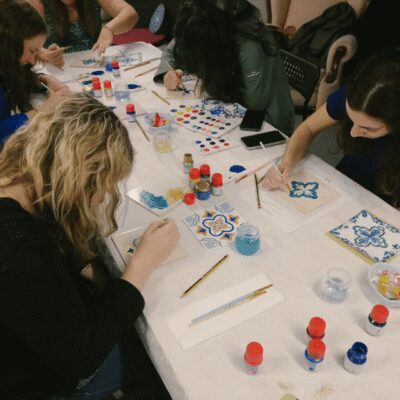
Tile-Painting Workshop with Porto Wine – Bainharia
Read our review →Browse the lists this tour appears in