
Reviewed · WORKSHOPS
Lisbon: Pastel de Nata Baking Class
Custard tarts taste better when you make them. This two-hour pastel de nata class at Homecooking Lisbon gives you a practical introduction to Portugal’s most famous pastry, with chefs guiding you through the dough, custard, shaping, and baking. You also learn about Portuguese food traditions while sampling coffee, juice, Port wine, and ginjinha.
I like the friendly teaching style and the fact that you actually handle the pastry instead of watching a demonstration. I also like the relaxed social side, especially for solo visitors, couples, and families with older children. The main consideration is the location: some people find it a little outside central Lisbon, so allow time for the journey. The official age guidance also says the class is not suitable for children under six.
In This Review
- Key things to know before booking
- Why pastel de nata is worth a class
- Entering the Homecooking Lisbon kitchen
- The first steps: dough, texture, and technique
- Custard, shaping, and the smell of the oven
- Coffee, Port, and a little ginjinha
- The best moment: warm pastel de nata
- Is $64 a fair price?
- Who will enjoy this class most?
- Booking advice for a smoother visit
- Should you book the Lisbon pastel de nata class?
- FAQ
- How long does the pastel de nata baking class last?
- Where does the class meet?
- How much does the class cost?
- Is instruction available in English?
- What drinks are included?
- Are ingredients and cooking equipment included?
- Is hotel transportation included?
- Can I cancel the booking?
- Can children take part?
Key things to know before booking
- You make the pastry yourself: The class covers dough, custard, folding, filling, and baking with plenty of help along the way.
- Fresh tarts are the reward: You eat your pastel de nata warm from the oven and may have some to take away.
- Portuguese drinks are part of the lesson: Expect homemade juice, coffee, water, Port wine, and a tasting of ginjinha.
- The class works well for beginners: Ingredients are prepared and measured in advance, but you still take part in the important steps.
- Small groups keep it personal: One recent class had 12 people, a size that allowed questions and hands-on support.
- Allow extra time to reach the kitchen: The meeting point is Homecooking Lisbon HUB, and a taxi may be the easiest option from central Lisbon.
Why pastel de nata is worth a class
Lisbon is full of pastry shops selling pastel de nata, so you might wonder why you should spend two hours making one. The answer is simple: the pastry looks modest, but the method has several parts that are easy to miss when you only buy the finished product.
A good pastel de nata needs crisp, layered pastry and a soft custard with enough flavor to balance its sweetness. The class lets you see how those elements come together. You handle the dough, shape it into the tins, prepare the filling, and learn why some ingredients or stages are done ahead of time.
That last point matters. This is not a television-style cooking show where everything magically appears at the right moment. Some ingredients are pre-measured, and parts of the preparation may be ready before you begin. That keeps the two-hour schedule manageable while still giving you real work to do.
I think this is the right balance for a holiday activity. You get the satisfaction of making the pastry without spending half a day on a difficult recipe. The class is designed for beginners, so you do not need baking experience or special equipment.
More Cooking Classes in Lisbon
- Lisbon: Traditional Portuguese Cooking Class
★ 4.9 · 592 reviews - Lisbon: 2-Hour Pastel de Nata Cooking Class
★ 4.8 · 461 reviews - Lisbon Portuguese Cooking Class with 3-Course Dinner
★ 5.0 · 445 reviews
Entering the Homecooking Lisbon kitchen
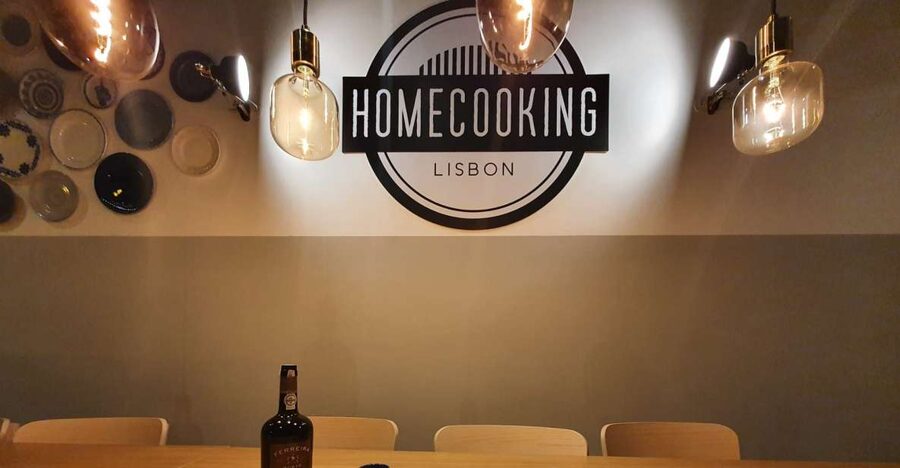
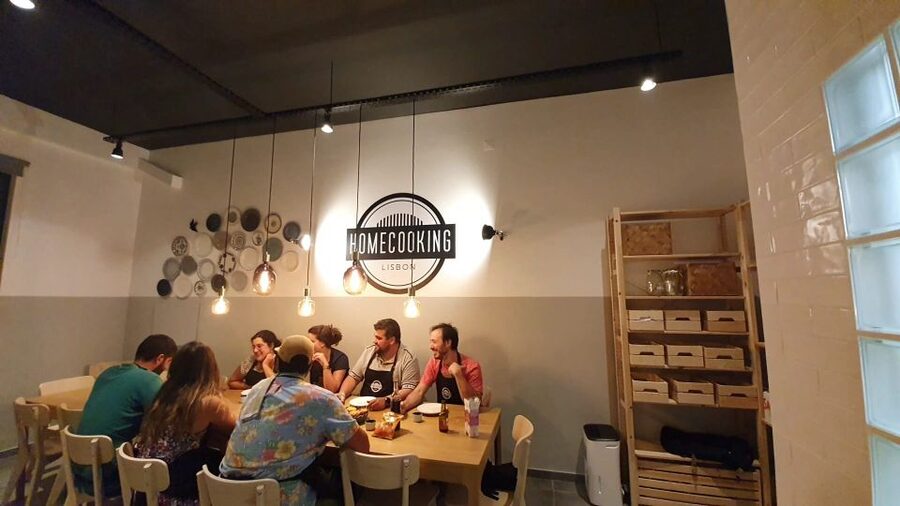
The meeting point is Homecooking Lisbon HUB in the Lisbon District. Several people found the kitchen clean, modern, easy to find, and well prepared. A bus stop is reported to be right outside, though the exact route will depend on where you are staying.
The location is not always the most convenient part of the experience. One class participant found it farther from central Lisbon than expected and chose a taxi, describing that option as convenient and inexpensive. Another person had a last-minute location problem connected with construction, but the issue was resolved quickly. I would check the meeting information shortly before setting out and avoid cutting your arrival time too close.
Once you arrive, the setting appears to do a lot of the work. A bright, tidy kitchen gives the class a proper cooking-school feel, while the group format keeps it informal. You are there to bake, not sit quietly in rows while someone lectures.
The class is taught in English. Instructors named in recent sessions include Marta, Bea or Beatrice, Miyuki, Miguel, Pedro, and Rachel. The names vary by date, but the teaching style is consistent: clear instructions, hands-on help, and plenty of encouragement when the dough does not behave perfectly.
The first steps: dough, texture, and technique
The class begins with an explanation of the pastry and the process ahead. You learn about the place of pastel de nata in Portuguese gastronomy, along with some background on the dessert’s origins and traditional preparation.
The first satisfying moment comes when you work with the dough. You can feel its softness and begin to understand why shaping matters. Folding and handling the pastry are not just small chores. They help create the flaky layers that give a good pastel de nata its crisp bite.
This is where patient instruction makes a real difference. Marta is repeatedly praised for showing each step clearly and helping people stay on track. Bea is also singled out for being warm, funny, and attentive. Miyuki receives similar praise for making the class welcoming, including for people who arrive alone.
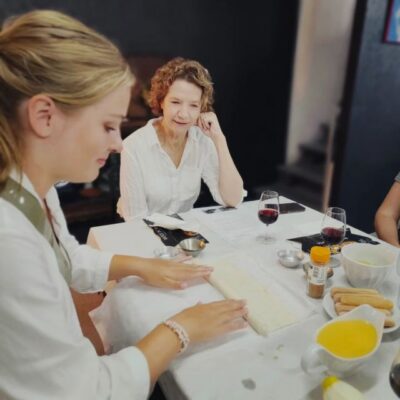
You may work in pairs rather than each person having a completely separate workstation. That can be a benefit if you like meeting people, and a slight drawback if you want to control every step yourself. One solo participant was paired with someone new and found the arrangement enjoyable. For a couple or family, pairing can make the activity feel cooperative rather than competitive.
The preparation is structured enough that you will not be left guessing. At the same time, you still do the important work. The ingredients are not simply handed over as a finished mixture, and the pastry is not made entirely for you.
Custard, shaping, and the smell of the oven
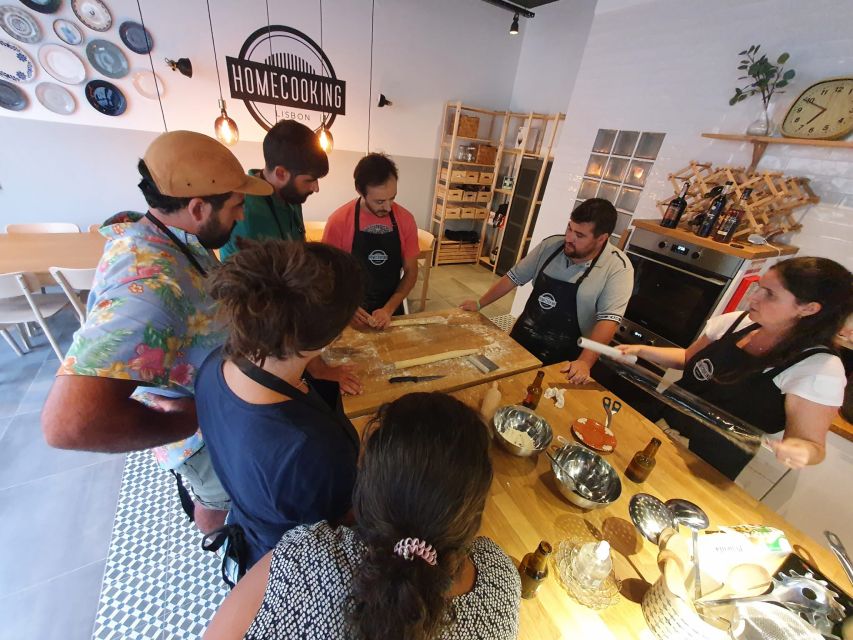
The custard is the other key part of the class. You learn how it is prepared and how it is filled into the pastry shells. The process is explained in plain English, with instructors ready to step in when you need a hand.
The recipes are presented as traditional rather than rushed shortcuts. One person especially appreciated learning about the traditional method instead of focusing only on modern ingredient substitutions. Another received recipes for the tarts and additional Portuguese dishes, which adds value if you want to keep cooking after Lisbon.
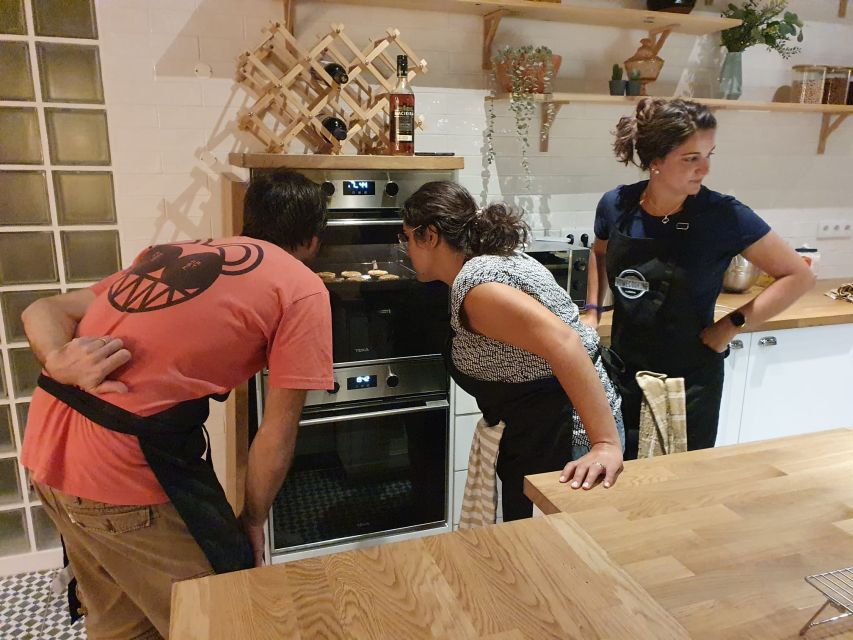
Shaping the pastry into the tins is likely to be the most hands-on part. You press and form the dough, then add the custard before the tarts go into the oven. The kitchen team may handle the oven stage, which is sensible in a group class and keeps the session moving safely.
The aroma is part of the pleasure. As the tarts bake, you get the smell of warm pastry and custard filling the kitchen. This waiting period also gives the class a natural social pause. You can talk with the other people in your group, ask questions, and sample the drinks.
Do not expect a pastry diploma at the end. You receive a useful introduction and enough understanding to attempt the recipe at home, but pastel de nata is still a pastry that takes practice. One person felt confident recreating it at home, while another was happy simply to have learned the method and gained a better idea of what is involved.
More Pastel de Nata Workshops in Lisbon
- Pastel de Nata Masterclass at a Real Bakery in Downtown Lisbon
★ 5.0 · 491 reviews - Pastel de Nata Pastry Class: Bake and Enjoy Your Own Treats
★ 5.0 · 485 reviews - Pasteis de Nata Baking Class from Lisbon
★ 5.0 · 248 reviews
Coffee, Port, and a little ginjinha
The drink selection adds a distinctly Portuguese touch. Included drinks are homemade juice, coffee, water, Port wine, and a tasting of ginjinha, the sour-cherry liqueur often served in Lisbon.
These drinks are not the main attraction, but they help turn the class into a food-and-culture experience rather than a narrow baking lesson. Coffee makes obvious sense with a custard tart. Port and ginjinha introduce you to local flavors you might otherwise overlook.
There is one small qualification: the exact drinks may not always appear in identical form. One person noted that wine was not available during their session. If Port is important to you, treat it as a listed inclusion rather than the central reason to book.
The atmosphere is described as sociable and relaxed. People come from different countries, and the shared work gives you an easy way to start conversations. That makes the class a good choice if you are traveling alone or want a break from sightseeing with your own group.
The best moment: warm pastel de nata
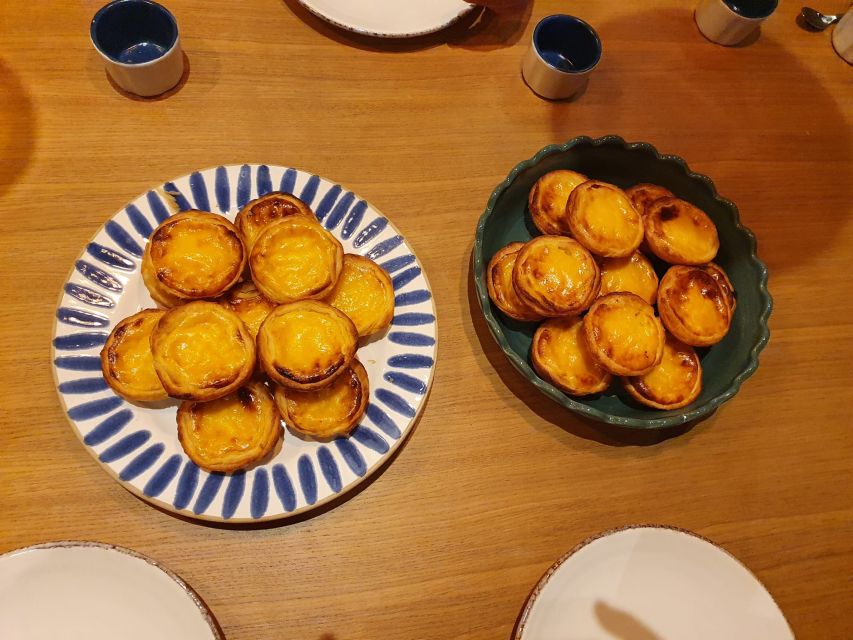
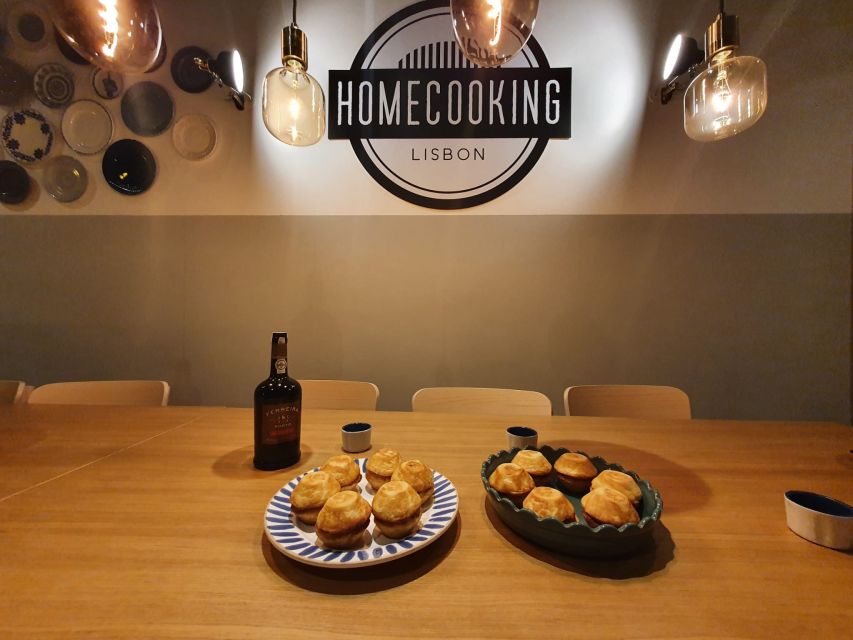
When the tarts come out, you finally get to judge your work. The most common result is crisp pastry, creamy custard, and a batch that tastes especially good because you made it yourself.
Freshness matters here. A pastel de nata from a bakery can be excellent, but one eaten warm at the end of a class comes with a little drama: you have watched the dough take shape, smelled it baking, and waited for the filling to set.
You can usually take some pastries back to your accommodation, though the exact amount is not specified. One person said there were enough to enjoy for the rest of the trip. Another noted that the final time to eat and chat felt rushed, so you may want to make the most of the last few minutes rather than lingering over every tart.
The class lasts two hours, which most people find to be the right length. It is long enough to learn the method but short enough to fit around a day in Lisbon. If you have a packed sightseeing schedule, still allow extra time for getting to the kitchen and returning to the center.
Is $64 a fair price?
At $64 per person, this is not the cheapest way to eat a pastel de nata. You can buy one in Lisbon for very little. The value comes from the full package: instruction, ingredients, equipment, drinks, cultural context, and a meal-sized batch of your own pastries.
You also avoid several costs that can add up in a cooking activity. Ingredients and utensils are included, and you do not need to bring anything special. Insurance is included as well. Hotel pickup and drop-off are not included, so transportation is your responsibility.
For me, the price makes more sense if you value experiences over simple food purchases. You are paying for a skill, a social activity, and a better understanding of a national specialty. It is particularly good value for a couple or a family that wants one shared activity rather than another guided walk.
It is less compelling if you only want a quick taste or if your Lisbon schedule is very tight. In that case, buy a tart at a bakery and spend the $64 on several other local foods.
Who will enjoy this class most?
This activity suits beginners, food lovers, couples, solo visitors, and families with children who meet the age guidance. Older children and teenagers appear to enjoy the hands-on work, and the two-hour format is easier for young cooks than a full-day course.
It is also a good rainy-day plan. You get indoors, work with your hands, and still experience something strongly connected to Lisbon. The English instruction makes the class accessible to people who do not speak Portuguese.
The official guidance says the class is not suitable for children under six or people with mobility impairments. One family account describes bringing a five-year-old, but that should not override the stated restriction. If you are booking with a young child or have mobility concerns, confirm suitability before paying.
You should also book this with realistic expectations. The class teaches the process, but it may not reproduce every detail of a professional pastry kitchen. Working in pairs and using some pre-measured ingredients are part of the format.
Booking advice for a smoother visit
Book a time that leaves room around the two-hour session. Check the available start times, then plan your route to Homecooking Lisbon HUB rather than assuming it is close to the main sights.
If you are coming from central Lisbon, compare public transport with a taxi. A bus stop is reported near the kitchen, but a taxi may save time and reduce the chance of arriving flustered with flour-free hands and a late start.
You can cancel for a full refund up to 24 hours before the activity. The reserve-now, pay-later option also helps if your Lisbon plans are still changing. Keep the booking details handy in case the meeting point changes.
Come ready to work in a shared kitchen. You will likely cooperate with another person, and the best results come from listening carefully during the shaping stage. If you bake at home later, keep the recipe and pay close attention to the pastry technique rather than only the ingredients.
Should you book the Lisbon pastel de nata class?
I would book this if you want a friendly, useful food experience rather than another sightseeing stop. The strongest parts are the patient instructors, the chance to make the pastry yourself, and the warm tarts with Portuguese drinks at the end.
The class is especially appealing for solo visitors, couples, families with older children, and anyone curious about how pastel de nata is made. At $64, it is fair value when you count the teaching, food, equipment, and social setting.
Skip it if you are looking only for the cheapest custard tart in town, or if reaching the Lisbon District meeting point would create a headache. For everyone else, this is a practical way to understand one of Portugal’s best-known foods, then try to recreate a little piece of Lisbon at home.
FAQ
How long does the pastel de nata baking class last?
The class lasts two hours.
Where does the class meet?
The meeting point is Homecooking Lisbon HUB in the Lisbon District, Portugal.
How much does the class cost?
The listed price is $64 per person.
Is instruction available in English?
Yes. The instructor language is English.
What drinks are included?
Included drinks are homemade juice, coffee, water, Port wine, and a tasting of ginjinha. Availability may vary by session, as one account noted that wine was not served.
Are ingredients and cooking equipment included?
Yes. All ingredients and cooking utensils are included, along with instruction and insurance.
Is hotel transportation included?
No. Hotel pickup and drop-off are not included.
Can I cancel the booking?
Yes. You can cancel up to 24 hours in advance for a full refund.
Can children take part?
The official guidance says the class is not suitable for children under six. Children over that age may be able to participate, but the activity is best suited to those who can follow instructions and work in a shared kitchen.
More Hands-On Cookery Sessions
- Traditional Portuguese Cooking Class in Lisbon
★ 5.0 · 287 reviews - Porto: Pastel de Nata Cooking Class from Scratch
★ 4.9 · 468 reviews - Porto: Pastel de Nata Cooking Class with Porto Wine (Sé do Porto)
★ 5.0 · 340 reviews - Porto Local Market Visit & Cooking Class / Showcooking
★ 5.0 · 206 reviews
More Pastry Workshops
- Porto: Pastel de Nata Cooking Class with Grandma’s Recipe
★ 5.0 · 1,565 reviews - Porto: Pastel de Nata Pastry-Making Workshop
★ 4.9 · 1,542 reviews - Porto: Pastel de Nata Cooking Class with Port Wine – Sé
★ 4.8 · 888 reviews - Workshops Pasteis de Nata in Porto, Portugal
★ 4.9 · 520 reviews
Just added around Lisbon
- Central Lisbon E-Bike Tour★ 5.0 · 168 reviews
- From Lisbon: Sintra and Cascais Full-Day Private Tour★ 4.9 · 168 reviews
- Experience the Queen of Fado at Ah Amália Living Experience★ 5.0 · 171 reviews
- Lisbon – Vinho Verde Wine Premium Boat Experience★ 5.0 · 171 reviews
- Lisbon: 2-Hour Sunset Sailing Tour on Luxury Sailing Yacht★ 4.9 · 171 reviews
- Óbidos: Medieval Tales & Secrets Spots Guided Walking Tour★ 4.9 · 171 reviews
- From Lisbon: Small Group Fátima & Little Shepherds Town Tour★ 4.8 · 171 reviews
- Horse Riding on the Beach★ 4.5 · 171 reviews
Workshops, compared.
Pastel de Nata Cooking Class with Grandma’s Recipe
Read our review →
Pastel de Nata Cooking Class with Port Wine – Sé
Read our review →


Tile-Painting Workshop with Porto Wine – Bainharia
Read our review →Browse the lists this tour appears in