
Reviewed · WORKSHOPS
Sintra: Hispanic Moorish Tile Workshop
Tiles tell Sintra’s story. This two-hour studio workshop gives you hands-on time with Aresta tile decoration, an Islamic-influenced technique that reached Spain in the 15th century and became known as Hispano-Moorish. I like the satisfying two-part format: you shape one tile with fresh clay and a mold, then paint a second tile with colored glazes. I also like the small group, limited to eight people, which leaves room for patient instruction. The main catch is timing: your painted tile needs firing, so you cannot take the finished piece home that afternoon.
The $58 price feels fair if you value a local craft lesson and a personal souvenir, rather than simply another sightseeing stop. Instructor Aldina, also named Alinda in one review, receives especially warm praise for her calm, friendly teaching. One practical concern is shipping: optional postage costs extra, and mail service to the United States is currently restricted, so American participants should plan on hotel delivery, later pickup, or storage at the studio.
In This Review
- Key points to know before booking
- Why this Sintra tile class feels different
- From fresh clay to the first molded tile
- Painting the glazed tile from 3 to 5 pm
- Choosing a motif without overthinking it
- How the firing and delivery process works
- Getting to the studio and planning your afternoon
- Is $58 a fair price?
- Who will enjoy this workshop most?
- Final verdict: book it if the souvenir matters
- FAQ
- How long does the Sintra Hispanic Moorish tile workshop last?
- Where does the workshop take place?
- What will I make during the class?
- Is the workshop taught in English?
- Are materials and equipment included?
- Is firing included in the price?
- Can I take my finished tile home the same day?
- Can the studio ship the tile to my home?
- Is the workshop suitable for children?
Key points to know before booking
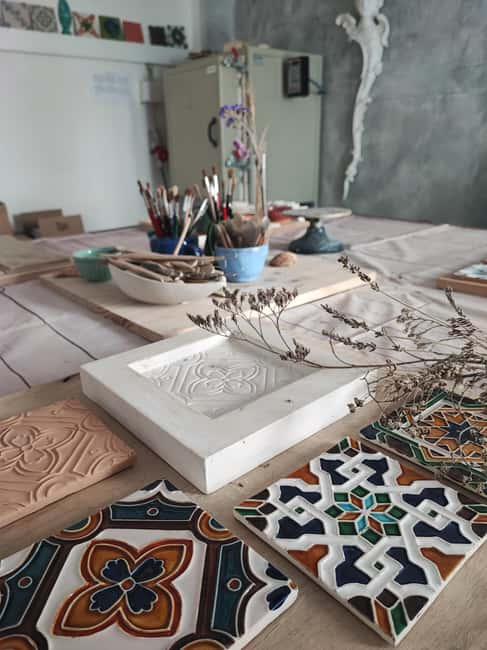
- Two tiles, two techniques: Shape one tile from fresh clay with a mold, then decorate another with colored glazes.
- Aresta decoration has Islamic roots: You learn a traditional method connected to Hispano-Moorish ceramics that came from Spain in the 15th century.
- Small classes keep the lesson personal: The workshop accepts no more than eight participants, and instruction is in English.
- Sintra makes a good setting: The studio is described as a short walk from the train station, making the class easy to pair with time in town.
- Your finished tile comes later: Firing takes about two to three days, after which you can collect the tile or arrange delivery.
- The price includes the essentials: Materials, equipment, instruction, one painted tile, and firing are covered in the $58 fee.
Why this Sintra tile class feels different
Sintra is famous for palaces, gardens, and steep streets. This workshop gives you a quieter way to understand the area through an art form you have probably already seen on Portuguese buildings, sidewalks, stairways, and interiors.
I like experiences that turn decoration into something readable. After spending two hours learning how a tile is formed and painted, you may look at the patterned walls around Lisbon and Sintra with a sharper eye. Geometric lines stop being background detail. You begin to notice the planning, repeated shapes, color choices, and handwork behind them.
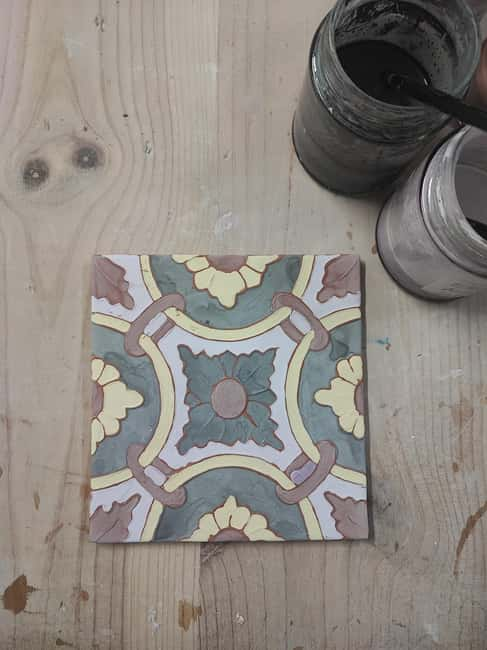
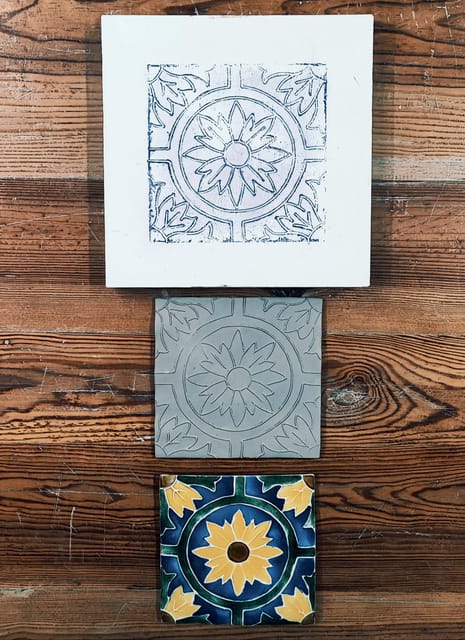
The class focuses on the traditional Aresta technique. The name refers to raised lines that help keep different glaze colors in place, creating the patterned effect associated with Hispano-Moorish tilework. You are not simply painting a souvenir from a blank ceramic square. You are learning a method with a clear link to Islamic artistic influence and the ceramic traditions that developed in Spain and Portugal.
That history is kept at a practical scale. You get an explanation of tile history, then put your hands to work. For me, that is the right balance. A long lecture would feel out of place during a creative class, while painting without context would miss much of the point.
A few more reviews worth comparing before you book
- Lisbon: Pastel de Nata Baking Class
★ 4.9 · 2,106 reviews - Porto: Pastel de Nata Cooking Class with Grandma’s Recipe
★ 5.0 · 1,565 reviews - Porto: Pastel de Nata Pastry-Making Workshop
★ 4.9 · 1,542 reviews
From fresh clay to the first molded tile
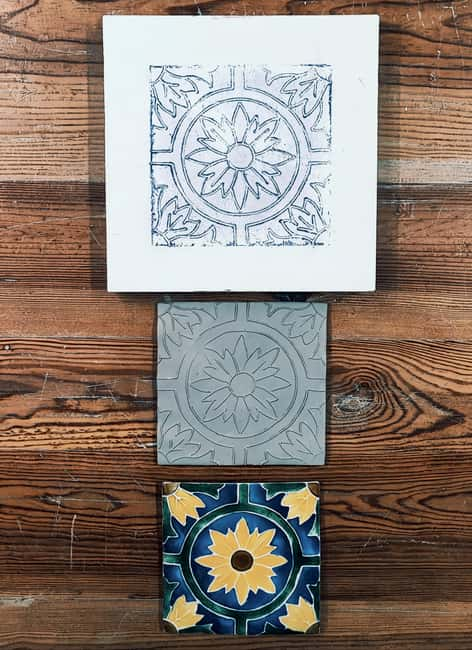
The first hands-on task uses fresh clay and a mold. You make a tile rather than starting with a finished piece, which lets you see the early stage of ceramic work. The mold provides structure, but you still take part in preparing the clay and forming the basic shape.
This part may appeal most to you if you enjoy tactile activities. Clay is forgiving in a way that a museum display is not. You can feel the material, follow the process, and understand that a decorative tile begins as a simple piece of earth-colored clay.
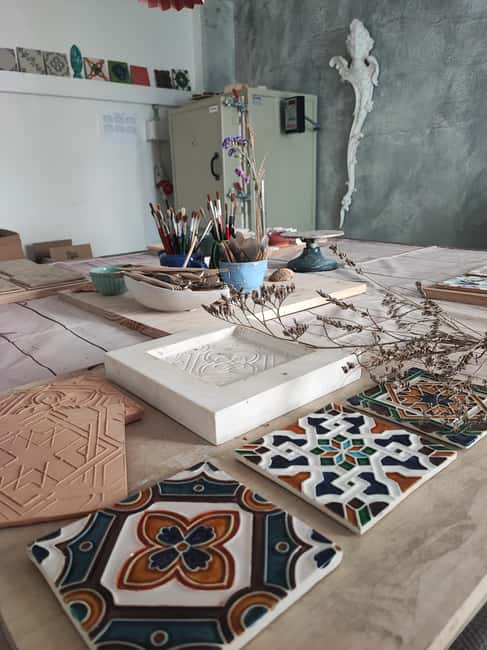
The available molds offer a range of motifs. That choice matters because it gives you some control over the character of the finished object. You may find geometric designs among the options, and the class is particularly suited to people who like Moorish patterns and repeated forms.
Keep your expectations realistic. In two hours, you are learning a traditional craft at an introductory level, not becoming a professional ceramicist. The value comes from trying the method and seeing how the parts fit together, not from producing a flawless museum piece.
The workshop includes the clay, molds, and equipment, so you do not need to bring craft supplies. The studio handles the firing process for the painted tile, while the description specifically highlights the molded clay experience as part of the class. Ask the instructor at the beginning how the two pieces will be finished if you want to know what happens to the clay tile after shaping.
Painting the glazed tile from 3 to 5 pm
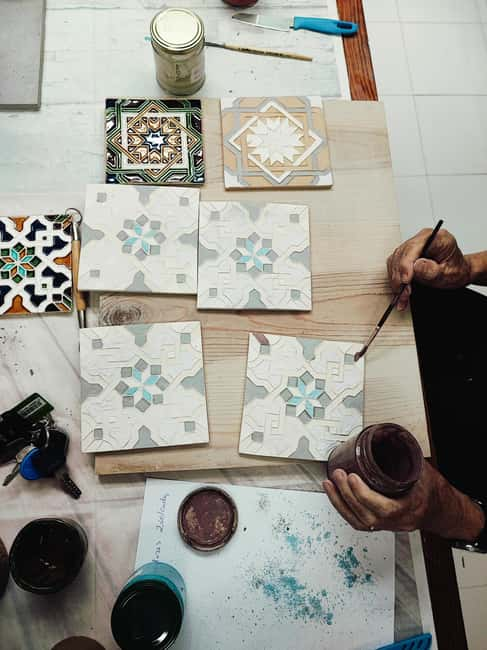
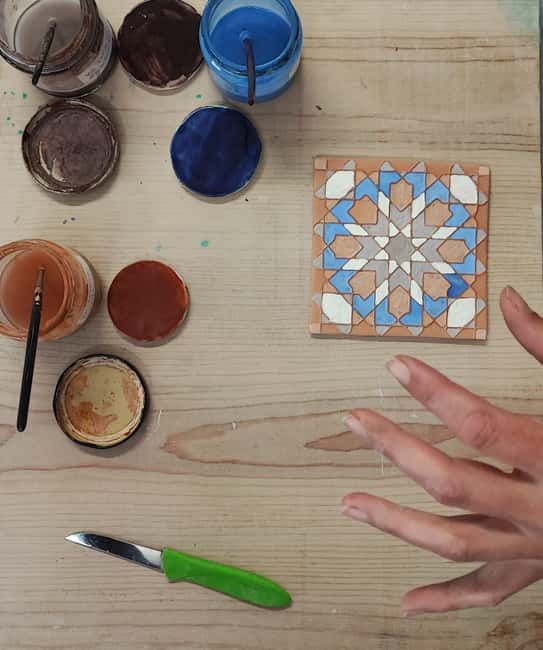
The second task is painting a tile with colored glazes. This is the part many people find most relaxing. You choose from a broad selection of motifs and colors, then work through the design with guidance from the instructor.
Glaze can look different before and after firing, so this is not quite like painting on paper. The final color develops in the kiln. That uncertainty is part of the charm, though it also means your finished piece may not look exactly as it did on the studio table.
The class runs from 3 to 5 pm. That afternoon schedule works well if you spend the morning visiting Sintra’s sights and want a creative break later in the day. It also gives you a firm two-hour block, which is useful when planning train connections or dinner.
I would arrive with enough time to find the studio without rushing. The class itself is limited to eight participants, but the exact pace will depend on how quickly everyone selects a motif and completes the painting. The small size should make it easier to ask questions and get help with fine patterns.
The strongest praise centers on the teaching. Aldina is described as warm, patient, and welcoming, with clear instruction and a friendly manner. That matters here. Tile painting can become frustrating if you are unsure how much glaze to use or how to follow the design, so a teacher who takes time with each person adds real value.
The activity is suitable for children aged seven and older, but younger children are not accepted. It can work for families, couples, solo visitors, and friends. If your group includes children, remember that the class involves careful painting and waiting for a finished piece, not a fast craft project.
Choosing a motif without overthinking it
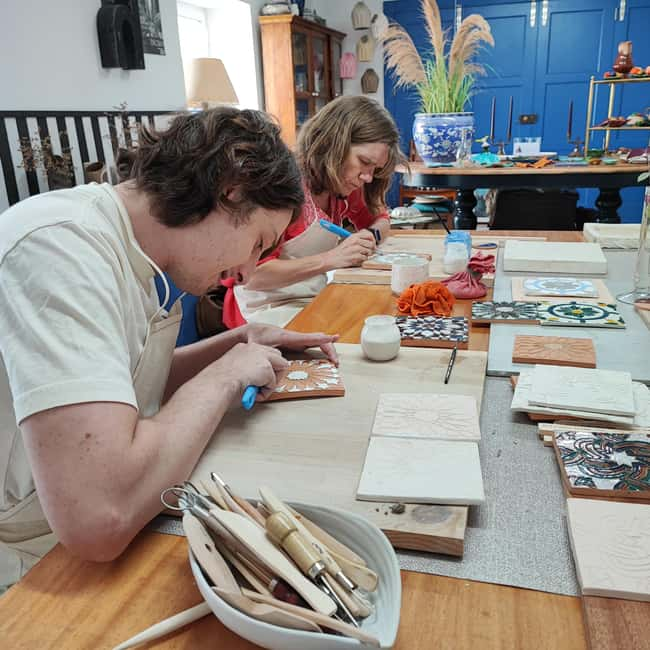
A wide choice of molds and tile patterns sounds liberating, but it can also slow you down. If you like geometric design, you may want to look for an intricate Moorish motif. If you prefer a simpler souvenir, select a pattern that gives you enough open space to work comfortably.
You do not need an art background. The point is not to copy a famous Portuguese panel. It is to make a personal tile while learning the basic logic of the decoration technique.
I suggest choosing a design that you will still enjoy looking at after the holiday. The tile may end up on a shelf, wall, or desk, so think about color and shape as well as historical appeal. You can also ask the instructor for help if two motifs catch your eye.
The choice of a finished tile is one of the reasons this class feels more personal than a standard demonstration. You leave with something connected to your own decisions, even if the piece has the pleasing irregularities of a first attempt.
A different sort of day out around Sintra:
- Sintra: Pena Palace and Park Entrance Ticket
★ 4.2 · 17,410 reviews - Lisbon: Sintra, Pena Palace, Cabo da Roca, & Cascais Tour
★ 4.9 · 3,509 reviews - Quinta da Regaleira Skip-the-Ticket-Line Entry & Audioguide
★ 4.2 · 3,316 reviews - Sintra: Castle of the Moors Skip-the-Line Ticket
★ 4.6 · 2,893 reviews
How the firing and delivery process works
You do not take the painted tile home at 5 pm. The studio keeps it for firing, and the finished piece is normally ready for pickup within two to three days. You can collect it at the studio later, or arrange delivery for an additional charge.
Shipping is not included in the $58 price. One participant reported a reasonable charge of 28 euros for sending two tiles to the United States in the past, but current U.S. shipping restrictions mean you should not rely on standard postal delivery there.
For U.S. participants, Portugal’s postal services have temporarily restricted shipments because of changed de minimis rules. The studio can keep your tile safely until international shipping becomes available again. If you cannot return to Sintra, hotel delivery by courier may be arranged for an additional fee.
This is the biggest practical issue in the experience. If you are leaving Portugal soon, ask about delivery options before you begin. A tile is compact, but it is fragile, and carrying an unfired or freshly fired piece through several flights and train rides is not ideal.
If you are staying in Sintra for at least a few days, pickup should be straightforward. The studio is described as a short walk from the train station, and that location makes a return visit easier. Build the extra stop into your plan rather than treating it as an afterthought.
Getting to the studio and planning your afternoon
Transportation to and from the studio is not included. Several visitors combined a short train ride from Lisbon with time exploring Sintra before the workshop. That is a sensible plan, though you should leave enough margin to reach the studio by 3 pm.
Sintra has plenty to fill the hours before class, but the workshop is not a reason to race through every major sight. If you spend the morning on a palace visit, allow time for the town’s hills, crowds, and possible delays. A calm arrival will help you enjoy the painting instead of watching the clock.
The location near the station is useful because you can organize the class around rail travel from Lisbon. The supplied information does not include a private transfer, meeting service, or guided tour of Sintra, so you are responsible for reaching the studio on your own.
Food and drinks are also not included. Plan lunch before the session or arrange a snack separately. The workshop lasts two hours, and the 3 pm start falls between lunch and dinner, so most people will find it easy to fit around a normal day of sightseeing.
The studio also offers other creative classes, including azulejo work, pottery, Tiffany glass, and jewelry. If you enjoy the session, you might find additional workshops available, but those are separate activities and not part of this booking.
Is $58 a fair price?
At $58 per person, this is not the cheapest way to spend two hours in Sintra. It is also more than a casual souvenir purchase. The question is what you want from the afternoon.
The price includes all materials and equipment, instruction in English, the fresh-clay molding activity, one painted tile, and firing. That makes the cost easier to justify than a class that charges extra for the basic ceramic work.
I see the best value in the combination of context and participation. You learn why the patterns matter, try two stages of the craft, and receive a finished object later. The class also gives you a break from sightseeing, which can be welcome after a morning spent walking around Sintra.
The price may feel high if you only want a quick painting activity or if you are traveling with a large family. The group limit of eight helps explain the cost, since a small class allows more direct assistance than a crowded workshop.
The firing service is important. You do not need to find a kiln or carry a wet project around Portugal. Still, delivery costs can add to the final bill, so include that expense when comparing this class with other activities.
Who will enjoy this workshop most?
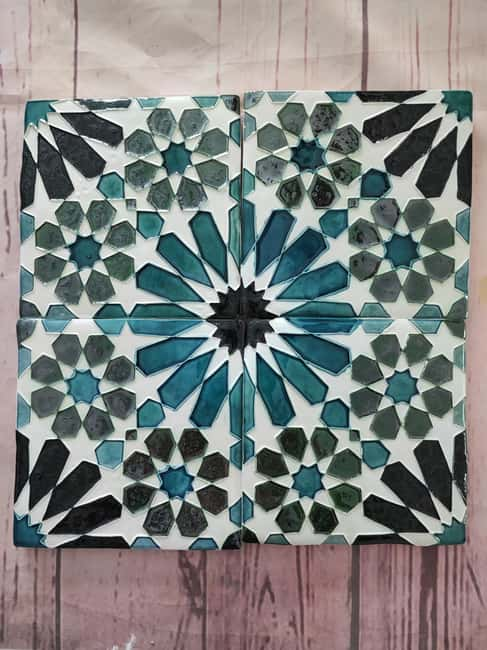
I would recommend the class to you if you like local crafts, historic design, and souvenirs with a story. It works particularly well for people who have already noticed Portuguese azulejos and want to understand how decorative tile is made.
It suits solo visitors because the small group and instructor-led format provide an easy social setting without requiring you to arrive with companions. Couples can make different design choices and compare the results later. Families with children aged seven and above can enjoy the hands-on format, provided the children are comfortable with a careful, two-hour activity.
It is also a good choice if you have seen enough palaces for one day. Sintra can become a parade of grand rooms and photo stops. Sitting at a worktable and making something gives your afternoon a different rhythm.
You may want to skip it if your schedule is packed tightly around palace tickets and train departures. The class is fixed from 3 to 5 pm, and the finished tile requires a later pickup or delivery arrangement. It is best for an itinerary with some breathing room.
Wheelchair access is available, which makes the workshop more approachable for people who need an accessible activity. The supplied details do not specify every feature of the route or restroom setup, so contact the studio if you need precise access information.
Final verdict: book it if the souvenir matters
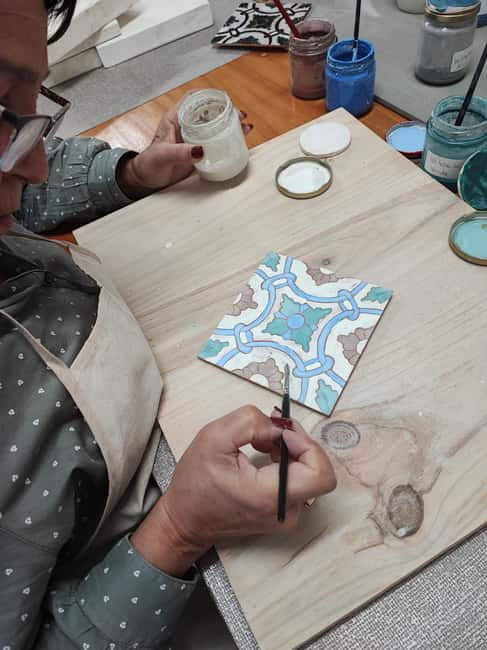
I would book this Sintra tile workshop if you want more than a photograph from Portugal. The strongest reasons are the two different clay activities, the personal guidance from Aldina, the small class size, and the chance to connect a familiar Portuguese art form with its Hispano-Moorish roots.
Plan carefully for the finished tile. Pickup takes place later, and shipping costs extra. U.S. participants should arrange hotel delivery or another solution before leaving Portugal because postal shipment is currently restricted.
For a relaxed afternoon, a creative souvenir, and a closer look at one of Portugal’s most recognizable crafts, the $58 fee is reasonable. If your schedule allows the 3 to 5 pm class and you are willing to handle the return logistics, this is an easy experience to add to a Sintra day.
FAQ
How long does the Sintra Hispanic Moorish tile workshop last?
The workshop lasts two hours, from 3 pm to 5 pm.
Where does the workshop take place?
It takes place at the Estudio Lazuli studio in Sintra, in Portugal’s Lisbon District.
What will I make during the class?
You will shape one tile with fresh clay and a mold, then paint another tile with colored glazes.
Is the workshop taught in English?
Yes. English instruction is available.
Are materials and equipment included?
Yes. The workshop includes all materials and equipment needed for the activities.
Is firing included in the price?
Yes. Firing service for your painted tile is included.
Can I take my finished tile home the same day?
No. The painted tile stays at the studio for firing and is generally ready for pickup within two to three days.
Can the studio ship the tile to my home?
Yes, shipping can be arranged for an additional fee. U.S. postal shipments are currently restricted, so American participants can ask about hotel courier delivery or storage at the studio.
Is the workshop suitable for children?
Children under seven are not accepted. The activity is suitable for children aged seven and older.
Just added around Sintra
- Sintra Guided Tour for Small Groups: Pena, Regaleira & Roca★ 4.8 · 48 reviews
- Sintra: Self-Drive Trip to All Monuments and Coast★ 4.8 · 48 reviews
- E-Car Self Guided Tour / Palacio da Pena / Regaleira / Monserrate★ 5.0 · 49 reviews
- Sintra/Lisbon: Sintra & Quinta da Regaleira Tour with Ticket★ 4.4 · 51 reviews
- Sintra: Epic Full-Day 4×4 Off-Road Adrenaline Tour in Sintra★ 4.8 · 54 reviews
- Sintra: Entry Ticket to Quinta da Regaleira and Guided Visit★ 3.5 · 55 reviews
- From Lisbon: Sintra, Pena, Regaleira, Roca and Cascais Tour★ 4.9 · 56 reviews
- Pena Palace & Sintra Full Day -Private Tour in Classic Car★ 5.0 · 56 reviews
Workshops, compared.

Pastel de Nata Cooking Class with Grandma’s Recipe
Read our review →
Pastel de Nata Cooking Class with Port Wine – Sé
Read our review →


Browse the lists this tour appears in