
Reviewed · WORKSHOPS
Hands on Portuguese Cooking Class in Lisbon
Lisbon tastes better when you cook it yourself. At Compadre Cooking School, you get your own kitchen station and prepare a full Portuguese meal from start to finish, with guidance in English and a shared meal at the end. The class lasts about three hours and includes a starter, a traditional cod dish, and a meat dish.
I like the small-group format, capped at 12 people, because it gives you room to work instead of merely watching a demonstration. I also like that you take home the recipes, and that instructors such as Ana, Anna, and Marta add stories about Portuguese food, cod, peppers, and local traditions as you cook. The main drawback is that dessert is not included, and the amount of wine may vary.
I would book this for an early day in Lisbon. You will learn what bacalhau means on a menu, discover how piri-piri flavors work, and gain enough confidence to order Portuguese food with a little more understanding for the rest of your trip.
In This Review
- Key details before you book
- Finding Compadre Cooking School in Lisbon
- Your three-hour Portuguese meal
- Why the small cooking stations matter
- From cod to piri-piri: what you actually learn
- Sitting down to eat what you made
- The social side of the evening
- Is $82.24 a fair price?
- Who should book this class?
- Final decision: should you book it?
- FAQ
- Where does the Portuguese cooking class begin?
- Where does the class end?
- How long does the cooking class last?
- Is the class offered in English?
- How many people can join the class?
- What dishes are included?
- Are drinks included?
- Can children attend?
Key details before you book
- Three dishes in about three hours: You prepare a starter, a traditional cod recipe, and a meat dish, with the exact dishes depending on the class menu.
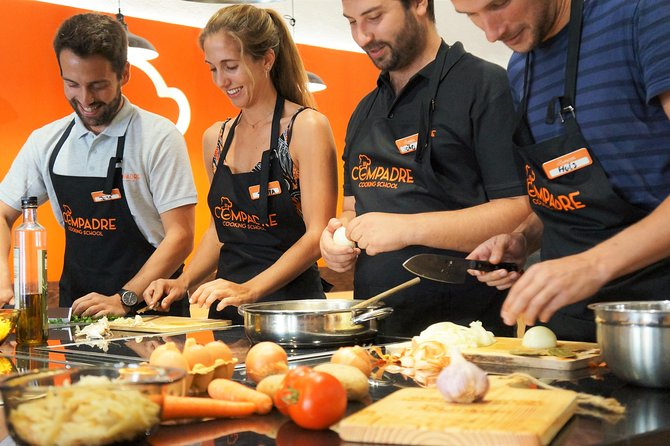
- Your own cooking station: This is a hands-on lesson, not a cooking show where you sit and watch someone else do the work.
- Cod takes center stage: The class explains the importance of salted cod in Portuguese cooking and uses a traditional cod preparation.
- Small groups help beginners: With a maximum of 12 people, instructors can offer personal help at each station.
- Recipes go home with you: The dishes are designed to be practical enough to make again for family and friends.
- Plan for a savory meal, not a dessert course: Wine may be served to adults, but dessert is not part of the stated menu.
Finding Compadre Cooking School in Lisbon
The class begins and ends at Compadre Cooking School, at R. Heliodoro Salgado nº14, 1170-176 Lisboa. The meeting point is near public transportation, which makes this a fairly simple addition to a day of sightseeing.
You receive a mobile ticket, and the class is offered in English. I would still allow a little extra time to find the address, especially if you are walking through Lisbon’s steep streets or arriving by transit. The activity returns to the same place, so you do not have to figure out a second pickup point after dinner.
The school is described as a beautiful, spacious cooking space. That matters more than it may sound. Cooking with a group can become cramped when everyone is chopping, stirring, and reaching for the same ingredients. Here, each small group has its own station, making it easier to follow instructions and take part in the work.
The class has a maximum of 12 people. It may be smaller, and one session had only four participants, creating the feel of a private lesson. You should not count on that exact arrangement, but the group limit still gives this experience a more personal feel than a large demonstration class.
More Cooking Classes in Lisbon
- Lisbon: Pastel de Nata Baking Class
★ 4.9 · 2,106 reviews - Lisbon: Traditional Portuguese Cooking Class
★ 4.9 · 592 reviews - Lisbon: 2-Hour Pastel de Nata Cooking Class
★ 4.8 · 461 reviews
Your three-hour Portuguese meal
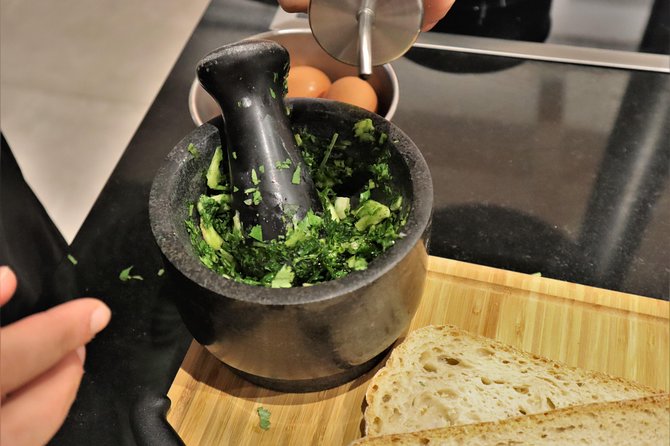
The class is built around a complete meal rather than a single recipe. You work through the food step by step, then sit down to eat what you prepared.
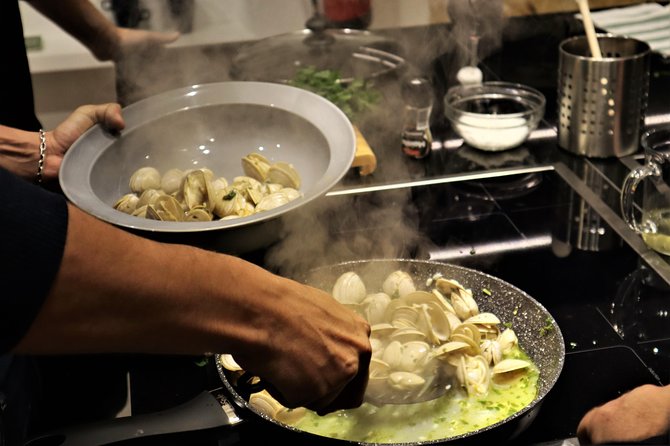
The stated menu includes a traditional Portuguese starter, a fish course featuring cod, and a traditional meat dish. Actual dishes described in the class include piri-piri chicken, a cod dish with cream, and a prawn preparation. Because the exact menu can change, I would think of these as examples rather than a guaranteed list.
That variety is one of the strongest parts of the experience. Portuguese food can look simple on a menu, but the ingredients carry plenty of meaning. Cod, for example, is a major part of national cooking despite not being caught off Portugal’s coast in the same way as many local fish. The class gives you useful background on bacalhau, or salted cod, and shows how it becomes a familiar Portuguese meal.
The instructors also use cooking to explain local tastes. You may learn about the spicy peppers favored in Portuguese food and how piri-piri brings heat to a dish. This is practical information, not a lecture for its own sake. Afterward, you will have a better sense of what you are ordering in Lisbon restaurants.
The work is shared between instruction and preparation. You should expect to chop, season, handle ingredients, and follow each dish as it develops. The class is suitable for beginners, but experienced home cooks can still pick up useful methods and ideas.
One detail deserves a warning: the prawn dish may require removing shrimp heads and deveining the prawns. That is normal kitchen preparation, but it can make some people uncomfortable. If you do not enjoy that task, you may prefer to step aside briefly while the rest of your group handles it.
Why the small cooking stations matter
A cooking class can be disappointing if you spend most of the time standing behind someone else. Compadre’s station-based setup avoids much of that problem.
You work directly on the dishes under the instructor’s guidance. The class moves through the meal together, but the small groups have space to prepare their own portions of the work. This lets you learn by doing, which is far more useful when you want to repeat the recipes at home.
The instructors receive especially strong praise for being patient, clear, and welcoming. Anna and Marta are mentioned by name in the class feedback, and Ana is also praised for explaining both the food and Portugal in an engaging way. The names may vary by date, but the teaching style seems consistent: warm help, clear steps, and room for questions.
This is good news if you rarely cook. One participant who normally has little interest in cooking still had a great time. At the same time, an experienced cook said the class still provided new lessons. That range is hard to achieve, and it makes the class a good pick for mixed groups where one person cooks often and another barely enters the kitchen.
The format also encourages conversation. You prepare food beside people from different countries, then eat together at the end. If you are visiting Lisbon alone, this gives you a natural way to meet people without the awkwardness of a formal group tour.
From cod to piri-piri: what you actually learn
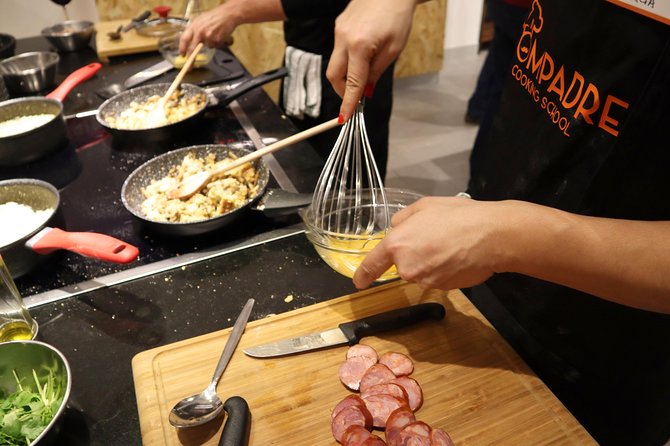
The most useful lesson here may be the context behind the dishes. You are not simply handed ingredients and told what to do. The instructors connect the recipes with Portuguese customs and food traditions.
Cod is the main teaching point. The class explains why salted cod is so important in Portugal and gives you a traditional preparation to try. Once you understand bacalhau, Portuguese menus become less mysterious. You will recognize why one ingredient appears in so many different dishes and may feel more comfortable choosing among them.
Piri-piri is another helpful introduction. The class includes information about the spicy peppers Portuguese cooks favor, and piri-piri chicken has been part of the menu taught in some sessions. If you like a little heat, this is a flavorful way to connect an everyday restaurant dish with the cooking method behind it.
You also learn skills that can travel home with you. The recipes are described as easy enough to repeat, and the instructors explain techniques in a way that works for different experience levels. The point is not to turn you into a professional chef in three hours. The point is to give you a few reliable dishes, a better feel for Portuguese ingredients, and enough confidence to cook them again.
The recipes are included for you to take home. That improves the value considerably, especially if you are already planning to buy ingredients or try Portuguese food after returning home.
More hands-on cookery sessions:
- Lisbon Portuguese Cooking Class with 3-Course Dinner
★ 5.0 · 445 reviews - Traditional Portuguese Cooking Class in Lisbon
★ 5.0 · 287 reviews - Pasteis de Nata Baking Class from Lisbon
★ 5.0 · 248 reviews - Portuguese Cooking Class in Lisbon
★ 5.0 · 141 reviews
Sitting down to eat what you made
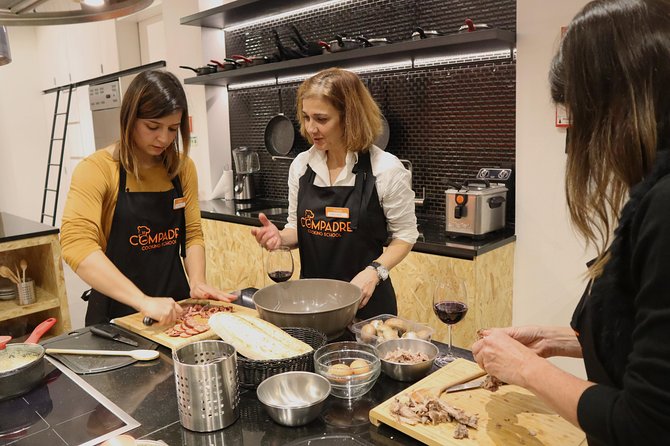
At the end, the class becomes a shared meal. You sit with the other participants and taste the dishes prepared during the session. This is the payoff, but it is also part of the lesson: you see how the separate dishes work together as a Portuguese meal.
The food receives very high praise. Piri-piri chicken is a favorite in one session, while the cod and prawn dishes also receive strong marks. Several participants describe the finished meal as delicious, which suggests that the class is not merely educational. You should expect to eat well.
Wine may be available for adults, but do not book this expecting a full wine tasting or unlimited drinks. One class had generous wine with lunch, while another had only one bottle for five adults. The information also states that alcohol is not served to anyone under 18. Water or tea is provided instead for those participants.
The absence of dessert is the clearest menu limitation. Two separate comments wished for a dessert course, and one person specifically hoped to take a pastel de nata class as well. If dessert is important to you, plan to visit a pastry shop afterward or book a separate pastry lesson if available.
Families can take part, but children up to 17 must be accompanied by an adult participant who is at least 18. That makes the class workable for families, though the kitchen tasks may suit older children and teenagers better than very young ones.
The social side of the evening
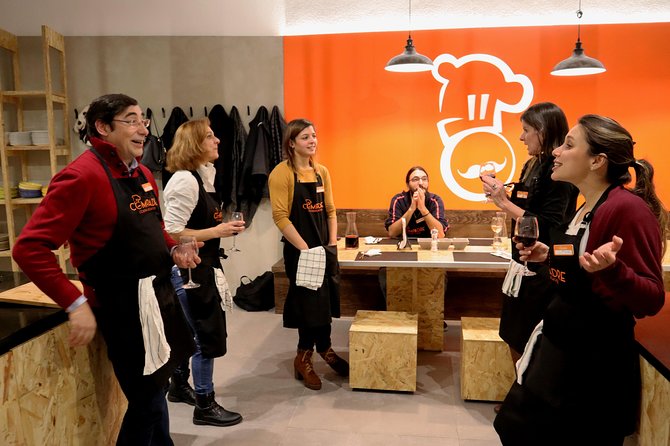
Food is a good bridge between strangers, and this class uses that advantage well. You cook in small groups, share tasks, and then sit down together. The result is more social than a standard restaurant meal, but less forced than an organized group activity.
Solo visitors can benefit most from this part of the class. You arrive alone but have an easy reason to talk with the people at your station. Couples and families also fit in well, and the class can work for groups with mixed cooking ability.
The pace appears well organized. In one session, some participants arrived late, but the instructors kept the rest of the group on schedule. I would still arrive on time because late entry can make you miss an important preparation step, but this suggests the staff can keep the class moving when small delays happen.
The shared meal has a natural ending point. You eat together, finish the dishes, and leave from the same school. Do not expect a long evening of lingering after the meal, since the school may need to prepare for its next class.
Is $82.24 a fair price?
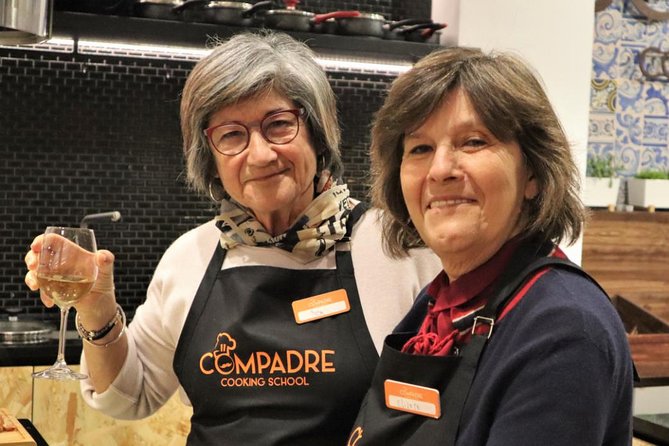
At $82.24 per person, this is not the cheapest meal you will eat in Lisbon. It is also not simply a dinner. The price covers about three hours of instruction, the use of a personal cooking station, several dishes, the meal itself, and the recipes you can use later.
I think the value is strongest if you care about learning. A restaurant meal may cost less, but it will not teach you how cod is prepared, explain piri-piri, or give you a recipe to recreate at home. A cooking class also gives you a social evening and a useful introduction to Portuguese food before you spend the rest of your trip ordering from menus.
The value is weaker if you want a polished gourmet event with a dessert course and a carefully defined wine pairing. The menu is savory, and the amount of wine is not fixed. You are paying for participation and instruction rather than luxury dining.
The class is often booked about 20 days ahead. That is a useful planning signal, especially if your Lisbon dates are fixed. I would reserve in advance rather than assume you can find a place at the last minute.
Who should book this class?
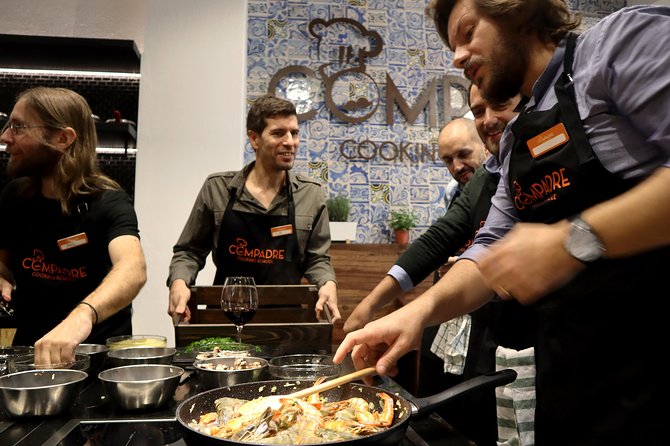
I would recommend it most strongly to:
- First-time visitors who want a useful introduction to Portuguese food
- Couples looking for an activity beyond sightseeing
- Solo visitors who enjoy meeting people over a shared meal
- Families with older children or teenagers
- Beginners who want simple recipes and patient help
- Experienced home cooks who enjoy learning local food traditions
You may want to skip it if you dislike group activities, do not want to handle seafood, or want a class focused on pastries and sweets. The menu is centered on savory food, and shrimp preparation can be hands-on in a way not everyone enjoys.
It is also a good choice early in your Lisbon stay. The lessons about bacalhau, peppers, and local dishes can help you make better restaurant choices later. You will recognize more of the food and understand why it matters.
Booking includes free cancellation if you cancel at least 24 hours before the start time. Changes or cancellations inside that window are not accepted for a refund. The class also requires a minimum number of participants, so if the school cancels for that reason, you are offered another date or experience, or a full refund.
Final decision: should you book it?
Book this class if you want to cook, eat, and learn at the same time. The strongest reasons are the hands-on stations, the small maximum group size, the patient instructors, and the recipes you can take home.
The experience is less suitable if you are looking for dessert, a guaranteed wine experience, or a formal chef-led showcase. For most visitors, though, $82.24 buys more than a meal. It gives you a practical introduction to cod, piri-piri, Portuguese traditions, and the pleasure of sitting down with new friends to eat your own work.
FAQ
Where does the Portuguese cooking class begin?
It begins at Compadre Cooking School, R. Heliodoro Salgado nº14, 1170-176 Lisboa, Portugal.
Where does the class end?
The activity ends back at Compadre Cooking School, the same place where it begins.
How long does the cooking class last?
The class lasts approximately three hours.
Is the class offered in English?
Yes. The experience is offered in English.
How many people can join the class?
The maximum group size is 12 participants.
What dishes are included?
The stated menu includes a traditional Portuguese starter, a traditional codfish dish, and a traditional meat dish. Sessions have included dishes such as piri-piri chicken, cod with cream, and a prawn dish.
Are drinks included?
Alcoholic beverages may be served to participants aged 18 or older, but the amount of wine can vary. Participants under 18 receive water or tea instead.
Can children attend?
Yes. Anyone up to age 17 must be accompanied by a participating adult who is at least 18 years old.
Just added around Lisbon
- Tuk tuk tour in Belem area★ 5.0 · 46 reviews
- Lisbon: Private Tour Sintra, Cabo da Roca and Cascais★ 4.9 · 46 reviews
- Private Sintra Tour from Lisbon★ 5.0 · 46 reviews
- Premium Porto Private Day Trip from Lisbon with Local Guide★ 5.0 · 47 reviews
- 4 Hours Tuktuk City Tour in Lisbon★ 5.0 · 47 reviews
- Small Group Pena Palace, Sintra, Regaleira and Cascais★ 5.0 · 47 reviews
- From Lisbon: Tour to Fátima, Batalha, Nazaré and Óbidos★ 4.6 · 47 reviews
- DayTrip from Lisbon to Sintra+Cascais PRIVATE TOUR-small groups★ 5.0 · 47 reviews
Workshops, compared.

Pastel de Nata Cooking Class with Grandma’s Recipe
Read our review →
Pastel de Nata Cooking Class with Port Wine – Sé
Read our review →


Browse the lists this tour appears in