
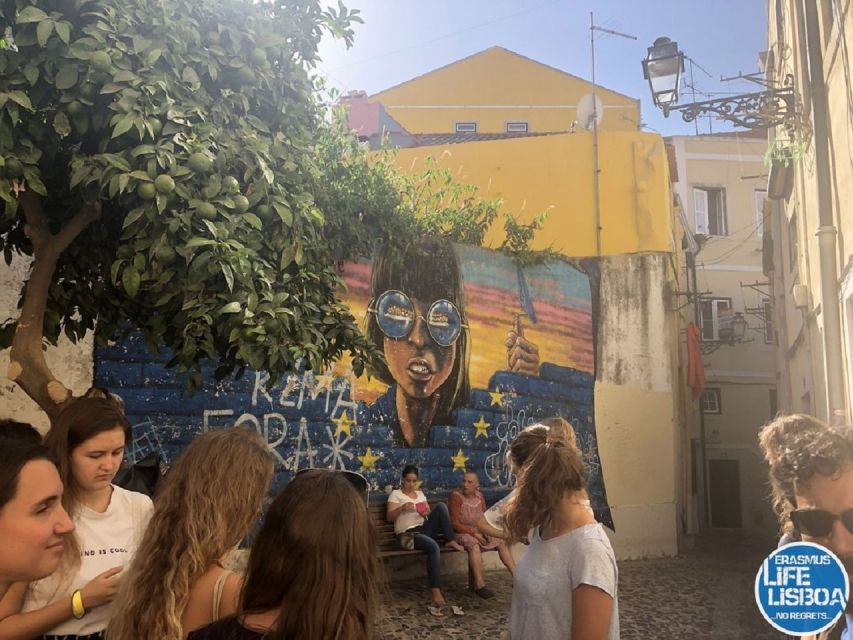
Reviewed · STREET ART
Lisbon 3-Hour Street Art Tour
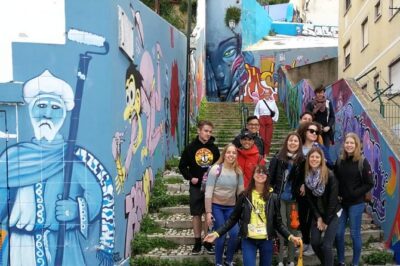
Lisbon’s walls tell stories. This three-hour walk through Mouraria and Graça brings you close to murals, stencils, posters, and tags while explaining the people and ideas behind them. I like the mix of local art and neighborhood history, and I like that the route includes both famous names and lesser-known work. The main caution is simple: this is a brisk walk through steep streets and stairways, not an easy stroll.
The strongest part is the guide’s interpretation. Véro, Diogo, Rigoberto, Ninetta, Diana, and other guides have been praised for making the art understandable without draining away its edge. You will also get good city views, but expect heat, rain, hills, and a few tired legs by the finish.
In This Review
- Key points to know before booking
- Starting at Martim Moniz Square
- Mouraria: art beside old neighborhood streets
- Graça: murals, stairs, and city views
- The guide makes the difference
- What three hours feels like on foot
- Why the Vhills finale works
- Is $33 a fair price?
- Who should book this walk?
- FAQ
- Where does the Lisbon Street Art Tour meet?
- How long does the tour last?
- What language is the tour in?
- Where does the tour finish?
- What should I bring?
- Is the tour suitable for wheelchairs or strollers?
- Should you book the Lisbon Street Art Tour?
Key points to know before booking
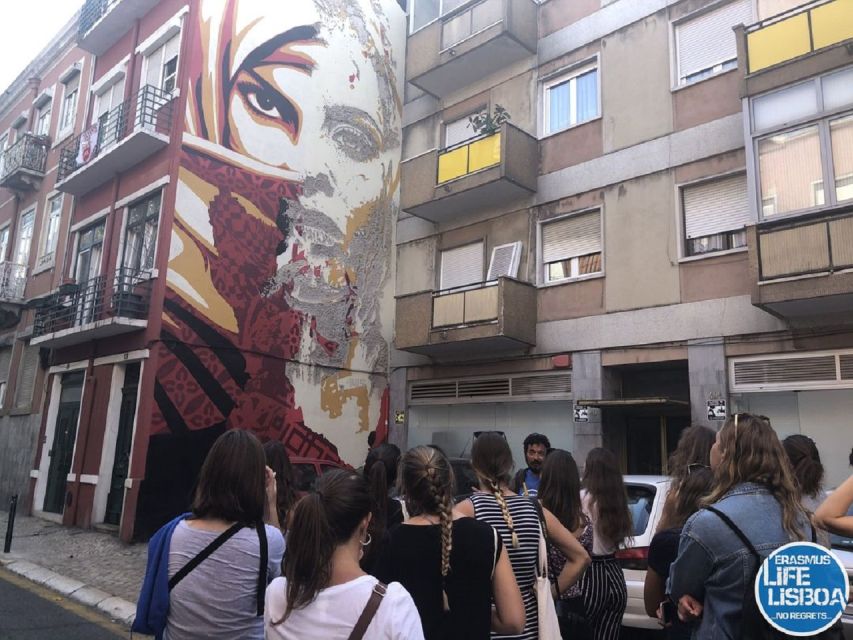
- Mouraria and Graça are the main stages: You explore old Lisbon neighborhoods where murals and public art are tied to renewal projects.
- The art has a message: Many works touch on social or political subjects, while others honor important Portuguese figures.
- Vhills provides the finale: The walk ends at a mural by the Portuguese street artist Vhills.
- The pace is fairly quick: Guides aim to show a lot in three hours, so comfortable shoes are essential.
- The meeting point needs care: Find the monument with soldier heads, bullets, and helmets in Martim Moniz Square, near Hotel Mundial.
- It costs $33 per person: That is a fair price if you want context and access to work you may miss on your own.
Starting at Martim Moniz Square
The tour begins in Martim Moniz Square, beside a distinctive monument or sculpture showing soldier heads, bullets, and helmets. It is surrounded by water and sits opposite Hotel Mundial. The local team will be in the middle of the square with a board marked for the Lisbon Street Art Tour.
Give yourself extra time to find the exact spot. The square is easy to reach because Martim Moniz has a station on Lisbon’s green metro line, but the meeting point is not simply the metro entrance. One person had trouble locating it because the map did not mark the precise place clearly. Look for the monument, then find the team holding the sign.
This opening location fits the subject. Martim Moniz is one of Lisbon’s mixed and energetic central areas, and the tour quickly moves away from the standard sightseeing path. You are not starting with a polished museum collection. You are starting on the street, where art can appear on a wall, shutter, stairway, or leftover patch of concrete.
Your guide speaks English. The guide assigned may vary, but Véro has been especially praised for her warmth and strong explanations. Diogo has led the walk with his dog Billy, an appealing bonus for dog lovers, though Billy should not be treated as a guaranteed part of every departure.
A few more reviews worth comparing before you book
- Lisbon: Street Art Tour
★ 4.9 · 1,324 reviews - Lisbon: Kickstart Street Art Walking Tour
★ 4.9 · 717 reviews - Lisbon: Street Art Tuk Tuk Tour
★ 4.9 · 372 reviews
Mouraria: art beside old neighborhood streets
From Martim Moniz, the route heads toward Mouraria. This is one of the most useful parts of the experience because the guide places the artwork inside the neighborhood rather than presenting it as isolated decoration.
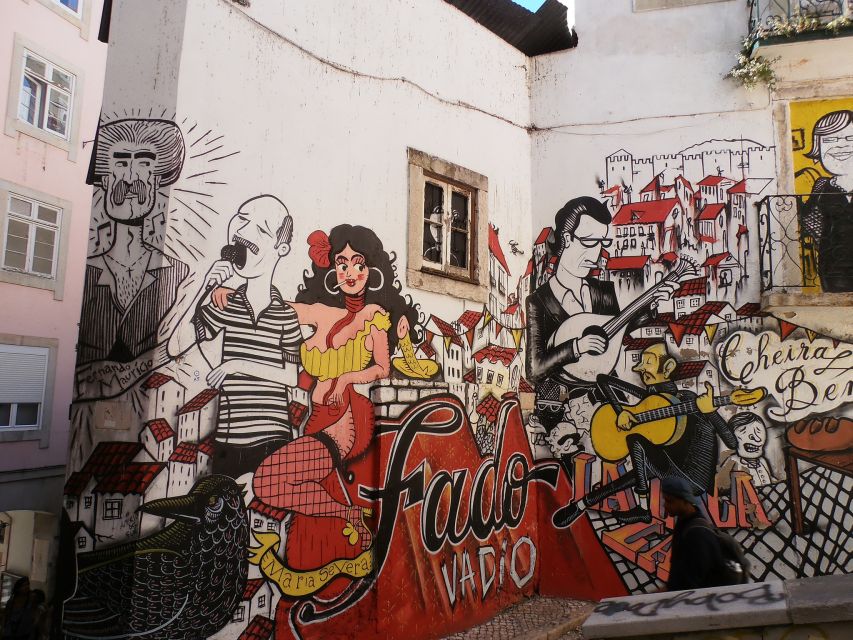
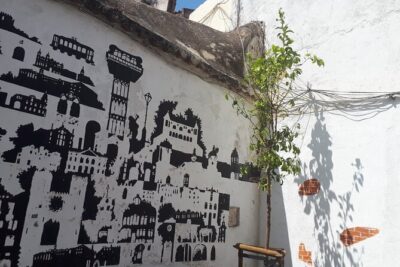
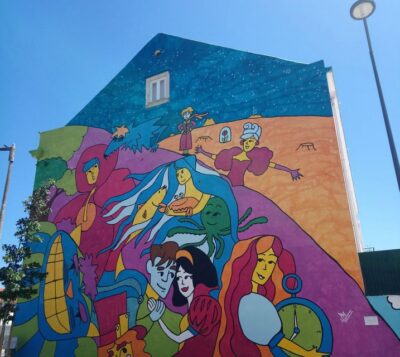
You can expect a mixture of murals, stencils, posters, tags, and projects linked to the renewal of older parts of Lisbon. Some pieces may be large and carefully planned. Others are quick, rough, or temporary. That variety helps you understand that street art is not one style. It can be a political statement, a portrait, a memorial, a private signature, or an official project meant to give a tired wall new life.
The guide explains artists’ methods and the stories behind individual works. You may hear how a piece was made, what materials or techniques were used, and why the image belongs in that particular part of the city. This is where the $33 fee begins to make sense. You could walk around Mouraria on your own, but you would not always know which marks matter, who made them, or how residents and city projects shaped the walls.
Look closely at the smaller work. Large murals naturally draw attention, but posters and stencils can carry sharp political or social ideas in a compact form. The walk helps you notice the difference between a planned public artwork and an unapproved tag, while also showing how both belong to Lisbon’s street-level visual culture.
The route is not limited to current fashion. Some pieces memorialize important Portuguese personalities. That adds a civic and historical layer, giving you more than a parade of colorful walls. You begin to see public art as part of how Lisbon remembers people, argues about issues, and presents itself to residents.
Graça: murals, stairs, and city views
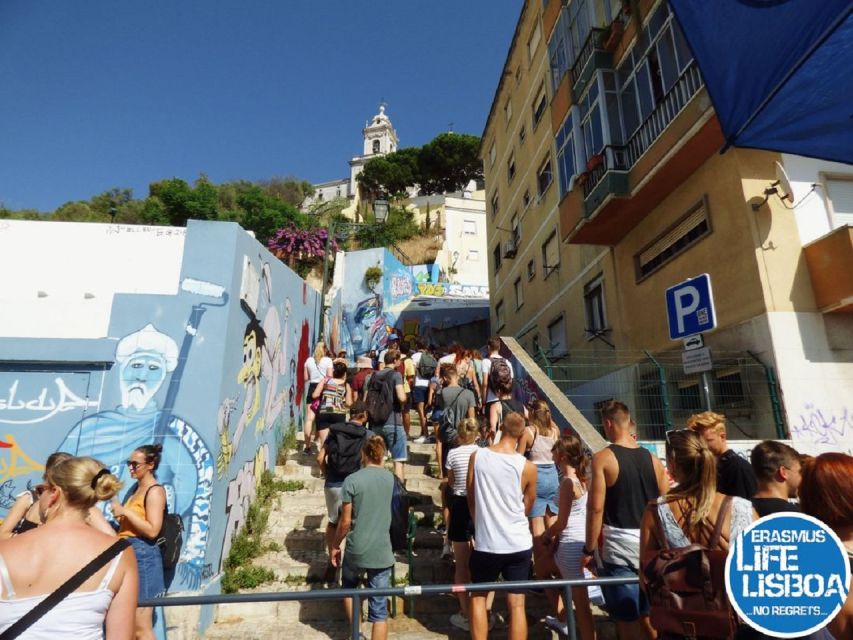
The walk continues into Graça, where the streets become more demanding. Hills and stairs are part of the character of this area, but they also make the tour physically serious. A fast pace can help the group cover more ground, yet it may feel tiring in strong sun.
Graça rewards the effort with a mix of art and views over Lisbon. One guide also made sure the route included good outlooks, which gives the tour a useful break from looking straight at walls. You get a sense of how the old neighborhoods sit above the central city, even as you keep searching for the next artwork.
This section is especially good for seeing how art fits into daily life. A mural can sit beside a residential building, a narrow lane, or a stairway used by local people. The setting matters. A work about social change feels different when you see it in a neighborhood being repaired and reshaped, rather than on a blank gallery wall.
The route may include work by both national and international artists. The guide’s role is to connect those names to Lisbon rather than treating the city as a passive backdrop. You learn which artists have left a mark, how their styles differ, and why some projects have a lasting place in the city while others may disappear under paint, construction, or weather.
Do not expect every piece to be pristine. Street art changes. Posters peel, tags are covered, and murals weather. That is part of the medium, but it also means the exact collection can change over time. The value of the tour is not only the current wall count. It is the way the guide teaches you to read a changing city.
The guide makes the difference
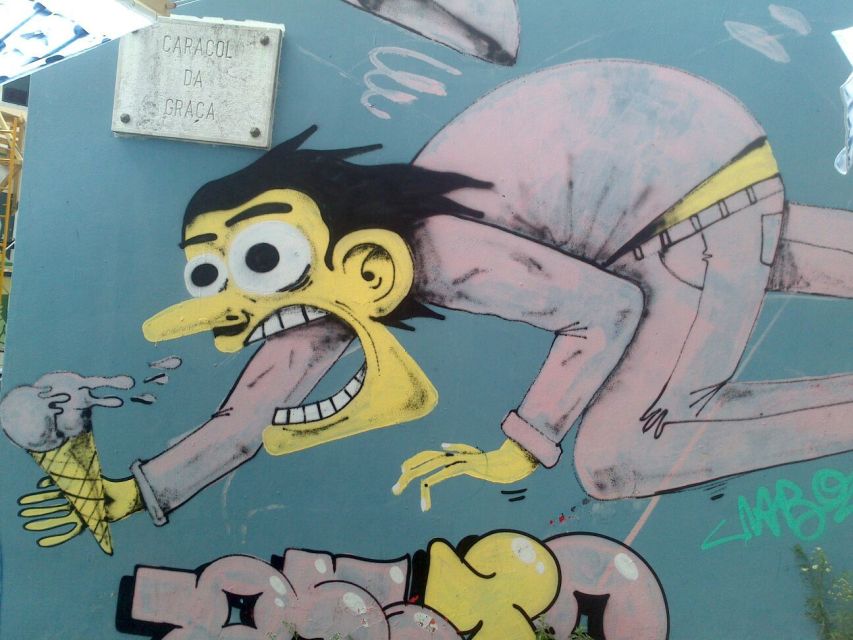
This experience rises or falls with the person leading it. The most praised guides have been friendly, patient, and full of useful context. Diana, for example, was noted for bringing the group together socially while explaining both the art and local culture. Ninetta kept the tour engaging in rain and did not rush the group through the work.
That personal approach matters on a walking tour. A guide who only names artists can make the route feel like a moving list. A guide who explains the setting, techniques, and social meaning gives each stop a reason to remember it.
Véro has also offered practical suggestions about restaurants and other places to visit. That sort of local advice can be useful early in a Lisbon stay, when you are still deciding how to spend the rest of your time. Just keep in mind that guide assignments can change, so you should not book solely for one named person.
Rigoberto was praised for keeping the group safe and cheerful during heavy rain. That detail says something useful about the tone of the experience. Weather can make a street art route awkward, but the guide can still keep the walk moving and the explanations lively. Bring water, and check the forecast before choosing clothing.
A small dog may sometimes join the route. Billy has been mentioned warmly, but the dog is an extra, not a listed feature you should count on.
A different sort of day out around Lisbon:
- Lisbon City Center Tour – The Unmissable Lisbon
★ 5.0 · 22,234 reviews - Lisbon: Sintra, Pena, Regaleira, Cabo da Roca & Cascais
★ 4.7 · 19,656 reviews - Lisbon: Jerónimos Monastery Entrance Ticket
★ 4.1 · 14,164 reviews - Lisbon: History, Stories and Lifestyle Walking Tour
★ 4.8 · 10,902 reviews
What three hours feels like on foot
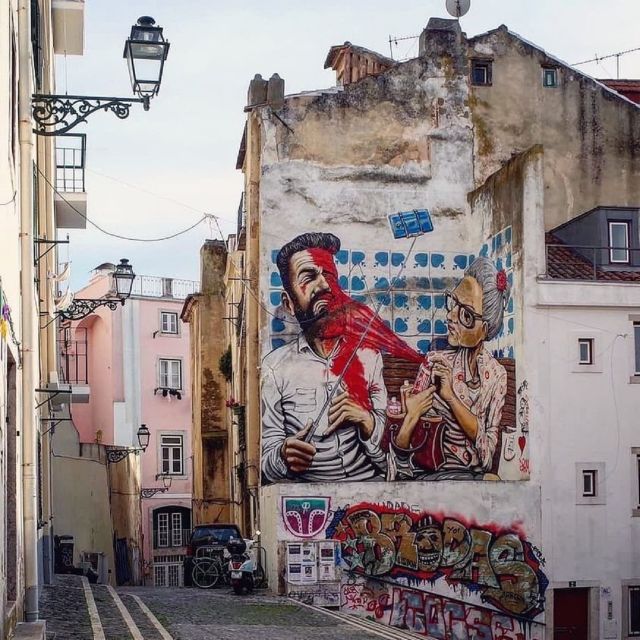
Three hours gives the group enough time to see a broad selection of work. The tradeoff is pace. One participant found the tempo rather high, while another said the final part became tough after walking in summer heat.
I would plan this for a morning or late afternoon if the schedule allows, especially in hot weather. The activity does not include food or drinks, so carry water and eat beforehand. There is no promise of a refreshment stop, and stopping for a full meal would cut into the art route.
Wear shoes with good grip. Lisbon’s slopes and stairs can be awkward in smooth soles, and the route is not suitable for people with mobility impairments. Non-folding wheelchairs and non-folding strollers are not allowed, and prams should be avoided because of the hills and steps.
Large bags and luggage are also not allowed. Arrive with a small day bag rather than trying to bring airport luggage or bulky shopping. This is practical advice, not a minor rule. A heavy bag becomes irritating quickly on a three-hour uphill walk.
The route does not finish back at Martim Moniz Square. The final stop is a mural by Vhills, so plan your next move from the ending point rather than assuming you will return to the metro station where you began.
Why the Vhills finale works
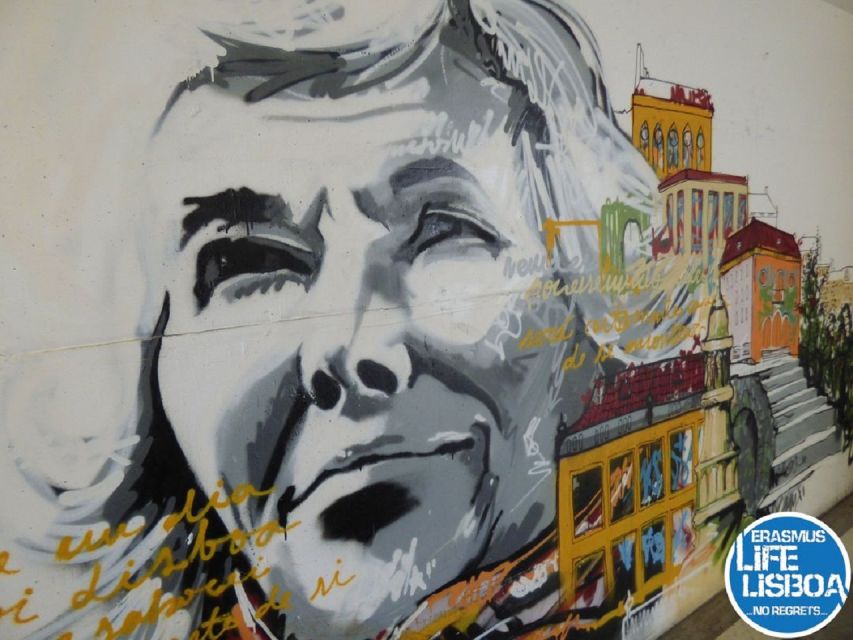
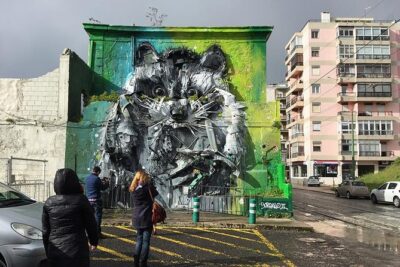
Ending at a Vhills mural gives the walk a clear finish. Vhills is described as a national street art superstar, and his work offers a strong final example of how public art can transform a wall and carry a recognizable artistic identity.
The stop also gives the guide a chance to bring the earlier themes together: technique, scale, national identity, and the relationship between an artist and the city. After seeing small tags and stencils, neighborhood projects, political pieces, and memorial works, you arrive at a mural by one of Portugal’s best-known names.
Do not expect the final mural alone to justify the price. The tour works because of the full sequence. The ending is satisfying, but the real benefit is learning how to look at everything along the way.
Is $33 a fair price?

At $33 per person, this is not the cheapest way to walk around Lisbon. You can see street art for free by exploring Mouraria and Graça independently. The question is what you want from the afternoon.
I think the price is fair if you value explanation. Your fee covers a local expert guide, three hours on foot, historical references, and a planned route through several areas. The guide saves you time and helps you identify work you might otherwise pass without noticing. You also get social and political context, artist information, and practical advice about the city.
The value is weaker if you mainly want photographs or dislike organized walks. You could spend three hours wandering at your own pace and stop whenever you like. You would also avoid the brisk tempo and the physical demand of the group.
The small-group feel can improve the experience, though group size is not fixed in the information provided. One earlier walk had seven people and felt personal. Do not assume every departure will be that small, but the format allows room for questions when the group is manageable.
Free cancellation up to 24 hours before the start and a reserve-now, pay-later option reduce the risk of fitting it into a changing Lisbon schedule. Those terms are useful, but the main buying decision remains physical: can you comfortably walk hills and stairs for three hours?
Who should book this walk?
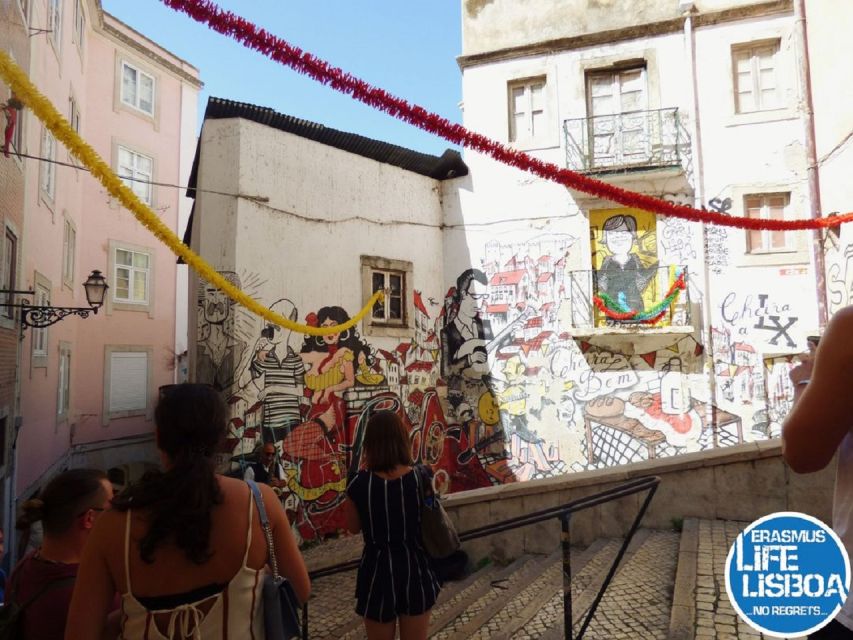
I would recommend it to first-time Lisbon visitors who want an unusual introduction to the city. It works especially well during the first few days because the guide combines art, neighborhood history, viewpoints, and suggestions for other places to visit.
It is also a good choice for people who already enjoy murals, graffiti, poster art, or political art. You will see several forms rather than one narrow style. Photographers may enjoy the changing textures and steep streets, but the route is about interpretation as much as images.
Families with very young children should think carefully about the stairs, pace, and no-stroller rule. The same applies to anyone with limited mobility or anyone who finds three hours in the heat difficult.
Rain does not automatically ruin the walk. Guides have handled wet weather with good humor, but you should still dress for it. Lisbon’s sunshine can be strong, and the walking does not become easier just because the artwork is interesting.
FAQ

Where does the Lisbon Street Art Tour meet?
It meets in the middle of Martim Moniz Square, by the monument or sculpture with soldier heads, bullets, and helmets. The monument is surrounded by water and sits opposite Hotel Mundial. The team will hold a board mentioning the Lisbon Street Art Tour.
How long does the tour last?
The walking tour lasts three hours. Starting times depend on availability when you book.
What language is the tour in?
The live tour guide speaks English.
Where does the tour finish?
The tour ends at a mural by the Portuguese street artist Vhills. It does not finish at the Martim Moniz meeting point.
What should I bring?
Bring comfortable shoes and water. Food and drinks are not included.
Is the tour suitable for wheelchairs or strollers?
It is not suitable for people with mobility impairments because the route includes many hills and stairs. Non-folding wheelchairs and non-folding strollers are not allowed, and prams should be avoided if possible.
Should you book the Lisbon Street Art Tour?
Book it if you want Lisbon explained through its walls, not just photographed. The route through Mouraria and Graça, the social and political context, the city views, and the closing Vhills mural give you a fuller sense of how public art fits into Lisbon’s older neighborhoods.
Skip it if you want a slow, flat walk or prefer to explore without a guide. For everyone else, $33 buys a useful three-hour introduction, provided you bring water, wear solid shoes, and arrive ready for hills.
Just added around Lisbon
- Tuk tuk tour in Belem area★ 5.0 · 46 reviews
- Lisbon: Private Tour Sintra, Cabo da Roca and Cascais★ 4.9 · 46 reviews
- Private Sintra Tour from Lisbon★ 5.0 · 46 reviews
- Premium Porto Private Day Trip from Lisbon with Local Guide★ 5.0 · 47 reviews
- 4 Hours Tuktuk City Tour in Lisbon★ 5.0 · 47 reviews
- Small Group Pena Palace, Sintra, Regaleira and Cascais★ 5.0 · 47 reviews
- From Lisbon: Tour to Fátima, Batalha, Nazaré and Óbidos★ 4.6 · 47 reviews
- DayTrip from Lisbon to Sintra+Cascais PRIVATE TOUR-small groups★ 5.0 · 47 reviews
Street Art, compared.

3-Hour Guided Street Art Walking Tour of Lisbon
Read our review →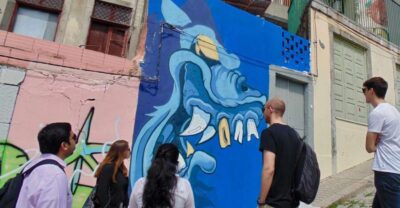

Browse the lists this tour appears in