
Reviewed · WORKSHOPS
Lisbon: Azulejos’ Design Create Your Own Tile Workshop
Your souvenir can begin with a blank square. This relaxed Lisbon workshop turns the city’s famous azulejo tradition into a hands-on creative session, using the Formettes method to help you design a tile even if you cannot draw. I especially like the patient, friendly instruction from Agathe, the French painter who leads the class, and the fact that you leave with your finished 10cm by 10cm tile instead of waiting days for a kiln or delivery.
The setting is another strong point. The workshop takes place in an artist’s home, not a large production studio, so the mood feels personal and calm. My main consideration is that this is a design and transfer workshop rather than a traditional pottery class: you create the artwork on paper, and it is later transferred to ceramic with a thermal press. That makes the process accessible and fast, but it may disappoint you if you expect to shape clay or paint directly onto unfired tiles.
In This Review
- Key points to know before booking
- Why make an azulejo in Lisbon?
- Meeting at Bell Number 2
- A short introduction to azulejos and Formettes
- Step one: pencil sketches without pressure
- Step two: black lines and a clean outline
- Step three: watercolor brings in the Lisbon color
- The behind-the-scenes Photoshop work
- Thermal pressing and the same-day souvenir
- Is $64 a fair price?
- The mood: calm, social, and beginner-friendly
- Who should book this workshop?
- Booking details that matter
- Should you book the Azulejos Design workshop?
- FAQ
- How long does the azulejo workshop last?
- How much does the workshop cost?
- What is included in the price?
- Can I take my tile home immediately?
- Do I need drawing experience?
- What languages does the instructor speak?
- Where is the meeting point?
- Can children attend?
- Can I cancel the booking?
Key points to know before booking
- The Formettes method needs no drawing experience: Stencils and simple design tools give you a useful starting point, while still leaving room for your own ideas.
- Your tile is ready the same day: The design is processed and heat pressed onto a 10cm by 10cm ceramic tile after the creative session.
- Agathe provides gentle, practical help: You can work freely, ask for advice, and get assistance improving your design before it is transferred.
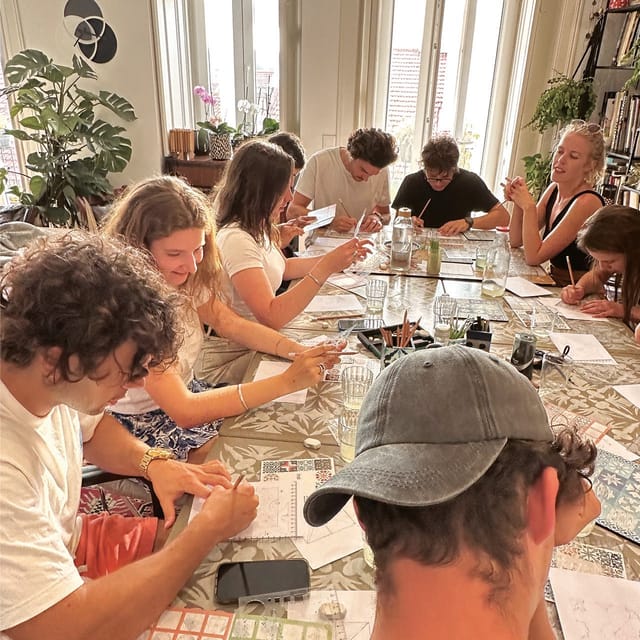
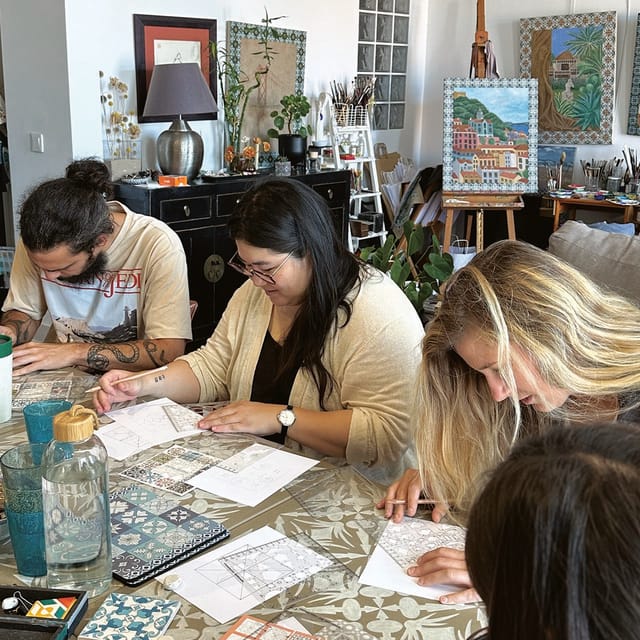
- The artist’s home creates a cozy setting: Small groups, tea or coffee, cookies, and a welcoming room make this feel more like a creative visit than a formal lesson.
- The workshop lasts 2.5 hours: That is enough time to sketch, ink, paint, and see the final tile without taking up an entire day in Lisbon.
- The $64 price includes the finished keepsake: Extra personalized objects and additional tiles cost more and are not part of the standard booking.
Why make an azulejo in Lisbon?
Lisbon’s tiled facades are not just pretty decoration. Azulejos appear on churches, homes, railway stations, stairways, and ordinary buildings throughout the city. Their patterns and colors are part of Lisbon’s visual identity, so designing one gives you a small, personal connection to something you have been seeing on the streets.
I like this workshop because it avoids the usual souvenir-shop problem. You do not simply buy a tile with a standard Lisbon image printed on it. You create a pattern of your own, then take home an object tied to the time you spent in the city.
The class also works well for people who are interested in art but do not consider themselves artistic. Several participants arrived worried about limited drawing ability and still came away pleased with their results. The method is structured enough to prevent the blank page from becoming intimidating, but it does not force everyone into the same design.
A few more reviews worth comparing before you book
- Lisbon: Pastel de Nata Baking Class
★ 4.9 · 2,106 reviews - Lisbon: Traditional Portuguese Cooking Class
★ 4.9 · 592 reviews - Pastel de Nata Masterclass at a Real Bakery in Downtown Lisbon
★ 5.0 · 491 reviews
Meeting at Bell Number 2
The meeting point is Bell N° 2. Pay attention to that detail before you arrive, since a workshop in an artist’s home may not have the obvious street presence of a museum or commercial gallery.
The activity is in the Lisbon District, and the location has been praised for being comfortable and easy to access. Still, give yourself enough time to find Bell Number 2 rather than arriving at the last minute. The session is built around a calm pace, and rushing in at the start works against the whole mood.
The group may be private or small. A class of four or six gives you the best balance: you can meet other people, but Agathe still has time to look at each design. Solo participants also fit comfortably into the format. The atmosphere is social without requiring you to arrive with a partner or a group of friends.
A short introduction to azulejos and Formettes
The workshop begins with a brief presentation of azulejos and the creative method. This opening matters because it gives the activity a cultural frame. You are not simply coloring a souvenir tile. You are learning how a basic drawing can become a repeated pattern on ceramic.
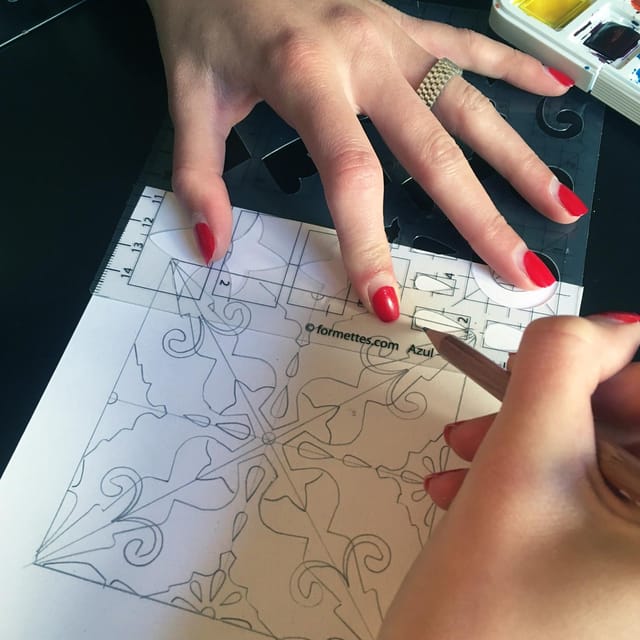
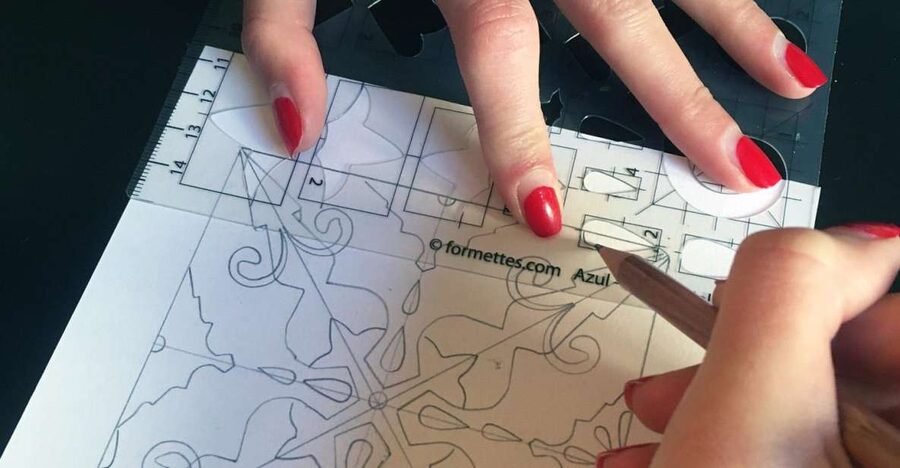
Agathe then introduces the Formettes tool, which helps you build your design. The method has no drawing prerequisites. You can use the provided shapes and stencils as a guide, or adapt them into something more personal.
This is a smart approach for a mixed group. Confident artists can take the idea in their own direction, while beginners get enough structure to make progress quickly. I would not expect a formal lesson in Portuguese tile history or a long technical talk. The presentation is short and practical, designed to get you creating.
Step one: pencil sketches without pressure
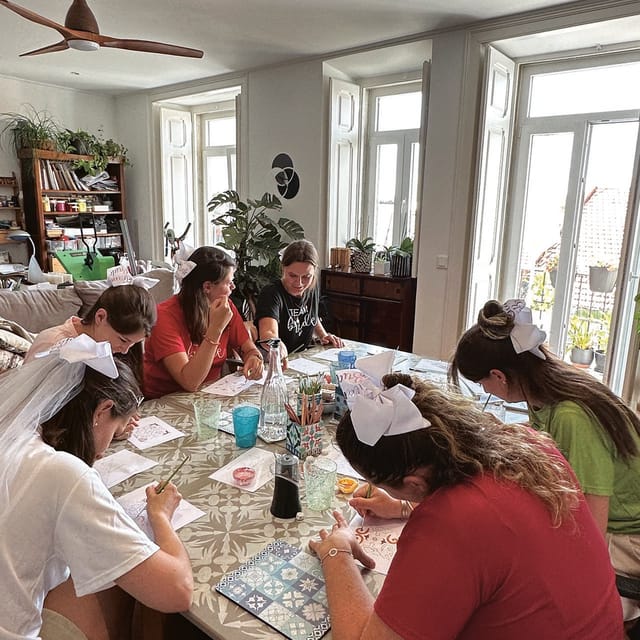
Your first task is to draw the design in pencil. This is the stage where you can test shapes, adjust proportions, and change your mind without ruining anything.
The pencil stage is forgiving, and that is one of the workshop’s best features. You have room to experiment before the permanent black lines arrive. If you are unsure where to begin, the Formettes tools provide a starting point. If you already have an idea, you can use the materials more freely.
You are not rushed through this part. The instructor gives guidance but leaves space for individual choices. That balance came through repeatedly in the experience: people appreciated receiving help while still having control over the final design.
A practical tip is to keep the overall tile in mind from the start. Small details may look attractive on paper but can become less clear once the design is reduced and transferred to the ceramic square. Agathe can help you make adjustments so the finished image reads well.
A different sort of day out around Lisbon:
- Lisbon City Center Tour – The Unmissable Lisbon
★ 5.0 · 22,234 reviews - Lisbon: Sintra, Pena, Regaleira, Cabo da Roca & Cascais
★ 4.7 · 19,656 reviews - Lisbon: Jerónimos Monastery Entrance Ticket
★ 4.1 · 14,164 reviews - Lisbon: History, Stories and Lifestyle Walking Tour
★ 4.8 · 10,902 reviews
Step two: black lines and a clean outline
Once you are happy with the pencil drawing, you trace it with a fine black marker. Afterward, the pencil marks are erased, leaving a clean outlined design.
This step gives the tile its graphic look. It also helps beginners produce a finished piece that feels deliberate, even if the original sketch was simple. The fine marker demands a little care, but the process is manageable because you have already worked out the design in pencil.
I like the order of the class. You do not have to make permanent decisions before you understand what you are doing. The instructor can look over your outline and suggest small corrections before you move on to color.
Do not expect every line to look machine-perfect. The point is to make your own design, and a little evidence of the handmade process is part of its charm. Still, the editing stage later gives the instructor a chance to correct minor issues.
Step three: watercolor brings in the Lisbon color
The final creative stage is coloring with watercolor. This gives you freedom to choose a restrained blue-and-white look, experiment with several shades, or create something more personal.
The supplied materials are included, so you do not need to bring drawing or painting equipment. Tea, coffee, and cookies are also provided, which suits the unhurried pace of the class. These are small touches, but they help the two-and-a-half-hour session feel hospitable rather than purely instructional.
Watercolor is a good choice for this method because it allows color to be added without demanding the heavy coverage or precision of ceramic glaze. You can concentrate on balance and pattern instead of worrying about complicated pottery techniques.
The finished colors may not look exactly the same on paper as they do after transfer. That is normal for a process involving digital preparation and heat pressing. Agathe’s advice is useful here, especially if you want your final tile to have clear contrast.
The behind-the-scenes Photoshop work
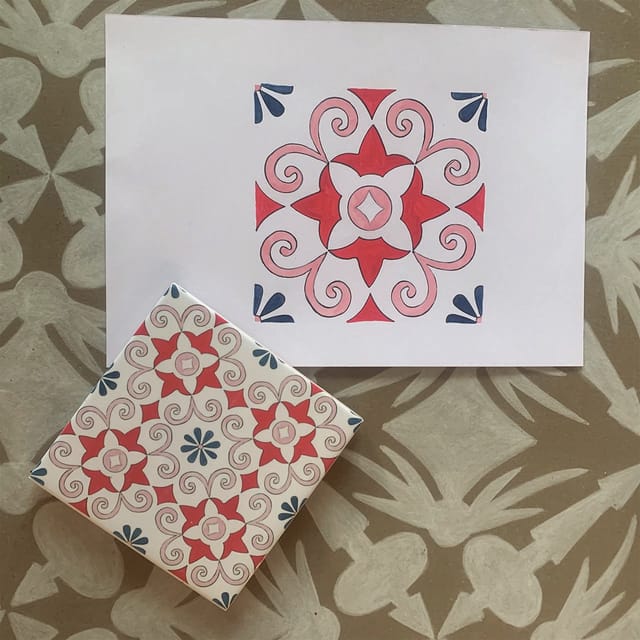
After you complete the drawing, the design is worked on in Photoshop. It may be slightly corrected if necessary, then multiplied so the pattern can be transferred to the ceramic tile.
This is an important detail to understand before booking. You are creating the artwork, but you are not personally carrying out every technical stage of tile production. The Photoshop step helps tidy the design and prepare it for the final object.
For a beginner, this is a benefit. Small flaws in a line or minor unevenness do not automatically spoil the result. One participant with limited artistic confidence was especially pleased that the digital stage helped make the final design look polished.
There is also a tradeoff. If your ideal experience involves traditional hand painting directly on ceramic, this workshop will feel different. The process is closer to designing, painting, digitally preparing, and heat transferring an azulejo than to learning the full craft of ceramic glazing and firing.
Thermal pressing and the same-day souvenir
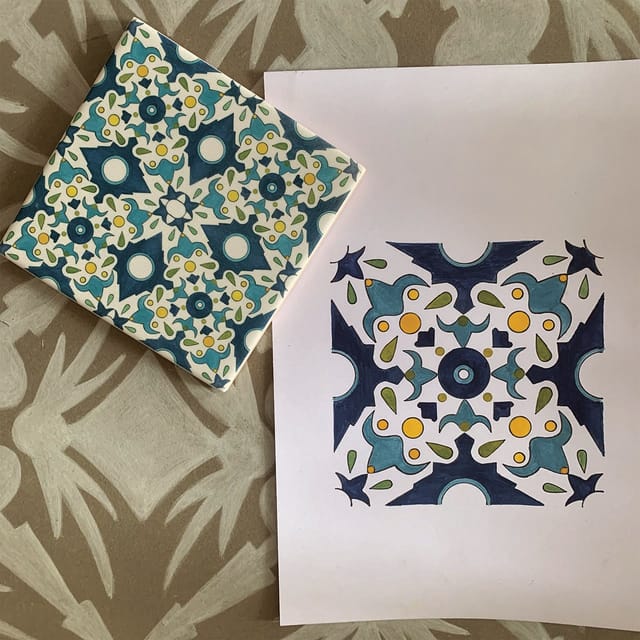
The prepared design is transferred to a 10cm by 10cm ceramic tile with a thermal press. This is why you can take the tile home immediately after the workshop.
That same-day result is a major advantage. You do not need to arrange delivery, return to the studio later, or worry about fitting a fragile handmade object into a future day of sightseeing. Several people chose the activity partly because they wanted a meaningful souvenir they could carry away at once.
The tile is compact and easy to pack compared with larger ceramic pieces. You should still wrap it carefully in your luggage, since it is ceramic and can crack if left loose.
The standard booking includes one tile. Additional personalized objects and extra tiles are not included. One participant added a second tile for €10, but ask about the current price and availability if you want more than one. The extra tile can be a good choice for a partner, family member, or friend, especially if your first design turns out better than expected.
Is $64 a fair price?
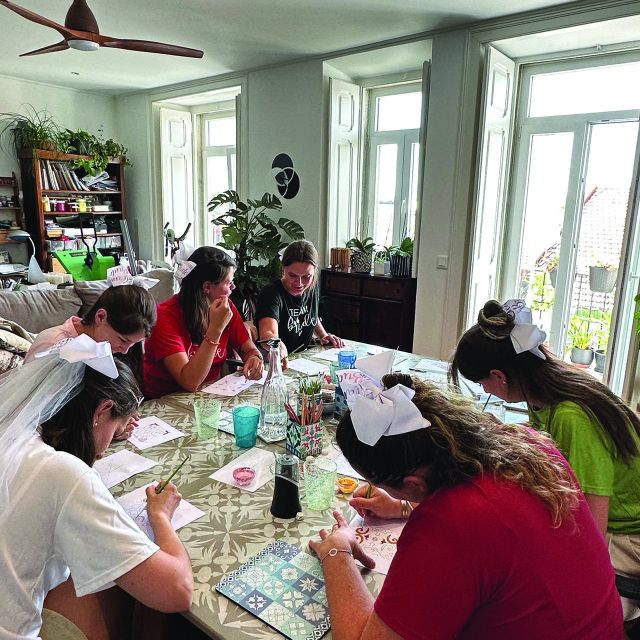
The listed price is $64 per person. That is not the cheapest creative activity in Lisbon, but the value is reasonable when you count the 2.5 hours of instruction, all drawing and painting materials, refreshments, personal guidance, digital preparation, thermal pressing, and one finished ceramic tile.
You are also paying for the setting and the instructor’s time. This is not a drop-in table where you receive materials and work alone. Agathe explains the process, helps you make design decisions, and makes corrections when needed.
The price makes the most sense if you value an experience as much as the object. A generic tile from a souvenir shop may cost less, and a traditional ceramic class could offer more hands-on work with clay. This workshop offers something in between: a personal design, a guided creative session, and a finished Lisbon keepsake without a long wait.
Small groups improve the value. You get individual attention while still having the pleasure of seeing different approaches around the table. Private groups are available, though the price and arrangements for that format should be confirmed when booking.
The mood: calm, social, and beginner-friendly
The tone is one of the strongest parts of the experience. The artist’s home has been described as warm and comfortable, and the small-group format helps people settle in quickly.
You can come alone. The activity gives solo visitors something to do with their hands, and the creative task offers an easy way to talk with people from other countries without forced conversation. Couples, friends, and families can all take part, too.
The class is not only for outgoing people. You can focus quietly on your own tile and ask for help when needed. The instructor’s patience and humor are repeatedly praised, and that matters when someone is worried about making a mistake.
The official age restriction says the activity is not suitable for children under 10. Older children can enjoy it, especially with an adult nearby. A family group ranging from children to older adults has found the process approachable, but each person should be comfortable spending time drawing, tracing, and painting.
Who should book this workshop?
I would recommend it to you if you want:
- A creative break from museums, churches, and city sightseeing
- A personal souvenir rather than a mass-produced Lisbon product
- An activity that works for beginners
- A small-group experience with direct instruction
- A same-day ceramic keepsake
- A relaxed option for solo visitors, couples, friends, or families with children aged 10 and older
I would think twice if you want to work directly with clay, learn traditional kiln firing, or spend a full day on advanced ceramic technique. The workshop is about creating the design and seeing it transferred to a tile, not mastering every stage of azulejo production.
It is also worth checking your schedule. At 2.5 hours, the class is long enough to feel substantial but short enough to fit into a morning or afternoon. You will want to avoid placing a tightly timed attraction immediately afterward, since the activity is meant to be enjoyed at an easy pace.
Booking details that matter
The workshop costs $64 per person and includes the instructor, drawing and painting materials, tea or coffee, cookies, and one 10cm by 10cm ceramic tile. Other personalized objects and additional tiles are extra.
Instruction is available in French, English, and Portuguese. You can reserve now and pay later, which is useful if your Lisbon plans are still shifting. Free cancellation is available up to 24 hours in advance for a full refund.
Starting times vary, so check availability for your chosen date. The meeting point is Bell N° 2. Private and small-group formats are available, and children under 10 should not be booked for this activity.
Should you book the Azulejos Design workshop?
Yes, if you want a personal, practical Lisbon souvenir and an easy introduction to tile design. The patient teaching, cozy artist’s home, flexible Formettes method, and same-day finished tile make this a strong choice for beginners and creative people who want more than a standard souvenir.
The main limitation is the production method. You draw and paint the pattern, but Photoshop and a thermal press handle the final transfer. If that distinction suits you, the $64 cost is fair for the time, materials, guidance, and keepsake. If you want hands-on pottery, look for a class centered on clay and glazing instead.
For most visitors, I would book this for a rainy afternoon, a slower morning, or the final part of a Lisbon stay. You get a colorful reminder of the city, and unlike another trinket from a shop shelf, you can point to the design and say, I made that.
FAQ
How long does the azulejo workshop last?
The workshop lasts 2.5 hours.
How much does the workshop cost?
The listed price is $64 per person.
What is included in the price?
The price includes the instructor, drawing and painting materials, tea or coffee, cookies, and one 10cm by 10cm ceramic tile.
Can I take my tile home immediately?
Yes. The design is transferred to the ceramic tile with a thermal press, allowing you to leave with it after the workshop.
Do I need drawing experience?
No. The Formettes method is designed for people without drawing prerequisites, and the instructor guides you through the process.
What languages does the instructor speak?
Instruction is available in French, English, and Portuguese.
Where is the meeting point?
The meeting point is Bell N° 2.
Can children attend?
The activity is not suitable for children under 10 years old.
Can I cancel the booking?
You can cancel up to 24 hours in advance for a full refund. You can also reserve now and pay later.
Just added around Lisbon
- Central Lisbon E-Bike Tour★ 5.0 · 168 reviews
- From Lisbon: Sintra and Cascais Full-Day Private Tour★ 4.9 · 168 reviews
- Experience the Queen of Fado at Ah Amália Living Experience★ 5.0 · 171 reviews
- Lisbon: 2-Hour Sunset Sailing Tour on Luxury Sailing Yacht★ 4.9 · 171 reviews
- Lisbon – Vinho Verde Wine Premium Boat Experience★ 5.0 · 171 reviews
- Óbidos: Medieval Tales & Secrets Spots Guided Walking Tour★ 4.9 · 171 reviews
- From Lisbon: Small Group Fátima & Little Shepherds Town Tour★ 4.8 · 171 reviews
- Horse Riding on the Beach★ 4.5 · 171 reviews
Workshops, compared.

Pastel de Nata Cooking Class with Grandma’s Recipe
Read our review →
Pastel de Nata Cooking Class with Port Wine – Sé
Read our review →


Browse the lists this tour appears in