
Reviewed · WORKSHOPS
Portuguese Pastry Workshop in Lisbon
Pastel de nata tastes better when you make it. This small-group class at Casa dos Ovos Moles em Lisboa turns two famous Portuguese pastries into a hands-on cultural lesson, with every participant working on the dough, fillings, and baking. I especially like the chance to make both pastel de nata and travesseiro de Sintra from scratch, plus the friendly teaching style reported from hosts including Filipa, Maria, and Filipe. The class also adds useful context about monastery baking and Portugal’s 500-year ovos moles tradition.
The main consideration is time. Two hours gives you a pleasant introduction, but not a full professional pastry course. You also need to reach the shop yourself at Calçada do Sacramento 25, and class times can vary by day, even though the listed start time is 3:00 pm.
In This Review
- Five things worth knowing before you book
- Making pastel de nata at Calçada do Sacramento 25
- From flour to flaky pastry
- Travesseiro de Sintra adds a second lesson
- Monasteries, ovos moles, and the story behind the sweets
- A small group makes the class personal
- Port, Ginja, coffee, and the final tasting
- Is $96.55 a fair price?
- Timing, transport, and cancellation details
- Who should book this pastry class?
- Should you book the Portuguese Pastry Workshop?
- FAQ
- Where does the Portuguese pastry workshop take place?
- What time does the class start?
- How long does the workshop last?
- Which pastries do you make?
- Are drinks and tasting included?
- How many people can join the class?
- Can you cancel for a full refund?
Five things worth knowing before you book
- You make two Lisbon-area pastries: Pastel de nata and the sugar-dusted travesseiro de Sintra are prepared by hand.
- The puff pastry is made from scratch: This is not simply a demonstration followed by a tasting.
- The group is capped at six: Small numbers allow the instructor to guide each person through the work.
- The tasting comes with Portuguese drinks: Enjoy your pastries with Port wine, Ginja liqueur, coffee, or tea.
- The shop adds a sense of place: Casa dos Ovos Moles em Lisboa specializes in ovos moles, a Portuguese sweet tradition said to be 500 years old.
Making pastel de nata at Calçada do Sacramento 25
The workshop takes place at Casa dos Ovos Moles em Lisboa, at Calçada do Sacramento 25 in central Lisbon. The address is near public transportation, which helps, since transportation to and from the activity is not included.
You meet at the shop and finish there, so the logistics are simple once you arrive. The listed start time is 3:00 pm, but schedules differ depending on the day of the week. Check your confirmed time carefully, especially if you are fitting this around a museum visit, a walking tour, or a dinner reservation.
The setting is part of the appeal. One class took place in a pastry shop inside an 18th-century building, giving the lesson a more local feel than a modern cooking studio. You are not being moved between several attractions. Instead, the afternoon centers on a working pastry business and the sweets associated with it.
That narrow focus works well. Lisbon has no shortage of food tastings, but this activity asks you to slow down and handle the ingredients yourself. You leave with a better sense of why a pastel de nata is more than a small custard tart bought at a café.
A few more reviews worth comparing before you book
- Lisbon: Pastel de Nata Baking Class
★ 4.9 · 2,106 reviews - Lisbon: Traditional Portuguese Cooking Class
★ 4.9 · 592 reviews - Pastel de Nata Masterclass at a Real Bakery in Downtown Lisbon
★ 5.0 · 491 reviews
From flour to flaky pastry
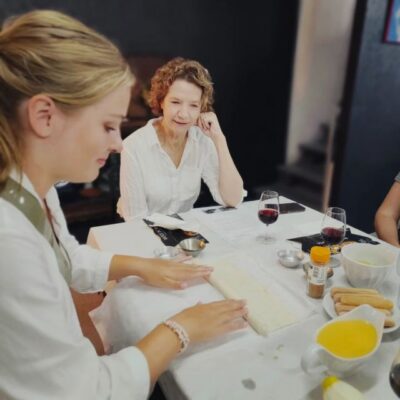
The lesson covers the entire process, including the puff pastry. That detail matters. Many cooking activities hand you prepared dough, which keeps things tidy but hides the difficult part. Here, you work with the pastry by hand and learn how the layers are formed before the filling goes in.
Pastel de nata looks modest, but the pastry demands care. The crisp shell and soft custard need to work together. The class gives you a practical appreciation for that balance, including why a genuine pastel de nata is not simply a sweet pudding inside any available pastry case.
The instruction is designed for participation. You can expect demonstrations followed by your own turn with the ingredients and techniques. A small group makes this much more useful than a large demonstration where you only watch from the back. With no more than six people, each person has room to take part, ask questions, and receive help.
The teaching style is one of the strongest reasons to choose this class. Filipa is described as patient, cheerful, and clear, while Filipe is praised for making the lesson relaxed and entertaining. Maria is also singled out for her warm hosting and careful guidance. The names vary because more than one person may lead the class, but the pattern is consistent: expect an involved teacher rather than a rushed kitchen presentation.
You should not expect every tart to look bakery-perfect. That is part of the fun. The goal is to learn the method, enjoy the work, and understand the pastry well enough to try it again at home. The finished sweets become more satisfying because you have handled the dough and filling yourself.
Travesseiro de Sintra adds a second lesson
The second pastry is travesseiro de Sintra, a specialty linked with Sintra, the hill town outside Lisbon. The name means pillow, an apt description of its soft, folded shape. Preparing it alongside pastel de nata gives you a useful comparison between two very different Portuguese sweets.
The class is not limited to one famous item. You learn how the two pastries use pastry and sweet fillings in different ways, and you get a taste of regional baking beyond the standard Lisbon custard tart. That makes the experience a better fit for someone who has already sampled pastel de nata and wants to understand more about Portuguese pastry traditions.
Descriptions of the class indicate that the filling for the travesseiro may be discussed alongside the other ingredients, with one account referring to a pudding with Port wine. The exact sequence can vary with the instructor and class conditions, but the important point is that both pastries are made during the session and served for tasting.
The second recipe also helps keep the two-hour lesson varied. You are not repeating one technique for the entire afternoon. Instead, the class moves between preparation, shaping, baking, explanation, and tasting.
Monasteries, ovos moles, and the story behind the sweets
The workshop includes the history of Portuguese pastries, particularly the link between sweets and religious institutions. You learn that these pastries were created inside Portuguese monasteries, a detail that gives the recipes more meaning than a simple list of ingredients.
Casa dos Ovos Moles has its own connection to that tradition. The shop specializes in ovos moles, an egg-based Portuguese sweet with a history described as 500 years old. Even if the class focuses on pastel de nata and travesseiro de Sintra, the shop’s specialty provides a wider setting for the lesson.
I like this part because food history works best when it stays close to the object in front of you. As you prepare a pastry, you can connect the method with Portuguese convent baking and the long importance of eggs and sugar in local desserts. The result is not a formal history lecture. It is a short, useful story that makes the tasting more memorable.
The cultural material also suits people who want an activity with more substance than eating another dessert. You still get plenty of sweetness, but you also learn why these foods matter in Portugal. Families with older children and teenagers may find this especially effective because the lesson combines movement, conversation, and a clear reward at the end.
A different sort of day out around Lisbon:
- Lisbon City Center Tour – The Unmissable Lisbon
★ 5.0 · 22,234 reviews - Lisbon: Sintra, Pena, Regaleira, Cabo da Roca & Cascais
★ 4.7 · 19,656 reviews - Lisbon: Jerónimos Monastery Entrance Ticket
★ 4.1 · 14,164 reviews - Lisbon: History, Stories and Lifestyle Walking Tour
★ 4.8 · 10,902 reviews
A small group makes the class personal
The maximum group size is six people. That is a real advantage for a practical class. In a group of four, the instruction can feel especially personal, with enough space for everyone to work and receive help. A full group of six is still small enough for active participation.
The experience can also run with fewer people. One participant had the class alone and received a more personal session, including the chance to take some pastries home. You should not assume you will have a private class, but the small maximum leaves open the possibility of a quieter workshop.
This format works well for families, couples, friends, and solo visitors. Families with children aged around 11 to 14 have found the class suitable, and the patient instruction helps younger participants keep up. Very young children may find the hands-on steps harder to manage, but no specific minimum age is provided, so confirm directly if age is a concern.
The social side is pleasant without taking over. You work alongside the other participants, talk with the instructor, and share the final tasting. One of the pleasures is that the class can feel like a shared afternoon rather than a rigid lesson.
Port, Ginja, coffee, and the final tasting
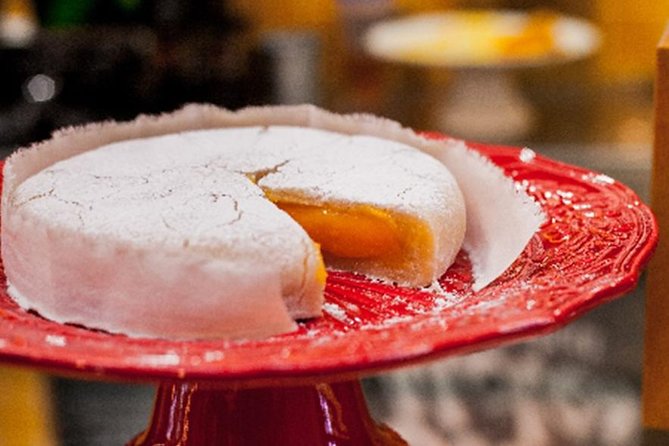
The reward at the end is built into the class. You taste the two pastries with a choice of Port wine or Ginja liqueur, along with coffee or tea. Beverages, snacks, food tasting, and alcoholic drinks are included in the price.
That pairing adds a distinctly Portuguese finish. Port gives the pastry tasting a warm, sweet edge, while Ginja, a sour-cherry liqueur, offers a different local flavor. Coffee and tea provide nonalcoholic choices, which is useful for children, anyone avoiding alcohol, or people who simply prefer a hot drink with dessert.
The pastries are served after the cooking, so you get to judge the result while the process is still fresh in your mind. Several class participants found their own pastel de nata among the best they had eaten in Portugal. That is partly the pleasure of fresh baking and partly the satisfaction of having made it yourself, but it speaks to the care taken with the lesson.
Ask about leftovers if you make more than you can eat. One solo participant was able to bring the remaining pastries away, but this should not be treated as a guaranteed part of every session. The more reliable takeaway is the recipe, which is provided so you can try the pastries at home.
Is $96.55 a fair price?
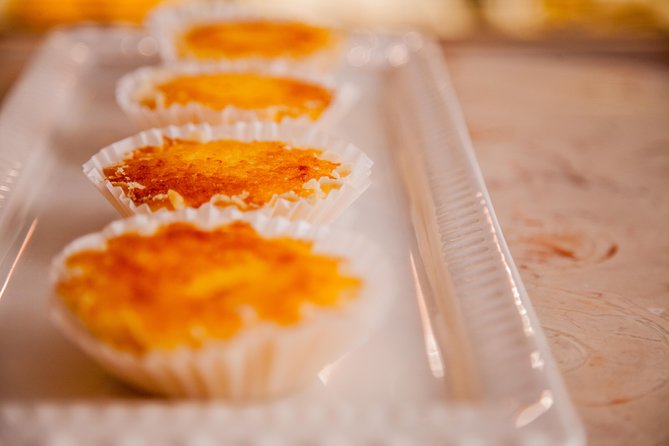
At $96.55 per person, this is not a cheap pastry stop. If you only want to eat a pastel de nata, Lisbon offers simpler and less expensive options. The price makes more sense when you count the instruction, two recipes, hands-on work, drinks, tasting, and the small group.
You are paying for access to a teacher and a working pastry setting, not just for two desserts. The class also fills about two hours, which gives it more weight than a quick tasting. For food-focused visitors, that is a reasonable exchange, particularly if you value practical skills and cultural context.
The value is weaker if you dislike baking, have limited time, or prefer to spend your afternoon moving between major sights. Dough preparation takes attention, and the lesson is centered on the process. You should book it because you want to make pastry, not because you are searching for a fast snack.
I would also consider the size of your party. A group of four or six can make the cost feel easier to justify because the activity becomes a shared memory. Solo visitors and couples may still find it worthwhile, especially if they want a calm, focused afternoon in Lisbon.
Timing, transport, and cancellation details
The meeting point is Calçada do Sacramento 25, 1200-393 Lisbon, and the activity returns to that same location. The shop is near public transportation, but you are responsible for getting there and returning to your accommodation or next stop.
The advertised duration is approximately two hours. The listed start time is 3:00 pm, although class times vary by weekday. Leave enough margin before the start, since the activity cannot include transportation or wait for a late arrival.
A mobile ticket is accepted, and the class is offered in English. Confirmation is provided when you book. Free cancellation is available until 24 hours before the start time for a full refund. Changes or cancellations inside that 24-hour window are not refunded or accepted.
The activity requires good weather and a minimum number of participants. If poor weather or insufficient bookings cause cancellation, you are offered another date or experience, or a full refund.
Who should book this pastry class?
I would point food lovers toward this workshop first. It gives you recipes, techniques, tasting, and a story connected to Portuguese convent baking. You do not need professional baking skills, since the instructor guides you through the process.
It also suits families with teenagers. The small group, hands-on format, and sweet result give younger participants a clear role. Adults can enjoy the history and drinks while children focus on shaping dough and tasting the finished pastries.
This is also a good choice for repeat visitors to Lisbon. If you have already seen the main sights, two hours in a pastry shop offers a different way to spend an afternoon. You get local food knowledge without committing to a full-day excursion.
I would hesitate if you want a polished demonstration with no work of your own. You will be expected to participate. I would also check the date carefully if your schedule is tight, since the class time can change by weekday and the cancellation window is firm.
Should you book the Portuguese Pastry Workshop?
Yes, if you want to do more than photograph a pastel de nata. The class combines two regional pastries, patient instruction, Portuguese food history, and a tasting with Port, Ginja, coffee, or tea. The six-person limit is the key practical advantage, and the recipes give you something useful after Lisbon.
Book it for a relaxed afternoon, not as a quick stop between major attractions. At $96.55, the value comes from making the pastries yourself and learning the method from start to finish. If that sounds better than simply ordering dessert, this is a sweet and worthwhile addition to your Lisbon plans.
FAQ
Where does the Portuguese pastry workshop take place?
It takes place at Casa dos Ovos Moles em Lisboa, located at Calçada do Sacramento 25, 1200-393 Lisbon, Portugal.
What time does the class start?
The listed start time is 3:00 pm. Class times can differ depending on the day of the week, so check the confirmed time for your booking.
How long does the workshop last?
The activity lasts approximately two hours.
Which pastries do you make?
You make two Portuguese pastries: pastel de nata and travesseiro de Sintra.
Are drinks and tasting included?
Yes. The experience includes food tasting, snacks, coffee or tea, and alcoholic beverages. The pastries are served with Port wine or Ginja liqueur.
How many people can join the class?
The class has a maximum of six participants, and each booking can include no more than six people.
Can you cancel for a full refund?
Yes. You can cancel at least 24 hours before the start time for a full refund. Cancellations or changes made less than 24 hours before the start time are not accepted or refunded.
Just added around Lisbon
- Tuk tuk tour in Belem area★ 5.0 · 46 reviews
- Lisbon: Private Tour Sintra, Cabo da Roca and Cascais★ 4.9 · 46 reviews
- Private Sintra Tour from Lisbon★ 5.0 · 46 reviews
- Premium Porto Private Day Trip from Lisbon with Local Guide★ 5.0 · 47 reviews
- 4 Hours Tuktuk City Tour in Lisbon★ 5.0 · 47 reviews
- Small Group Pena Palace, Sintra, Regaleira and Cascais★ 5.0 · 47 reviews
- From Lisbon: Tour to Fátima, Batalha, Nazaré and Óbidos★ 4.6 · 47 reviews
- Private 4 hour Sintra Tour★ 5.0 · 47 reviews
Workshops, compared.
Pastel de Nata Cooking Class with Grandma’s Recipe
Read our review →
Pastel de Nata Cooking Class with Port Wine – Sé
Read our review →


Browse the lists this tour appears in